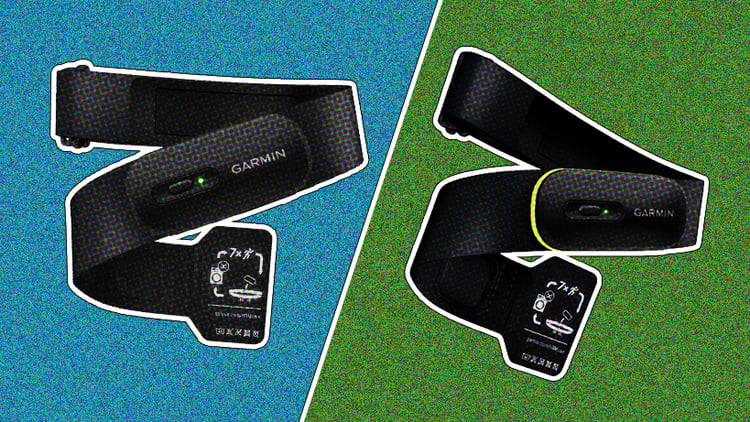
Battle of Garmin’s top chest straps and only one winner
Garmin first released HRM 200 as a simple chest strap that offered all the basics you’d expect from a good heart rate monitor. It quickly became popular with fitness fans who wanted heart rate data without paying for extra features they might not need.
But Garmin wouldn’t be Garmin if it didn’t challenge itself. So, the company introduced HRM 600, which is designed for people who see running and training as more than just a hobby.
This newer strap comes with more advanced features. Of course, all those extras come with a higher price.
Naturally, we thought about whether HRM 600 is worth the higher cost or whether the simpler HRM 200 is a better choice. That is how we’ve decided to put the two straps head-to-head for comparison. So, let’s dive in.
|
|
|
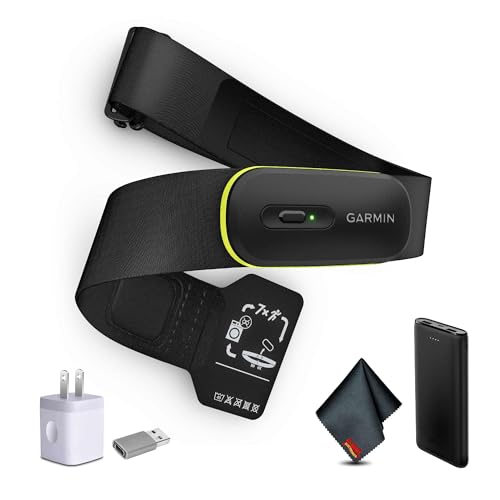
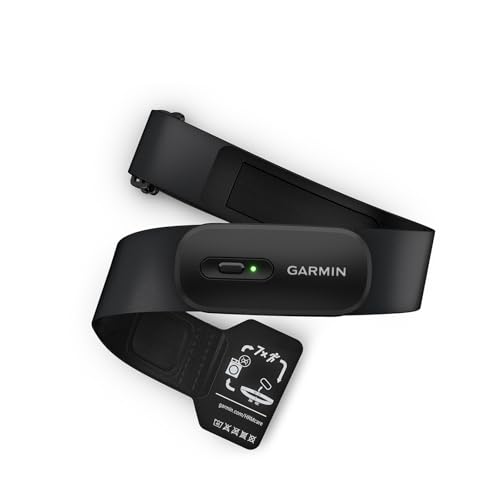
| Title | Garmin HRM 600 | Garmin HRM 200 |
| Heart rate/HRV | Yes | Yes |
| ANT+ | Yes | Yes |
| Bluetooth | Yes | Yes |
| Battery life | Up to 2 months (rechargeable) | Up to 1 year (Cell coins) |
| Water resistance | 5ATM | 3ATM |
| More info | Buy on Amazon | Buy on Amazon |
Garmin HRM 200 vs. HRM 600: Key differences
Before diving into the finer details of these two chest straps, let’s focus on the differences that matter most every day.
Replaceable vs. rechargeable battery
Right off the bat, one of the first things you’ll notice is the battery setup.
HRM 200 uses replaceable coin-cell batteries, and when it runs out, you just swap in new ones. HRM 600 has a built-in rechargeable battery, so you need to remember to charge it.
Which one is better depends on your training habits. We like the simplicity of HRM 200 for occasional or regular workouts, while the rechargeable HRM 600 makes more sense if you use it frequently and don’t want to keep spare batteries around.
Basic tracking vs. advanced training data
HRM 200 is mainly designed for heart rate tracking. For some people, it’s all they need, but for others, it might not be enough.
That’s why HRM 600 goes further. It tracks heart rate and can send extra training data to compatible Garmin devices. It acts more like an extra sensor for your Garmin setup than just a heart rate monitor.
3ATM vs. 5ATM: Can you take it swimming?
Do you go swimming regularly? Well, this might influence your decision between those two sensors.
HRM 200 has a 3ATM rating, which means you shouldn’t bring it to the swimming pool. HRM 600 is different. It is rated to 5ATM and can be used in the pool. So, if you want to track your heart rate while swimming, the winner is obvious.
Winner: HRM 600
HRM 200 vs. HRM 600 battle in comfort department
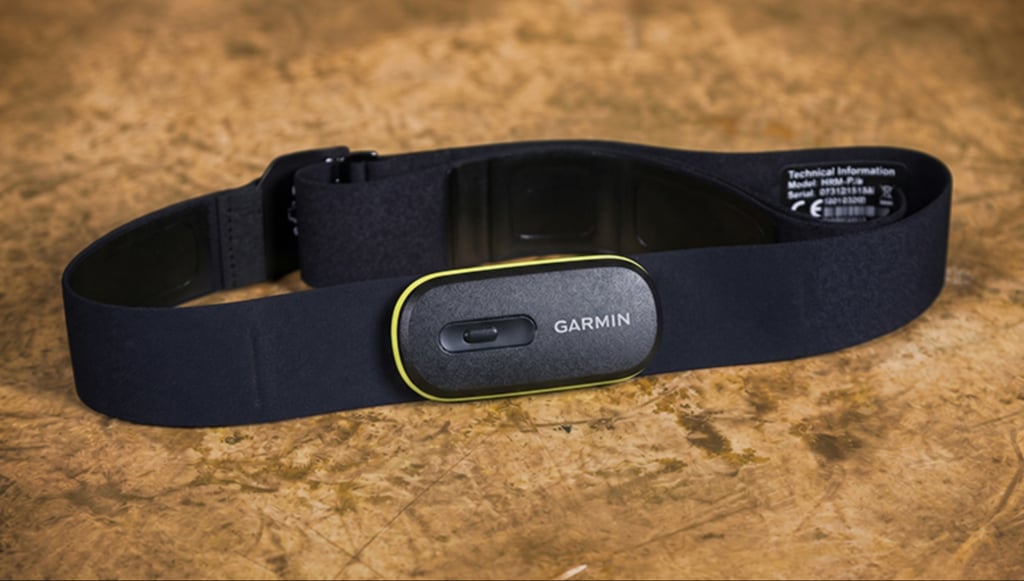
Honestly, we didn’t expect either strap to be much more comfortable than the other. If one had been, we could probably crown a winner right here and save ourselves the rest of the comparison.
When it comes to chest straps, accuracy is our top priority, but comfort is almost as important. There’s not much use in a super accurate sensor if the strap keeps slipping, shifting, or constantly reminds you it’s there. If it moves during a workout, it could even mess with your readings.
Luckily, neither HRM 200 nor HRM 600 gave us that problem. They both fit snugly against the chest and don’t budge, whether you’re running, lifting, or just working out. The straps are flexible, so they move with you instead of against you.
So, when it comes to comfort, it’s a tie. No matter which one you pick, both are comfortable enough to forget about, which is exactly what you want in a chest strap.
Winner: Draw
HRM 200 vs. HRM 600: Which one gives more accurate heart rate data?
In our recent Garmin HRM 600 review, we decided to put the strap through its paces during indoor cycling, a sustained outdoor run, and interval running sessions.
Yes, we compared it to smartwatches and wearables like WHOOP 5.0. But our main goal was to see how fast each device reacted to changes in effort. That’s where HRM 600 really stood out. It responded faster when we switched from an easy pace to a hard push, especially during intervals.
We noticed that smartwatches and wrist wearables often underreported heart rate over longer stretches compared to the chest strap. They sometimes missed the initial heart rate spike at the start of a run or lagged when we pushed hard at the end.
And if we are talking about indoor cycling, HRM 600 was always the first to pick up quick bursts of effort and the drops during recovery.
Is HRM 200 just as accurate?
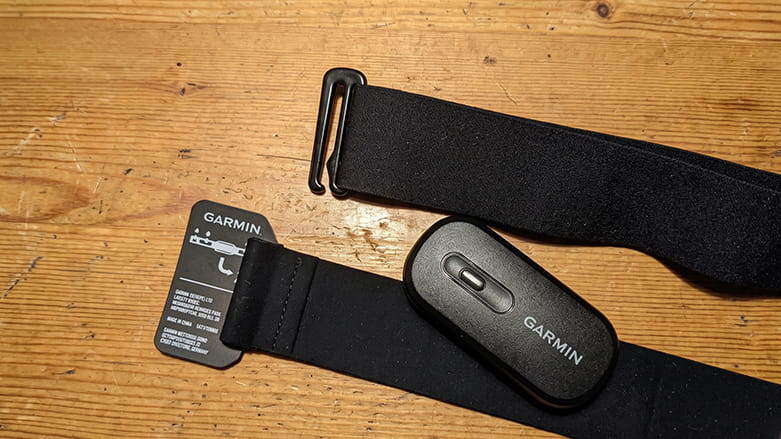
We also put HRM 200 and HRM 600 head-to-head, wearing both straps at the same time during indoor cycling and outdoor runs. And, honestly, the results didn’t surprise us.
Both straps reacted quickly to changes in effort. When we pushed harder during intervals, both showed an immediate increase in heart rate. When we eased off, both showed the drop just as fast.
For basic heart rate tracking, there was hardly any difference between them. So, if you mainly want a chest strap for responsive heart rate data during workouts, either one will work well. I guess it all comes down to additional features and whether you need them.
Winner: Draw
HRM 600 lets you leave your watch at home
As we’ve already established, the choice between HRM 200 and HRM 600 comes down largely to the extra features. And one of the best things about HRM 600 is that it can record your workouts even if you don’t have your phone or smartwatch with you.
Let’s just say you’ve gone to the gym and your watch and phone are almost out of battery, or you forgot them at home. Maybe you don’t have a smartwatch or just don’t want to carry your phone while you run. We’ve all been there.
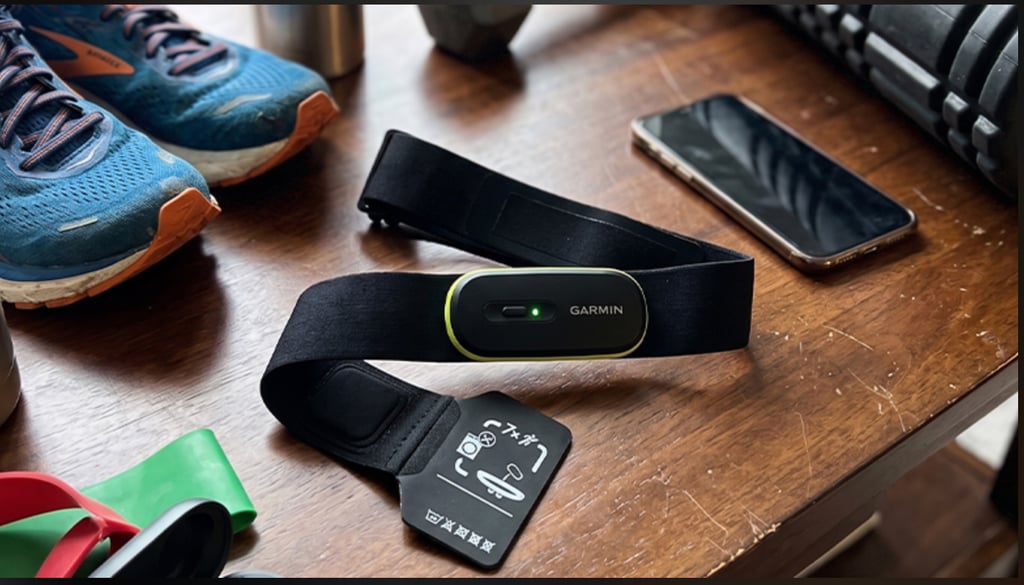
And that’s where HRM 600 has a clear advantage. It records your workout right on the strap, so you don’t need to bring another device. When you’re done, you can transfer your workout data to a compatible Garmin device or app.
This might seem like a small thing, but it’s actually really handy. It’s nice to know you can leave your watch charging and still track your workout.
HRM 200 can’t do this. It always needs to be connected to a compatible smartwatch or phone to work. If you always have one of them with you, you might not care about this feature. But if you occasionally like to go device-free, HRM 600 earns some extra points here.
Winner: HRM 600
HRM 600 superiority in running metrics
This is one area where HRM 600 can justify its higher price, but only if you plan to use the extra data. If you’re a casual runner, these metrics could feel like information overload. But if you like to analyze your running form, it can be very helpful.
So, HRM 600 gives you Garmin’s usual Running Dynamics data, plus a few extra metrics you won’t find on HRM 200.
One we really like is Ground Contact Time Balance, which shows how evenly you use each leg while running. For example, if one leg starts working harder than the other during a long run, this data may help you notice it. That’s useful when fatigue starts to affect your form.
Ground Contact Time is another good metric, especially if you’re still learning to run efficiently. It shows how long your foot stays on the ground with each step. And we’ve found that the chest strap gives more responsive data here than just using a watch.
There’s also Step Speed Loss (SSL), which is unique to HRM 600. It estimates how much speed you lose with each foot strike, giving you another way to look at running efficiency.
However, we’re not sure SSL is essential, though. Here is why. Garmin compares your results to data from millions of miles run by others and shows them on a color-coded scale, from excellent to needing improvement. And essentially, we never saw anything other that excellent rating despite our running form not being perfect. Despite that, it’s still interesting data, but we wouldn’t buy HRM 600 just for this feature.
Winner: HRM 600
Which battery is better: rechargeable or coin cells?
We’ve already compared rechargeable batteries and coin cells in our Polar H10 vs. Garmin HRM 600 review, and it’s a similar story here.
HRM 200 uses coin-cell batteries that Garmin says can last up to a year for many people. We haven’t tested it for a full year yet, but our HRM 200 is still working well.
HRM 600, on the other hand, has a rechargeable battery. Garmin says it can last up to two months if you use it about an hour a day.
However, using the LED indicator during workouts drains more power, but the battery-saving mode helps it last longer. We usually got about four to five weeks between charges with HRM 600, though some people might reach the full two months. Either way, we liked not having to keep extra coin-cell batteries on hand.
HRM 200’s power button is a small but useful detail
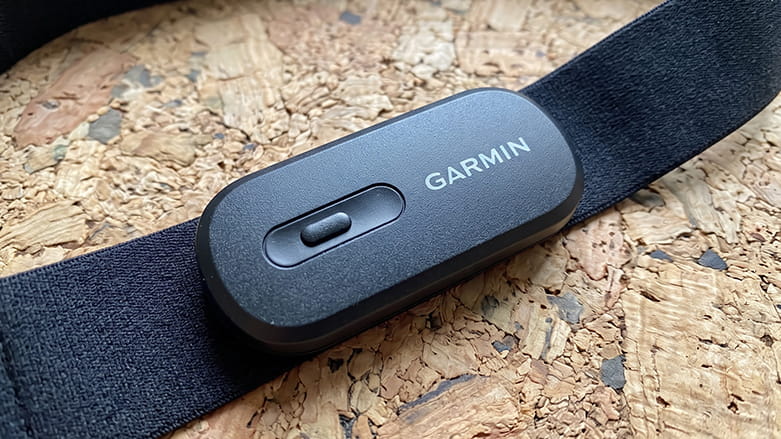
In the same Polar vs. Garmin comparison, we also noted that sensors without a button activate when attached to the strap. This means that if you leave it there, the battery keeps running.
That’s why we really liked that HRM 200 has a button that you can press to start training when you want. And if you forget to turn it off, it enters sleep mode if it doesn’t detect a heartbeat, saving power. This is handy if you tend to toss your gear in a bag and forget to turn it off.
Winner: Draw
Is it worth paying extra for HRM 600?
We have to admit, these two sit on very different sides of the price range. HRM 200 is about half the price of HRM 600, which makes the decision fairly simple if all you want is heart rate data during your workouts.
HRM 600, on the other hand, is aimed at people who want more features. For example, the ability to record workouts without wearing a watch, track heart rate during swimming, and have more advanced running statistics. So if you value those features, the higher price might be worth it.
Winner: HRM 200
More heart rate monitor comparisons
Polar H10 vs. Garmin HRM 600: Which chest strap heart rate monitor should you buy?
Garmin HRM 600 review: An unbeatable option for data obsessives
Best chest strap heart rate monitors: Tested for accuracy and performance
Best Bluetooth heart rate monitors: Our favorite picks for running, cycling, and indoor training
Best heart rate monitors: Chest straps, watches, and rings we trust
Verdict: Garmin HRM 200 or HRM 600?
We already noticed from the Polar vs. Garmin comparison that choosing between two chest strap heart rate monitors is a pretty hard job, because they are all great in their own way. But again, we had to choose a winner.
That said, we’d pick Garmin HRM 600 because it’s more flexible. It offers all the basics you’d expect, plus extra features you might find useful as your training progresses. You can record workouts without a watch, track swimming, and get advanced running stats.
Buying HRM 600 now means you probably won’t need to upgrade later if your needs change. Still, we think that HRM 200 is a great option too. It offers the essentials at a lower price, and for many people, that’s all they need.
With that in mind, here’s who we think each strap suits best:
Choose Garmin HRM 600 if:
- You take your running seriously.
- You want advanced Running Dynamics.
- You want to record workouts without carrying a watch or phone.
- You want to see heart rate data during swimming.
- You prefer a rechargeable battery.
Choose Garmin HRM 200 if:
- You only want heart rate tracking.
- You are a casual runner and do not require advanced training metrics.
- You prefer replaceable batteries.
- What you would like to do is spend less money.