Best cheap fitness trackers: We look beyond the price tag to find real value
A cheap fitness tracker can cover the basics you actually use (steps, heart rate, sleep, and workouts) without the price or complexity of a premium smartwatch. Our guide to the best cheap fitness trackers puts everyday value first: useful tracking, comfortable wear, and features worth paying for. But spending less means knowing where the compromises sit.
Depending on the model, expect smaller screens, simpler apps, fewer smart features, limited sensors, or GPS that struggles with accuracy (or needs your phone). Some brands also reserve extra insights for subscribers, adding to the long-term cost. In this review, we focus on genuinely affordable fitness trackers, weighing those trade-offs against what you get, so you can choose a budget pick that suits your routine without paying for unnecessary extras.
The best cheap fitness trackers: Quick picks
- Hume Band 2: Best for subscription-free wellness tracking
- Herz P1 Smart Band: Best for the lowest upfront cost
- WHOOP 5: Best for subscription-based recovery insights
- Amazfit Helio Strap: Best for budget value without a subscription
How we tested the best cheap fitness trackers
To fairly assess our shortlisted products, we wore each tracker through ordinary days, overnight, and during workouts, checking comfort, strap fit, and ease of use. We compared step counts on repeat walks, checked activity logging and workout modes, and compared heart-rate readings with a chest strap.
For sleep, we checked recorded bedtimes and wake times against our notes. Where GPS was available, we checked distance and routes on familiar outings. We logged battery life, charging time, and everyday app use, including syncing, notifications, and other smart features.
We also checked smartphone compatibility and water-resistance ratings, distinguishing stated protection from conditions we actually tested. Finally, we weighed useful features, tracking consistency and any subscription costs against each tracker’s price (not premium smartwatch standards). This helped judge whether it delivered worthwhile everyday value for buyers on a genuinely limited budget.
Hume Band 2
Best for following sleep and recovery patterns without ongoing fees
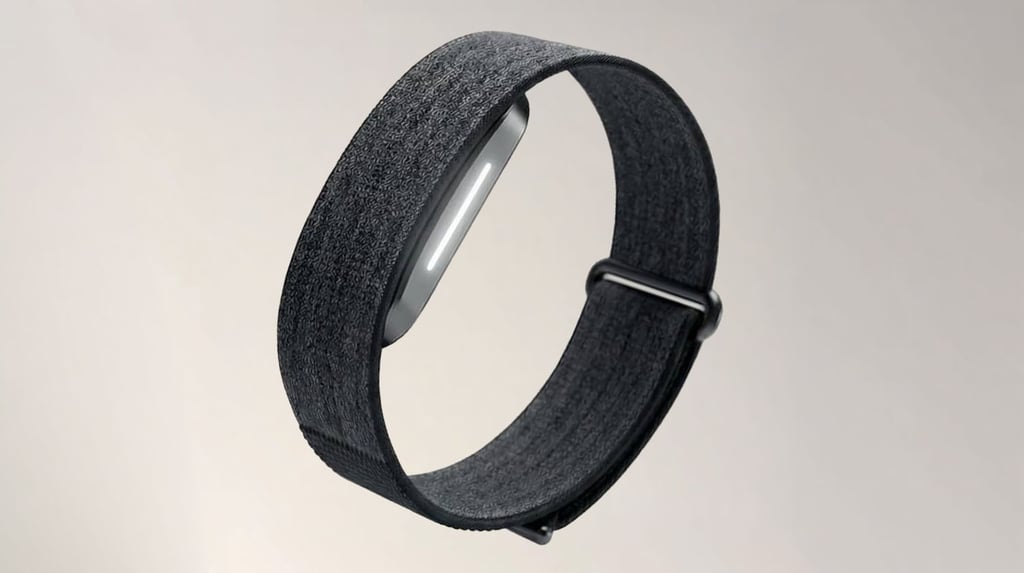
| Key features: | Screenless design; heart rate, HRV, sleep and recovery insights; optional paid coaching |
| Battery life: | Up to 14 days claimed; charging takes 20–80 minutes, according to Hume |
| Price: | Mid-tier |
Hume Band 2 is a step-up wellness tracker rather than the cheapest one here. At $249, its strongest financial argument is the absence of a required membership: you pay upfront and retain access to core scores and historical data.
The app brings together sleep stages, resting heart rate, and heart rate variability, while the screenless band avoids notifications and uses a soft, adjustable woven strap. Those design choices favor continuous wear, although the claimed 14-day battery life proved to last closer to 10 days during our full-on use. The bigger caution concerns Hume’s proprietary health scores. “Pace of Aging,” “Metabolic Momentum”, and blood pressure trends are wellness estimates, not clinical measurements or proof that the band extends lifespan.
Hume explicitly says its blood-pressure feature cannot replace a validated cuff. We also noticed that step counts, workout heart-rate results, and GPS details were not 100% accurate, so we wouldn’t recommend it as a primary option for precise performance tracking. The appeal is subscription-free trend tracking, but not proven medical insight or budget-leading sports accuracy. We would consider it for users more interested in overnight recovery than checking workout statistics on their wrist.
- Core data requires no membership
- Sleep, HRV, and recovery in one app
- Screenless, adjustable woven design
- Claimed battery life up to 14 days
- A bit expensive for a budget device
- No display or phone notifications
- Health scores are non-clinical estimates
Herz P1 Smart Band
Best for trying screen-free activity tracking on a tight budget
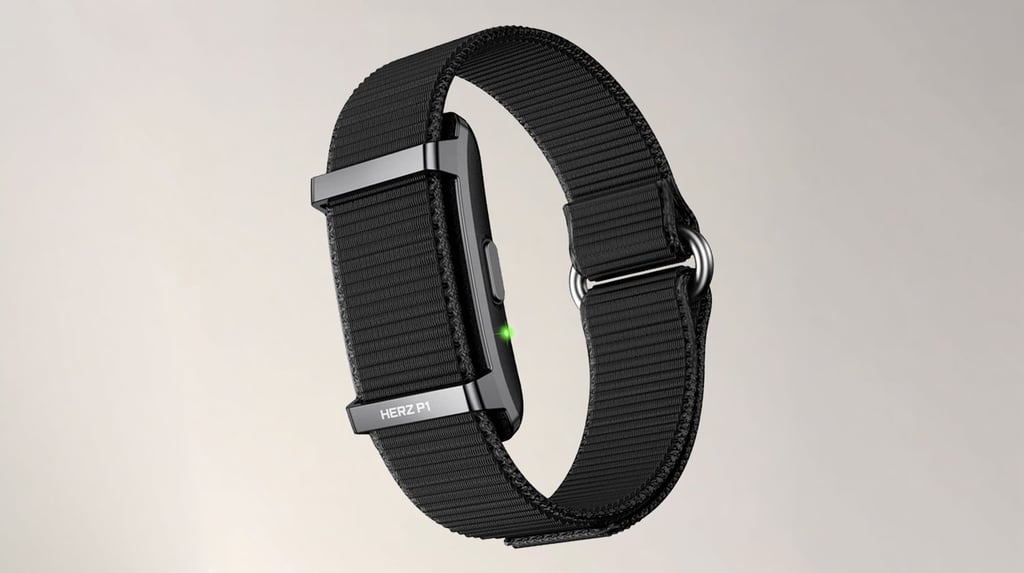
| Key features: | Steps, estimated distance and calories, heart rate, HRV, sleep and wellness trends; QRing app for iOS and Android |
| Battery life: | Up to 30 days claimed; approximately one to two hours to charge |
| Price: | Cheap |
Herz P1 has the lowest upfront price in this shortlist, but we would treat it as a cautious budget option rather than a proven bargain. Its advertised package covers steps, estimated distance, heart rate, sleep stages, and recovery-related trends without a monthly fee. That makes it appealing for someone who wants to explore everyday tracking without committing to WHOOP-style costs. However, the evidence does not yet establish how accurately it counts steps or follows heart rate during demanding workouts.
Important to note, route tracking depends on carrying your phone. Its screenless design and adjustable straps look suited to discreet daily wear, but every useful result lives in QRing. That app supports iPhone and Android, although reported user feedback highlights inconsistent sleep and stress results and a dashboard that can take too much scrolling.
The claimed 30-day battery would reduce charging interruptions, but that endurance is more of a claimed low-use-scenario number than practical everyday performance. We would shortlist Herz for low-cost curiosity about activity and sleep patterns, but maybe not precise training guidance. Its splash-only protection also limits versatility. Before buying, check the current price and return terms, and treat its health readings as general wellness information rather than medical measurements.
- Low $59.99 sale price
- No required subscription
- Supports both iPhone and Android
- Screenless, adjustable strap design
- Tracking accuracy remains insufficiently verified
- Mixed QRing app feedback
- Workout modes and auto-detection unclear
WHOOP 5
Best for linking regular training with sleep and daily readiness
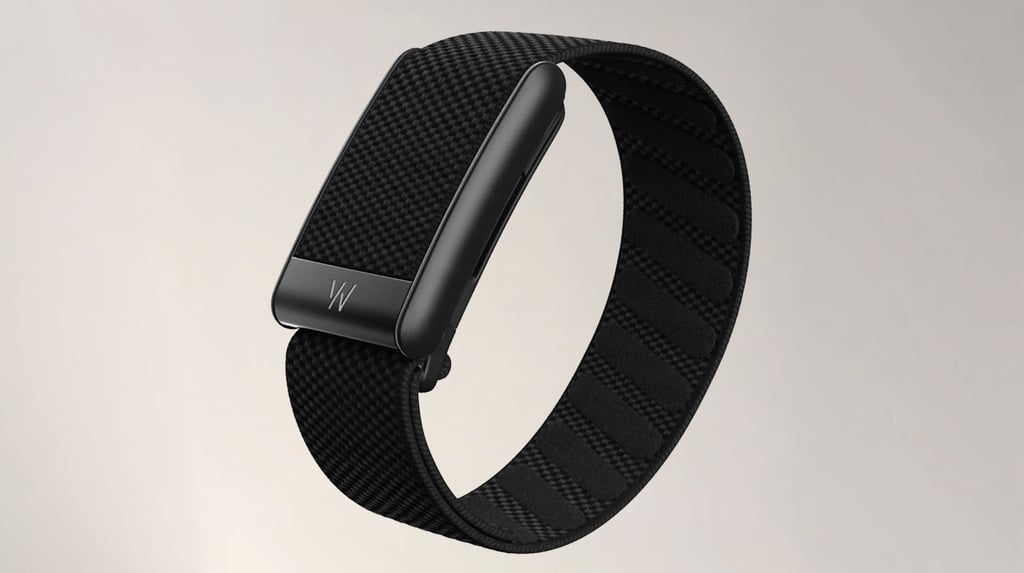
| Key features: | Sleep, Strain, and Recovery scores; steps; Strength Trainer; habit journal and coaching |
| Battery life: | Up to 14-plus days claimed; supports on-body charging with a battery pack |
| Price: | Mid-tier |
WHOOP 5 makes the most sense when you want help interpreting your routine, not simply collecting more numbers. Its app connects workout Strain, overnight Recovery, and sleep needs, while the habit journal helps explore relationships between daily choices and subsequent scores. Steps are included, but the platform’s main attraction is that broader training-and-recovery picture.
We tried the $199-a-year One membership for core fitness guidance, whereas Peak added features such as Health Monitor, Stress Monitor and Healthspan for $239 annually. Neither turns WHOOP into a genuinely cheap long-term purchase. The understated, screenless design suits continuous wear, and the claimed 14-plus-day battery is a bonus. On-body charging is particularly useful when you want uninterrupted overnight records.
However, there is no wrist display for live pace or messages, and outdoor GPS data requires a phone. Accuracy is another area to consider. TechGearLab’s 5.0 testing found useful everyday heart-rate tracking but missed maximum readings during some HIIT sessions. We would favor WHOOP for patterns and coaching rather than exact interval heart rates. ECG and blood-pressure features belong to MG/Life, not this model. Buy it if you will regularly use the insights enough to justify renewal.
- Connected sleep, strain, and recovery guidance
- Strength Trainer included in One
- Claimed 14-day battery
- Charging without removing the tracker
- Requires annual membership
- Can miss peak heart rates during HIIT
- Health and stress monitoring cost extra
Amazfit Helio Strap
Best for affordable gym tracking with useful recovery context
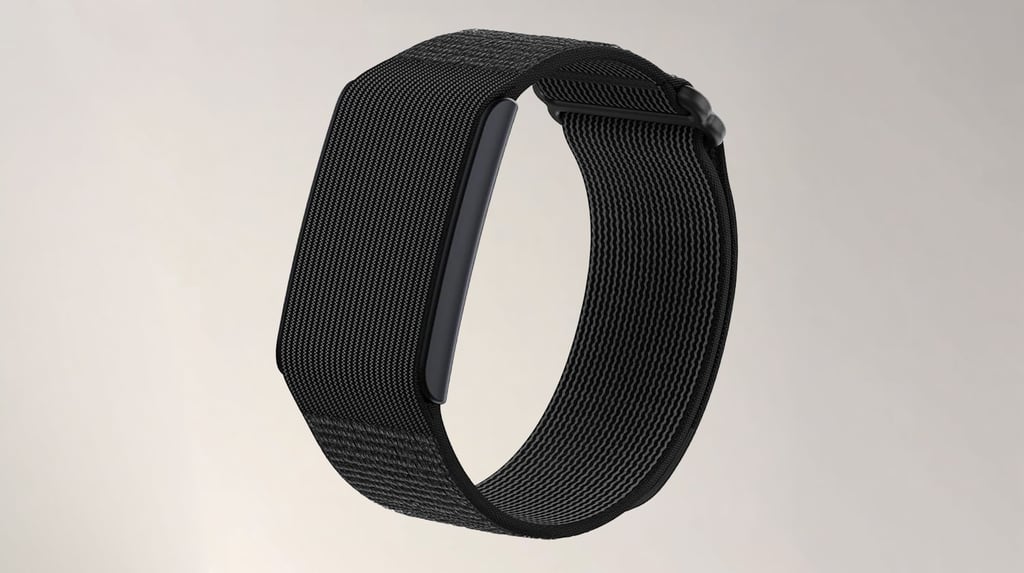
Amazfit Helio Strap also offers a strong combination of price and testing evidence, making it another budget value pick. For a truly budget price tag, it covers everyday steps, sleep, and continuous heart rate. On top, it adds training load, recovery time, and BioCharge—a running estimate of your available energy. Core insights remain available without a subscription.
We found the 20g band comfortable, and its workout heart-rate tracking is particularly strong when worn on the upper arm. With the optional armband, session averages and maximum readings were typically within one to two beats per minute of a Garmin HRM 600 chest strap; wrist measurements showed larger differences on some comparisons. Sleep duration and other core sleep statistics also compared favourably with established trackers.
Now, the compromises mostly concern interaction. Automatic workout detection was overly sensitive in that test, sometimes treating brisk walks as exercise, so manually starting sessions in Zepp was more dependable. The app contains useful information but can feel crowded, and a screenless band cannot show live workout numbers on your wrist. Outdoor routes use phone GPS. Battery life reached roughly a week to 10 days in our testing, with charging taking about two hours. We would choose Helio for affordable activity and recovery tracking, provided you accept app-based controls and occasional logging corrections.
- Affordable price with free core insights
- Strong tested workout heart-rate accuracy
- Lightweight 20g design
- Useful training and recovery metrics
- Over-sensitive workout auto-detection in testing
- Zepp app can feel cluttered
- No wrist display or built-in GPS
Best cheap fitness trackers compared
| Product | Best for | Price | Battery life | GPS | Heart rate | Sleep tracking | Workout tracking | Water resistance | Smartphone compatibility | Subscription |
| Hume Band 2 | Long-term wellness and recovery trends | Upper-tier upfront | Up to 14 days claimed | Built-in GPS not confirmed in manufacturer information checked | Continuous heart rate and HRV | Duration, stages, and recovery insights | Activity, strain, and recovery; detailed sports-mode support not verified | IP68; manufacturer specifies up to 1m for two hours | iPhone and Android via Hume Health | Core data free; optional Premium features |
| Herz P1 Smart Band | Low-cost, screen-free everyday tracking | Budget upfront | Up to 30 days claimed; not independently verified | Phone-dependent route tracking; no built-in GPS reported | Heart rate and HRV; accuracy not independently established | Duration and estimated stages | Steps, distance, and calories; sports-mode list and auto-detection unconfirmed | Sweat- and splash-resistant; no verified swimming rating | iPhone and Android via QRing | No required subscription reported |
| WHOOP 5 | Connecting training load with sleep and recovery | Upper-tier ongoing cost | Up to 14-plus days claimed | Connected GPS through your phone; no built-in GPS | Continuous heart rate and HRV; may miss peaks during HIIT | Duration, stages, Sleep Performance, and sleep-need guidance | Activity logging, Strain and Strength Trainer | IP68; up to 10m for two hours; suitable for swimming, not diving | iPhone and Android via WHOOP | Required; features vary by membership tier. support |
| Amazfit Helio Strap | Gym tracking and recovery at an affordable price | Affordable upfront | Up to 10 days; approximately 7–10 days in Wareable testing | Connected GPS through your phone; no built-in GPS | Continuous heart rate and HRV; strongest tested workout results with optional upper-arm strap | Duration, stages, sleep score, and recovery context | Multiple sports modes, strength tracking, HYROX, and training-load insights | 5 ATM | iPhone and Android via Zepp | No required subscription for core tracking |
Other fitness and wellness reviews
Best fitness trackers: Tried-and-tested options
Best sleep trackers: Top tested picks
Hume Band 2 review: Our hands-on experience
WHOOP 5: In-depth review
Final Verdict
Hume Band 2 suits wellness-focused buyers who can stretch their budget, offering core tracking without mandatory subscription fees. Herz P1 is the lowest-cost option and claims impressive battery life, but its accuracy and endurance still need independent verification. WHOOP 5 provides training and recovery guidance, although recurring fees weaken its budget appeal. Amazfit Helio Strap is another solid budget pick, with subscription-free insights and encouraging published workout results. It’s also a good choice for beginners comfortable using an app rather than a screen.
For phone-free GPS, look beyond this shortlist. The best cheap fitness tracker isn’t the one with the most features. It's the one that reliably covers your everyday needs without charging for unnecessary extras, whether those costs come upfront or through subscriptions you won’t use regularly.
FAQ
Some cheap fitness trackers provide useful everyday readings, but accuracy varies by model and metric. Published testing found encouraging workout heart-rate results from Amazfit Helio Strap, for example. Look for independent comparisons rather than assuming a longer feature list means greater accuracy.
Yes, some have built-in GPS, while others borrow your phone’s GPS to record routes, distance and pace. Amazfit Helio Strap and WHOOP 5 need your phone for route tracking. Check for “built-in GPS” specifically if you want to leave it behind.
Yes, many cheap fitness trackers estimate sleep duration and stages using movement and heart-rate data. They can help reveal changes in your routine, but sleep-stage results are estimates—not clinical measurements. Use them to follow patterns, not diagnose a sleep disorder.
Yes, many include optical sensors for everyday and workout heart-rate monitoring. All four shortlisted models offer heart-rate tracking, but performance differs. Movement and sensor placement can affect readings, and WHOOP 5 missed some peak heart rates during published HIIT testing.
No, many cheap fitness trackers provide core tracking without recurring fees. Amazfit Helio Strap includes subscription-free activity, sleep and recovery insights, while Hume offers optional paid features. WHOOP requires membership, so compare ongoing costs as well as the initial price.
-
National Center for Biotechnology Information.
-
FDA.
-
National Center for Biotechnology Information.
-
National Center for Biotechnology Information.
-
National Center for Biotechnology Information.