Everything you need to know about how the smart ring generations compare
The arrival of the Oura Ring 5 raises two inevitable questions: how much better is it than the Oura Ring 4, and what are the need-to-know differences?
While the leap to the Ring 4 mostly concerned sensor pathways and accuracy, this latest generation seeks to answer the smart ring leader's biggest critique: the size.
The headline you'll see a lot in marketing materials is that the Oura Ring 5 is 40% smaller in overall internal volume than the previous generation. Below, we'll dive into more details on that—updated with our findings after two full months of continuous side-by-side testing.
There's plenty more to consider beyond the contrasting designs, too. The charging case and sensor setup have both been tweaked, and the price difference remains crucial for anybody looking to upgrade or choose between these smart rings.
Having logged months of continuous wear for our full Ring 5 analysis, we've updated this comparison across all key areas with our definitive real-world results.
Design thickness, width, and weight
Undoubtedly, the biggest difference between the Oura Ring 4 and Oura Ring 5 is the physical design.
When we reviewed the Ring 4 back in October 2024, our biggest disappointment was its width of 7.90mm and thickness of 2.88mm. Given competitors such as Ringconn posted vastly smaller designs around that time, it felt like a missed opportunity—even if the sensor accuracy upgrades have ensured it's remained Wareable's top-rated smart ring to own since launch.
With the Oura Ring 5, we get the best of both worlds: a design that reduces the width to 6.09mm and the thickness to 2.28mm while retaining the improved comfort and accuracy of the fourth generation.
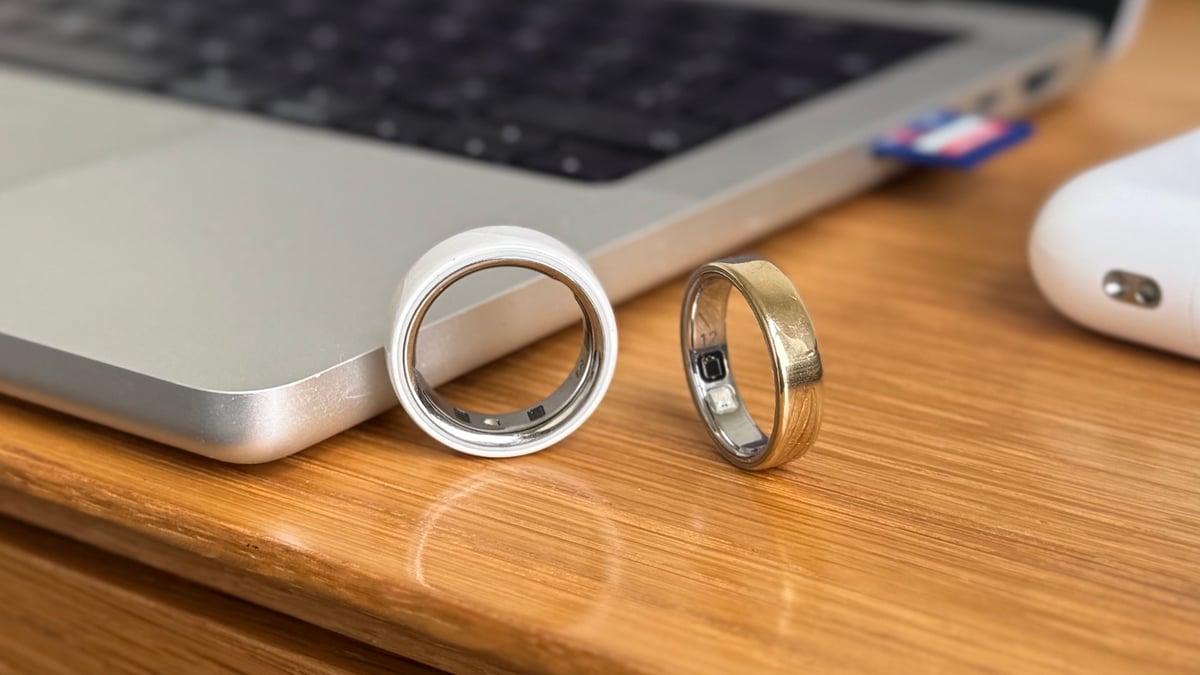
Even though it's a dramatic difference on the spec sheet, it can be tough to get a sense of those sizes and their real-world impacts from just reading about them or seeing static images. So, take it from someone who has had over a dozen smart rings in the last few years—and the Ring 4 since launch—the difference between the two is immediately noticeable.
Balancing the scales
It's also compounded by a weight reduction. While the Ring 4 sat on the finger at 3.3-5.2g (depending on your ring size), the new generation is comparatively featherlight, weighing 2-2.69g. It feels much more like a 'normal' piece of jewelry than the Ring 4 ever did, and more like a standard wedding band.
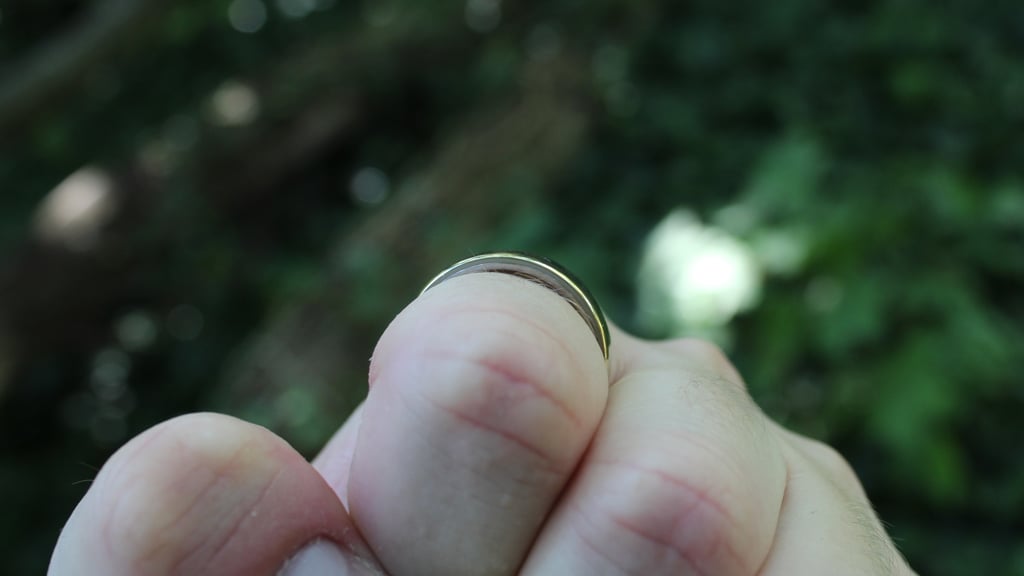
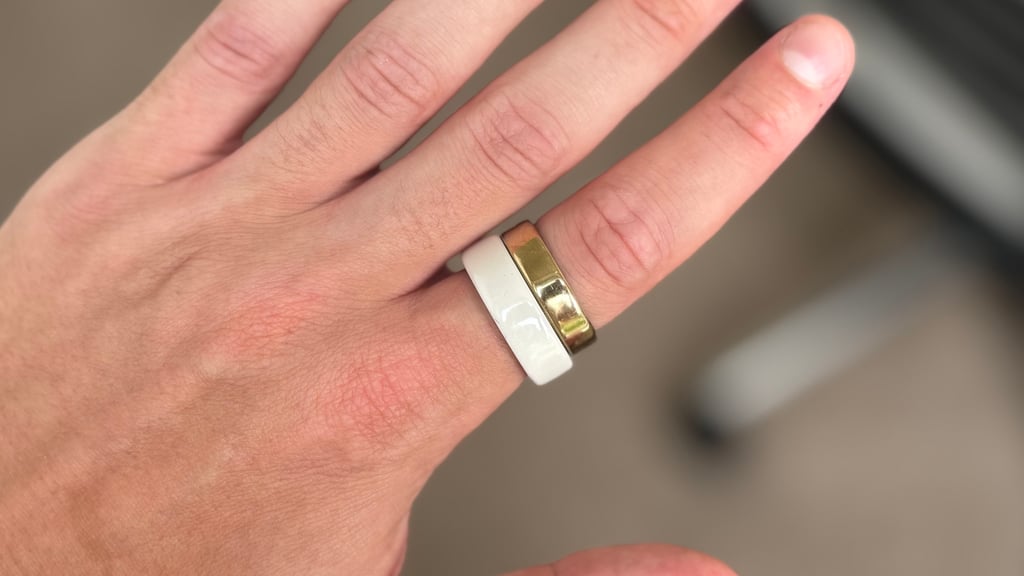
In our two months of daily wear, this weight and profile reduction completely transformed the experience. When you close your hand into a tight fist (as shown above), carry heavy grocery bags, or press your palm flat against a desk, the Ring 5 sits completely naturally. It eliminates that annoying, pinchy lateral bulk that routinely pressed against adjacent fingers on the Ring 4.
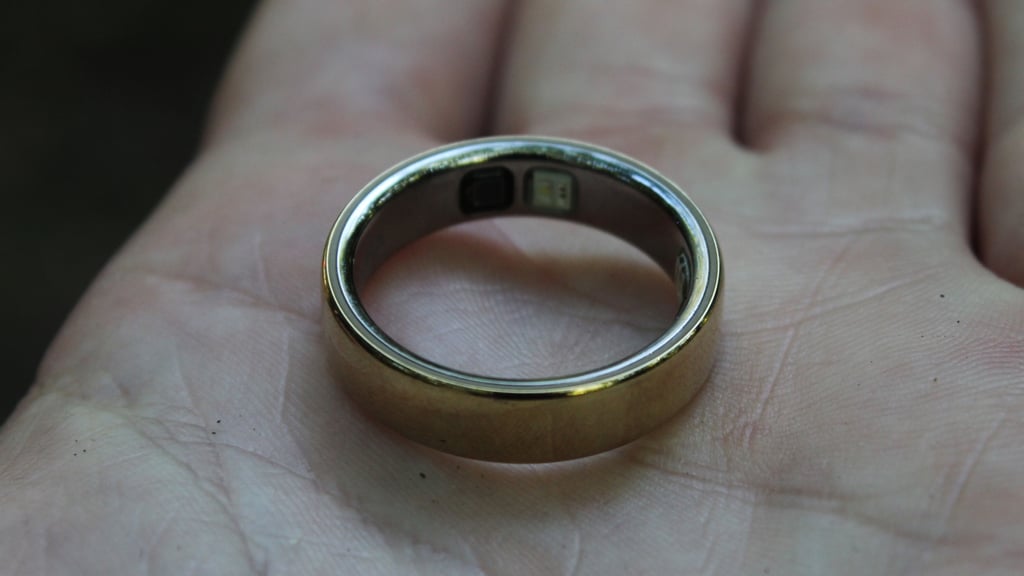
However, the overall comfort inside remains much the same on first wear, even though the sensor bumps that were eliminated for the Ring 4 have returned in this latest generation—albeit much less prominent than those in the Ring 3's design.
Our testing confirmed that these reintroduced micro-domes serve a brilliant secondary purpose: stabilization. Unlike the smooth interior of the Ring 4, which had a frustrating tendency to spin freely throughout the day, the subtle bumps on the Ring 5 keep the ring securely locked in place on the finger without leaving deep indents on your skin.
Scratch resistance, finishes, and ring sizes
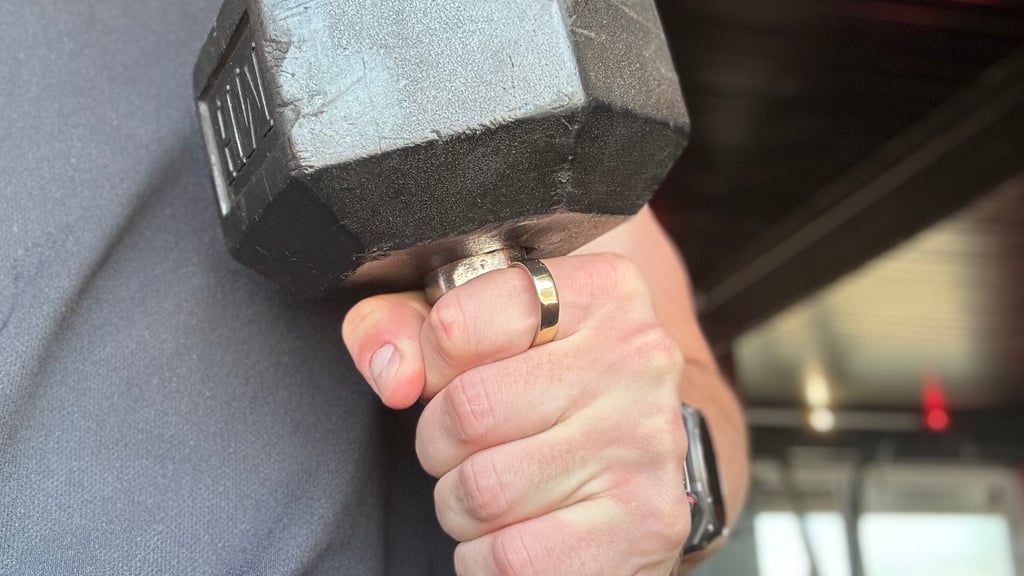
Oura actually delivered a very notable update in this area late last year with the Ceramic Edition of the Ring 4, finally giving users a more durable, scratch-resistant exterior.
In long-term testing of the standard brushed titanium Ring 4, we accumulated a web of micro-scratches over time.
With the Ring 5, Oura introduced an upgraded protective PVC coating over the titanium hull. After eight weeks of continuous wear—showering, running, cycling, and doing daily chores—our test unit picked up only a couple of tiny micro-dings visible under direct light. While it still can't match the scratch-immunity of the Ring 4 Ceramic, it holds up noticeably better than the standard Ring 4.
Whichever you choose, we still issue a warning against wearing either generation during gym sessions: knurled steel barbells will easily scratch the titanium exterior, and the hazard of ring avulsion remains a safety concern for any metal ring during heavy lifting.
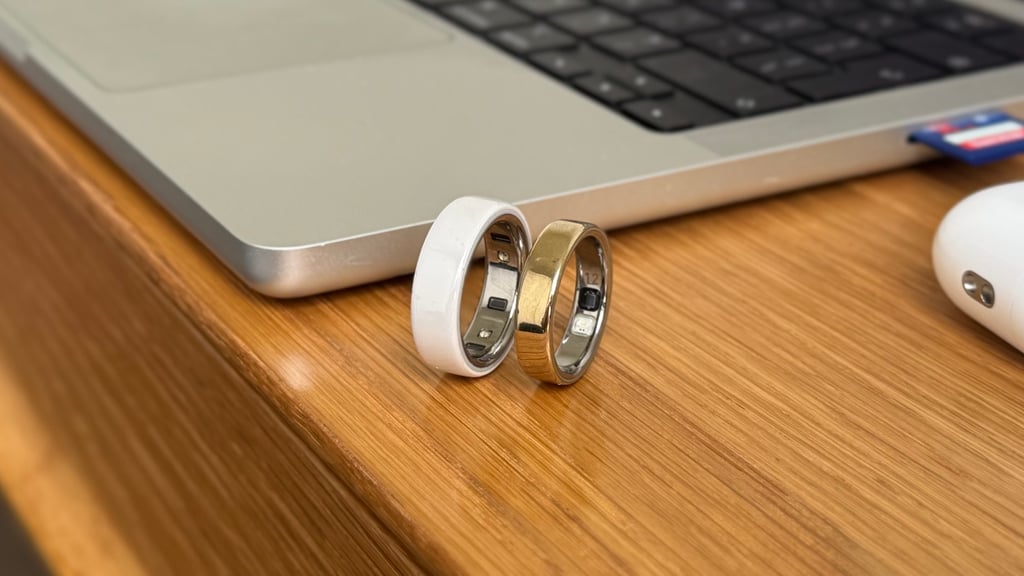
The finishes are also largely comparable between these two generations, but Oura has slightly refreshed the palette for Ring 5: the standard 'Gold' finish has been toned down to a lighter, more modern hue, and a more copper-toned 'Deep Rose' finish replaces the older Rose Gold option.
This is a subjective area, naturally, but we do think the gold finish is dramatically improved for the Ring 5. Gold smart rings, generally speaking, have had a tendency to lean toward the tackier side of the gold spectrum, but the Ring 5's tweaked offering looks like genuine, high-end jewelry gold—rich, warm, and distinctly premium.
The only catch here is that Oura has tightened the Ring 5's availability back to sizes 6–13, missing the size 4-5 and 14-15 options found on the Ring 4 line. That may change in the future, given that the Ring 4 also debuted without those same size extremes, though.
Pricing and subscriptions
Oura has never been a budget-friendly smart ring option, and the fifth-generation hardware firmly cements its status as a premium purchase.
- Oura Ring 4: Originally started at $349 for standard core finishes (Silver and Black) and climbed to $499 for premium variants
- Oura Ring 5: Sets a new baseline at $399 for Silver and Black, while more premium finishes—including Gold, Stealth, Brushed Silver, and the new Deep Rose—demand $499
This baseline jump represents a $50 / £50 price increase for entry-level finishes over the Ring 4. Crucially, Oura has also omitted any trade-in program or loyalty discount for existing Ring 4 owners—a major point of friction for dedicated users looking to upgrade.
As with the Oura Ring 4 Charging Case, the sold-separately accessory remains $99 for the tweaked version that arrives alongside the new generation. Check out the sections below for more on that.
And, of course, without ignoring the obvious here, the $5.99/month subscription model remains mandatory to gain insights, no matter which ring generation you own. While subscription-free rivals like the Samsung Galaxy Ring exist, Oura’s recurring fee directly funds ongoing R&D—as evidenced by recent rollouts such as GLP-1 insights, perimenopause tracking, and third-party blood panel uploads.
Tracking and sensors
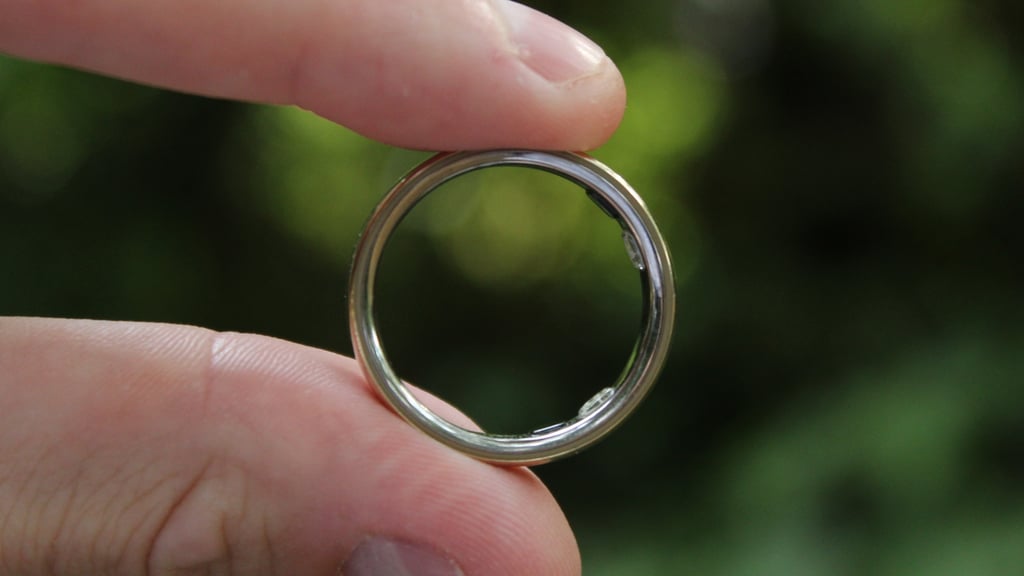
The internal sensor layout marks an intriguing shift for Oura. When the Oura Ring 4 launched, as we mentioned earlier, its big selling point was the 'Smart Sensing' platform that introduced an array of 18 signal pathways.
The idea here was that the architecture ensured a clean signal would always be available, even if the ring spun around your finger during the likes of exercise or sleep tracking.
The Ring 5 takes a more refined, targeted approach. It reduces the total number of signal pathways from 18 down to 12. While a lower number may look like a downgrade on a spec sheet, Oura claims the new arrangement is actually more precise and engineered with brighter LEDs for greater biometric accuracy across a wider range of skin tones.
The Ring 5 abandons the Ring 4's completely flat interior and instead reintroduces precision-engineered, low-profile sensor domes. These subtle interior nodes optimize physical contact with the skin, but on first wear, they feel completely unnoticeable compared to those on the Oura Ring 3.
In our two months of real-world testing, the Ring 5 preserved Oura's gold-standard accuracy across the board.
As we detailed in our full review, it performed as expected when tested against the Eight Sleep Pod 5, mapping sleep and wake boundaries within minutes of the gold standard smart mattress cover. Overnight heart rate and HRV charts were smooth and uninterrupted, proving that shifting to 12 pathways alongside physical skin domes lost zero fidelity compared to the Ring 4.
Software features
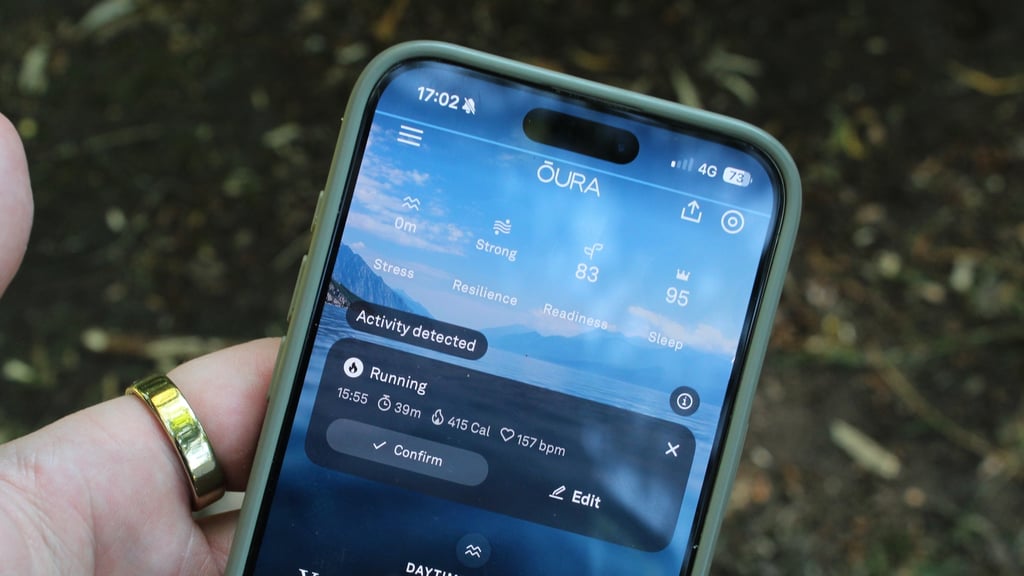
In terms of core health features, the two generations operate within the exact same software ecosystem. Both tap into Oura's excellent structural pillars: Today, Vitals, and My Health, covering Readiness, Sleep, Activity, and Stress.
Where the Ring 5 attempts to pull ahead is in basic data fidelity while in motion. We still rate any Oura device as a great way to get a basic insight into your passive workouts, like walking commutes or maybe the occasional run if it's your only wearable, but the nature of the form factor ensures that workout tracking remains a key weak point compared to wrist-worn devices.
It's not necessarily an issue of poor accuracy, since the Ring 5 performed relatively well in our steady-state cardio tests. Mostly, it's just that smart rings aren't a good fit for workouts with equipment—and, like most devices, the latency compared to a chest strap is a big factor if you're trying to use the live activities function during interval training.
Where both rings excel is in holistic health tracking: Stress Resilience, Cardiovascular Age, and passive diagnostic tools like Symptom Radar—which successfully flagged oncoming colds 24 hours before physical symptoms appeared in our testing.
The only exclusive software perk hardware-wise for the Ring 5 is the new Bluetooth 'Locate' feature to track down a misplaced ring in the app, alongside support for multi-ring pairing so you can switch between a Ring 4 and Ring 5 on a single account.
Battery and charging
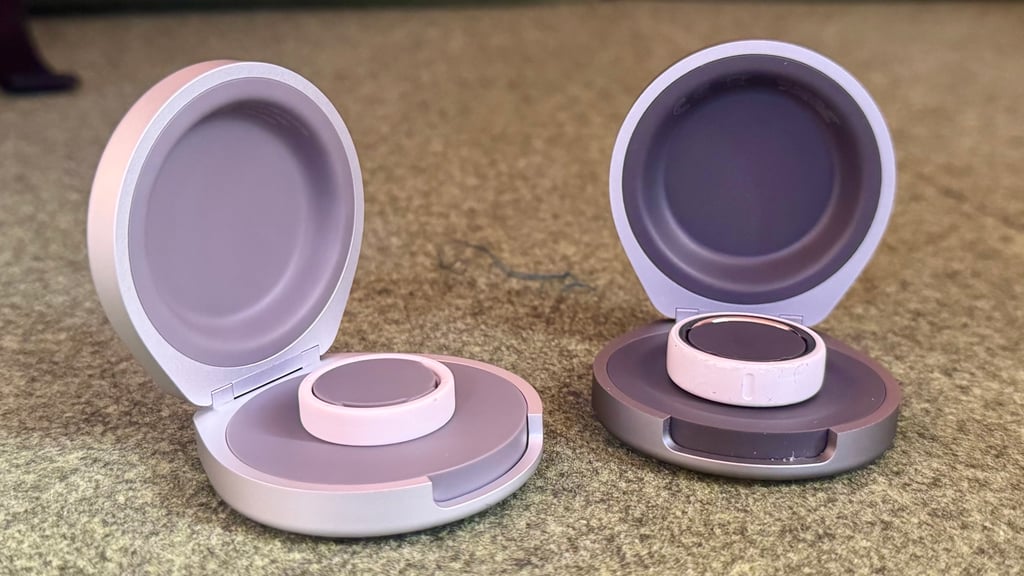
While the Oura Ring 4 was able to stay largely true to the eight-day battery estimate, real-world tracking with features like blood oxygen monitoring active reduced that down to around 5-6 days. And until the Charging Case arrived in late 2025, the Ring 4 relied on a static charging mount, making it easy to leave behind or run out of charge while traveling.
The Oura Ring 5 achieves a major technical victory in this area, though—at least on paper.
Despite its 40% smaller internal volume, it delivered outstanding real-world battery endurance in our two months of testing. With SpO2 blood-oxygen sensing enabled, the Ring 5 comfortably lasts six full days. Disabling SpO2 stretches battery performance to over a week—matching the Ring 4 despite its much slimmer profile.
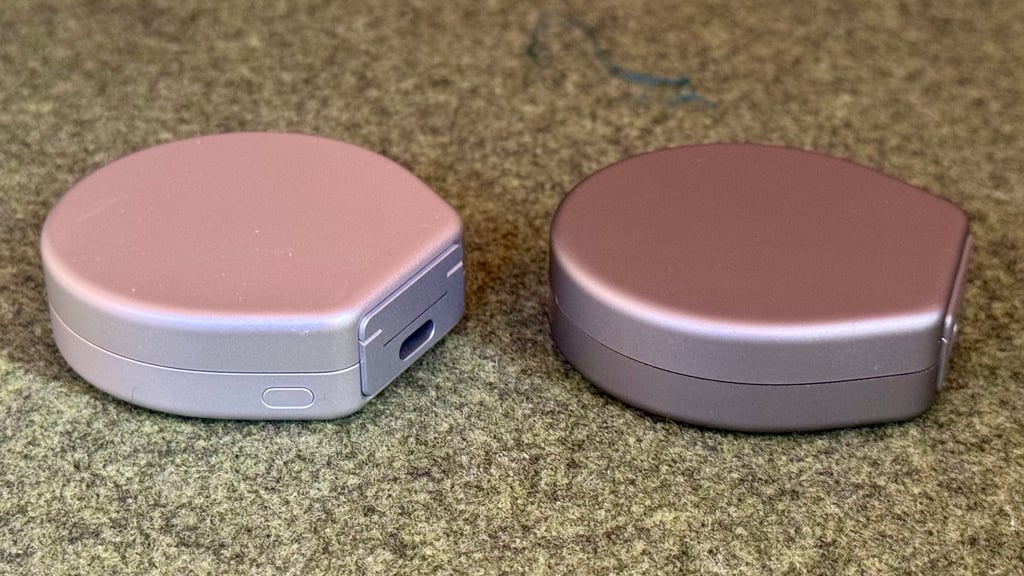
Oura has introduced a slightly tweaked version of the pocket-sized Charging Case for the Ring 5. This case acts just like an earbud case, holding enough juice to completely recharge the Ring 5 five times over (providing up to 60 days of travel backup power).
Compared to the Ring 4 equivalent, it now also includes an integrated quick-action button for seamless Bluetooth pairing or reset, and additional LED colors to indicate the power levels of both the case and the ring.
Verdict: A huge leap forward
After a good chunk of continuous testing, our verdict is clear: The Oura Ring 5 doesn't rewrite the software playbook, but it didn't need to. Instead, it represents the exact physical evolution the brand desperately needed.
By slashing the width down to 6.09mm and the thickness down to 2.28mm, it effectively neutralizes the aesthetic and comfort advantages previously held by competitors like Samsung and Ringconn. The subtle sensor bumps fix the Ring 4's tendency to spin on the finger, while the upgraded PVD finish offers noticeably better day-to-day scratch resistance.
However, because both generations share the exact same app metrics, software updates, and subscription requirements, if you already own a Ring 4 and aren't bothered by its slightly chunkier profile, upgrading to the Ring 5 is a luxury rather than a necessity—especially given the $50 baseline price increase and the lack of a legacy trade-in program.
For new buyers deciding between the two, or anyone upgrading from a Ring 3, the Ring 5 is the definitive smart ring experience and—arguably—the finest piece of wearable tech on the market today.