- Simple, non-invasive design that’s easy to use daily
- App-guided sessions make it accessible for beginners
- Noticeably calming during and immediately after sessions (in my testing)
- Portable and easy to fit into short breaks or routines
- Effects can feel subtle and build slowly over time
- Requires consistency to feel worthwhile
- The price may be hard to justify if you don’t use it regularly
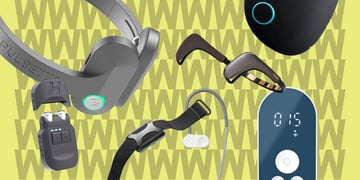
As vagus nerve stimulation is trending, more devices are promising calmer minds, better resilience, and improved recovery without medication. At the same time, there’s growing interest in stress-management wearables more broadly, as people look for practical ways to manage daily pressure beyond meditation apps or basic breathing exercises. Still, there’s understandable skepticism, as wellness tech often makes big claims that don’t always translate into real-world results.
| Product | ZenoWell Luna |
| Price | From $300 to $409, depending on the retailer and promotion |
| Rating | 4/5 |
| Verdict | Comfortable and easy to use, but best fit for gradual relaxation rather than instant results |
| Specs | App-guided vagus nerve stimulation, neck-worn design, guided relaxation sessions, adjustable intensity, stress- and sleep-focused programs |
ZenoWell stands out by focusing on auricular vagus nerve stimulation in a compact, app-connected format that’s designed for daily use. I’ve tested wellness wearables before, but vagus nerve stimulation felt harder to evaluate than sleep trackers or smartwatches.
Over several weeks, I used ZenoWell Luna in short daily sessions, usually during work breaks or in the evening, to see whether it could realistically become part of a routine. Most importantly, I wanted to see if the calming effects felt genuinely noticeable or more placebo-driven.
ZenoWell and VNS: How it works
ZenoWell Luna uses transcutaneous auricular vagus nerve stimulation, or taVNS. It sends electrical stimulation through the skin to the auricular branch of the vagus nerve rather than using an implanted medical device. This is important because medical-grade VNS is typically implanted under the skin and used for conditions such as epilepsy, while ZenoWell is positioned as a wellness device for at-home use.
In practice, the company says it targets the vagus nerve through the ear and neck area to support relaxation, stress reduction, sleep, and focus, but those are wellness claims rather than guaranteed clinical outcomes. What’s clear is that the key point here is consistency: this kind of device is usually framed as something you use regularly, not once and expect immediate effects.
Is VNS proven?
Vagus nerve stimulation is a real medical technique, but the strength of evidence largely depends on the device and the use case. Clinical VNS has established uses, while wellness-focused at-home devices have a less certain evidence base and tend to show subtler, more variable results.
Can it help with sleep or anxiety?
It may help some people feel calmer or unwind more easily, and some studies on taVNS suggest possible benefits for sleep and anxiety over time. But I’d treat those as possible effects rather than promises, especially with a consumer device.
ZenoWell pricing, policy, and value
Although ZenoWell Luna is priced at $409 on the official website, you can sometimes find it anywhere between $300 and $350 with retailers like Walmart and online stores like eBay.
ZenoWell’s site describes a 30-day refund window if you use the device daily and aren’t happy, though return shipping costs are on you, and the refund period effectively ends 37 days after purchase. ZenoWell also says cancellations are only possible before shipping, and the return policy requires the product and all original accessories to be sent back in original packaging.
I couldn’t find a clear subscription requirement in the sources I checked, so the strongest read is that the device itself is a one-time purchase, but I’d still confirm app access at checkout because some wellness devices split features between free and paid tiers.
Shipping availability is less transparent on ZenoWell’s pages than on some rivals’, so that’s another point worth checking before you buy. In the box, you should expect the device and core accessories covered by the return rules, but the exact bundle is not fully spelled out in the sources I found.
How it stacks up
Compared with Pulsetto, ZenoWell looks more expensive, since Pulsetto is listed at around $270 to $300, but it can add premium app costs. Apollo Neuro costs $349, with optional subscription tiers available (such as SmartVibes AI or Apollo Sessions). Sensate is $269 or $279 with the Plus subscription for better app content. Nurosym is the priciest of the group at about £599 or €699, which translates to at least $800. With that in mind, it also positions itself as a more clinically backed option.
My take is that ZenoWell is not obviously overpriced if you want a simpler wellness device, but it’s harder to justify if you only want stress relief that meditation apps or cheaper breathing tools could approximate.
ZenoWell Luna design: Lightweight and easy to live with
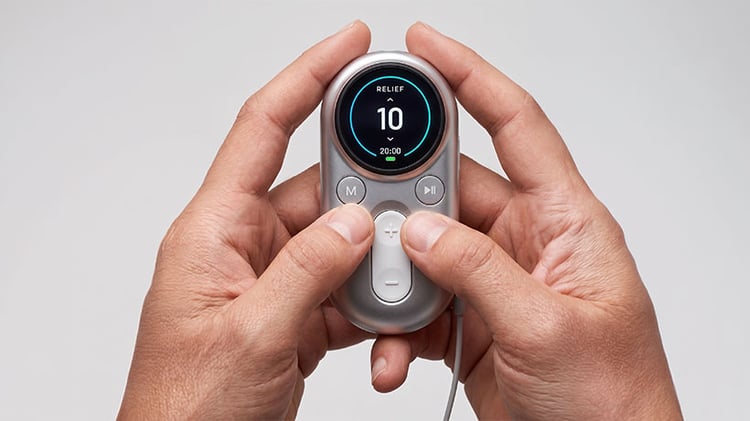
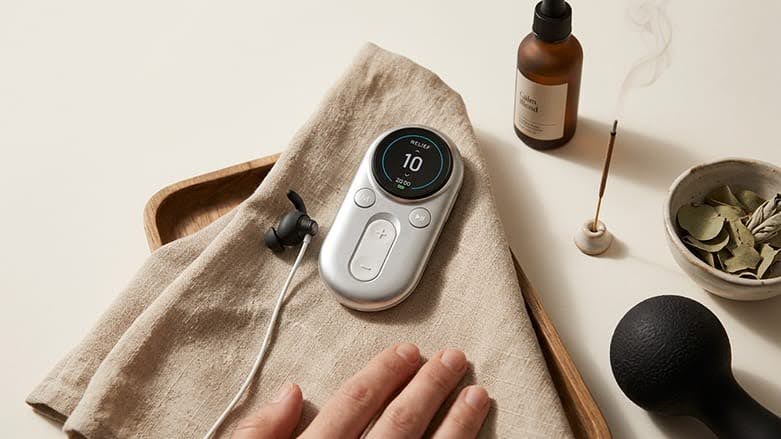
I found ZenoWell Luna more consumer-friendly than clinical from the unboxing onward, with packaging that feels neat, premium, and focused on everyday use rather than medical seriousness. The build quality feels solid, the materials have a smooth, well-finished look, and the overall shape is compact enough that it doesn’t feel bulky in the hand or awkward to carry.
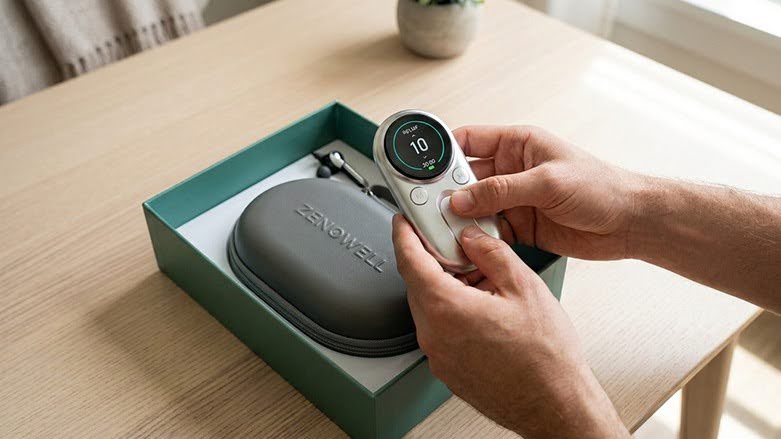
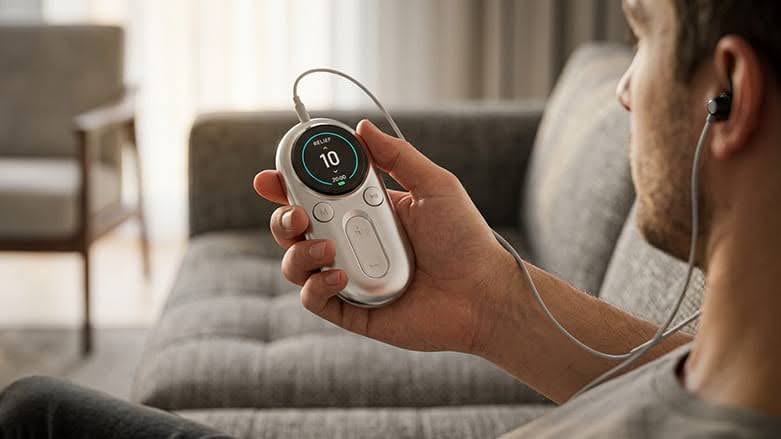
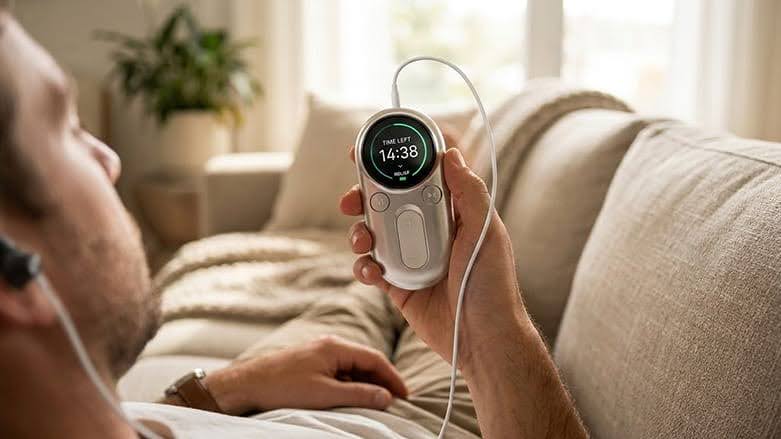
In use, the neck-and-ear placement takes a minute to adjust, but once it sits correctly, it feels secure enough for short sessions without constantly drawing your attention. I could see this being comfortable while working, especially if you’re sitting still, though it’s not the kind of device you forget about completely.
The intensity controls are easy to understand, which helps because finding the right level matters even more than the product’s marketing suggests. It’s also travel-friendly, and storage is simple since there aren’t many parts to manage. Cleaning is also straightforward, which makes it easier to keep in rotation.
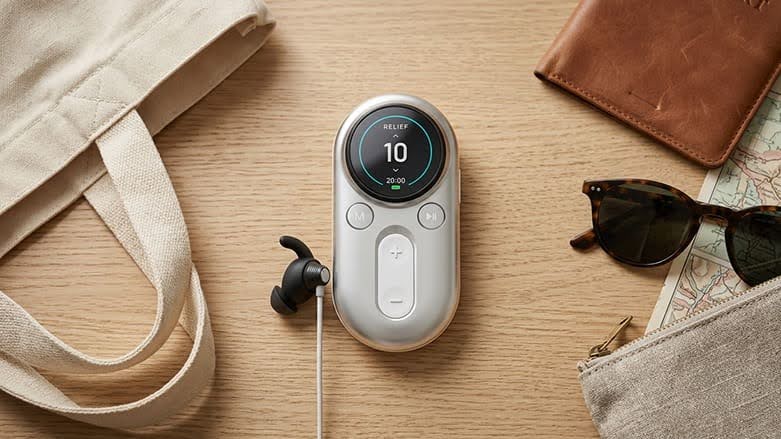
ZenoWell Luna app in everyday use
ZenoWell Luna feels less like a full-featured wellness app and more like a straightforward routine gadget, which I think is the right approach for a tool like this. Setup is simple enough once you’ve learned the basics, and I found the learning curve mostly comes from figuring out the right placement and intensity, not from the interface itself.
The session categories help the device feel more purposeful because you’re not just pressing start and hoping for the best but choosing a use case that fits your mood or goal.
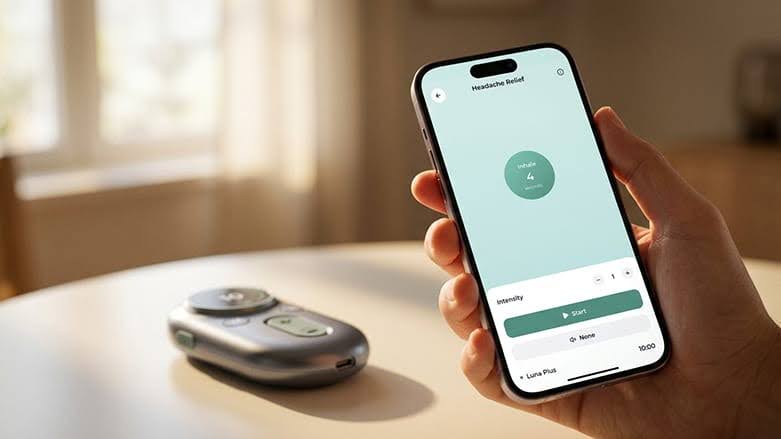
In that sense, it reminds me a little of a meditation app, except the experience is shorter, more physical, and easier to repeat day after day. I’d say the guided sessions are useful because they reduce guesswork, but the app experience only works if you like it enough to keep you coming back.
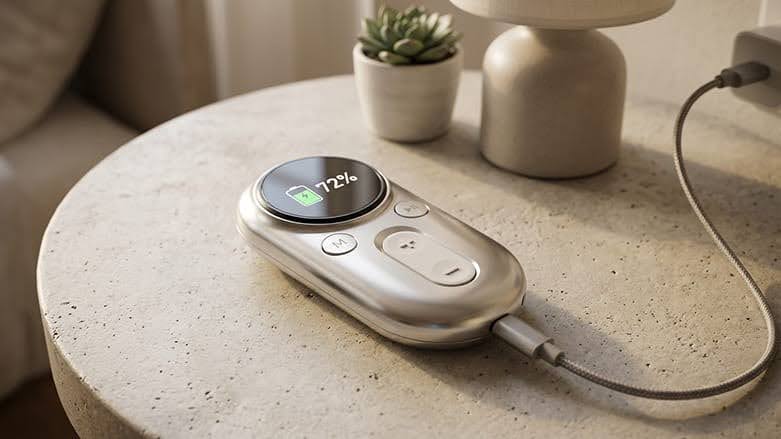
Charging is easy to manage, battery life is set up for regular use, and reminder prompts can help turn sessions into a habit. If you want a device you can build into daily life without much friction, ZenoWell can be a good choice.
ZenoWell over weeks of use
Week 1–2: Getting used to it
In the first week or two, I’d say my reaction was cautious curiosity. ZenoWell did feel a little strange at first around the neck-and-ear placement, and I had to spend some time adjusting the fit before it felt natural.
That initial sensation was noticeable, but not unpleasant once I found the right position and kept the intensity low enough to stay comfortable. I was skeptical about whether I’d feel anything meaningful beyond a brief sense of novelty, but the sessions did make it easier to switch off for a few minutes.
Then I noticed how simple the habit became once I attached it to an existing routine, like the end of a workday or a quiet evening break. I wouldn’t describe those first sessions as transformational, but they were relaxing in a subtle, immediate way that made me more willing to keep using the device. The comfort level was good enough for repeated use, although I still had to stay mindful of placement at the start.
Week 3–4: Settling into a rhythm
By weeks three and four, ZenoWell felt less like something I was testing and more like part of a stress-support routine. I noticed the sessions were easiest to stick with when I used them consistently rather than sporadically.
In terms of stress, the effects felt more like a gradual smoothing-out of tension than a sudden drop in pressure, which is probably why the experience felt believable to me rather than placebo-driven.
My sleep did not change overnight, but I found the evening sessions helped create a calmer wind-down period. Mood and focus changes were more subtle, though I did feel a little clearer on days when I used it before a mentally busy stretch.
The main frustration was that results were not perfectly consistent, which made it harder to judge the device on any single session. Shorter sessions often felt just as useful as longer ones, especially when I wanted a quick reset.
Week 5–8: Did it hold up?
By the final stretch, the biggest question was whether ZenoWell still felt worth the effort. I think it was, but mostly for people who value a calm routine more than a measurable result. The benefits did seem to level off, in the sense that I stopped expecting each session to feel noticeably different.
That said, the more effective modes for me were the ones that encouraged a slower, quieter reset rather than the most intense settings. I also found that the device made the most sense when used as part of stress recovery, not as a standalone solution. I would keep using it if my goal were regular relaxation support, but I wouldn’t buy it expecting obvious, measurable changes every time.
ZenoWell review: My take after testing
In my testing, ZenoWell did not feel like a miracle device, but it also didn’t feel meaningless. The results broadly matched my expectations that the strongest effect was a short-term sense of calm rather than any dramatic change in stress or sleep. Again, the most noticeable benefit was how quickly it could help me settle down at the end of the day, especially when I used it consistently and paired it with a quiet routine.
I found that the relaxation felt real in the moment, though the broader claims around anxiety, sleep support, and long-term nervous system benefits seemed harder to verify. That’s where I’d stay cautious, because wellness-focused vagus nerve stimulation devices still sit in a gray area between promising and proven.
Here are a few takeaways from my ZenoWell testing:
- Consistency mattered a lot; when I used it regularly, the experience felt more useful and easier to judge
- Individual results will vary, and some people may feel a stronger effect than others
- Short sessions could still be worthwhile, but the calming effect was easier to notice when I used the device as part of a routine
- I’d be careful about calling it a placebo, because the experience can feel genuinely soothing even if the science is still evolving
My overall view is that ZenoWell may work best as a practical relaxation aid rather than a guaranteed wellness solution. If you expect subtle support and are willing to give it time, it has a credible place in a stress-support routine.
ZenoWell safety: What to know before you try it
In my view, ZenoWell should be treated like any stimulation-based wellness device: start low, pay attention to how your body reacts, and don’t push through discomfort. The most common sensations are likely to be tingling or mild stimulation around the neck and ear area. Those may feel fine for some people, but distracting for others.
Some skin irritation is also possible if the fit is off or if you use it for too long without a break. I’d also watch for headaches, soreness, or a sense of discomfort, which are signs to reduce the intensity or stop the session.
For safety, I’d recommend beginning at the lowest setting and increasing only if the sensation stays gentle and controlled. Because the device stimulates the neck area, placement matters. It should feel secure, not tight, and never painful.
Watch out for the following:
- Avoid use if you are pregnant unless a clinician has said it’s appropriate
- Be cautious if you have heart conditions, a pacemaker, or any implanted device
- Speak with a clinician first if you have a neurological condition
- Use extra caution if you’re sensitive to stimulation or prone to headaches
- Stop if the sensation feels sharp, lingering, or unusually uncomfortable
Comparing ZenoWell to alternatives
ZenoWell vs. Pulsetto
ZenoWell feels more comfortable and less advanced, while Pulsetto is the better pick if you want stronger, more obvious neck stimulation. ZenoWell is easier to live with day to day, thanks to its simpler feel and more approachable session setup, but Pulsetto may suit you better if you want a more intense experience.
ZenoWell vs. Apollo Neuro
Apollo Neuro is more of a passive wearable, so it works quietly in the background. ZenoWell is more active and session-based, which makes it better if you want a clear relaxation routine rather than all-day wear. Apollo is easier to forget about, whereas ZenoWell is more deliberate and focused.
ZenoWell vs. Sensate
Sensate uses vibration and sound, so it feels gentler and more meditation-led. ZenoWell is more direct, with electrical stimulation that some people may find more effective for a quick reset. Sensate is easier for beginners, while ZenoWell may appeal more if you want something that feels like targeted nerve stimulation.
ZenoWell vs. Nurosym
Nurosym has a stronger scientific positioning in the wearable market. ZenoWell is less intense and usually more consumer-friendly, which may make it easier to use regularly. If credibility matters most, Nurosym has the edge. If you’re after comfort and simplicity, ZenoWell is the easier daily pick.
Other vagus nerve stimulation devices reviews:
Sensate review: See if this wellness device actually relieves stress
Pulsetto review: Can this sleek vagus nerve wearable calm stress fast?
ZenoWell vagus nerve stimulator: My verdict
After weeks of use, ZenoWell broadly matched my expectations. This vagus nerve stimulation device felt most valuable as a steady stress-support tool, not a dramatic one-off solution.
I’d recommend it for you if you want a guided relaxation routine and you’re willing to use it consistently as a ritual, because that’s when it makes the most sense and the price becomes easier to justify. I’d skip it if you want instant, obvious results or a device that feels more like a guaranteed aid for sleep or stress. My main takeaway is that ZenoWell can earn its place, but mainly for patient users who see value in subtle, repeatable benefits rather than fast, clinically-backed transformation.
-
University of Florida Health.
-
University of Texas at Dallas.
-
JAMA Network Open.
-
Frontiers in Neuroscience.