- Consistent measurements
- Battery lasts over a year
- Two color options
- Bonus features (weather, electrodermal activity)
- Older model can’t compete with advanced alternatives
- Mid-range pricing
- Withings App struggles with bugs and syncing issues
Body composition tracking has been having its moment in recent years. Whether it’s the wellness trend or actual interest in fitness, more people are picking up smart scales to monitor their body beyond just a single number on the display.
Withings has a whole lineup of smart scales, and the Body Comp recently landed in my hands for three weeks of testing. I’m skeptical about how obsessive the fitness industry gets with weight and metrics—but I also get it. If you’re serious about building strength or are on a wellness journey, knowing your body composition matters. However, how accurate can this information be from a smart scale rather than a medical device?
In this Withings Body Comp review, I share what I found: how it performs day-to-day, why I question its accuracy, what app issues are worth knowing about, and how it compares against other 2026 competitors.
| Product | Withings Body Comp |
| Price | $229.95 |
| Dimensions | 12.8 x 12.8 x 1.1 in |
| Connectivity | Wi-Fi (802.11 b/g/n) and Bluetooth 5.2 |
| Supported apps | Withings App, Apple Health, Google Fit, and more |
| Battery life | Up to 15 months |
| Max users | Up to 8 |
| Metrics tracked |
|
| Verdict | Best for beginner wellness enthusiasts |
Value: Is it still worth the money?
Value: Is it still worth the money?
Let’s start this Withings Body Comp review with its pricing. The scale has been around for a few years now, and its price sits steady at $229.95. What makes that number less painful is the benefits you get: a 1-month subscription of Withings+, 30-day money-back guarantee, and 2-year warranty that covers defects.
Although my opinion about it isn’t the best, plenty of reviews praise the Body Comp as a solid and reliable long-term wellness tool worth the investment.
- Read our picks of the best smart scales in 2026
Do you actually need Withings+?
Withings+ costs $99.50 a year or $9.95 per month. The good news is that you can absolutely skip it and still track your body metrics without paying for the subscription.
Still, the paid version has some noteworthy features that may add to the experience. For example, Habit Builder is a 6-week guided program that might help you adjust your nutrition, sleep, and activity based on your actual data. You also unlock various workout videos, daily missions, AI-powered health summaries, and quarterly video calls with wellness specialists.
If you’re just starting out, you probably won’t miss these extras. But as you get deeper into tracking, they might be nice to have.
Living with the Body Comp
What I appreciated right away about Withings Body Comp is that there isn’t a right answer to how often you need to use it. Though daily weighing is often recommended if you’re actively tracking weight loss or muscle growth, frequency depends on your goals, schedule, and how you’re feeling that day.
Why bring mental health into this? Well, overall daily weighing isn’t considered damaging, and recent research suggests it may lead to a more effective behavior change and weight loss. But if tracking starts messing with your self-worth, skip the scale and talk to someone. Your mental well-being matters more than numbers on the scale.
There are a lot of studies that show that frequent weight monitoring may harm your mental health, especially if you had prior issues with body image and anxiety about weight.
Design and my first impression
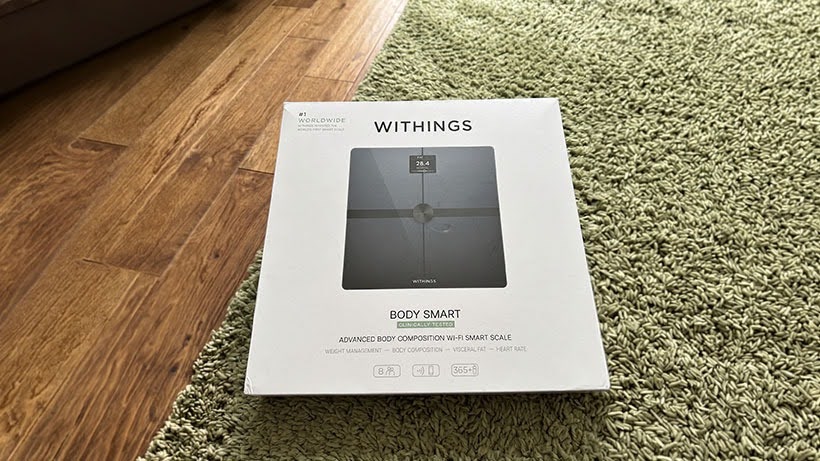
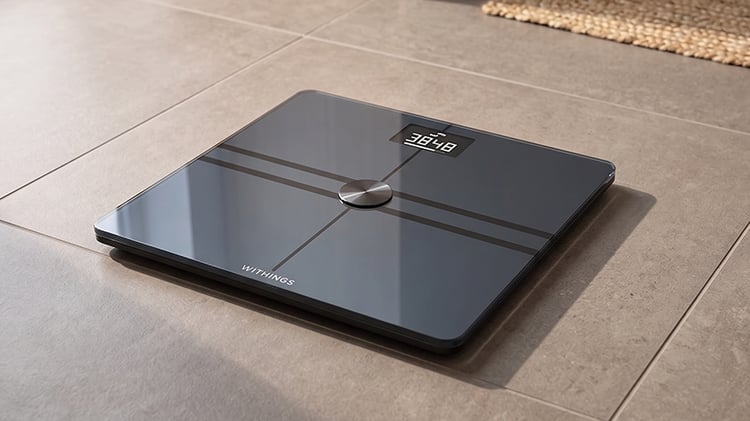
The Body Comp design is simple—a lightweight square with a tempered glass platform and color screen, available in white or black. Nothing too fancy visually, which made me wonder why it lacks a handle you see on pricier body composition scales.
Spec-wise, the brand claims Body Comp has four electrodes embedded in the glass plate, supports a weight range of 9–440 lbs with 0.1 lb precision, and the four AAA batteries last around 15 months.
It’s a no-frills design that looks like any other modern scale. Just one practical piece of advice—it’s a dust magnet, so keep it stored somewhere when not in use.
Syncing with the Withings App
Withings App is free for both iOS and Android users, covering basics like activity, sleep, weight, and progress tracking. The interface is clean, but I consistently had syncing issues.
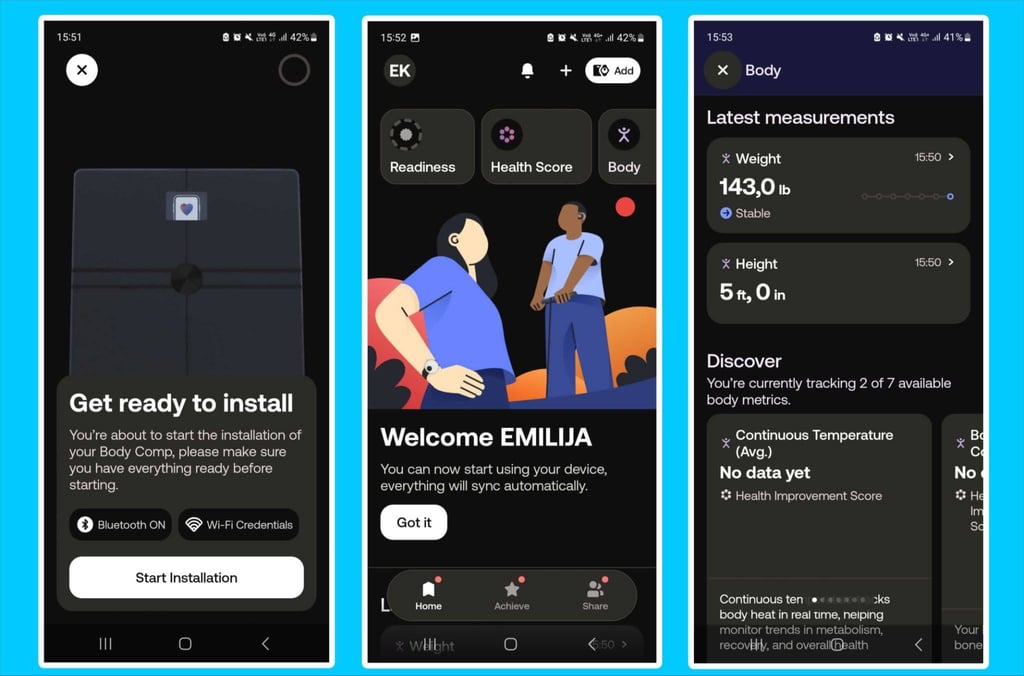
To set it up, open the Withings App, tap ‘Devices’, select ‘Add’, and then follow the on-screen prompts to complete the installation. It’s quick enough—except app updates have made it increasingly buggy. The scale keeps disconnecting, or measurements don’t upload, so troubleshooting keeps eating up your time.
That said, it’s just software, and these issues could be fixed with future updates. That’s why I don’t recommend completely writing the Body Comp off just because of its app.
Accuracy and health tracking performance
Let’s be honest—Withings Body Comp excels at just one thing. It’s a great scale for weight, but a mediocre body composition device.
Weight is where the Body Comp performs best. In my testing, weight readings were accurate and consistent, matching up well with other body composition scales we tested at Wareable. So, if all you care about is tracking your weight trends over time, the scale delivers.
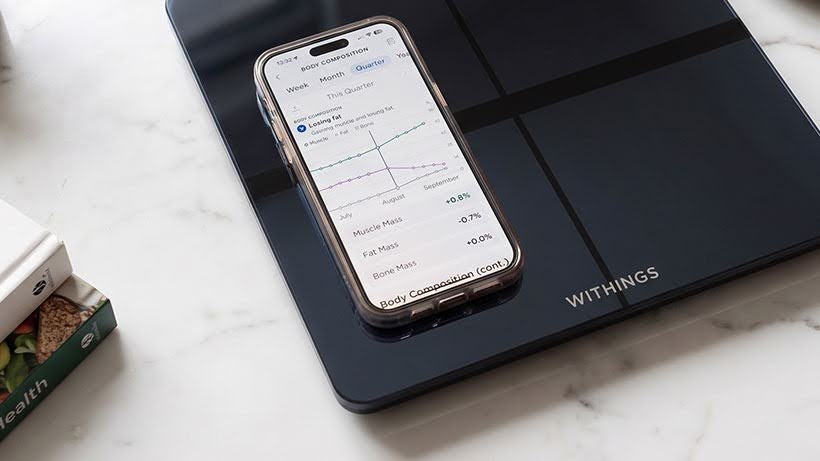
Here’s what surprised me, though—while individual body composition readings feel unreliable, the Body Comp does consistently track whether you’re gaining or losing fat and muscle. So, I’d recommend not trusting numbers on a single reading, but you can track trends to see your changes and recognize patterns.
Limitations: Which metrics I think are way off
Although I didn’t have access to a clinical DEXA scan, I could compare the Body Comp directly with other body composition scales during testing. Trust me, the differences were obvious: body fat percentage, muscle mass, and hydration readings varied significantly from other scales.
While the Body Comp’s numbers were consistent, they seemed systematically off compared to devices with more advanced measurement technology. The reason may be as simple as a low number of electrodes—scales with 8 electrodes or more, provide segmental readings that are likely more accurate and detailed.
Withings itself warns against overstating what the extra features do. Vascular Age, available on both Body Comp and Body Scan, measures your arteries’ stiffness relative to other Withings users in your age range. But the brand explicitly states that these measurements may be unreliable and shouldn’t be viewed as diagnostic data.
The same goes for Electrodermal Activity Score (known as Nerve Health Score in the EU) and other extra metrics. They’re interesting additions, but aren’t actual medical insights.
Skip or buy?
If you’re seriously optimizing your training and want actionable muscle mass data, the Body Comp isn’t for you. Except for total weight, the numbers aren’t reliable enough.
But, if your expectations align with what the Body Comp actually does—reliable weight tracking and rough body composition trends—it’s worth considering. It may help you understand your body better: am I gaining muscle or fat? Sometimes exact numbers aren’t needed to make meaningful changes.
What makes Withings Body Comp different?
Before making a final decision, you might want to get to know your other options. Here’s how the Body Comp compares to three popular alternatives:
| Specs | Withings Body Comp | Withings Body Scan | Hume Health Body Pod | InBody Dial H30 |
| Price | $229.95 | $499.95 | $199.00 | $379.00 |
| Online rating | 4.3/5 | 4.1/5 | 4.6/5 | 4.5/5 |
| Battery life | Up to 15 months (4x AAA batteries) | Up to 1 year (rechargeable) | Up to 1 year (rechargeable) | Up to 9 months (4x AA batteries) |
| Electrode count | 4 (feet only) | 8 (feet and handle) | 8 (feet and handle) | 8 (feet and handle) |
| Metrics tracked | 10+ (body fat, muscle, water, visceral fat, and more) | 40+ (segmental composition, 6-lead ECG, and more) | 45+ (body fat, segmental composition, and more) | 12+ (soft lean mass, water, body fat, and more) |
| Max users | Up to 8 | Up to 8 | Up to 24 | Up to 20 |
| Best for | Beginners wanting basic body composition tracking | Advanced users wanting a more precise body analysis | Enthusiasts wanting detailed and longevity-focused metrics | Fitness-focused users who value precision |
| Official website | Check out Body Comp | Check out Body Scan | Check out Hume Pod | Check out InBody Dial H30 |
Other body composition scale reviews
- Best smart scales for Apple Health
- Best smart scales for Samsung Health
- GE Smart Scale vs. Hume Body Pod
- Hume Health Body Pod review
Verdict: Should you buy the Withings Body Comp?
Overall, the Body Comp is a good smart scale. Though it isn’t for me, and if you want detailed body composition data, you might want to check some pricier alternatives.
That said, if you’re just starting out and want to track trends, Withings Body Comp might be a great match. You’ll see whether you’re losing fat or building muscle, which is what matters most at the beginning of a wellness journey.
My advice—don’t rush this decision. The scale you’ll actually use consistently beats the one with the fanciest specs. Take your time, weigh your options, and pick what you’re confident you’ll stick with.
References
-
Current Cardiovascular Risk Reports.
-
Current Obesity Reports.