- Continuous ECG
- Real-time vibration alerts for training zones
- 24-hour battery life with fast charging
- Lightweight
- Includes features to prevent overtraining
- Not built for swimmers
- No automatic Strava sync
- Some features require an additional premium subscription
After years of lifting and ignoring cardio almost entirely, I got used to my Apple Watch—there was no reason to “upgrade” to a chest-strap. But once I started training for VO2 max, I picked up Frontier X2—and it turned out to be a useful tool for that.
But of course, Frontier X2 is not built for VO2 max training only. It's designed as a continuous heart health monitor, with an ECG built in, so rather than reviewing it purely through the lens of my own use case, I wanted to test it more broadly—covering the design, the everyday practicality, and the value—so you can see the fuller picture of where it holds up and where it doesn't.
| ECG capability | Yes, continuous (even during workouts) |
| Weight | 25 grams |
| Connectivity | Bluetooth 5.0 |
| Battery | Rechargeable Li-ion battery lasting up to 24 hours on a full charge |
| Charge time | Under 45 minutes |
| Water resistance | IP67, waterproof up to 1.5m |
| Other features | Breathing rate, training load, strain monitoring, vibration alerts, step cadence, VO2 max estimation, sleep analysis |
What is the Frontier X2?
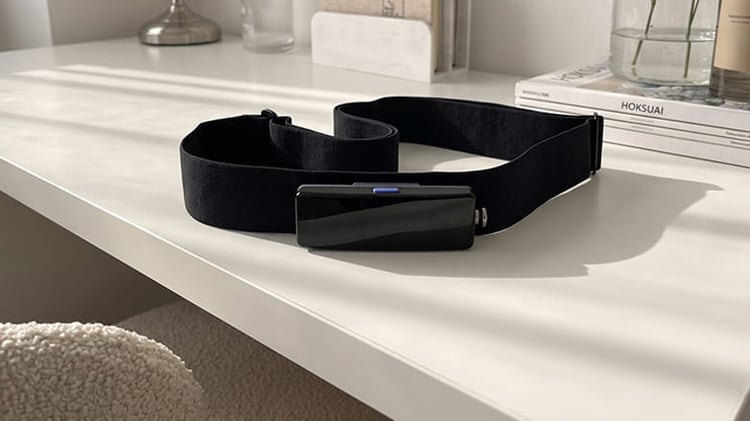
Frontier X2 is a chest strap heart rate monitor. The pitch for chest strap heart rate monitors is straightforward: wrist-based devices can only get a reliable reading when you're relatively still, which makes them a poor fit for the exact moments you most want accurate data—mid-interval, mid-set, or mid-sprint. The chest-worn sensor of Frontier X2 is engineered to address this limitation by providing non-stop tracking, even during sleep, for a maximum of 24 hours per charge—a cap dictated by its battery capacity.
Beyond raw heart rate, the device also tracks a bunch of other metrics, including breathing rate, strain, HRV, training load, body shock, and step cadence, all found in the Frontier X app and web dashboard.
Most of the features are free for those who own the device—but not all. For instance, sleep analysis and VO2 max estimations are not—which was quite disappointing as these are two main things I am constantly trying to improve.
During my testing, I was still able to use the device for VO2 max training: I used the vibration function to alert me when I reach cardio zone 5, so I can train in it without constantly checking my Apple Watch to make sure I am still in it.
Frontier X2 also plays reasonably well with other hardware. Over Bluetooth 5.0, it connects to phones, Apple Watch, Garmin devices, Peloton, and Zwift—useful if you're already using another sensor and don't want to fully replace your setup.
Design, comfort, and build quality
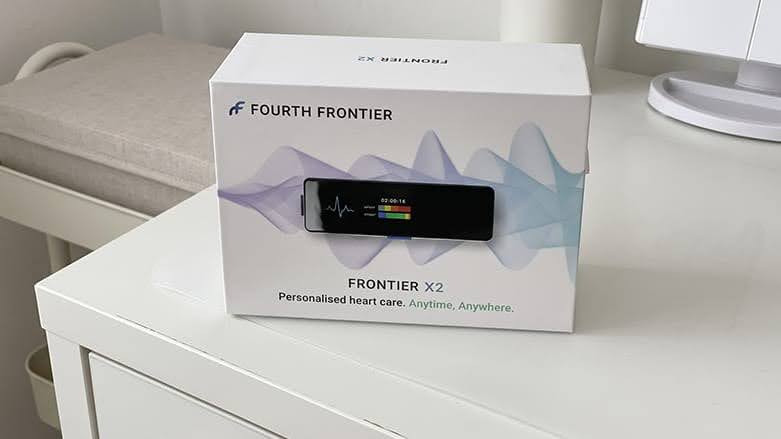
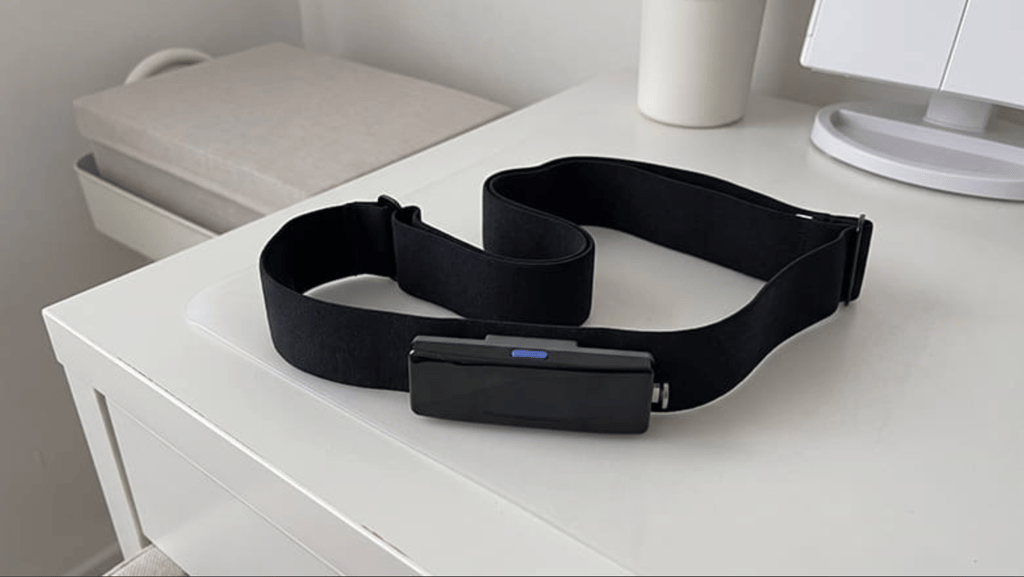
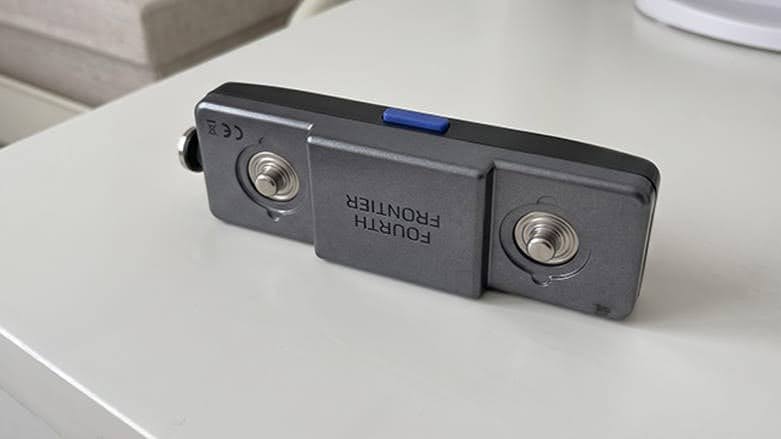
At roughly 25 grams, the Frontier X2 module itself is barely noticeable once it's clipped onto the chest strap. The included elastic strap stretches pretty well.
I found the fit comfortable, even during vigorous exercise. The strap has small silicone dots along the inside to help it stay put without needing to be cinched painfully tight, which I appreciated after wearing other straps that either slid down mid-workout or dug in enough to leave a mark.
The device is built from a mix of plastic and stainless steel, and it feels sturdier than its weight suggests. Controlling it is super simple: a single blue button handles all the key functions.
Frontier is rated IP67 and is waterproof up to 1.5 meters, so sweaty gym sessions or getting caught in the rain on a run aren't a concern, although for more serious swimmers, this might not be sufficient.
Setup and everyday use
Setup took me less than a few minutes. You snap the Frontier X2 module onto the elastic strap, download the Frontier X app, and pair via Bluetooth. From there, the app walks you through positioning the strap, so you don’t need to read a manual for this—although it is included in the box.
Once paired, everyday use is low-friction. The single-button design means you won’t need to use the app to start your workout. There’s a screen on the module itself, but it didn’t strike me as quite useful. I would only check the display to see how much battery I still have left. For everything else, I headed straight to the app.
One detail bothered me slightly: there's no direct integration between the Frontier X2 and third-party fitness apps like Strava or Training Peaks. You can work around this by pairing Frontier X2 with your phone or Apple Watch during a workout (it has no GPS chip of its own, so it relies on your device for GPS data) and then manually downloading a .FIT file from the dashboard to upload.
But there's no automatic sync, and I sometimes forget to do the manual upload—and as they say, if it's not on Strava, did it really happen? Sure, it's a minor annoyance rather than a dealbreaker, but it's worth knowing going in if Strava (or similar apps) play a role in your training regime.
Testing Frontier X2 during training
We’ve reached the most important question: how does Frontier X2 perform during exercise?
Since I was using it specifically to support a new push into VO2 max training, the features that mattered most were the ones tied to real-time feedback during a session, not just the after-the-fact summary—but, of course, for this review, I looked at everything.
That being said, for me, the vibration alerts were the most useful feature. For VO2 max training, I work in heart rate-based intervals. The app allows you to set two vibrations (single buzz and double buzz). The thresholds will need to be edited to match your training goals and individual capacities—you’ll not find any guidance from the app. That wasn’t a drawback for me, but, in general, Frontier X2 didn’t strike me as a very beginner-friendly device
It packs a wide range of features—from simple HR to more specialized metrics like Body Shock, which is supposed to estimate the mechanical stress during training, especially runs and jumps. For some, I had to read the information on the official website to understand why they are added and how I could benefit from tracking them.
From the accuracy side of things, for the most part, I’ve found Frontier X2 to excel—at least compared to my current fitness tracker, which is an Apple Watch. In terms of accuracy, I found that the heart rates on both devices were very similar, but Frontier X2 was quicker to pick up changes. This is expected, as Frontier X2 uses an ECG sensor for heart rate rather than a less reliable optical heart rate sensor (PPG).
The strain and training load scores ended up being more useful to me than I expected. I have a habit of pushing sessions until I'm completely exhausted, without much sense of when I'm overdoing things. Having a strain number attached to each session gave me something concrete to look at instead of just going by feel, which, in my case, tends to mean going too hard.
Pairing that with the readiness score each morning became part of my routine quickly—it's a way to help you determine whether a day calls for pushing harder or backing off, rather than guessing. To access this feature, however, you have to get a premium subscription—which, in my book, is a major drawback given the device's higher price point compared to similar chest straps.
As a core feature, you will also have a breathing rate metric—which is not always available in chest straps. In addition to standard heart rate metrics, this feature may serve as a secondary data point, providing a clearer picture of the actual effort level.
Obviously, none of these metrics replaces coaching or a structured exercise plan, but as a way to double-check effort and recovery on your own, it's a solid layer of information to have.
Battery life
The brand claims that Frontier X2 lasts up to 24 hours of continuous use, and that held up in practice across regular training days plus overnight wear for sleep tracking.
Full charge takes under 45 minutes, so even a short top-up before a workout is usually all you need—no need to sweat without it. I didn't run into situations where I had to choose between tracking my sleep or tracking my next training session because the battery hadn't recovered in time.
However, in terms of battery performance, it falls short of being the top option on the market. For instance, Wahoo TRACKR is claimed to last 100 hours of active battery life, so we are talking about weeks or even months between charges, but this particular device offers fewer features as well.
Other popular devices (e.g., Polar H10, Garmin HRM) offer even longer battery life—but they use replaceable batteries instead of the rechargeable Li-ion battery found in Frontier X2.
So, while not the best, I personally had no problem with the 24-hour battery life—again, just a heads-up before you buy, as this might surprise you if you are used to devices that offer weeks or months of use before the battery runs out.
Price and value
Frontier X2 sits at the top of the range, alongside other performance-focused chest-strap monitors aimed at serious athletes rather than casual gym-goers.
Compared to simpler HR straps, Frontier X2's added layer of app-based analytics, strain scoring, and continuous ECG may justify the cost for some users—but I will be honest, for most people, a cheaper device will probably be sufficient.
My honest advice: if you are considering Frontier X2, spend some time learning about it and comparing it with other options before you commit. For instance, you can check out our best chest strap monitors article to discover other options—so you know exactly what you are getting for the premium price.
Other heart monitor reviews
Best chest straps overall: We tried a bunch of different monitors and picked the most capable ones
Best Bluetooth heart rate monitors: We tested the most popular options
Best heart rate monitor watches: If you decided to go with a wrist-based monitor instead
Is the Frontier X2 worth buying?
Yes—but with a caveat.
Frontier X2 is a very capable device that goes beyond a basic chest-strap for HR monitoring. Some of the extra features include continuous ECG, breath rate monitoring, insights on your training load (strain and readiness)—and all of them can be useful, but will likely be overkill for most users.
There are plenty of cheaper chest straps for athletes who find the continuous HR monitoring to be sufficient, without additional features such as ECG, so I wouldn’t recommend Frontier X2 to everyone.
But if you have read into this device and find these extra features to be valuable, go for it. In the end, Frontier X2 is a good product overall, although definitely not a must-have for all.
Keep in mind that while most core features are free—such as HR, ECG, HRV—some of the more niche features, such as VO2 max estimation and readiness score, are only available if you purchase an additional Frontier premium plan for the app.