We reviewed the most talked about red light therapy caps—here’s our honest take
Hair loss can be frustrating for most because it’s often hard to manage. It’s no surprise that more people are turning to at-home red light therapy (RLT) caps as a potential solution.
We understand its popularity. RLT caps are hands-free and mostly easy to use. Usually, you wear the cap for a set time daily and hope to see changes.
But there is a snag. RLT caps are often expensive, and research, while promising on hair regrowth in certain cases of hair loss, doesn’t consistently show dramatic results. Improvements, if they happen, tend to be slow and require patience.
Because of these limitations, we decided to test some of the most popular RLT caps on the market for months to see if they are worth your attention. In this guide, we focus on what matters: usability, comfort, value, and what you can realistically expect.
Quick picks: Best red light therapy caps
- iRESTORE Elite: Best premium laser growth device
- Illumiflow 272 Pro Laser: Best deep stimulation
- iRESTORE Professional: Best entry-level red light therapy cap
- Glokore Hair Regrowth Cap: Best budget-friendly red light therapy cap
- Kiierr Laser Cap Hair Growth System: Best device with a ball cap design
- Capillus PRO: Best research-backed red light therapy cap
- Megelin GrowLux Laser+LED Cap: Best budget-friendly red light therapy cap
- HigherDOSE Red Light Hat: Best LEDs-only cap
How we tested red light therapy caps
Over the past six months, we tested the five most-discussed at-home RLT caps to see how they fit into real-world routines.
Each device was used by at least one team member. We kept detailed notes on design, comfort, fit, and build quality.
We also looked for small details you won’t find on spec sheets, like how easy each cap is to use, travel with, and fit into a daily routine. We focused on value and real performance to give you an honest look at each cap, not just the marketing.
Red light therapy caps compared
| Device | Wavelengths | Light type (lasers/LEDs) | Number of diodes | Session time | FDA clearance | Price |
| iRESTORE Elite | 625/655/680nm | Both | 500 diodes | 12 minutes daily | Yes | From $1,899 |
| Illumiflow 272 Pro Laser | 650nm | Lasers | 272 diodes | 30 minutes every other day | Yes | From $899 |
| iRESTORE Professional | 655nm | Both | 282 diodes | 25 minutes every other day | Yes | From $899 |
| Glokore Hair Regrowth Cap | 660nm, 850nm | Both | 96 diodes | 10–30 minutes per session | No | From$109.99 |
| Kiierr Laser Cap Hair Growth System | 650m | Lasers | From 148 diodes | 30 minutes every other day | Yes | From $974 |
| Capillus PRO | 650nm | Lasers | 272 diodes | 6 minutes per day | Yes | From $1 359.20 |
| Megelin GrowLux Laser+LED Cap | 630/660/810/850/1064nm | Both | 475 diodes | 15 minutes daily | No | From $329 |
| HigherDOSE Red Light Hat | 650nm | LEDs | 120 diodes | 10 minutes | Yes | From $359 |
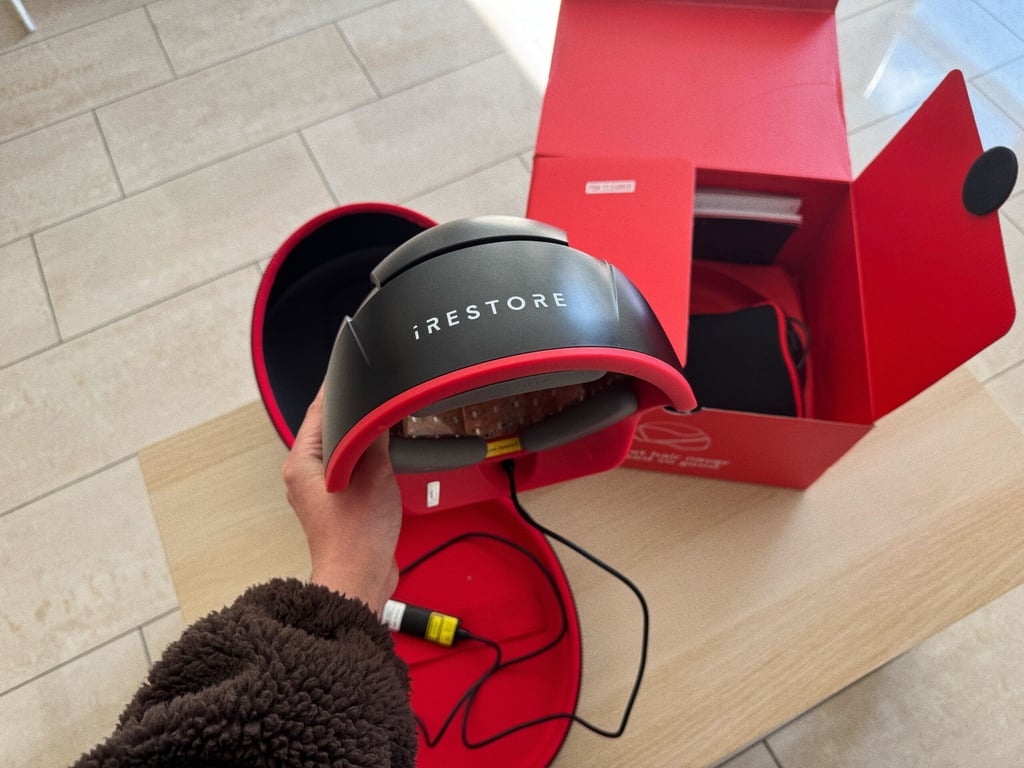
iRESTORE Elite
Best premium laser hair growth device
- Wavelength: 625/655/680nm
- Number of diodes: 500 diodes (laser and LED)
- Session length: 12 minutes daily
- FDA clearance status: Yes
- Price: From $1,899
The first thing we noticed with the iRESTORE Elite was its coverage. With 500 diodes (300 lasers and 200 LEDs), it covers more of your scalp than most other devices we tried. This may help reduce missed spots and create a more even coverage, especially if you have thinning on top.
We also liked the design and how easy it was to use daily. Even with 500 diodes, the helmet remains comfortable thanks to soft inner cushioning and built-in ventilation. Sessions are short at around 12 minutes, making it easier to stick with consistently compared to devices requiring 25 to 30 minutes.
All that said, the price hurts the wallet. It’s the most expensive cap on our list and gets pricier if you want it wireless.
Still, here, it earns its place as the best premium pick because it feels the most complete. If you want a serious at-home hair growth support device and are willing to commit to daily use, it might be worth spending a few dollars more.
- Has the highest diode count on the list
- Comfortable fit
- Short 12-minute sessions
- Very expensive compared to other devices
- Wireless battery pack costs extra
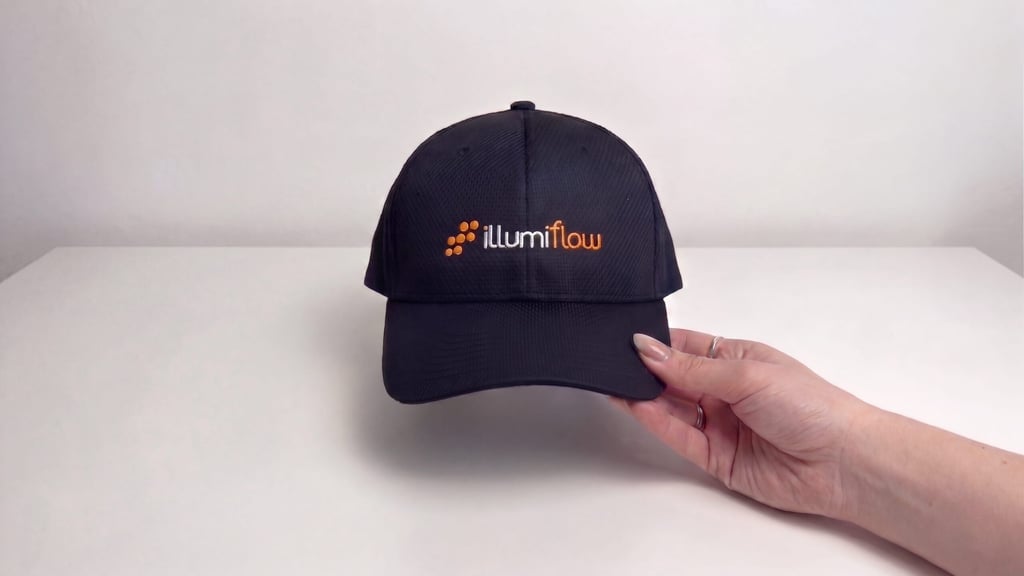
Illumiflow 272 Pro Laser
Best deep stimulation
- Wavelength: 650nm
- Number of diodes: 272 diodes (lasers)
- Session length: 30 minutes every other day
- FDA clearance status: Yes
- Price: From $899.00
Second on the list is the Illumiflow 272 Pro Laser. Though it doesn’t reinvent features found in other helmets or caps, it does a solid job balancing coverage, simplicity, and long-term usability.
What stood out most was the diode density compared to other cap-style RLT devices, as it may provide more even scalp coverage.
However, the brand suggests you’ll still need about 30 minutes every other day, which is longer than some competitors but manageable if you build it into your routine while working, reading, or watching TV.
That said, the one feature we appreciate the most is that if you don’t like the experience, you can return it since the brand offers a 12-month satisfaction guarantee. If you don’t see results after a full year of daily use, you can return the device for a refund. Just don’t forget to register your cap after receiving it, or the rule won’t apply.
- 12-month satisfaction guarantee
- Comfortable design
- Solid diode density
- Longer 30-minute sessions
- Lacks the premium comfort
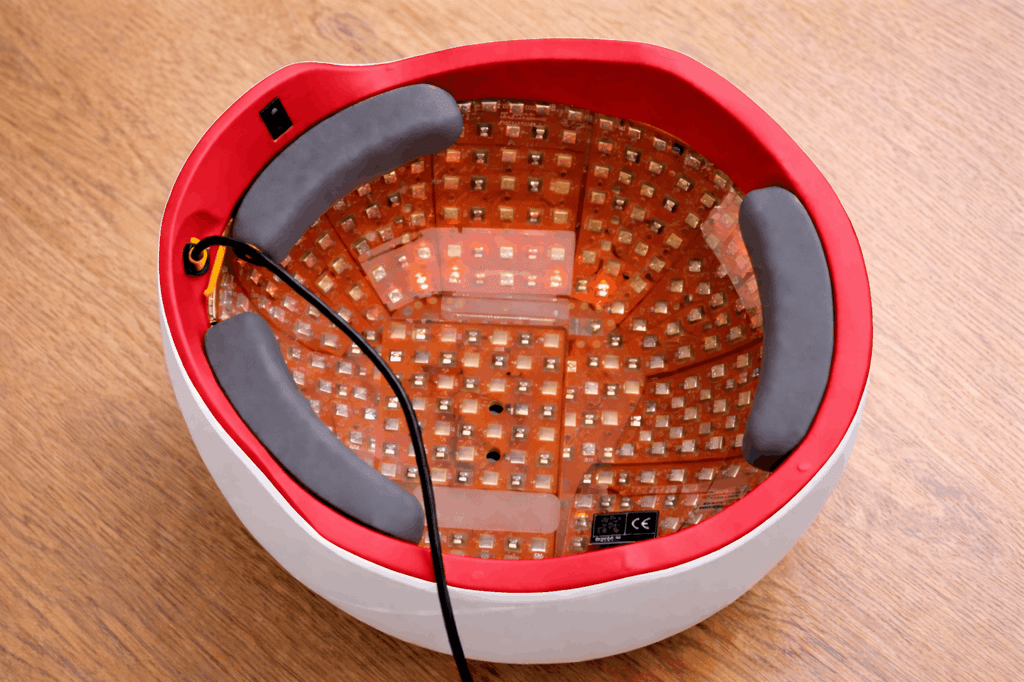
iRESTORE Professional
Best entry-level red light therapy cap
- Wavelength: 655nm
- Number of diodes: 282 diodes (lasers and LEDs)
- Session length: 25-minutes every other day
- FDA clearance status: Yes
- Price: From $899
If you’re a first-time RLT cap user and unsure what to choose, iRESTORE Professional might be a good start. If iRESTORE Elite sits at the top of the range, iRESTORE Professional is a more accessible option for people who want a similar at-home laser experience without draining savings.
Yes, it doesn’t aim to match its cousin’s maximum coverage or diode count, but instead, it focuses on a more affordable way to explore RLT.
What we really liked about the Professional cap is that even without the same diode density, the light is evenly distributed across the scalp. It’s not patchy or uneven, which is where lower-tier devices often fall short. Instead, it seems to keep the experience simple and consistent, making it easier to stick with over time.
However, sessions take much longer compared to the Elite cap. If you’re very busy, 25 minutes every other day might seem too much. That said, it could be a good excuse to sit, relax, and enjoy an episode of your favorite show.
Overall, we see this as a good middle option for people who want something more solid than basic LED caps but aren’t ready to spend a fortune.
- Great value for money
- Even light distribution across the scalp
- Good entry point for first-time users
- Longer sessions than with iRESTORE Elite
- Lower diode count
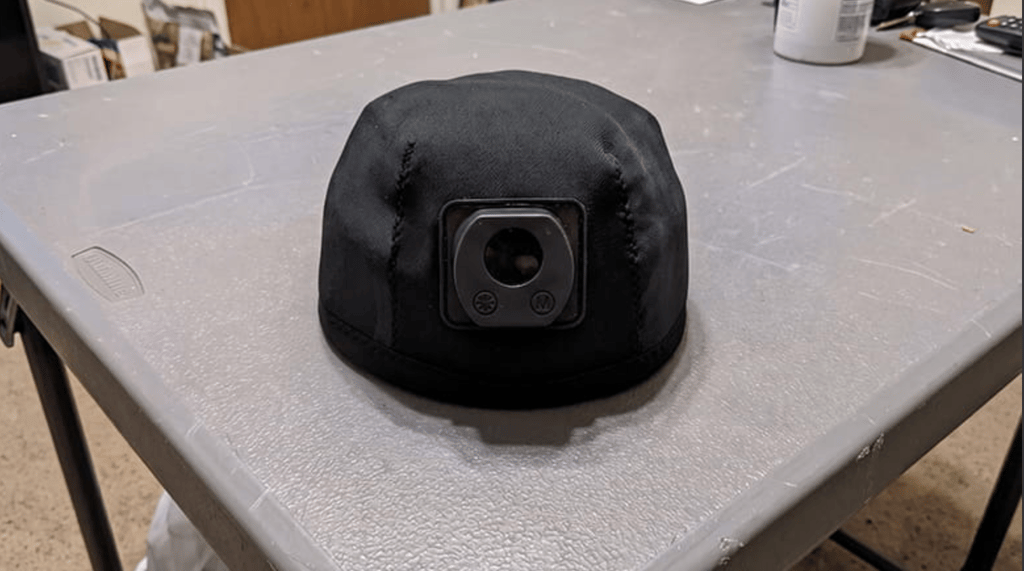
Glokore Hair Regrowth Cap
Best budget-friendly red light therapy cap
- Wavelength: 650nm/850nm
- Number of diodes: 96 diodes
- Session length: 10–30 minutes per session
- FDA clearance: No
- Price: $109.99
If you want to spend as little as possible on a red light therapy cap, Glokore Hair Regrowth Cap is the clear winner here. At $109.99, it's the most affordable cap on the list, so it's a good way to try red light therapy without a big upfront cost.
We also like that it offers four intensity modes, letting you start low and increase the setting over time.
However, there is one thing we couldn’t ignore. The cap is on the shorter side and doesn't cover the sides of your head. If you want more scalp coverage, you might prefer one of the helmet-style devices on this list.
The lower price also means it has fewer diodes. With 96 diodes, Glokore has the lowest count here. That means there are fewer light sources and the coverage is less dense than with pricier devices on the list.
- Very affordable
- Four intensity modes
- Lowest diode count on our list
- Limited side coverage
Kiierr Laser Cap Hair Growth System
Best device with a ball cap design
- Wavelength: 650nm
- Number of diodes: From 148 to 302 diodes (lasers)
- Session length: 30-minutes every other day
- FDA clearance status: Yes
- Price: From $974
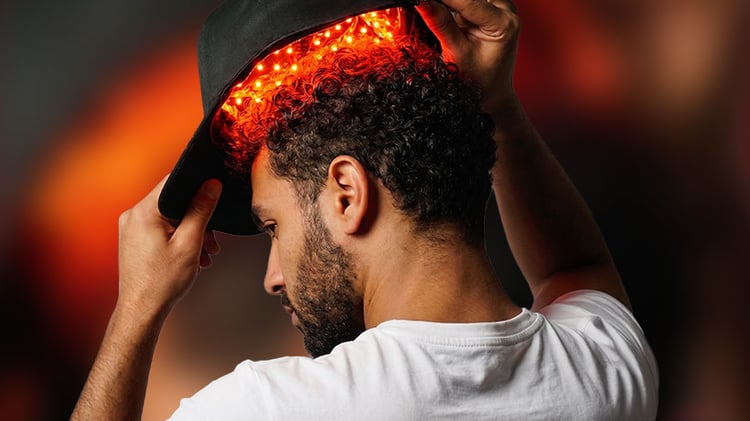
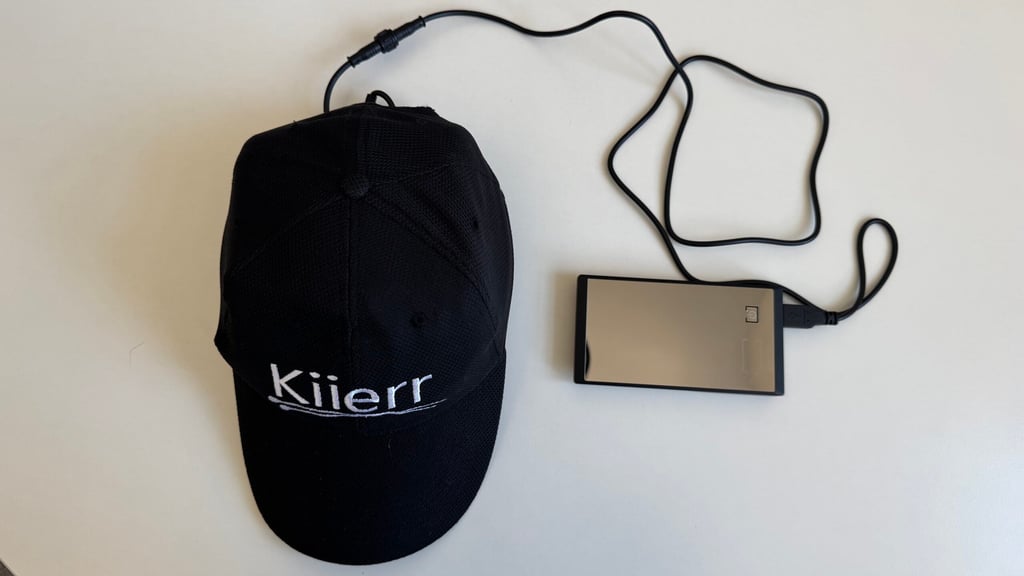
Kiierr Laser Cap Hair Growth System is a strong alternative for anyone interested in RLT caps instead of helmets. Compared to bulkier devices like the iRESTORE, this one is more discreet with a classic hat design, which is exactly why it earned our nomination for best device with a ball cap design.
We like it because it feels more natural to wear; however, don’t get fooled by its looks. If you wonder whether you can go for a walk and no one will notice, that’s not the case. It still needs to be plugged into a power bank during use, so you’ll have to walk around with a cord sticking out.
Another thoughtful feature is that you can choose between different diode-density hats. This lets you select the intensity to your needs and budget. However, if you want higher diode density, you’ll need to spend more, which can quickly push it into premium territory.
All that said, we feel it’s a good fit if you prefer something that looks and feels more like a regular cap than a bulky RLT device.
- Available with different diode densities
- Discreet ball-cap design
- Long charging times and sessions
- Less powerful
Capillus PRO
Best research-backed red light therapy cap
- Wavelength: 650nm
- Number of diodes: 272 laser diodes
- Session length: 6 minutes daily
- FDA clearance: Yes
- Price: From $1 359.20
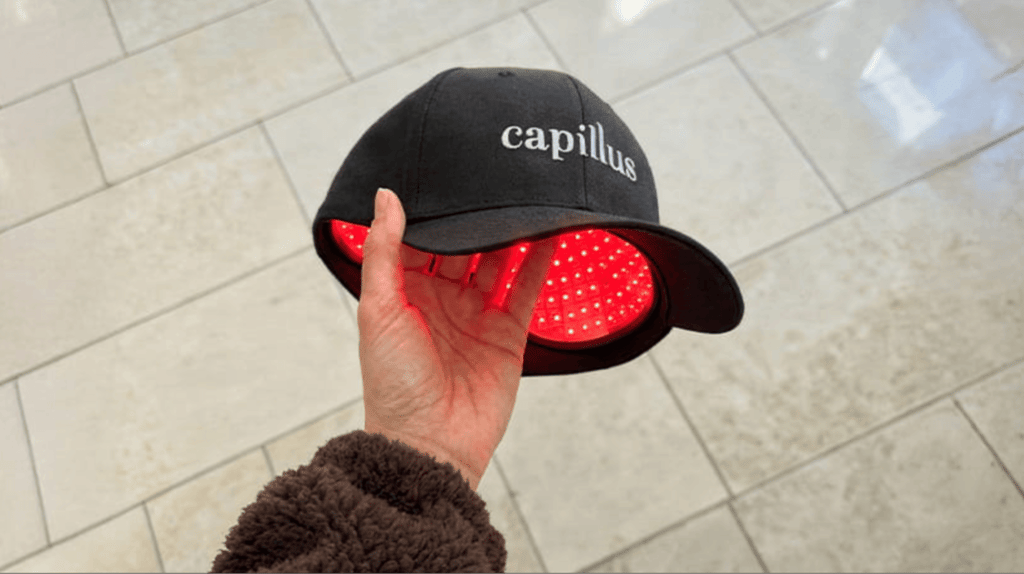
Capillus offers three main cap options, but we chose Capillus PRO because it strikes the best balance between technology and price. The Spectrum and TriSpectrum models use more wavelengths, but they are much more expensive.
What stands out about the PRO is that it has been tested specifically for hair loss, not just based on general light therapy research. In one clinical study, people using the device saw an average 51% increase in hair count after 17 weeks.
Of course, that doesn't mean everyone will see the same results, but having research on the device itself is useful when you're comparing expensive hair-growth caps.
Another advantage is the six-minute daily session, which is much easier to fit into a routine than devices that need 20 or 30 minutes. Of course, all of this comes at a higher price, but the shorter session and research behind it are worth it.
- Was used in a study
- FDA-cleared
- Only ssix-minute-per-day sessions
- Expensive
- Only one wavelength
Megelin GrowLux Laser+LED Cap
Best value red light therapy cap
- Wavelength: 630/660/810/850/1064nm
- Number of diodes: 475 diodes (laser and LED)
- Session length: 15 minutes daily
- FDA clearance status: No
- Price: From $329.00
Let’s admit, RLT caps can be quite expensive. That’s why our goal was to include a couple of devices on this list that would be more budget-friendly without sacrificing quality—the second is the Megelin GrowLux Laser+LED Cap.
That said, being cheaper, it still matches more premium devices in terms of technology. It combines lasers and LEDs, and its five wavelengths provide a broader light setup than many entry-level caps. The cap uses 630nm, 660nm, 810nm, 850nm, and 1064nm light, covering both red and near-infrared ranges.
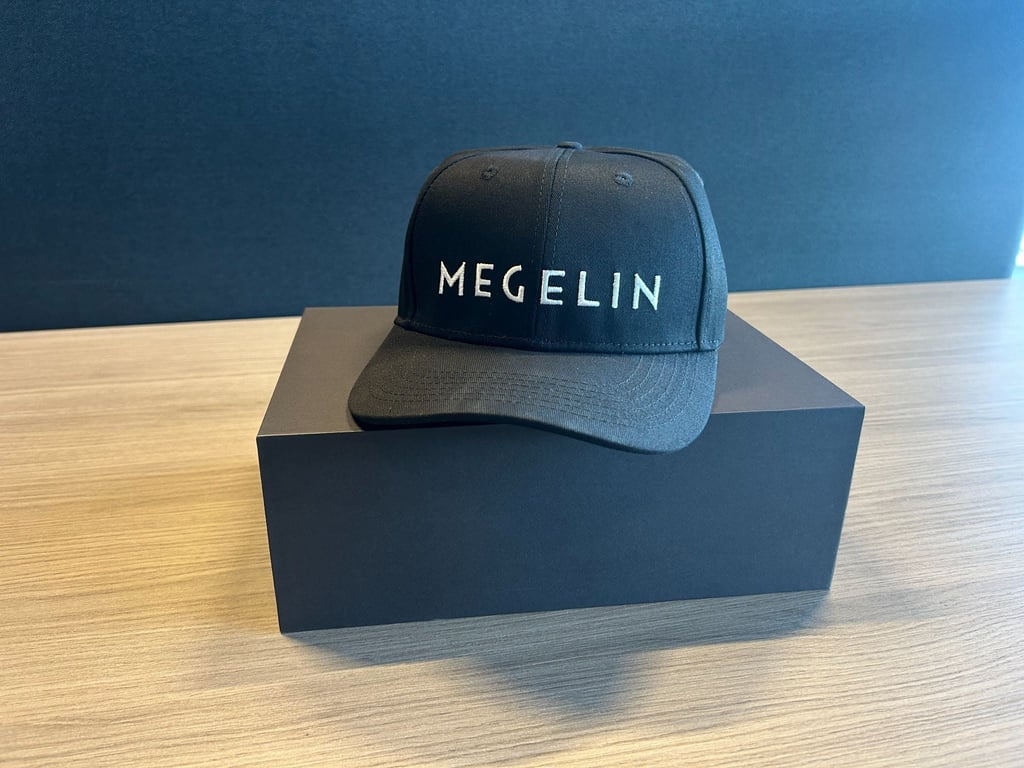
The adjustable fit is another helpful feature. You don’t need separate caps for different head sizes because you can change the fit for better comfort.
Megelin has 475 diodes, five wavelengths, adjustable sizing, and uses both lasers and LEDs. It offers a lot of features at a lower price. Its diode count is almost the same as the iRestore Elite’s 500, so it covers a similar area and even adds an extra wavelength.
- 475 diodes with four wavelengths
- Has adjustable cap size
- Cheaper than other options on the list
- Not FDA-cleared
- Might not fit everyone’s head shape
HigherDOSE Red Light Hat
Best LEDs-only cap
- Wavelength: 650nm
- Number of diodes: 120 diodes (LEDs)
- Session length: 10-minute sessions
- FDA clearance status: Yes
- Price: From $359
We thought that two budget-friendly caps weren’t enough on this list; that’s why we decided to include HigherDOSE Red Light Hat. We like it because it makes RLT more accessible for people who don’t want to spend close to $1,000 on their first device.
While an appealing budget option, you do sacrifice some benefits. HigherDOSE uses only LEDs (not lasers), so it may not deliver the same intensity as laser-based caps.
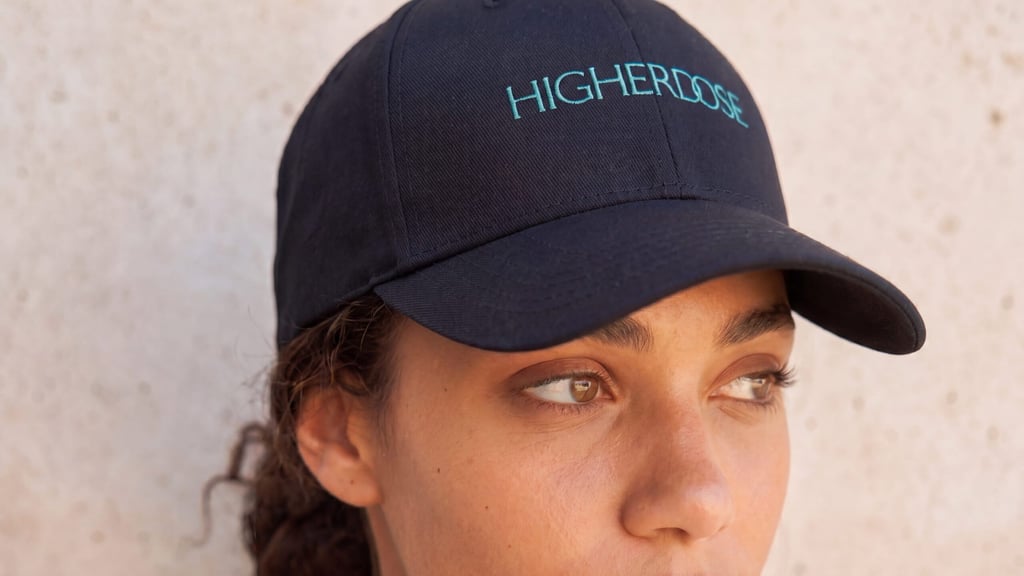
Design-wise, it’s similar to the Kiierr Laser Cap Hair Growth System but ranks lower because the session is more basic. Still, if you want an affordable way to try RLT, this is an easy recommendation.
The best part is that, according to the brand, you only need 10 minutes per session, which feels easier to stick with long-term compared to 25–30 minutes required by other devices. You can quickly fit it into your daily routine while answering emails, brushing your teeth, or making breakfast.
- More affordable than most laser-based hair growth caps
- Quick 10-minute treatments
- Uses only LEDs, not lasers
- Less powerful and targeted
What is a red light therapy cap (and how does it work)?
Most modern RLT caps today use lasers, LEDs, or both. Laser-based caps are generally more focused and targeted, while LED-based caps spread the light more widely.
Neither one is guaranteed to work better, but lasers are usually considered stronger, while LEDs are cheaper and might be less effective. That said, if you come across RLT devices, you’ll notice the term low-level light therapy (LLLT), which RLT is a type of.
Simply said, LLLT is designed to gently stimulate your scalp and hair follicles. The idea is that exposing follicles to consistent red light around 650nm may help stimulate follicle activity and support processes linked to hair growth.
Still, you shouldn’t expect miracles right away. RLT caps aren’t a quick fix—results are slow and can vary a lot from person to person.
Do red light therapy caps help with hair growth?
In certain cases of hair loss, RLT caps may help with hair growth, but it’s important to set realistic expectations before buying one. Current research on LLLT is promising, and over time, it may support healthier and thicker strands and make hair appear fuller and denser.
However, patience is important, since results are usually slower rather than dramatic. From our experience, these devices may work best for people with early thinning, not for those with advanced hair loss. Manufacturers recommend using these caps several times a week for months to notice any potential changes.
According to user reviews, first subtle improvements may appear only after 3–6 months of regular use. That said, it can’t be guaranteed for everyone, as every hair loss or thinning case is different.
Ultimately, RLT has shown potential only in certain hair loss cases. If you’re struggling with hair thinning, we recommend speaking with a specialist first to determine the cause behind hair loss before trying any RLT cap. A trichologist can help you see whether it would be a solution for you.
Laser caps vs. other hair loss treatments
The best hair loss treatment should be decided with a healthcare professional, as different types respond to different treatments. What works for early thinning due to male or female pattern hair loss may do little for shedding related to stress, certain medication use, or medical conditions.
Medications like minoxidil and finasteride remain among the most common non-surgical options for managing male or female pattern hair loss.
Minoxidil may support blood flow around follicles and might prolong the hair growth phase. In comparison, finasteride works by blocking an enzyme involved in hormone-related hair loss, but it can only be prescribed to men.
While research shows generally positive outcomes for both minoxidil and finasteride, some people may want to avoid them due to side effects.
On the other hand, hair transplants have gained popularity in recent years, as they may yield more dramatic results by moving healthy follicles into thinning areas. Still, it’s an invasive, surgical procedure, and many continue using medications or laser therapy afterward anyway.
There are also shampoos, oils, and supplements. Some may help with scalp health or fix nutrient gaps, but most don’t have strong proof for regrowth.
How to choose the right red light therapy cap
We created a list of what you need to pay attention to before buying an RLT cap, because choosing one isn’t just about specs—it’s about finding something you can actually stick with long-term.
Stage of hair loss
If you’re in the early stages of thinning, most caps may be useful. For more advanced thinning, you may want to look for a device with broader coverage and better diode distribution. That said, at any stage of hair loss, we advise speaking with a specialist to develop the best treatment plan.
Comfort and fit
A lot of people overlook comfort. If a cap feels heavy or tight, you probably won’t use it much. Pick one you can wear while sitting, working, or relaxing.
Session time
While there’s still not enough research to determine how long and how often to use RLT for optimal hair growth, most devices on our list recommend 10–30-minute sessions. Shorter ones are easier if you’re busy, while longer ones might suit you if you like to relax with a movie or book at the end of the day.
Portability
Some caps aren’t wireless and have to be plugged in. If you prefer more movement while wearing it, choose the option that has a power bank.
Budget
Prices range a lot, but spending more doesn’t always mean better results. Often, you’re paying for comfort, design, and the number of diodes.
Wavelength (stick to proven range)
All of our tested RLT hats sit around 650nm because it’s the most commonly studied range for hair growth support.
FDA clearance
FDA-cleared devices are not automatically more effective, but they do add a layer of safety and quality assurance. Because of that, we always recommend looking for it.
Are red light therapy caps safe?
In the short term, RLT caps are considered generally safe when used as directed, so always read and follow the manual. However, it’s important to add that there’s no data on whether RLT is safe to use in the long run.
Some people are also advised to avoid RLT due to insufficient safety evidence or a higher risk of side effects. Including pregnant and breastfeeding individuals and those with photosensitivity-related health conditions.
Most devices we tested are FDA-cleared, meaning they meet basic safety and quality standards for home use. However, don’t confuse this with FDA approval. FDA clearance does not guarantee results—it only confirms the device is low-risk when used properly.
Eye protection should also be a priority. Most manufacturers recommend avoiding direct eye exposure or using protective eyewear.
Most importantly, remember, RLT may be part of a hair loss treatment plan, but it’s not always a complete solution on its own.
Other red light therapy reviews:
Best red light therapy for hair loss: Devices and what actually works
Best red light therapy devices: Tested picks for skin, pain and recovery
Theradome vs. iRestore helmets: Which should you buy for hair regrowth?
Kiierr vs. iRESTORE: Which hair growth device is right for you?
Resources:
-
American Hair Loss Association.
-
Annals of Dermatology.
-
Journal of Cutaneous and Aesthetic Surgery.
-
Cureus.
-
National Library of Medicine.
-
Journal of Clinical and Aesthetic Dermatology.