Best full body red light therapy devices (2026): Tested picks for home and clinic use


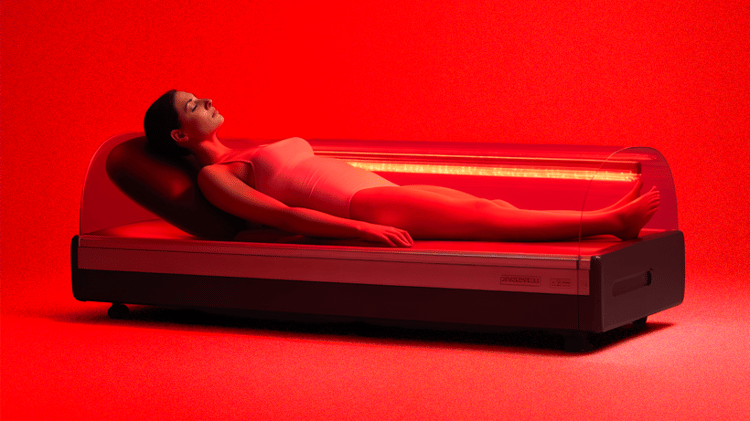
We reviewed top red light therapy devices for full-body treatments at home—here are our top picks based on our tests
People are focusing on their well-being by using various health tech tools from the comfort of their own homes. One category of devices that we noticed is growing in popularity is red light therapy devices.
Depending on your needs, you can use red light therapy panels, full-body setups, or even therapy beds, each with different sizes and coverage. The most commonly cited sources for red light therapy use include skin health, muscle recovery, and may also extend into areas such as pain management, hair growth, and inflammation. However, you should not expect instant results, as we found that it requires consistent use.
To help you find a full-body red light therapy device for home use, we extensively tested multiple devices and evaluated their features, usability, and performance in real-life scenarios. In this article, we provide an overview of the top devices we found worth trying in 2026.
How we tested full-body red light therapy devices
To find the top picks, we performed extensive testing and used the devices for several months. Our goal was to learn how each device acts in real-life scenarios rather than focusing on technical specifications.
While most think that all red light therapy devices are the same, personal preferences and intended use actually set them apart. Besides, the choice should also depend on your specific needs, so it’s important to consider your use case before investing in red light therapy devices.
During testing, we focused on ease of use, coverage, and overall performance. We also overviewed their power output and wavelength range. Finally, we compared each device and its value for money.
Quick summary: The best red light therapy devices
- Bon Charge Max Red Light Therapy Device - Best overall full-body RLT device
- Megelin LASER&LED Light Therapy Bag: Best for the broadest coverage
- MitoPRO1500: Best for simple, user-friendly sessions
- Nushape body pod: Best for relaxation before sleep
- VELLGUS max 300: Best for clinic use
Full body red light therapy devices compared
Red light therapy devices vary in specs, performance, and best use cases. Here’s a quick overview of the key differences.
| Device | Wavelengths | Coverage | Power | Modes | Best for |
| Bon Charge Max Red Light Therapy Device | 660nm, 850nm | Full-body | >142mW/cm² | Red light, near-infrared light | Professional full-body sessions |
| Megelin LASER&LED Light Therapy Bag | 630nm, 660nm, 830nm, 850nm, 940nm, 1064nm | Full-body (including facial skin) | >120mW/cm² | Constant Light Mode, Deep Therapy, Nervous System & Relaxation | Broadest coverage |
| MitoPRO 1500+ | 630nm, 660nm, 830nm, 850nm | Full body | >170mW/cm² | Red light, near-infrared light | Beginners |
| Nushape Body Pod | 635nm, 660nm, 850nm | Full body | Does not specify | Continuous, 10Hz, and 40Hz | Relaxation |
| VELLGUS max 300 | 630nm, 660nm, 810nm, 830nm, 850nm | Full body | >245 mW/cm2 | Continuous, Pulsing+, Dimming+ |
Bon Charge Max Red Light Therapy Device: Best for professional full-body RLT sessions at home
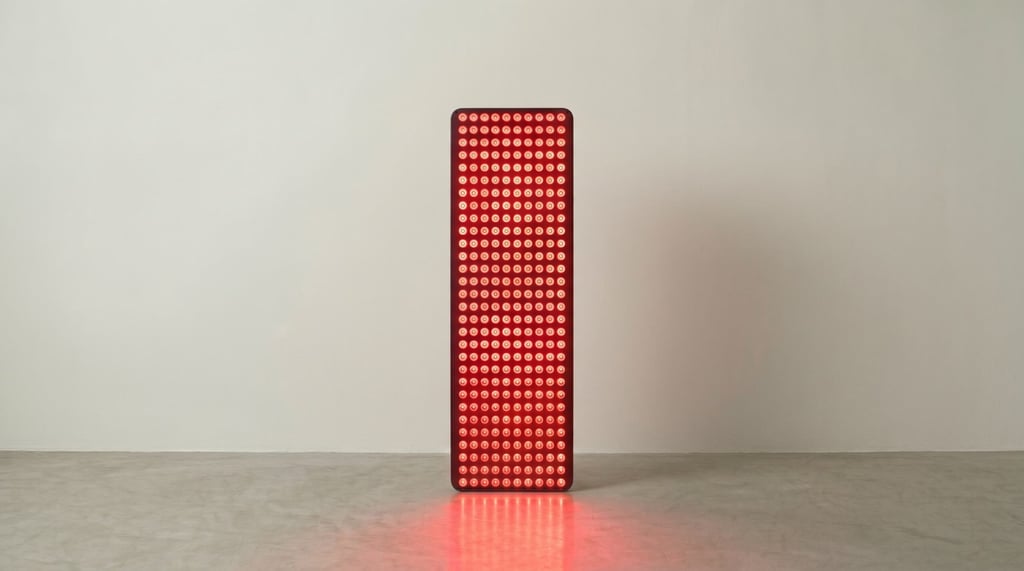
- Wavelengths: 660nm, 850nm
- Coverage size: Full-body
- Power output: >142mW/cm²
- Price: $999
We found Bon Charge Max to be the top choice, as it offers professional home sessions. Since it’s a full-body panel, we recommend it for general skin improvement or muscle recovery, rather than simpler, targeted use.
The panel uses the required wavelengths, delivers high irradiance, and covers the whole body, so you won’t need to reposition your body. However, like other RLT devices, it requires consistent use. To save you some time, we recommend combining your RLT sessions with your workouts or using them while relaxing.
Even though it’s a professional device, the sessions felt straightforward. The panel is meant to be used as a stand, but it also comes with a hanging system, which we found very convenient, as it means it should fit in all households.
However, Bon Charge Max is definitely a larger device compared to MitoPRO+ 300 or Hooga PRO300, which means that it’s not very portable. It’s also quite expensive, so if you only need RLT in targeted areas, there are cheaper alternatives.
- Full-body coverage
- Hanging system included
- Straightforward use
- Not portable
- Expensive pricing
Megelin LASER&LED Light Therapy Bag: Best for the broadest coverage
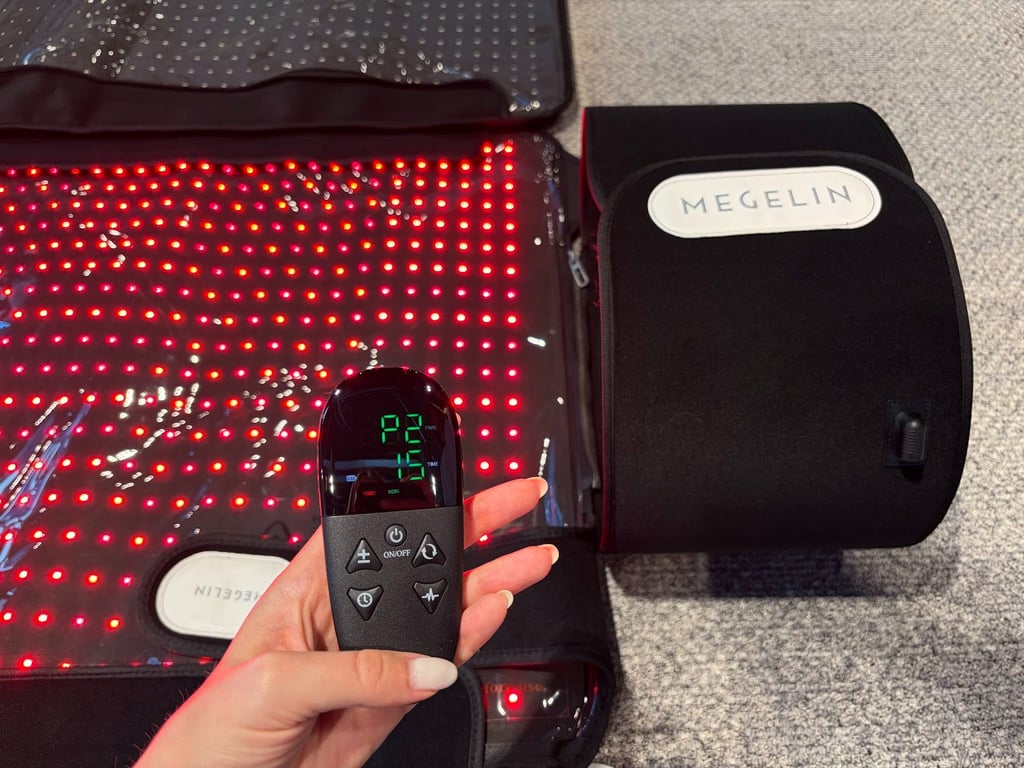
- Wavelengths: 630nm, 660nm, 830nm, 850nm, 940nm, 1064nm
- Coverage size: Full-body
- Power output: 120mW/cm²
- Price: $2399
If your goal is to target the entire body in one session, consider this Megelin product—uniquely, it is not a panel but a bag.
We found that the bag's design, which zips or wraps around you, offers a distinct advantage over panels by including a specialized head wrap. This may be particularly useful if you are addressing various goals simultaneously, such as knee discomfort, shoulder tension, and facial skin health. Unlike standard panels, this device features specific laser zones for the midsection, neck, and joints, ensuring that your sessions are both comprehensive and targeted.
The density of light sources was also impressive to us: Megelin features 7,890 LEDs paired with 288 lasers across six wavelengths ranging from 630nm to 1064nm. According to the brand's specifications, the inclusion of 1064nm light is intended to provide enhanced depth of penetration.
- Easy to use
- Can be rolled up
- Pulsed light modes for relaxation
- Expensive
MitoPRO 1500+: Best for beginner-friendly usage
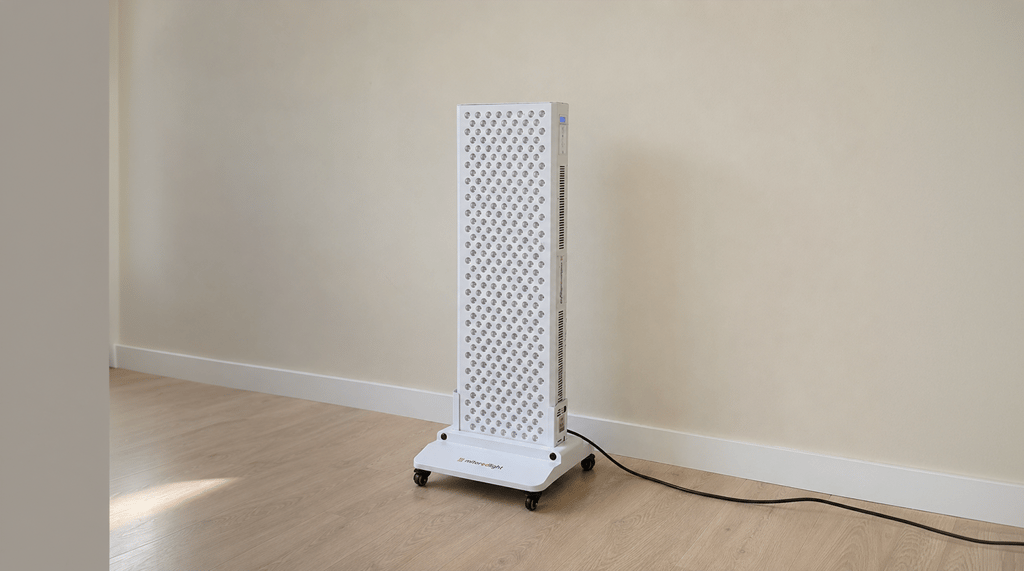
- Wavelengths: 630nm, 660nm, 830nm, 850nm
- Coverage size: Targeted
- Power output: >170mW/cm²
- Price: $1169
Our tests revealed that MitoPRO 1500+ is a great red light therapy panel for beginners. We found it easy to use, even if you have never tried RLT before.
It doesn’t have too many features, which actually made the whole session much simpler for us. Due to its size, you will be able to use it for the entire body—but if you change your mind and decide to buy a smaller one, the brand offers the same panel in smaller sizes as well.
At the irradiance of >170mW/cm², MitoPRO 1500+ is quite powerful—so the recommended session with this device is only 10 minutes.
For potential results, the brand recommends sessions 4–6 times per week and consistent use. Stop using the device if you notice any signs of irritation, discomfort, or unusual skin reactions.
- Beginner-friendly settings
- Powerful
- Good value for money
- No advanced features
Nushape Body Pod: Best for relaxation
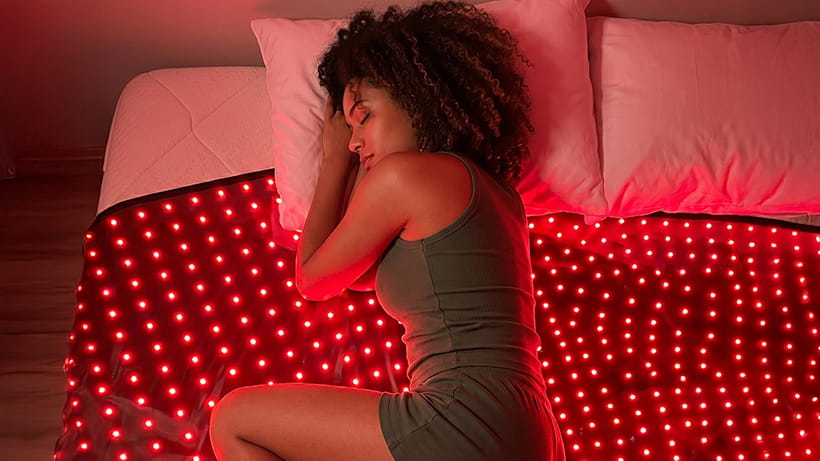
- Wavelengths: 635nm, 660nm, and 850nm
- Coverage area: Full-body
- Power output: Does not specify
- Price: $1,999
If you’re looking for relaxing sessions at home, Nushape can be a great choice for you, as it is similar to a blanket.
The device is customizable, offering a few modes—but we didn’t find that overwhelming, quite the opposite, it was easy to use.
Compared to panels on this list, Nushape also stands out for being lightweight, weighing around 8 pounds—so, could be a great option if you want something more portable.
As per the brand, the session should take from 20 to 40 minutes. It’s longer than for similar products on the market, but doable—especially if you incorporate Nushape in your bedtime routine. Made from exceptionally soft material, the pad generates only a gentle warmth, making the experience surprisingly relaxing and comfortable.
- Can be used on the bed
- Light and portable
- Easy to use
- Quite expensive
- The recommended session is longer
VELLGUS max 300: Best for professional use
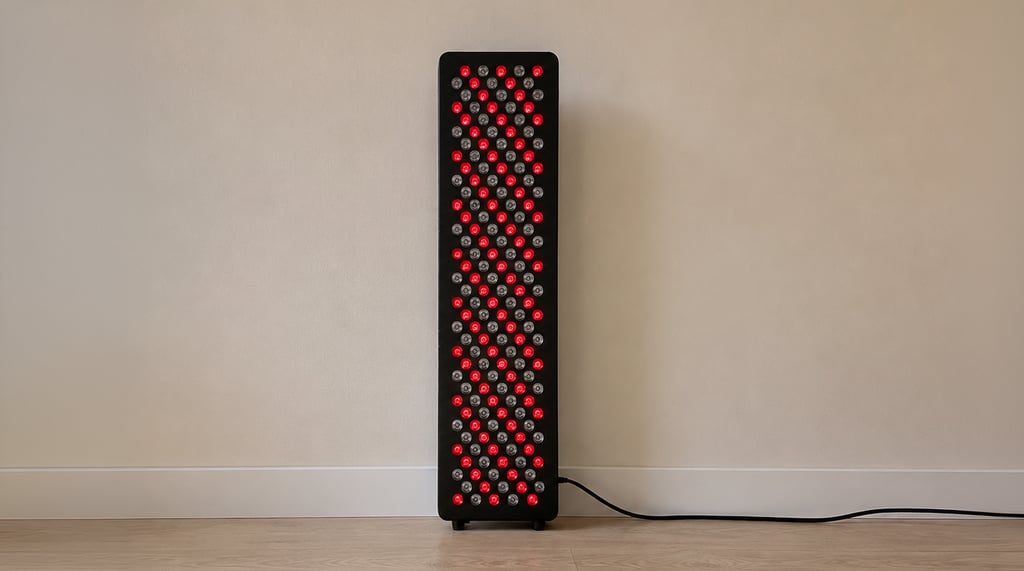
- Wavelengths: 630nm, 660nm, 810nm, 830nm, 850nm
- Coverage area: Full-body
- Power output: >245 mW/cm2
- Price: From $1149
If you are looking for something more powerful, VELLGUS max 300 is the one we would recommend. At the highest power output on the list, this is a suitable device for home use and for clinics, gyms, and similar establishments.
Due to this high power output, the recommended session is also short, about 10 minutes. This will depend on your goals. For instance, you may need more if you are using red light therapy for sleep—all this information is available on the official VELLGUS website.
We liked how sturdy it feels—definitely something you would see in a professional setting. With a 3-year warranty, VELLGUS backs that professional-grade build with long-term coverage, which makes sense if you want the device to withstand frequent use.
- Very powerful
- 3-year warranty
- Short sessions
- Heavy
- Might be harder to operate
What is full-body red light therapy?
Full-body red light therapy is a non-invasive procedure that offers more extensive coverage in the form of panels and beds. Other red light therapy devices, like masks, belts, or helmets, are smaller and are meant to be used on targeted areas.
Red light therapy is often associated with potential skin health, anti-aging, and hair growth effects. It may also support deeper-tissue processes, including inflammation, discomfort, and muscle recovery.
If you’re interested in RLT for hair growth or acne, you don’t really need a full-body panel, as smaller devices for targeted areas will be enough. However, if you want a device to support inflammation, skin regeneration, or overall well-being, full-body devices can cover the whole body during your sessions.
How does red light therapy work?
Red light therapy works by penetrating your skin with specific red and near-infrared wavelengths. When the light hits your skin, it may stimulate mitochondrial activity, which may help reduce inflammation.
The red light is generally more used for surface-level application (such as skin concerns), while near-infrared light penetrates deeper into tissues and is often associated with muscle recovery and inflammation support. However, the performance also highly depends on power output.
Higher irradiance means that more light reaches your body. While lower irradiance doesn’t necessarily mean that it’s not effective, we found that higher power output may allow for shorter sessions in some cases.
Types of red light therapy devices
There are multiple types of red light therapy devices, and they all differ in terms of coverage, size, and cost. The best choice for you depends on your specific needs, whether you’re looking for a full-body solution or a simpler, targeted device.
Full-body panels or therapy beds will cover your entire body (or at least most of it). As a result, we found it may be most suited for inflammation and skin health support, or improving overall well-being. However, these devices are often much larger and more expensive.
Alternatively, there are handheld devices that can be used for targeted areas. They are usually much smaller and cheaper than full-body ones. However, if you’re planning to use it on larger areas, you will need to reposition it often, which will extend the session duration.
If you’re looking for an additional step in your skincare routine, RTL face masks are commonly used for concerns like acne and signs of aging. Such masks are specifically designed to fit your face, allowing you to enjoy and relax during RLT sessions.
Red light therapy mask: FAQ's
Full-body red light therapy devices may support your well-being, but this depends on your use case, how often you use them, and the devices themselves. For the best results, it’s important to use a device that delivers high irradiance and covers the appropriate wavelengths. We also found that RLT should be used consistently for it to have any potential effects.
Generally, you may start to see results after using an RLT device for 4–12 weeks, though this depends on your concerns. You might notice that your muscles are less stiff after only a few sessions, but if your goal is skin improvement or hair growth, you will most likely need to use it for longer. You’ll also need to use the device consistently, typically 2–5 times a week
You should use your red light therapy device 2–5 times a week for 15–25 minutes per session. However, this may vary depending on your needs and the device that you’re using. If your device delivers higher irradiance, shorter sessions may be enough.
Yes, at-home red light therapy devices may be effective if your goal is muscle recovery, pain and inflammation relief, or skin improvement. However, optimal results may take time, even if you use your RLT device consistently.
For red light therapy devices, 630–660nm red and 810–860nm near-infrared are the most common wavelengths. Red light within the 630-660nm range may be best suited for addressing surface-level concerns, like general skin health, acne support, and potential anti-aging effects. Meanwhile, near-infrared light (810-860nm) may be best applied to deep tissues, including muscle and inflammation relief.
Red light therapy devices are generally considered safe for at-home use as they are non-invasive and non-toxic. However, just like with any other device, we recommend familiarizing yourself with the procedure, following the manufacturer's guidelines, and patch-testing first to avoid side effects like skin irritation.
Other red light therapy reviews:
Best under-eye red light therapy devices: Top devices compared
Best infrared sauna blankets: Our top picks for your wellness and rejuvenation
Best red light therapy belts: Tested picks for pain relief and recovery
Best red light therapy mats: Top picks for home wellness and recovery
References
-
Grand View Research
-
National Library of Medicine
-
Journal of Plastic, Reconstructive & Aesthetic Surgery