Best red light therapy belts (2026): Tested picks for pain relief and recovery


Comprehensive guide to help you choose the best red light therapy belt for recovery and muscle support
In recent years, at-home recovery tech has gained significant attention. It uses non-invasive red light therapy (RLT), which has been studied for its potential to stimulate biological processes, helping support pain relief and muscle recovery.
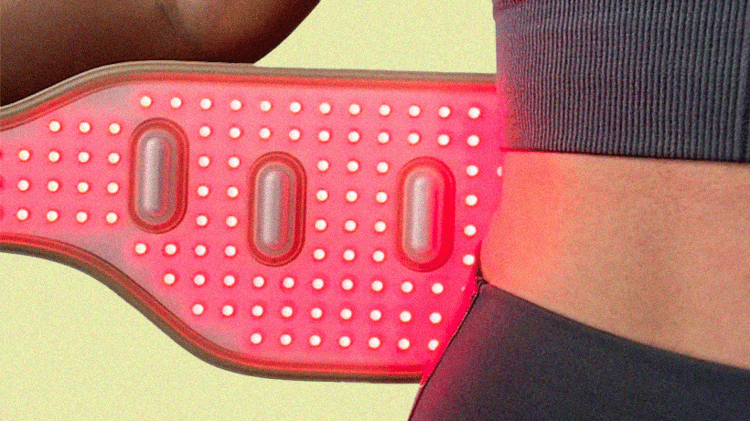
Belts stand out from other red light therapy devices for their sheer convenience, providing hands-free sessions that may help manage soreness in the back, waist, abdomen, and joints. Still, it’s not a fix-all solution, especially when managing chronic soreness and pain conditions.
To help you find a belt you'll enjoy using, we spent weeks testing the latest models, breaking them all down based on comfort, power, coverage, and real usability.
How we tested these red light therapy belts
Testing red light therapy belts can get complicated. We compared each device’s features with what users may need, using our expertise to help you find the best options.
Our personal testing took over several weeks. During that period, we looked at how convenient and comfortable the belts are, whether they’re safe to use, and if they are truly worth the cost.
Quick summary: Best red light therapy belts
- Novaa Light Pad: Best for recovery-focused routines
- MitoQUAD Wavelength Belt: Best for supporting deep recovery
- Megelin ContourLux Light Therapy Belt: Best for broad light spectrum
- Hooga Red Light Therapy Belt: Best for cordless red light therapy
- Bon Charge Infrared PEMF Wrap: Best for relaxation and recovery
- Lifepro Red Light Therapy Belt: Best for budget-conscious RLT users
- Infraredi Body Wrap: Best for red light therapy on the go
Red light therapy belts compared
We compared the key specifications of each device, helping you find the perfect fit in no time:
| RLT device | Device type | Power | Wavelengths | Coverage area | Corded/cordless | Session time |
| Novaa Light Pad | Flexible pad | 150mW/cm² | 660nm, 850nm | 16.3" x 7.9" | Corded | 20 mins |
| MitoQUAD Wavelength Belt | Belt | 18mW/cm² | 630nm, 660nm, 810nm, 850nm | 50" x 7" | Corded | 15–20 mins |
| Megelin ContourLux Light Therapy Belt | Belt | 100mW/cm² | 635nm, 660nm, 808nm, 830nm, 850nm, 1064nm | Not specified | Cordless | 20–30 mins |
| Hooga Red Light Therapy Belt | Belt | 70mW/cm² | 660nm, 850nm | 52" x 7.09" | Cordless | 1–20 mins |
| Bon Charge Infrared PEMF Wrap | Wrap | 25mW/cm² | 660nm, 850nm | 48" x 9.45" | Corded | Up to 60 mins |
| Lifepro Red Light Therapy Belt | Belt | 96.8mW/cm² | 660nm, 850nm | 49.5" x 7.7" | Corded | 15–20 mins |
| Infraredi Body Wrap | Wrap | Unspecified | 660nm, 880nm | 8” x 3.5” | Cordless | 10–20 mins |
Novaa Light Pad
Best for: Recovery-focused routines
- Wavelength: 660nm (red) and 850nm (NIR)
- Lux output/intensity: 150mW/cm²
- Session length: 10–20 minutes
- Battery life: Requires plug-in
- Weight: 0.6lbs
- Price: $314.91
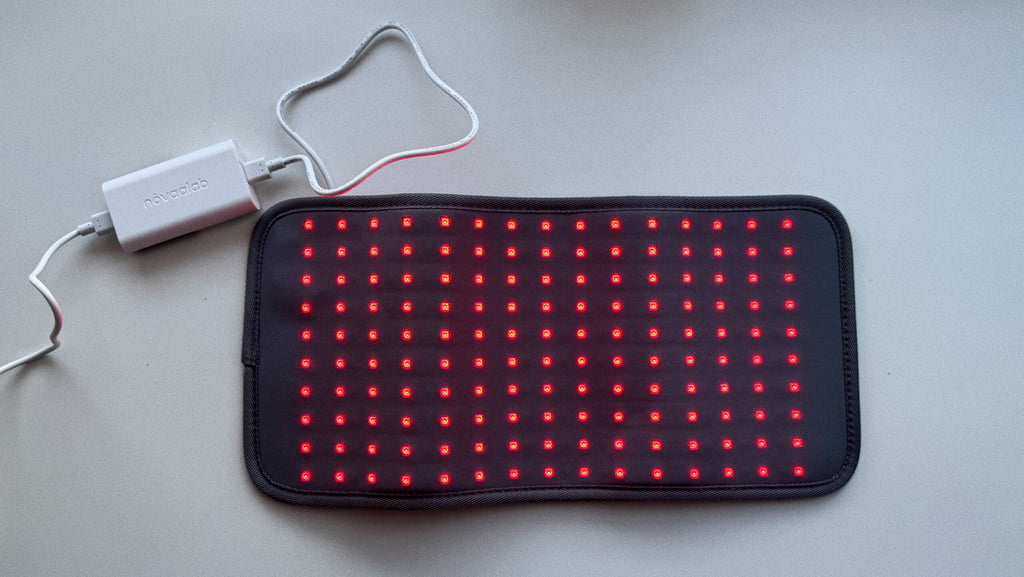
Novaa Light Pad is the most powerful red light therapy belt on our list of recommendations. Despite its power, it doesn't compromise on safety. It holds CE and RoHS certifications, and has integrated timers for safe management of sore muscles and joints.
The overall pad design is very lightweight and compact, yet it is still big enough to fully cover your lower back. Because the pad is flexible, you can effortlessly wrap it around joints like your knees or elbows to get support exactly where you need it.
The main downside is its lack of portability. To maintain such a high power output, the device requires to be plugged in during use and doesn't offer wireless freedom.
Still, even without a rechargeable battery, Novaa Light Pad remains a suitable option for anyone looking for a highly comfortable, powerful, and safe red light therapy device to have at home that may help manage daily aches and support your body's recovery.
- Powerful
- Lightweight
- Great for smaller body parts like knees and elbows
- Requires plug in
MitoQUAD Wavelength Belt
Best for: Deeper recovery support
- Wavelength: 630nm, 660nm (red) and 810nm, 850nm (NIR)
- Lux output/intensity: 18mW/cm2
- Session length: 15–20 minute sessions
- Battery life: Battery currently unavailable
- Weight: 1.2lbs
- Price: $349
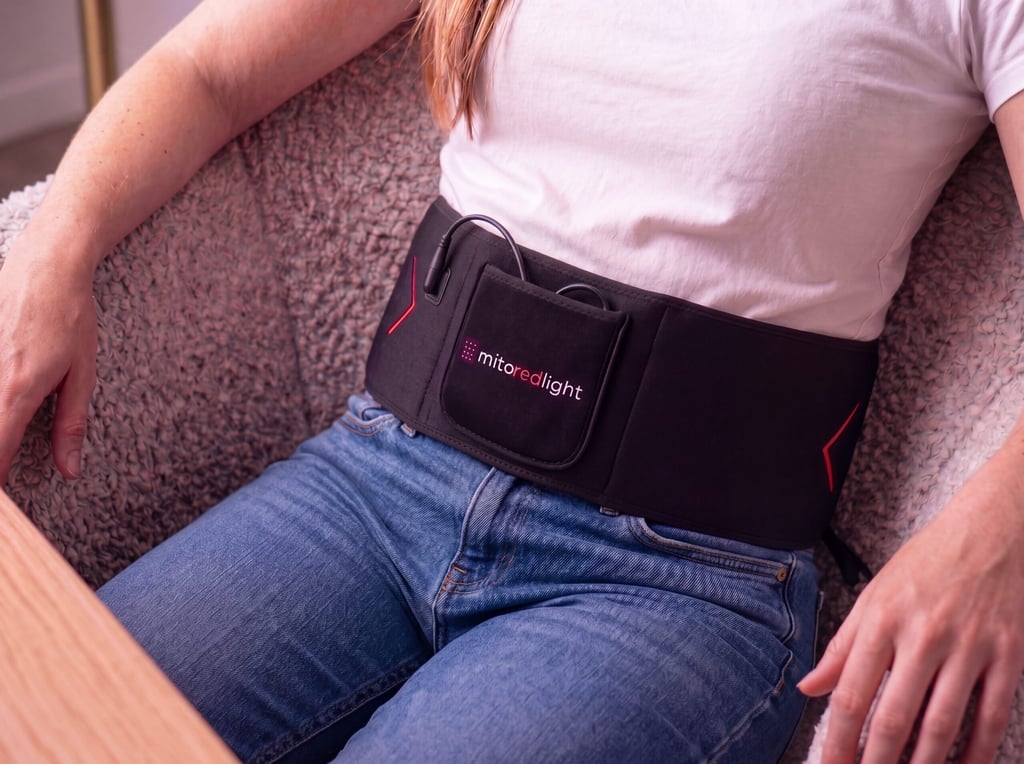
MitoQUAD Wavelength Belt stands out from its competitors by featuring four different wavelengths, which may offer deeper tissue penetration, and just up to 18mW/cm2 irradiance for close skin contact.
Like others on this list, it’s also very comfortable to wear. We noticed that the flexible and soft material allows the belt to conform to differently shaped joints and body parts, ensuring you get direct contact where you need it most.
However, it can only be used plugged into an outlet, as the rechargeable battery, which is sold separately, is currently unavailable.
Still, it remains a solid RLT solution for people looking for a wearable device that may support deeper recovery through four distinct wavelengths.
- Holds IEC 60601 medical electrical safety compliance certificate
- Uses commonly studied wavelengths
- May help support deeper recovery
- Pricey
- Not portable
Megelin ContourLux Light Therapy Belt
Best for: Broad light spectrum
- Wavelength: 635nm, 660nm (red) and 808nm, 830nm, 850nm, 1064nm (NIR)
- Lux output/intensity: 100mW/cm²
- Session length: 20–30 minutes
- Battery life: Rechargeable pack
- Weight: Unspecified
- Price: $279.00
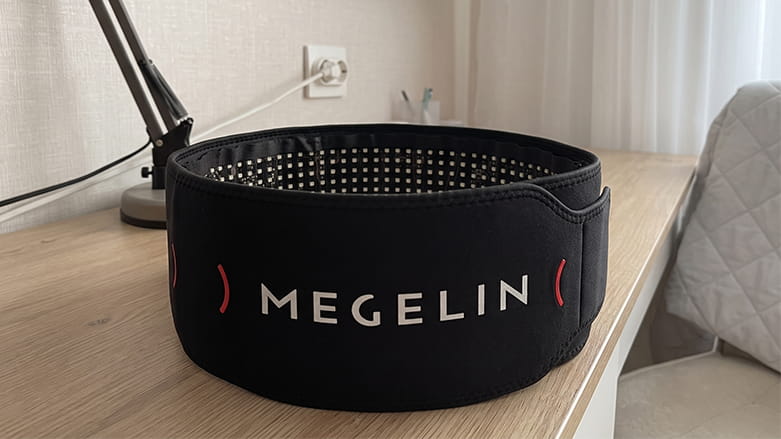
The ContourLux belt earned its place in our eyes by combining six different wavelengths, covering a wider range of the red and near-infrared spectrum than most competing devices.
But that’s not all—it also gives you the option to switch between continuous light and 10Hz or 40Hz pulse modes. This may especially appeal to you if you prefer having more flexibility and control over your sessions.
We found it comfortable to wear, wrapping snugly around the torso or thighs. You can also use it on other body areas, although it isn’t quite as soft as some other red light therapy belts we tested, so keep that in mind.
The main disadvantage for us is the brand’s positioning. Megelin heavily promotes body contouring and cellulite reduction, but these cosmetic claims have very limited evidence behind them. If you focus on its core light therapy features for muscle recovery and pain support instead, ContourLux is still a solid option for most people.
- Red light therapy combined with pulse modes
- Wide range of wavelengths
- Powerful
- The belt isn’t as soft as some rivals
Hooga Red Light Therapy Belt
Best for: Cordless red light therapy
- Wavelength: 660nm (red) and 850nm (NIR)
- Lux output/intensity: 70mW/cm²
- Session length: 2–15 minutes
- Battery life: 150 minutes
- Weight: Unspecified
- Price: $249
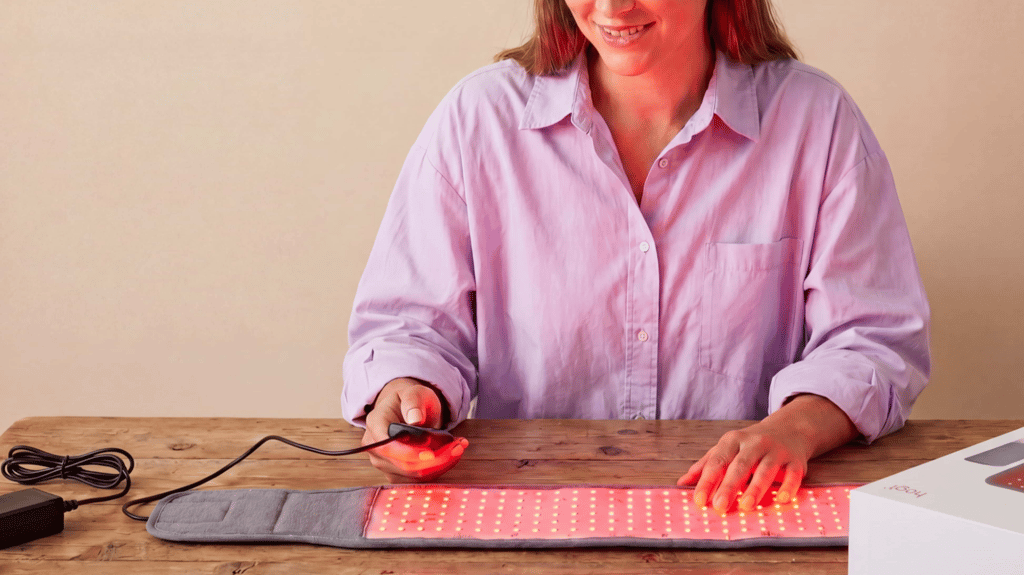
Hooga Red Light Therapy Belt is more than just a basic red light therapy belt. It features pulsing light mode, which may help support targeted pain and inflammation management.
What impressed us most was that it’s truly portable. It features a rechargeable battery, lasting around 10 uses. Plus, it’s made out of neoprene material, which not only adds to comfort and flexibility but also makes for easy upkeep.
With Hooga Red Light Therapy Belt you can also adjust intensity, allowing you to customize your sessions.
Though not as powerful as our top 1 choice, Hooga Red Light Therapy Belt is a truly wireless belt, best suited for people on the go looking to fill a missing link in their recovery routine.
- Rechargeable battery
- Pulsing light mode
- Customizable
- Less powerful than some similar belts
Bon Charge Infrared PEMF Wrap
Best for: Relaxation and recovery
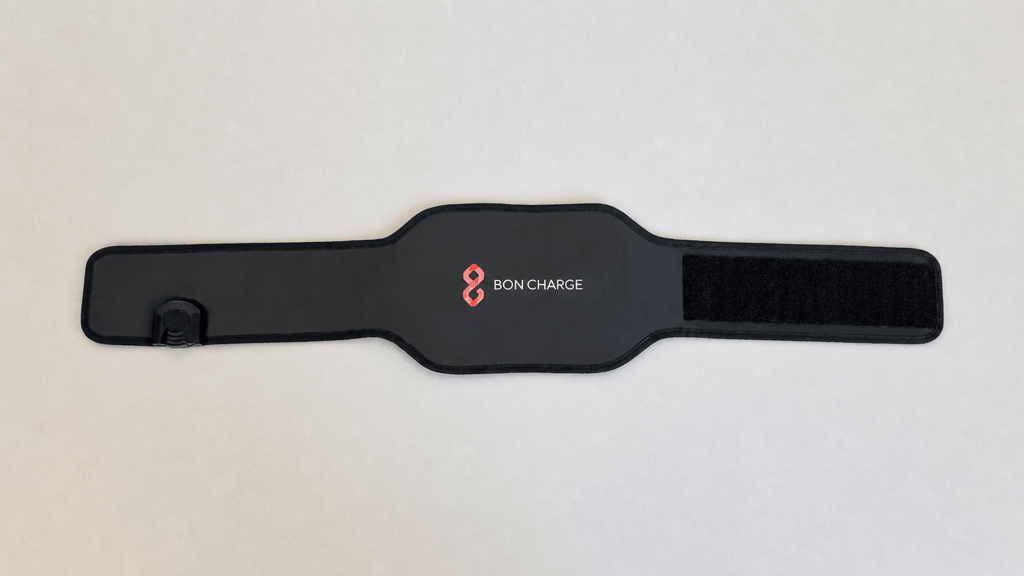
- Wavelength: 660nm (red), 850nm (NIR), and FAR infrared
- Lux output/intensity: 25mW/cm²
- Session length: Up to 6o minutes
- Battery life: Requires plug-in
- Weight: 4lbs
- Price: $349
Bon Charge Infrared PEMF Wrap combines PEMF technology with red light therapy to support relaxation, recovery, and inflammation. The PEMF technology uses subtle electromagnetic pulses that have shown promising results for reducing pain in specific cases.
Another standout feature is the layer of semi-precious gemstones in the belt, including quartz, amethyst, tourmaline, and onyx. This layer helps to evenly distribute the heat of light, which reaches up to 86–176°F (30–80°C). With this in mind, be aware that it gets warmer than other belts on this list.
However, because of the gemstones, the belt gets quite heavy and bulky, weighing 4 lbs. Additionally, it is not battery-powered, so it must remain plugged in during use to supply enough power for red light and PEMF technology.
That said, with an easy-to-clean PU leather surface and official FDA registration and ARTG certification, it’s a good option for anyone looking for a device that may support recovery and provide relaxation.
- PEMF technology
- Layer of crystals
- May help relax
- Heavy
- Required plug-in
Lifepro Red Light Therapy Belt
Best for: Budget-conscious RLT users
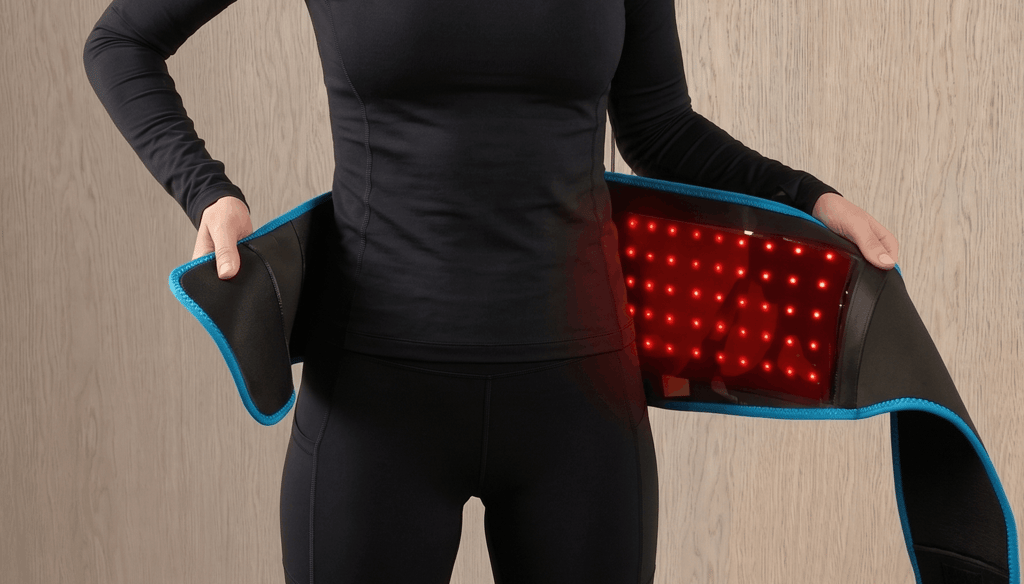
- Wavelength: 660nm (red) and 850nm (NIR)
- Lux output/intensity: 96.8mW/cm²
- Session length: Up to 30 minutes
- Battery life: Requires plug-in
- Weight: 0.95lbs
- Price: $189.99
Although it is the most affordable device on this list, Lifepro Red Light Therapy Belt is surprisingly powerful, featuring a pulsed light mode and integrated vibration therapy to potentially help soothe aching muscles.
Another plus we found is its extension belt. This convenient feature adds length for larger areas like the back, chest, or shoulders, making it much easier to get a comfortable and secure fit.
However, one downside is that the battery pack costs extra. This means you will have to use the belt plugged into a power source unless you decide to purchase the portable battery separately.
Still, it offers great value for anyone looking for a solid and affordable red light therapy solution.
- Affordable
- Includes vibration therapy
- Battery pack costs extra
Infraredi Body Wrap
Best for: Red light therapy on the go
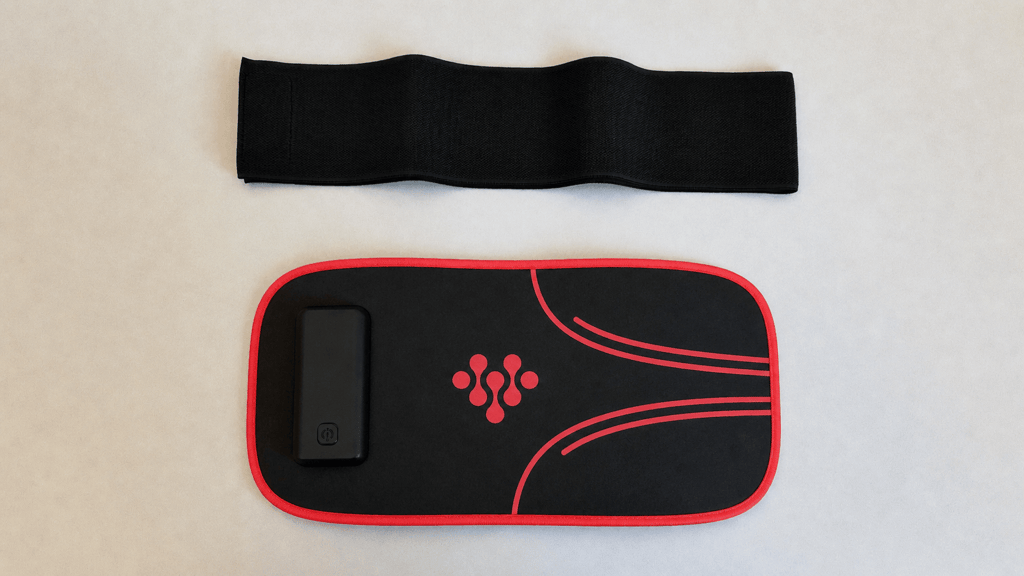
- Wavelength: 660nm (red), 850nm (NIR)
- Lux output/intensity: Unspecified
- Session length: 10–20 minutes
- Battery life: Unspecified
- Weight: Unspecified
- Price: $199
Infraredi Body Wrap is the most compact and portable RLT device for potential pain relief and muscle recovery on this list. It comes with a chargeable battery and a 20cm x 9cm treatment area, making it an ideal companion on the go.
It also features anti-odor fabric to keep the belt fresh between uses, all at a very budget-friendly price point.
However, there’s a trade-off for the portability. Because of its smaller size, it contains only 60 medical-grade LEDs, meaning it covers less surface area at once compared to larger alternatives.
Overall, it remains a great choice if you want a travel-friendly wrap for targeting specific areas of the body.
- Budget-friendly
- Great portability
- Small number of LEDs
- Unclear irradiance
- Not the best option for larger body areas
What is a red light therapy belt?
A red light therapy belt is a wearable, flexible device embedded with LEDs that delivers red light therapy to targeted areas like the back, waist, abdomen, and joints. Unlike masks or stationary panels, it is specifically designed to wrap around the body for direct skin contact, maximizing light absorption in the areas that may need it the most.
In some studies, the red light integrated into these belts has shown promise in potential pain relief, inflammation reduction, muscle recovery acceleration, and circulation improvement. The combination of convenience and recovery support may make these belts an ideal red light solution for many people.
How does red light therapy work?
Red light therapy works by delivering light to the body. The light penetrates the skin and may stimulate the mitochondria to help produce more energy.
This potential boost in energy may help support repair processes and could play a role in recovery and pain management in muscles and joints.
How to choose a red light therapy belt?
Choosing the right red light therapy belt for you ultimately comes down to your own routine and specific needs. Here are a few key buying factors you may want to consider before committing to an RLT device:
- Coverage area: Think about the areas you feel sore or stiff in. A lower back belt might be better if you need to focus on a specific spot, like the lower back or knees. Meanwhile, a full wrap might be more beneficial for those who want to target broader areas like shoulders, waist, or hips.
- Wavelength: Some research suggests that the combination of 630–660nm red light and 800–850nm near-infrared light may be the most effective for supporting muscle recovery and pain relief. So look out for belts that feature these specific wavelengths for potentially more effective sessions.
- Power intensity: Measured in mW/cm², power intensity indicates how much light energy reaches your body. A higher power intensity means that more light reaches and potentially stimulates cells for optimal recovery. Though, irradiance also depends on how close to the skin the device is, so bigger intensity isn’t always the best.
- Comfort and fit: Make sure to look for belts and wraps made out of flexible and comfortable materials. This helps ensure direct skin contact for potentially more effective sessions, while the added comfort makes it much easier to integrate the device into your daily routine and stay consistent.
- Portability: If you plan to use the red light therapy device on the go or while traveling, a rechargeable belt is the way to go. However, in case you plan to use it while relaxing, a model that requires plugging in during use may be a better choice and sometimes offers slightly higher power output.
- Safety certifications: Safety is essential with any device you purchase. Look for RLT belts with safety certifications, such as FDA clearance or CE/RoHS marks. Additionally, built-in safety measures like timers are also important, as they can prevent red light overexposure, which is known to sometimes cause skin irritation.
Types of red light therapy devices
Red light therapy devices come in various shapes and sizes to suit different routines and needs. Here is a quick look at the main types available:
- Belts: Wearable and flexible, they are designed to wrap around and target specific body parts. Thanks to their portability, they can be easily integrated into your routine for recovery and pain relief support.
- Panels: Ranging from small tabletop to full-body panels, they treat a wider area for potential recovery. They are typically more powerful than portable RLT options for proposed deeper tissue penetration.
- Handheld: This includes small wands that focus on treating pinpoint areas of the body and face. They are highly convenient and portable, though less powerful.
Red light therapy mask: FAQ's
Do red light therapy belts actually work?
Red light therapy belts may work for supporting muscle recovery and reducing stiffness. In fact, some evidence shows that red light may speed up healing and reduce inflammation. However, RLT belts aren’t a guaranteed fix for pain management. Therefore, they should be used as a complementary tool rather than a sole solution.
How long does it take to see results?
While this may vary greatly, some studies suggest that it might take several weeks of consistent red light therapy to see initial improvements in muscle recovery and pain relief. That said, it’s important to maintain realistic expectations when starting red light therapy at home, as it might not be effective for everyone.
How often should you use one?
Each red light therapy belt is a little different, so how often you should use it depends on the brand's specific recommendations. We highly advise sticking to them to make sure your at-home sessions are safe.
Are they safe for daily use?
While red light therapy might not be suitable for everyone, it is generally considered safe for daily use. Most brands recommend using RLT belts 3 to 5 times per week for 20-minute sessions. If you have any concerns about their safety, check in with your doctor to discuss what is best for your individual situation.
Can you use them for weight loss?
A few small studies have explored whether red light therapy may have an effect on body contouring and fat reduction. However, it’s unlikely that red light therapy belts could be an effective standalone solution for weight loss. More evidence is needed to confirm red light therapy's effect on weight loss.
What wavelength is best for pain relief?
Some research suggests that the combination of 630–660nm red light and 800–850nm near-infrared light may be the best for supporting muscle recovery and pain relief. While one targets the skin’s surface, the other penetrates deeper so as to potentially help speed up recovery, reduce inflammation, and support pain management. References
References
-
Pain Research and Management.
-
AIMS Biophysics.
-
Lasers Surg Med.
-
Neurol Int.
-
Eur J Phys Rehabil Med.