Best red light therapy devices for gums 2026: What actually works


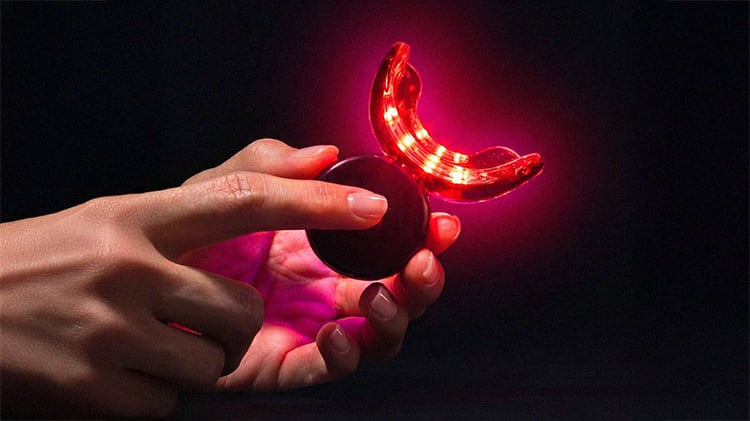
We’ve tested the leading red light therapy devices for gums—these are the ones that may make a difference
Red light therapy for gums is gaining attention as a simple, at-home way to support gum health, but it’s not a miracle fix. Yet, when used consistently, some devices may help reduce inflammation, calm bleeding, and support recovery alongside your regular brushing and flossing routine.
To find out what may potentially work, we tested 10 of the most popular red light therapy devices for gums over four weeks, working alongside two practising dentists to assess real-world effects. We looked at ease of use, comfort, treatment time, and whether we saw any improvements. As you’ll see, results vary depending on the device and your starting point, but a few stood out. Below, we break down our top four picks and who they’re best suited for.
Quick picks: best red-light devices for gums
- NovaaLab ORAL CARE PRO: Best overall for gum-focused use
- Glokore OralCare Plus: Best for hands-free, full-mouth light therapy
- BON CHARGE Red Light Toothbrush: Best for everyday brushing
- MitoMIN 2.0: Best compact panel option
- Hooga Torch with Precision Tip: Best for targeted treatment
Red light therapy devices for gums compared
We’ve compiled this shortlist to help you find the right device based on how you’ll actually use it—not just what the specs promise. As you’ll see, some are designed with oral care as the main focus, while others are better suited to quick daily routines or more targeted sessions, depending on what you need.
| Device | Wavelengths | Power density | Session time | Form factor | Best for |
| NovaaLab ORAL CARE PRO | 660nm red, 450nm blue | 28mW/cm² | 10 min | Intraoral mouthpiece | Full-mouth gum therapy |
| Glokore OralCare Plus | 620 nm red, 460 nm blue, 850 nm near-infrared | Not specified | 10–15 min | Cordless, rechargeable intraoral mouthpiece | Full-mouth, hands-free LED oral care |
| BON CHARGE Red Light Toothbrush | 660nm red, 830nm near-infrared | Not specified | 2 min | Electric toothbrush | Daily brushing routine |
| MitoMIN 2.0 | 660nm red, 850nm near-infrared | Highest irradiance claimed, but exact mW/cm² not listed | 10 min | Compact panel | Targeted panel use |
| Hooga Red Light Therapy Torch | 460nm blue, 630nm and 660nm red, 850nm and 940nm near-infrared | 120mW/cm² | 3 min | Handheld torch | Precision spot treatment |
NovaaLab ORAL CARE PRO
Best for: Dedicated gum therapy
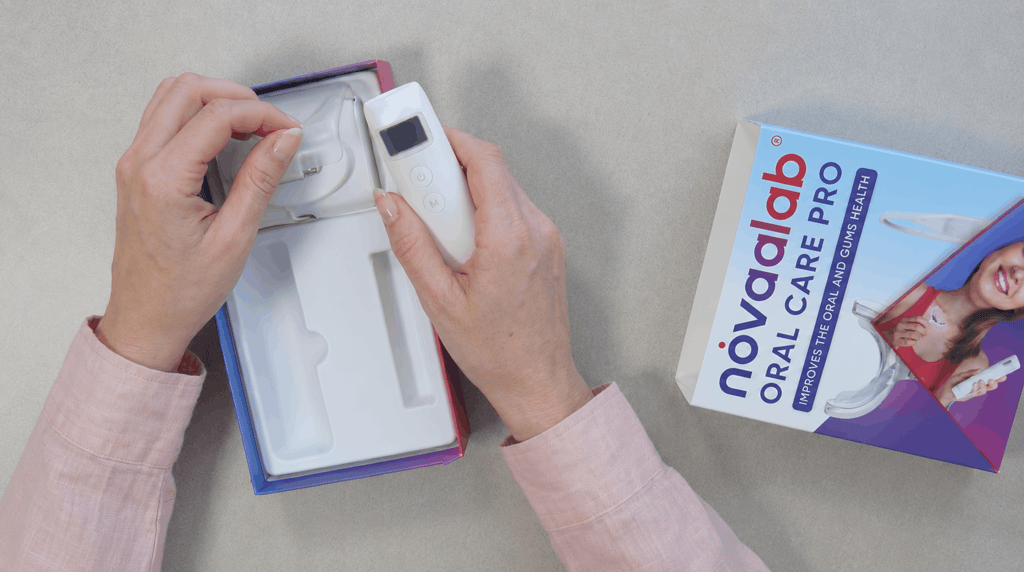
- Light: 660nm red light and 450nm blue light
- Power: 28mW/cm² power density
- Session time: 10-minute sessions
- Design: Intraoral mouthpiece design
After weeks of hands-on testing, we found the NovaaLab Oral Care Pro feels genuinely purpose-built for gum care rather than adapted from a broader red light device. From the start, it’s clear you’re using something designed specifically for your mouth, not a general wellness tool. The red-and-blue light setup, paired with a 10-minute daily routine, made it easy to stay consistent. This was especially felt when paired with regular brushing.
What stood out most is how focused the experience feels. Because you’re using a mouthpiece, the light stays concentrated exactly where you need it—no guesswork. In daily use, that made it feel more intentional and easier to stick with over time.
If you’re looking to support gum health or help manage sensitivity, this targeted approach may work well. That said, if you want a more flexible device, this likely won’t tick that box. You’re trading versatility for precision, and in our testing, it makes the most sense as a dedicated oral-care tool rather than an all-in-one red light solution.
- Purpose-built for gums
- Easy to use in one fixed routine
- Compact oral-care format
- Strong fit for focused at-home treatment
- Less versatile than a panel
- Optimal results depend on consistent use
- Not ideal if you want a multi-use device
Glokore OralCare Plus
Best for: Cordless, full-mouth LED oral care
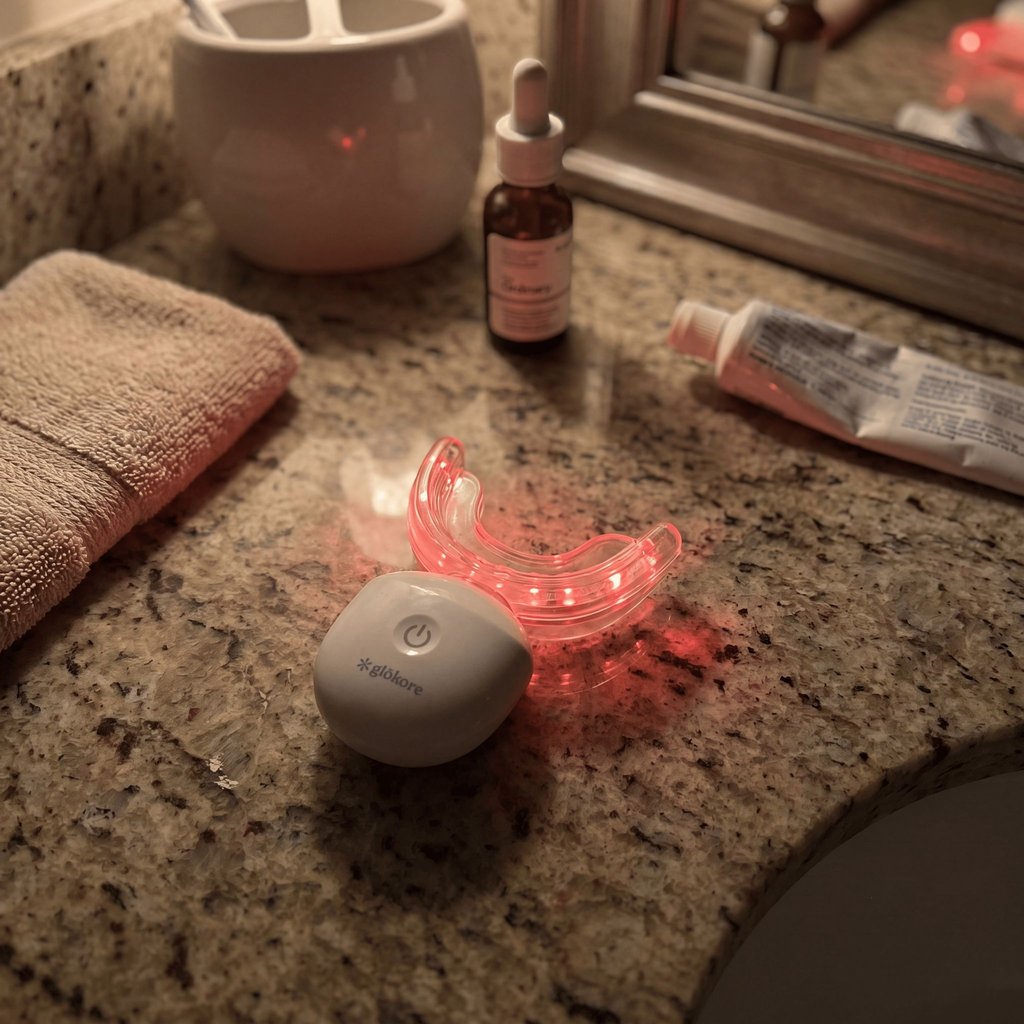
- Light: 460nm blue light, 620nm red light and 850nm near-infrared light
- Power: Not specified by Glokore
- Session time: 10–15 minutes
- Design: Rechargeable intraoral mouthpiece
Popping a glowing device into your mouth isn’t quite part of the standard morning routine just yet, but that’s where Glokore OralCare Plus makes a compelling case for hands-free light therapy. Built around a flexible, rechargeable mouthpiece, it fits comfortably over your teeth and gumline, sparing you from awkwardly holding a light wand against your face for 15 minutes.
It packs a triple-threat wavelength array: 460nm blue light (aimed at bacteria and breath freshness), alongside 620nm red and 850nm near-infrared light to target deeper gum tissue. In testing, the daily 10-to-15-minute sessions are easy enough to fold into a night-time wind-down. Hardware-wise, the 500mAh battery charges via a standard 5V/1A input in roughly two hours, offering solid cordless freedom.Where it leaves us guessing is pure power.
Glokore doesn't publish an irradiance or power-density figure, so there's no way to benchmark its actual output strength against rival light-therapy tech.It’s also important to manage expectations. While the combination of blue, red, and NIR light gives it a broader feature set than single-spectrum devices, this is an at-home wellness perk—not a magic wand. Think of it as a sleek supplement to your regular brushing and flossing, rather than a clinical fix for bleeding gums or periodontal disease.
- Cordless, rechargeable mouthpiece design
- Combines blue, red and near-infrared light
- Hands-free coverage during a fixed session
- IPX6 water-resistance rating for easier rinsing
- Irradiance and power density are not specified
- Manufacturer claims should not be treated as clinical evidence
- Less versatile than a panel or handheld device
BON CHARGE Red Light Toothbrush
Best for: Daily brushing routine
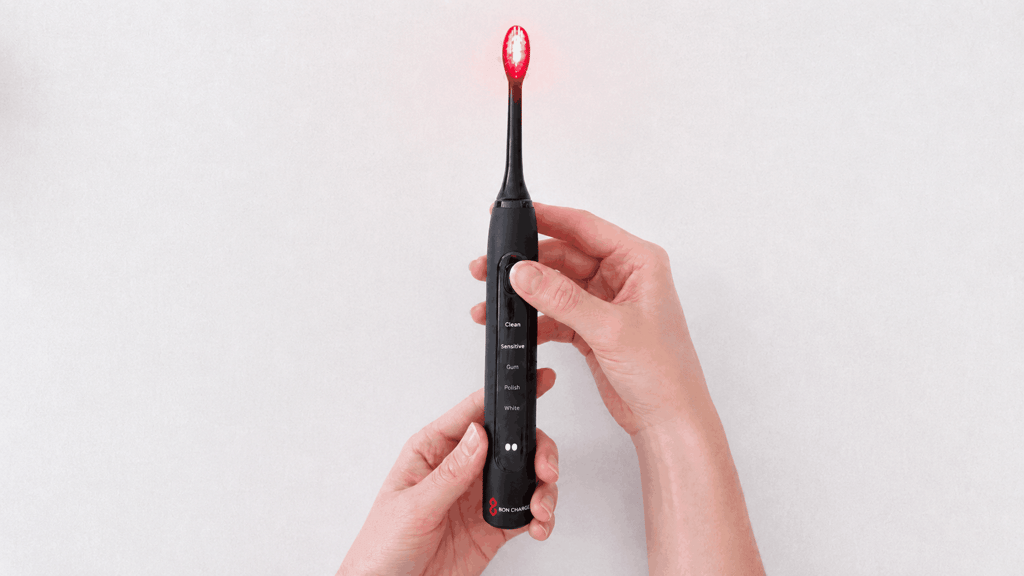
- Light: 660nm red light and 830nm near-infrared
- Power: Not listed
- Session time: 2-minute session
- Design: Electric toothbrush form factor
When testing it out, we liked how BON CHARGE Red Light Toothbrush fits seamlessly into an existing routine—there’s almost no learning curve. You simply hold the power button for a few seconds to activate the 660nm red light, and from there, you brush as you normally would. In practice, that ease of use made a real difference. We didn’t have to carve out extra time or remember a separate step, which made staying consistent far easier over the full four weeks.
Using the device naturally blended into daily use. Think: you’re not changing your habits—you’re just upgrading them. Over time, we noticed a subtle improvement in how gums felt after brushing. In particular, the gumline appeared less irritated. Charging via USB-C was straightforward, and battery life held up well without needing frequent top-ups.
If you’re already planning to upgrade your toothbrush, this feels like a low-effort way to introduce red light therapy. With that in mind, if you’re dealing with more advanced gum concerns, this may not go far enough. In our experience, it works best as a gradual, everyday enhancer rather than a targeted treatment device.
- Very easy to use daily
- Combines brushing and light therapy
- Short session time
- Good for routine-driven users
- Less targeted than a gum-specific device
- No published power density listed
- Not the best choice for deep-focused oral treatment
MitoMIN 2.0
Best for: Compact panel use
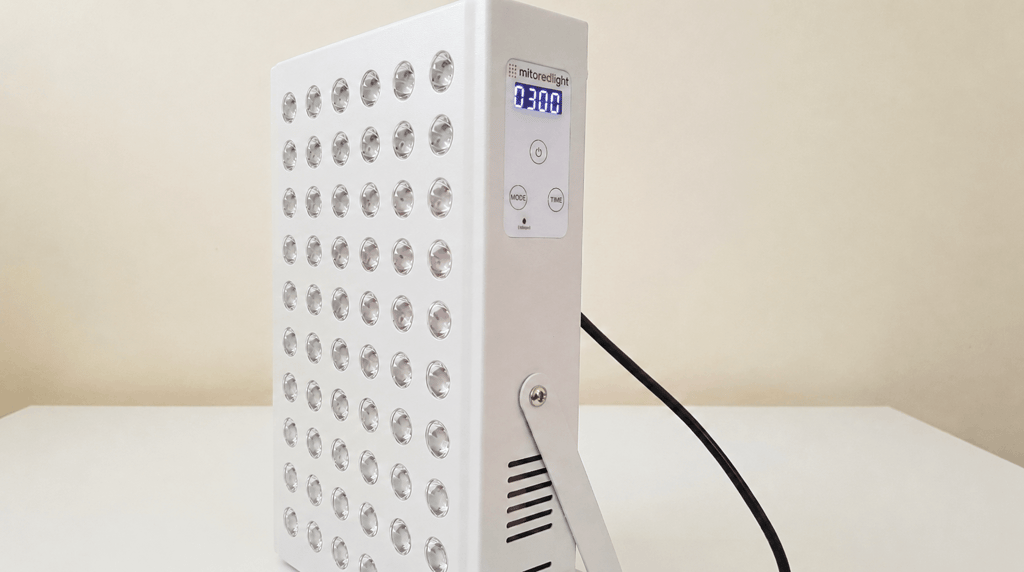
- Light: 660nm red light and 850nm near-infrared light modes
- Power: Not listed (54.6mW/cm² average claimed via 3rd-party lab testing).
- Session time: 10-minute sessions
- Design: Compact panel design
If you’re looking for something more versatile than a fixed mouthpiece, we found that MitoMIN 2.0 takes a very different approach in practice. During testing, we didn’t just use it for gums. You can angle the panel and apply its 660nm and 850nm light to areas like your jaw or even facial skin, which makes it feel more like a general-purpose recovery tool than a single-use device.
That flexibility does come with a bit of a learning curve. Unlike hands-free options, you’ll need to aim the panel and keep it positioned correctly. We noticed this most when targeting back teeth, where holding the light steady took a bit more attention to get consistent exposure.
Once you get used to it, though, it becomes easy to slot into short 5–10-minute sessions. The compact size also helps here, as you can leave it on your nightstand or pack it without thinking twice.
If you want a dedicated oral care device, this might feel less focused. But if you’d rather have one tool you can use across multiple areas, we noticed a level of flexibility that more specialized options simply don’t match.
- Compact and versatile
- Can be used beyond oral care
- Simple 10-minute routine
- Good if you already use red light panels
- Not gum-specific
- Requires careful positioning
- Less convenient than an oral mouthpiece
Hooga Red Light Therapy Torch
Best for: Precision treatment
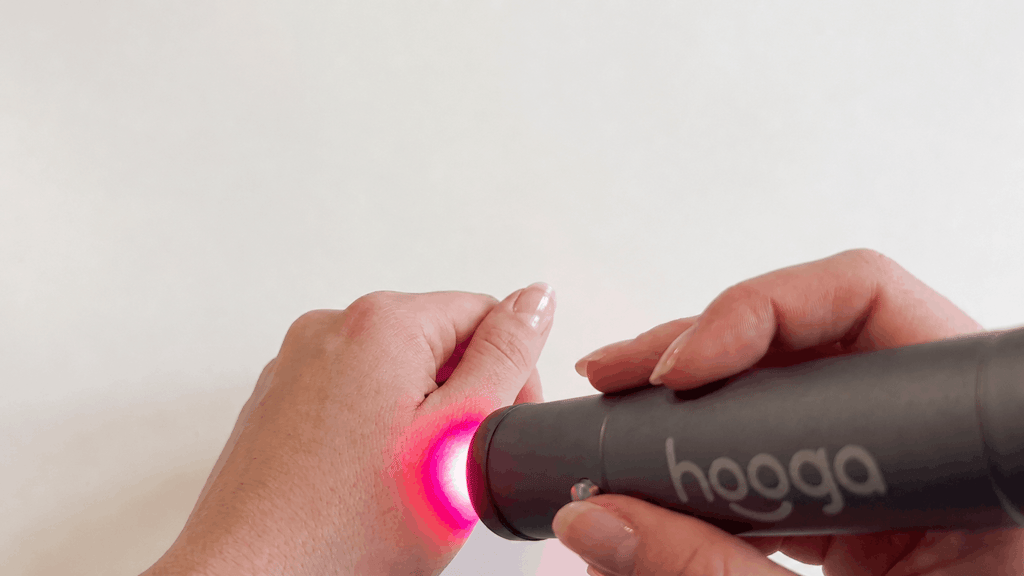
- Light: 460nm, 630nm, 660nm, 850nm, and 940nm wavelengths
- Power: 120mW/cm²
- Session time: 3-minute sessions
- Design: Handheld torch with a precision tip
During our experience with Hooga Red Light Therapy Torch, what stood out straight away is how much control it gives you. Instead of covering a wide area, you’re directing the light exactly where you need it. In reality, this can be a sensitive gum spot or a more localized area of inflammation. In practice, that precision made it easier for us to focus on problem areas without wasting time on broader, less effective exposure.
We also found output to be another key factor. Using 660nm red and 850nm near-infrared wavelengths, it delivered high intensity in a short window. That’s why we were able to keep sessions brief while still feeling like we were getting solid coverage. This was especially noticeable compared to lower-powered devices that may require longer use. However, you’ll need to stay hands-on. Holding the torch steady (particularly for intraoral angles) can get tiring if you’re trying to be precise. If you’re after something you can use passively, this won’t be the best fit.
Still, if you value speed, portability, and targeted application, we found this is one of the more practical options. It’s best suited if you want quick, focused sessions rather than a set-and-forget experience.
- Very precise application
- High power density
- Short session time
- Portable and easy to aim
- Less comfortable for longer use
- Requires manual handling
- Not as seamless for daily routines
How we tested red light therapy devices for gums
To judge these devices fairly, we focused on the parts that matter in everyday use, not just the numbers on the box. We verified the advertised wavelengths and irradiance where possible, then checked how each device actually felt in the mouth or against the gum line. Comfort, heat, and fit were key, because a device that feels awkward or runs too warm is hard to stick with.
We also looked at battery life, cleaning simplicity, and whether mouthpiece-style designs were easy to keep hygienic between uses. To make the testing more meaningful, we tracked basic dental markers such as plaque and bleeding before and after regular use, alongside feedback from dental professionals. That gave us a clearer view of which devices were simply well-marketed and which ones were genuinely practical for consistent gum care.
How to choose the best device for gum health
Choosing the right red light therapy device for gums comes down to how well it fits your mouth, your routine, and your budget. A device can look impressive on paper, but if it does not reach the gum line comfortably or consistently, it will not do much in practice. Here are some of the key factors to consider:
- Coverage. Make sure the light reaches the full gum line, not just the front teeth or a small spot.
- Power. Higher output can be useful, but the device still needs to feel comfortable enough for regular use.
- LED mix. Look for devices that combine red and near-infrared light, since that may give you a more complete oral-care setup.
- FDA listing. This can offer extra reassurance, but it should not outweigh comfort, design, or usability.
- Hygiene. If you are choosing a mouthpiece-style device, check that it is easy to clean and keep sanitary.
- Budget. The best option is the one you will actually use consistently, not simply the cheapest one.
Do red-light devices actually work for gums?
Yes, a red light device may help, but more as a support tool, not a cure. Red light therapy may help with gum inflammation, bleeding, and overall oral care. This potential lies in helping cells produce more energy, improving blood flow, and supporting collagen function.
That said, it is not a magic fix for gum recession. Receding gums usually need proper dental care, and red light therapy works best when it is used consistently alongside brushing, flossing, and professional treatment. In other words, it may help encourage tissue recovery and calm irritated gums, but it will not reverse structural loss on its own.
The most realistic way to think about it is this: red light therapy may help gum condition, especially in early irritation or after dental procedures. However, optimal effects depend on the device, the routine, and the starting point.
Best wavelengths for gum treatment
For gum care, possibly the most useful red light tends to sit in the 630 to 670nm range, which is well suited to surface tissues like the gum line. That makes it a strong choice when the goal is to calm irritation, support recovery, and target the area you can actually see and reach. For deeper support, especially around the periodontal ligaments, 810 to 850nm near-infrared light may be the better fit because it can potentially penetrate further into tissue.
In practice, a combination of both is usually the most flexible option. That may give you surface-level coverage plus deeper reach, which is why dual-wavelength devices often make the most sense for red light therapy for gums.
Mouthpiece vs. toothbrush LEDs vs. panels
Different device styles suit different routines, but they do not perform the same way. If you want the light to sit directly over the gum line with minimal effort, a mouthpiece is usually the most practical choice. Toothbrush LEDs are easier to fold into an existing habit, while panels give you more flexibility but require more careful positioning.
| Format | Strengths | Trade-offs |
| Mouthpiece | Best gum-line coverage, hands-free, easy to stay consistent | Less versatile, usually only useful for oral care |
| Toothbrush LEDs | Built into daily brushing, fast and convenient | Less targeted, often lighter on coverage |
| Panels | More flexible, can be aimed more precisely, useful beyond gums | Harder to position, less convenient for oral use |
For most people, the mouthpiece wins on coverage and convenience, especially if the goal is to keep sessions simple enough to repeat every day.
Final verdict: Which device should you choose?
If you want the safest all-around choice, we’d go with NovaaLab ORAL CARE PRO for its gum-focused mouthpiece design and dedicated oral-care setup. If budget and everyday convenience matter more, the BON CHARGE Red Light Toothbrush is the easiest option to stick with because it slots straight into your brushing routine. For those who want a more advanced, high-power setup, Hooga’s Red Light Therapy Torch is the pro-style pick thanks to its strong output and precise targeting.
In every case, the best device is the one you’ll actually use consistently, because red light therapy for gums works best as part of a regular routine, not as a quick, magical fix.
References
-
Clinical and preclinical evidence on the bioeffects and optimal parameters of photobiomodulation.
-
Photobiomodulation with Red and Near-Infrared Light.
-
Effectiveness of an 810-nm Diode Laser in Addition to Non-Surgical Periodontal Therapy.
-
Effect of Low-Level Laser Therapy on Periodontal Host Cells.