We tested these Android-capable smartwatches—here are the best options to consider in 2026
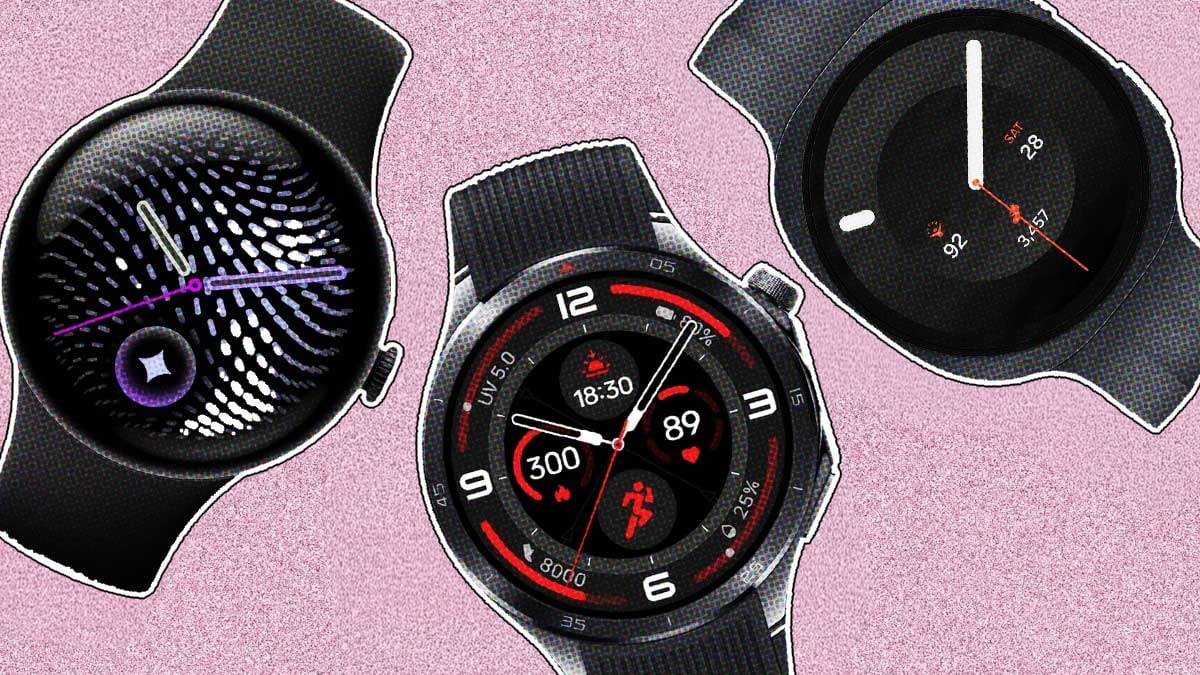
If you have an Android phone, there are more great smartwatch options than ever. Google Pixel Watch 5, Samsung Galaxy Watch 9, OnePlus Watch 3, and Samsung Galaxy Watch Ultra 2 lead the Wear OS lineup. These top picks combine Google apps, useful notifications, payments, and comprehensive fitness tracking.
Each is best suited to a different type of buyer. We recommend the Pixel Watch 5 for a seamless Google and Fitbit experience, the Galaxy Watch 9 for Samsung phone owners, the OnePlus Watch 3 for longer battery life, and the Galaxy Watch Ultra 2 for a larger, more rugged sports watch.
Wear OS is not the only option, though. Garmin Venu 4, Amazfit Balance 2, Xiaomi Watch 2, and Withings ScanWatch Light also pair well with Android, offering alternatives that place greater emphasis on training, battery life, health tracking, or a more traditional watch design.
At a glance: Best Android smartwatches
- Google Pixel Watch 5 - Best overall Android smartwatch
- Samsung Galaxy Watch 9 - Best smartwatch for Samsung phone owners
- OnePlus Watch 3 - Best Wear OS smartwatch for battery life
- Samsung Galaxy Watch Ultra 2 - Best premium Android sports watch
- Garmin Venu 4 - Best Android smartwatch for fitness tracking
Google Pixel Watch 5: Best Android smartwatch for most people
Overview
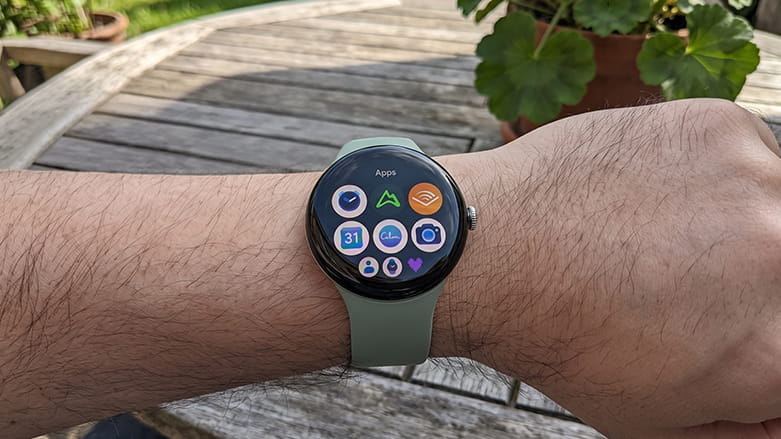
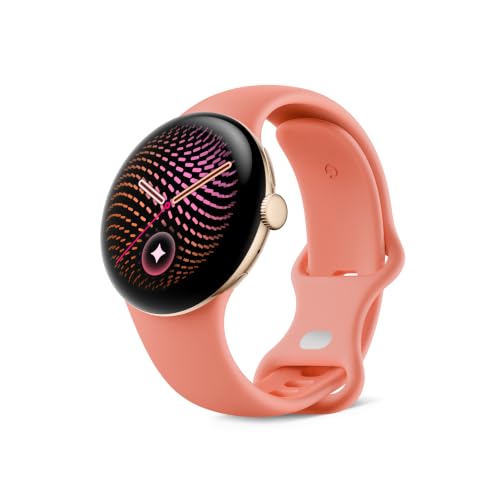
Google Pixel Watch 5 is our top Android smartwatch for most people because it gets the essentials right: it is comfortable enough to wear all day, provides a full Wear OS experience, and brings Google and Fitbit features together in one intuitive package.
In practice, that means you can handle notifications, calls, Google Wallet payments, Google Maps directions, music controls, and apps without constantly reaching for your phone. It also offers detailed everyday health tracking through Fitbit, including heart rate, sleep, activity, stress-related body responses, skin temperature, and blood oxygen monitoring.
The choice of 41mm and 45mm cases is something to note. The smaller model is better suited to slimmer wrists and those who prefer a less noticeable watch, while the 45mm version offers more screen space and a stronger quoted battery life. Both use a bright curved AMOLED display that is easy to read outdoors, and the fast-charge dock can add up to 15 hours of use in 15 minutes. This is so useful when the watch needs a top-up before bed to track sleep.
Why we recommend it
The Pixel Watch 5 is our top pick because it delivers the smartwatch features most Android users will use every day in a design that is comfortable enough to keep on overnight. Wear OS gives you quick access to Google Maps, Wallet, calendar alerts, messages, music controls, and a broad app selection, while Fitbit makes activity, heart-rate, sleep, and wellness data easy to understand rather than burying it in technical detail.
It also has the practical hardware to back up that experience. The choice of 41mm and 45mm cases makes it easier to find a comfortable fit, and the curved AMOLED display is bright enough for outdoor checks during a run or walk. Google’s fast-charge dock is particularly useful for regular sleep tracking: the 41mm version is quoted to reach 50% in around 15 minutes and the 45mm version in the same time, helping to make short top-ups easier to fit into a daily routine.
Fitness features go beyond basic step counting. Dual-frequency GPS is intended to improve outdoor route tracking, while Fitbit supports structured runs, HIIT, and strength workouts, including on-screen reps, sets, rest periods, and guidance. The 45mm model’s continuous-GPS runtime of around 8–10 hours should be enough for a marathon, most long training sessions, and a full day of regular activity, though it is not designed for multi-day endurance events without recharging.
Battery life is strongest in the 45mm version, which Google rates for up to 40 hours with the always-on display enabled; the 41mm model is rated for up to 30 hours. Sleep tracking adds a relatively low overnight drain (roughly 1–2.5% per hour based on early user reports), so the watch can normally record a night’s sleep without undermining the next day. Actual results will change with GPS, display, LTE, notifications, and workout use.
Read our Google Pixel Watch 5 review.
- Excellent Google and Fitbit integration
- Bright, high-resolution AMOLED display
- Full Wear OS app, payment, navigation, and notification support
- Battery life is shorter than some of the dedicated fitness watches
- Less suited to multi-day outdoor activity than Garmin-focused alternatives
Samsung Galaxy Watch 9: Best smartwatch for Galaxy phone owners
Overview
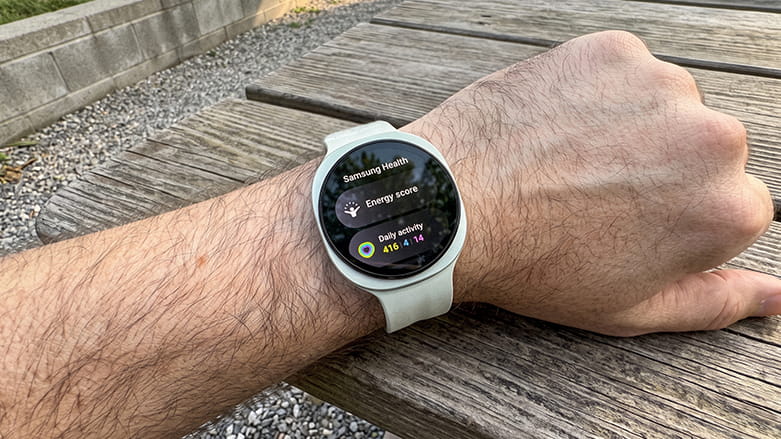
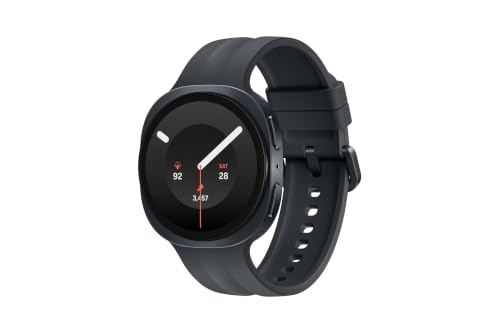
Galaxy Watch 9 is Samsung’s best mainstream smartwatch and the first natural choice for people with a Galaxy phone. It combines a slim, lightweight design with Wear OS, Google Play apps, Google Wallet, maps, music controls, and Samsung Health in a watch that is designed for continuous day-and-night wear.
The key upgrade is its focus on turning routine data into useful guidance. The new Vitals feature may detect trends in overnight heart rate, heart-rate variability, breathing rate, skin temperature, and blood-oxygen levels. Then, it compares them against your personal baseline.
It is not a medical diagnostic tool, but it may help flag when your usual sleep or recovery pattern has shifted. Energy Score and Sleep Coaching provide a simple snapshot of recent sleep and activity. Daily Cardio Load tracks cardiovascular strain from workouts and higher-intensity daily movement, then compares recent workload with estimated recovery capacity. It offers useful training context, rather than prescriptive instructions.
Fitness Index takes a longer-term view, combining metrics such as heart rate, estimated VO₂ max, steps, activity, and body composition where available into a broad score of fitness progress.
Both sizes are notably slim at 8.6mm; this makes them more comfortable for sleep tracking than chunkier sports watches. The 44mm version offers a larger screen and a 445mAh battery, while the 40mm version has a 390mAh cell and is the better fit for smaller wrists. Samsung quotes up to 30 hours with the always-on display enabled, which is enough for a full day and a night of tracking.
Why we recommend it
We recommend Samsung Galaxy Watch 9 to Galaxy phone owners. Although it can pair with compatible Android phones, several of its most advanced health insights (such as Vitals and Heart Health Score) require a Samsung Galaxy phone, Samsung Health, and a Samsung account. ECG and irregular-heart-rhythm notifications also have Galaxy phone and regional availability requirements.
For everyday use, though, it is an excellent all-rounder. The bright display is easy to read outdoors, dual-frequency GPS should improve route tracking in built-up areas, and the watch includes the full collection of practical Wear OS extras. These make a difference outside of exercise: payments, turn-by-turn directions, apps, calls on LTE versions, and Google Gemini voice assistance.
The trade-off is battery life. If you want several days between charges or more in-depth endurance-sport analysis, OnePlus Watch 3 or Garmin Venu 4 will be the stronger alternatives. But if you own a Samsung phone and want the most synced-up smartwatch experience for sleep, health trends, exercise, and daily connectivity, Galaxy Watch 9 is our top pick.
Read our Samsung Galaxy Watch 9 review.
- Slim and light design in two case sizes
- Smart integration with Samsung Galaxy phones
- Strong sleep, recovery, heart-health, and fitness tools
- Best health features require a compatible Samsung Galaxy phone
- Battery life is modest compared to dedicated fitness watches
OnePlus Watch 3: Best for battery power
Overview
After re-entering the smartwatch market in 2024 with a strong trio of second-generation watches, OnePlus Watch 3 is the brand's latest major model.
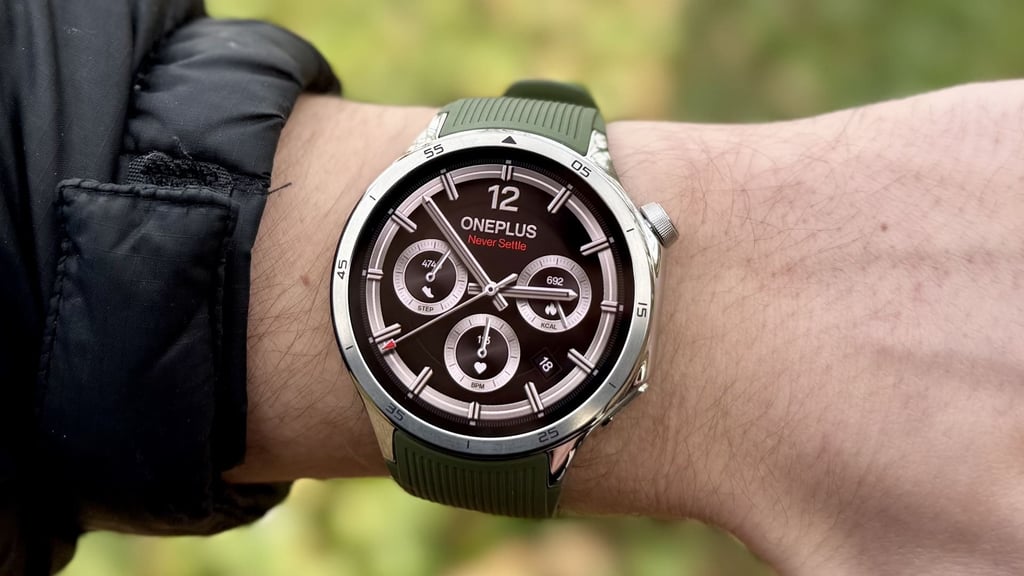
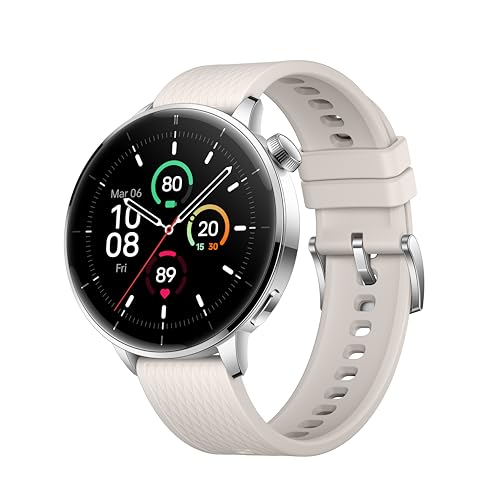
The standard OnePlus Watch 3 has a large 46mm case, so it can feel imposing on smaller wrists and less discreet during all-day wear. OnePlus also sells a 43mm version, which is the better option if you want the same Wear OS experience in a more compact, lighter design.
Neither size is available with LTE, so both rely on a nearby phone or Wi‑Fi connection for calls, messages, and data when you are away from home. That will not matter to everyone, but it is worth considering if standalone connectivity is a priority.
Still, it remains the best option right now for anyone seeking true multi-day battery life in a Wear OS watch. The secret to the battery's longevity remains the brand's clever dual-chip system. The Snapdragon W5 is used for power-intensive tasks, while the updated BES 2800BP MCU is used for low-power features like notification scanning and AOD.
This improved efficiency means the Watch 3 can go just that bit more than Google or Samsung's watches. We found that around 70 hours of battery life is possible, even with AOD enabled in heavy use, making it the longest-lasting Wear OS watch on the list. It can also reliably stretch another couple of days if you disable AOD for the cycle.
The OnePlus Watch 3 runs Wear OS 5, giving you familiar essentials such as Google Play apps, Google Wallet, Maps, notifications, and music controls. We found the software quick and easy to navigate.
Health tracking includes heart rate, blood oxygen, sleep, wrist temperature, and a Mind and Body score that summarizes recent activity, recovery, and rest. Its 60-Second Health Check-In can collect several readings at once, though availability varies by country.
It's not the perfect smartwatch. We still recommend Google's 45mm Pixel Watch 4 over it—and the Galaxy Watch Ultra if your budget allows it—but it's the best of the rest. Just make sure you're comfortable with its downsides before buying it.
Check out our full OnePlus Watch 3 review.
- Impressive three days of AOD time
- Helpful tweaks to the design
- Improved health features
- No LTE option
- Only available in one case size
Samsung Galaxy Watch Ultra 2: Best premium Android sports watch
Overview
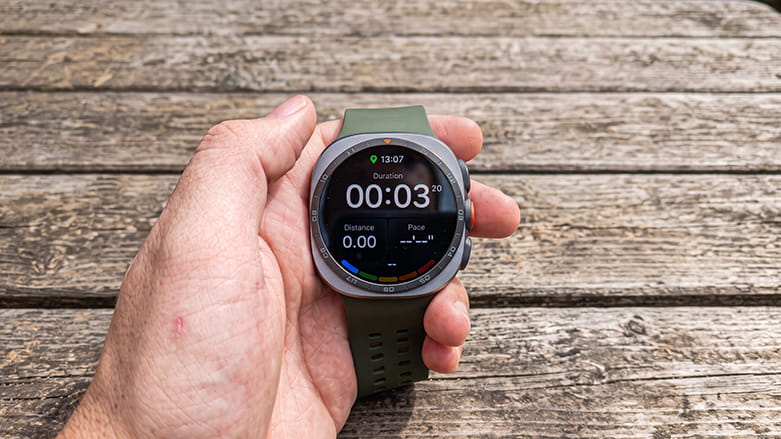
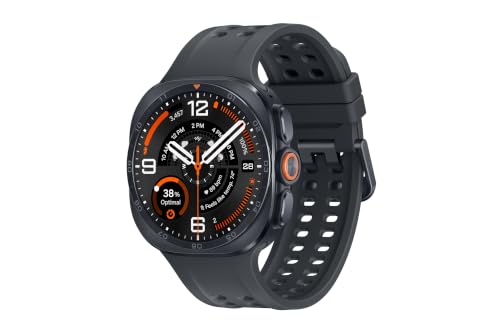
The Galaxy Watch Ultra 2 is Samsung’s best option for outdoor training, combining LTE, dual-frequency GPS, GPX route guidance, and a large 1.52-inch AMOLED display in a titanium case. Its 800mAh battery is rated for up to 60 hours of use, making it better equipped than the Galaxy Watch 9 for long workouts and weekends away from a charger.
The familiar 47mm cushion-shaped design is slimmer than before, while the screen reaches up to 5,000 nits for clearer outdoor viewing. It is also built for tougher conditions, with IP69K, 10ATM, and EN13319 diving certification.
The titanium case is designed for durability, and it has the credentials to back it up. Alongside 10ATM water resistance and IP69K protection against dust and high-pressure water, the Ultra 2 is Samsung’s first watch certified to the EN13319 diving-instrument standard.
Its Depth app shows live depth, water temperature, and elapsed dive time down to 40m. That will matter to recreational divers, but swimmers and trail runners will also benefit from the extra reassurance of its tougher construction in case of a fall or heavy rain.
Battery life is the defining upside. This watch has an 800mAh cell (35% larger than the prior generation) and quotes up to 60 hours with the always-on display active. That is a meaningful improvement over most Wear OS watches, particularly if you want to record long workouts, sleep with the watch, and avoid treating charging as a daily chore. Moreover, fast charging can restore up to 40% in around 30 minutes.
Why we recommend it
We recommend Samsung Galaxy Watch Ultra 2 for Android users who want a premium smartwatch with genuine outdoor and endurance benefits. The large 1.52-inch screen reaches up to 5,000 nits, making workout data and navigation much easier to see in direct sunlight.
Dual-frequency GPS, GPX route support, turn-by-turn guidance, climb information, and direct support for compatible cycling sensors strengthen its appeal for trail runners, hikers, and cyclists.
It is still a complete Wear OS smartwatch, rather than a stripped-back sports watch. You get Google Play apps, Google Maps, Google Wallet, messaging, music, optional LTE connectivity, and Gemini voice controls.
Although not to be treated as medical insights, Samsung Health adds sleep tracking, Energy Score, running guidance, training-load context, and broader health insights. Some advanced Samsung Health tools and regional health functions require a compatible Galaxy phone, Samsung account, and supported country.
The biggest drawback is simple: this is a single 47mm watch that looks large and bulky on smaller wrists, despite the slimmer case. If you want Samsung’s software in a lighter everyday design, Galaxy Watch 9 is a better match.
If your priority is a premium Android watch with brighter hardware, more battery headroom, and far stronger water and outdoor credentials, the Ultra 2 is the one.
Read our Samsung Galaxy Watch Ultra 2 review.
- Rugged titanium build with serious water and dust protection
- Bright, large AMOLED display for outdoor use
- Up to 60 hours of quoted always-on battery life
- Premium positioning makes it overkill for basic smartwatch needs
- Some health features work best with a Samsung Galaxy phone
Garmin Venu 4: Best Android smartwatch for fitness
Overview
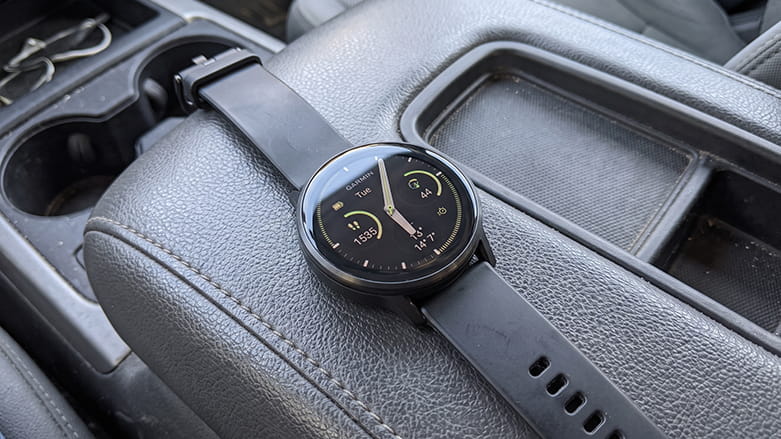
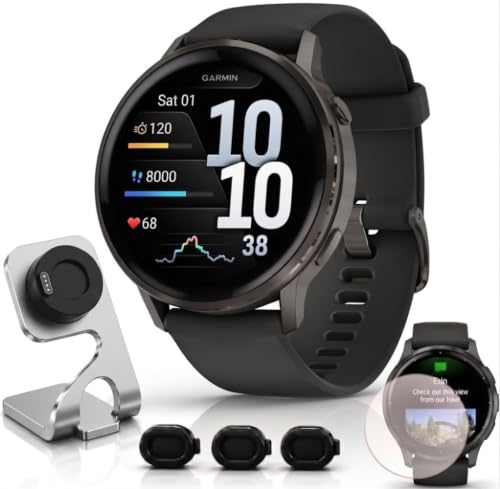
Garmin Venu 4 is the best choice here for Android users who prioritize fitness, training, and battery life instead of a deep smartwatch app experience. It looks more like an everyday smartwatch than Garmin’s overtly sporty Forerunner range, but it brings many of the training and recovery tools that make Garmin one of the strongest tools in fitness tracking.
Venu 4 is available in 41mm and 45mm sizes, both with a more premium stainless-steel finish than the earlier Venu models. It remains comfortable for all-day wear and sleep tracking, while the brighter AMOLED display is far easier to read outside than before. Both sizes also gain a built-in LED flashlight—a surprisingly useful addition for finding keys, moving around the house at night, or staying visible on late-night runs.
Garmin’s dual-frequency GPS is the headline sports upgrade. In our testing, it delivered dependable route and distance data, representing a clear improvement over the previous Venu generation’s single-band positioning.
It also supports multi-sport activity tracking, strength-focused Garmin Coach plans, Daily Suggested Workouts, breadcrumb navigation, back-to-start guidance, and Training Readiness. That makes Venu 4 a strong choice for runners, cyclists, gym-goers, and even first-time triathletes.
Why we recommend it
We recommend the Venu 4 for anyone who wants Garmin’s deeper health and fitness tracking in a smartwatch that looks just as suitable for everyday wear as it does for workouts. It can track heart rate, sleep, stress, respiration, HRV, Pulse Ox when enabled, and skin temperature, then translates that data as Body Battery, Training Readiness, Morning Report, Evening Report, and the new Health Status view.
Android users can view image-rich notifications, reply to messages, manage calls through the built-in microphone and speaker, and mirror Google Maps directions. Moreover, Garmin Pay, offline music through supported services such as Spotify and YouTube Music, and the Connect IQ store add useful flexibility. However, it cannot match the variety of apps, payment support, cellular options, or overall polish offered by Wear OS watches such as Google Pixel Watch 5 and Samsung Galaxy Watch 9.
Battery life is its other major strength. We typically saw around five days with the always-on display enabled, and the quoted 10-day and 12-day figures are realistic if you use the gesture-activated display instead. That makes the Venu 4 far easier to wear consistently for sleep, recovery, and training than a watch that needs near-daily charging
Read our full Garmin Venu 4 review.
- Dual-frequency GPS and dependable fitness tracking
- Solid training, recovery, sleep, and energy insights
- Long battery life compared with Wear OS smartwatches
- Expensive for a fitness-focused smartwatch
- App selection remains limited besides Wear OS
Amazfit Balance 2: Best value fitness smartwatch for Android
- Size: 47.4mm
- Display: 1.5-inch AMOLED, 480 x 480 pixels, sapphire glass, and up to 2,000 nits peak brightness
- Connectivity: Bluetooth 5.2, Wi‑Fi, NFC, dual-band GPS, and six satellite systems
- Weight: 43g without the strap
- Operating system: Zepp OS
- Battery life: Up to 21 days with typical use, up to 10 days with heavy use, or up to 33 hours in its most accurate GPS mode
- Phone compatibility: Android and iPhone
- Storage: 32GB
- Water rating: 10ATM; suitable for swimming and recreational diving to 40m
- Sensors: BioTracker 6.0 PPG biometric sensor, accelerometer, gyroscope, geomagnetic sensor, barometric altimeter, ambient-light sensor, and temperature sensor
Overview
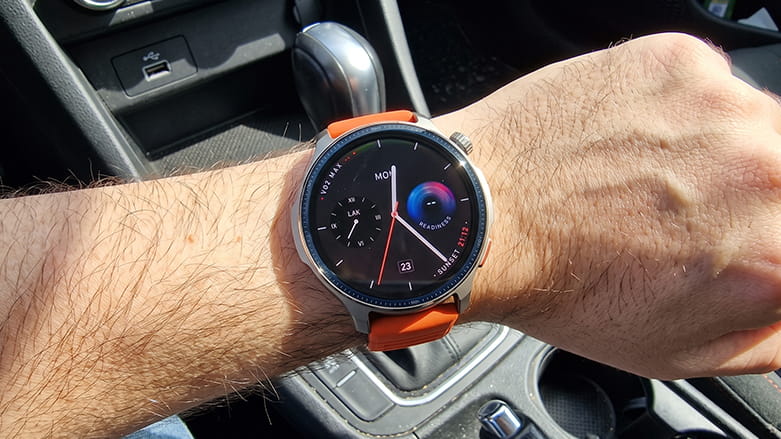
Amazfit Balance 2 is a feature-packed alternative to Wear OS watches for people who want strong fitness tracking, a big AMOLED display, and genuinely long battery life without paying for a top-tier sports watch. It is a large, round smartwatch with a 47mm case, but its 43g body keeps it comparatively easy on the wrist.
Amazfit has made several useful hardware upgrades over the original Balance. The screen is protected by sapphire glass, which should be more scratch-resistant than the Gorilla Glass used on many mainstream smartwatches.
Water resistance was also increased to 10ATM compared to the previous gen, and the Balance 2 supports recreational dives to 40m through its dedicated diving mode. These upgrades give it a more durable, sport-ready feel than many rivals at this level.
The 1.5-inch AMOLED display is bright and sharp, while the combination of dual-band GPS and six different satellite navigation systems is designed to improve route accuracy in difficult environments, such as tree-covered trails and city streets.
It also supports offline maps, downloadable route files, turn-by-turn directions, and more than 170 sport modes, including dedicated options for Hyrox, golf, running, cycling, swimming, strength training, and multisport workouts.
Why we recommend it
We recommend Balance 2 to Android users who want a capable health and fitness watch but do not need the deep app support, cellular option, or Google services, like the ones offered by Pixel Watch 5 and Samsung Galaxy Watch 9.
Its smartwatch experience is more limited, but it covers the basics well: notifications, Bluetooth calling, music controls, offline music storage, NFC payments in supported regions, and Zepp Flow voice assistance.
The major benefit is its battery life. Amazfit quotes up to 21 days in typical use or 10 days with heavy use, and even with its accuracy-focused GPS mode, the watch lasts up to 33 hours. That makes it much more practical for holidays, multi-day hikes, or anyone who wants consistent sleep and recovery tracking without having to plan their routine around a charger. Real-world longevity will vary with display settings, GPS use, calls, and notifications, but it comfortably outlasts most full Wear OS watches.
In our testing, Amazfit Balance 2 delivered reliable dual-frequency GPS tracking and accurate heart-rate data, supporting its status as one of the strongest fitness watches in its class. The Zepp app also presents a broad range of wellness information, including sleep, stress, readiness, heart rate, blood oxygen, and training load. Keep in mind that these measurements are best used to monitor personal trends, rather than diagnose a health condition.
Zepp OS is quick and easy to use, but it has far fewer downloadable apps than Wear OS. Its health dashboard also presents several calculated scores (such as BioCharge, sleep, stress, and training load) at once. These can be useful once you understand what feeds each score, but newcomers may need time to learn how their sleep, heart rate, activity, and stress data affect the results. Still, if battery life, fitness features, GPS, and durability matter more than Google apps on your wrist, Balance 2 offers outstanding all-around value.
Read our full Amazfit Balance 2 review.
- Sapphire glass and 10ATM water resistance add useful durability
- Long battery life, even with regular exercise tracking
- Reliable dual-band GPS and strong heart-rate performance
- One large 47mm size may not suit smaller wrists
- No LTE connectivity
Xiaomi Watch 2: Best budget Android smartwatch
Overview
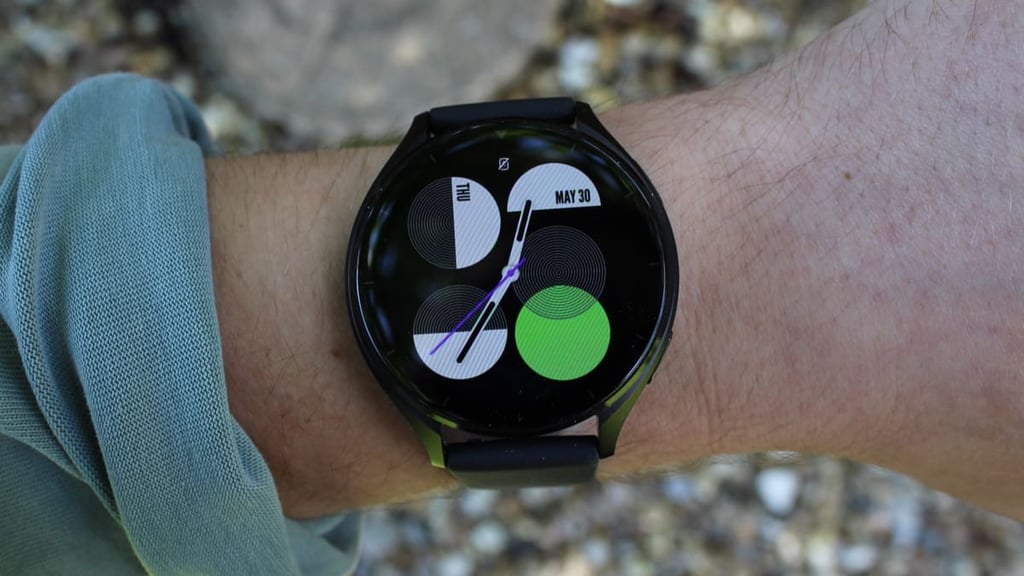
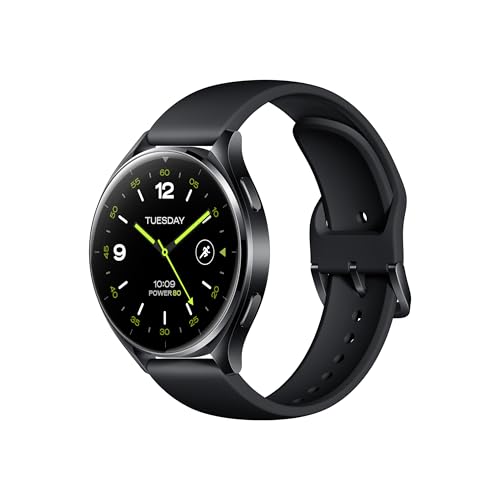
Though now a little long in the tooth, the Xiaomi Watch 2 remains the best budget Wear OS option.
The build quality and display are superb for a cheaper smartwatch, and it doesn't feel like a sacrifice. It's exceptionally light to wear and features a glorious full AMOLED display.
You also get the full suite of Google Play Store apps and Google Pay, making it significantly more advanced than budget rivals in terms of smart features. It even boasts GPS and, during testing, delivered better heart rate tracking performance than its more expensive Pro sibling. While not the gold standard, casual gym-goers and runners will achieve usable accuracy.
As you would expect at this price, there are compromises. In real-world testing, we found the battery life to be limited to a single day, which seems somewhat outdated when most other Wear OS watches can comfortably surpass this.
Why we recommend it
We recommend Xiaomi Watch 2 for Android users who want a proper Wear OS smartwatch without stepping up to a more premium model. It gives you the essentials that cheaper fitness watches often miss, including Google Play apps, Google Wallet, Maps, Spotify, WhatsApp, notifications, and built-in GPS.
It is also light and comfortable for a 46mm-class watch, with a sharp AMOLED screen and solid heart-rate performance in our testing. The trade-off is battery life: with everyday features enabled, expect to charge it daily. If that is manageable, the Watch 2 remains a very capable entry point to Wear OS.
Check out our full Xiaomi Watch 2 review.
- Superb price tag
- Light and attractive design
- HR accuracy is very solid
- Battery life is very average
- Doesn’t run Wear OS 4
Withings ScanWatch Light: Hybrid smartwatch alternative with classic design and health focus
- Size: 36.8mm
- Display: 0.63-inch grayscale OLED display, 14,504 pixels, 282ppi, alongside analog hour and minute hands
- Connectivity: Bluetooth Low Energy; connected GPS through a paired smartphone
- Weight: 27.1g without strap
- Chipset: Not disclosed by Withings
- Battery life: Up to 30 days of typical use; around two hours to recharge
- Storage: Not applicable for apps or media; stores up to five days of activity data before syncing
- Water rating: 5ATM / 50m
- Sensors: Multi-wavelength PPG optical heart-rate sensor and accelerometer
Overview
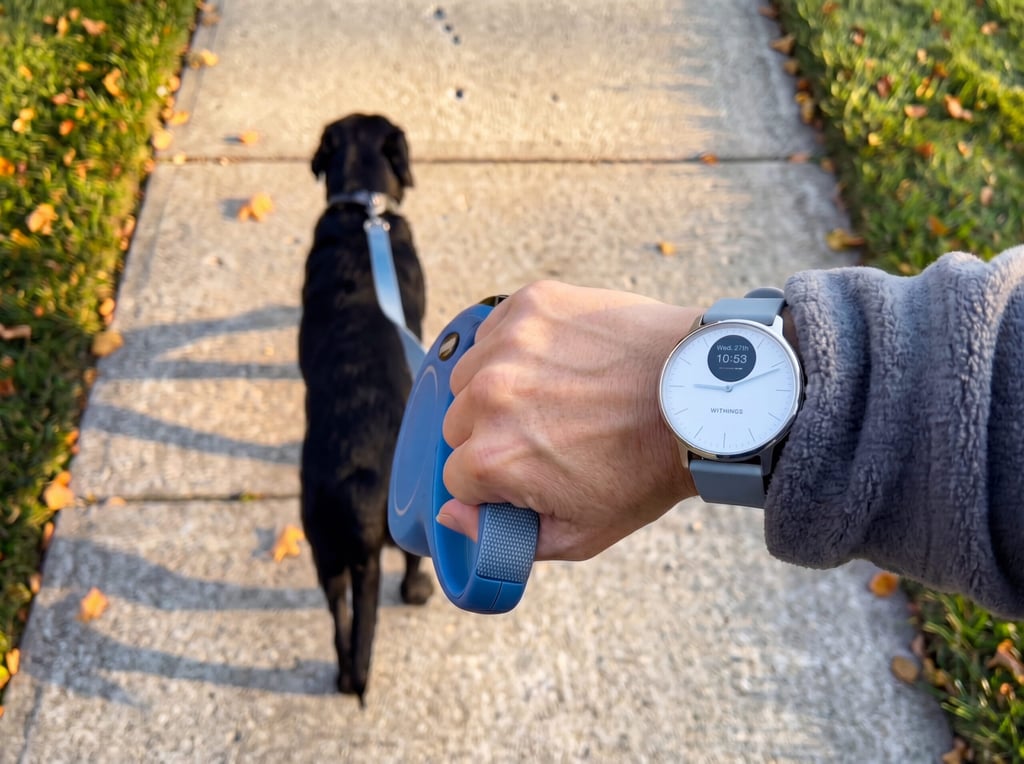
Withings ScanWatch Light is a simple health data smartwatch with a classic look. It doesn’t try to be a smartphone on your wrist. Instead, it sticks to the basics: heart rate monitoring, sleep tracking, and activity tracking.
It’s perfect for users who get easily lost in all the features smartwatches have nowadays. Most importantly, the hybrid design (a traditional watch face with a small grayscale OLED sub-display) makes it one of the few wearables that don’t scream ‘tech gadget.’ It styles easily with any outfit, from gym clothes to a dress.
Another upside is the battery. It can last up to 35 days, depending on use. You might even forget to charge it. Sure, it lacks flashy apps, animations, and color screens, but that’s the point, right? That said, you get a health tracker with a minimalist vibe, not a distraction on your wrist.
Why we recommend it
In the land of chunky smartwatches, we need one that is more dainty and stylish. That doesn’t mean it’s less accurate than others.
Yes, you won’t get some in-depth insights that more advanced smartwatches offer, but if you seek basic, easy-to-understand fitness metrics, it’s the one. Withings ScanWatch Light is simple without feeling limited—exactly the kind of wearable that quietly gets out of your way and just works.
Read our Withings ScanWatch Light review.
- Clean, classic design
- Exceptionally long battery life
- Simple fitness metrics
- Fitness metrics aren’t as detailed as high-end smartwatches (con for some)
- Small OLED display shows only essential info (con for some)
Two alternatives for Android users from our reviews
There are also different options for those unsure whether Wear OS is the right smartwatch platform. These picks still work well with Android smartphones and offer an alternative software experience to Google's.
Garmin Venu X1
- Size: 46mm
- Display: 2-inch AMOLED with sapphire crystal
- Connectivity: GPS, GLONASS, Galileo, Wi-Fi, Bluetooth
- Weight: 40g (with strap)
- Battery life: Up to 2 days (AOD enabled) / Up to 7 days (smartwatch mode)
- Phone compatibility: Android and iOS
- Storage: 32GB
- Water rating: 5ATM (50 meters)
- Sensors: SpO2, PPG (Elevate Gen 5), accelerometer, compass, thermometer
Overview
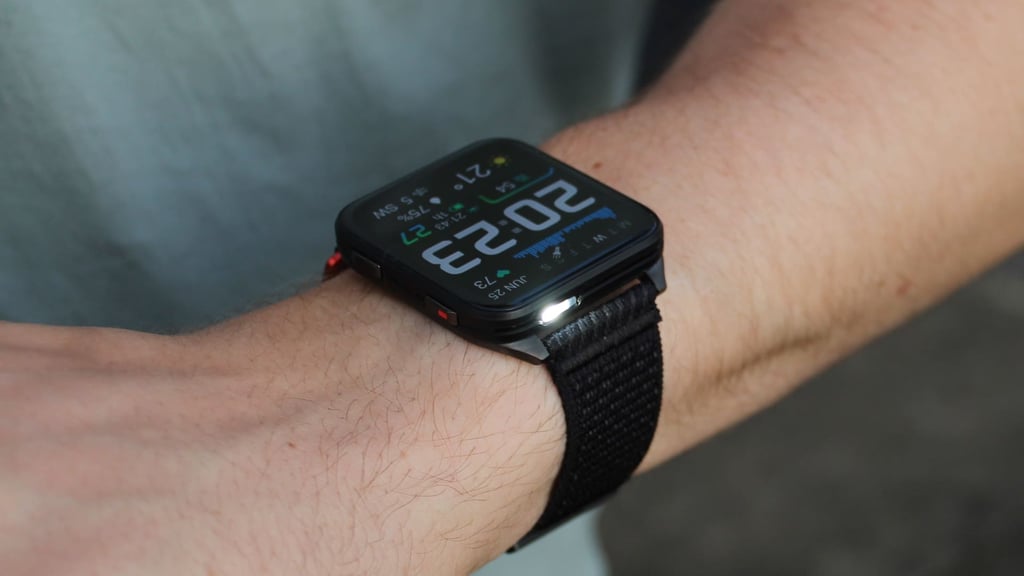
The Venu X1 brings Garmin’s advanced fitness and navigation tools to a slimmer, more design-focused smartwatch. Its square 8mm case, titanium caseback, sapphire lens, and large 2-inch AMOLED display make it feel more like a premium everyday watch than Garmin’s traditional sports models. It sheds the brand’s traditionally rugged aesthetic for an incredibly thin (7.9mm) and light titanium case that’s both stunning and supremely comfortable.
The vibrant 2-inch AMOLED display is protected by sapphire crystal and is easily one of the best on any sporty smartwatch.
While it pairs flawlessly with Android phones for notifications and calls, it’s important to remember this isn't a Wear OS device; you won't get the deep app integration or smart assistant features found on a Galaxy Watch or Pixel Watch. Instead, its strength lies in its world-class fitness ecosystem.
A superb Galaxy Watch Ultra alternative
This is a very advanced Garmin at its core; there's a vast array of sports profiles, full suite of training metrics, and the brand's excellent native platform for offline mapping and coaching plans.
However, to achieve its slim design, it omits Garmin’s top-tier Multi-Band GPS and an ECG sensor. Our testing revealed that the standard GPS remains accurate in most conditions, and the new Elevate Gen 5 heart rate sensor worked even during demanding interval sessions.
The major drawback, however, is the battery life. With the always-on display enabled, the Venu X1 lasts for just two days. This represents a significant departure from Garmin’s reputation for reliability and longevity, though it remains comfortably comparable to devices like the Galaxy Watch Ultra.
Check out our full Garmin Venu X1 review.
- Incredibly thin, light, and comfortable design
- Core sports tracking accuracy is outstanding
- An LED flashlight—in this design!
- Two-day AOD battery life
- No ECG or dual-frequency GPS
Huawei Watch 5 series
- Size: 42mm or 46mm
- Display: LTPO AMOLED
- Connectivity: Dual-frequency GNSS, NFC, Wi-Fi, Bluetooth
- Weight of 42mm edition (without strap): 51g (steel); 48g (titanium)
- Weight of 46mm edition (without strap): 63g (steel); 58g (titanium)
- Chipset: Kirin A1 chipset
- Battery life: 42mm: Up to 12 days / 46mm: up to seven days
- Phone compatibility: Android and iOS
- Storage: 32GB
- Water rating: 5ATM / IP69K (dive-rated to 40m)
- Sensors: SpO2, PPG, skin temperature, ECG (dual-sensing via 'X-Tap')
Overview
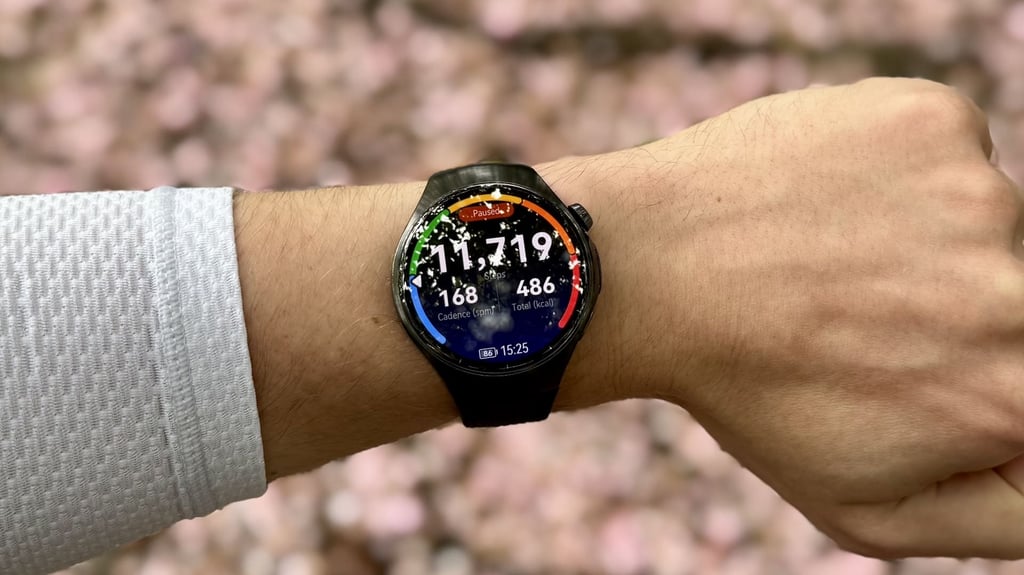
After a two-year hiatus, Huawei's flagship Watch returns for its fifth generation, boasting refined materials and a novel 'X-Tap' sensor on the side of each case.
Watch 5 offers the brand's best experience in 2026. All modern Huawei watches run Harmony OS, which, as a major downside compared to Wear OS, offers a limited app selection due to Huawei's ongoing US ban (though there is now at least some contactless payment support).
However, the health tracking (even if X-Tap felt slightly gimmicky in our testing) and added gesture controls combine to make this feel like a somewhat elevated software experience. The premium materials also ensure that this is one of the best-feeling smartwatches we've ever tested, albeit slightly let down by the display's pronounced reflectiveness.
Tracking accuracy, sports features, and battery life
The Watch 5 also features the same sports-tracking upgrades introduced in 2024's set of watches: upgraded 3D course maps and green contours for golfers, on-wrist mapping for the dedicated trail-running profile, and a design certified for recreational diving. Across the range, there are also new insights for runners, such as ground contact time and vertical oscillation. Additionally, those who prefer the saddle can turn their paired phone into a cycling computer.
Along with numerous sports modes, the Watch 5 models also boast dual-frequency GNSS technology and a refined version of the brand's TruSense architecture. The GPS performed exceptionally well in our testing, even though heart rate accuracy lags slightly behind what we've seen from Garmin's latest sensors and algorithms.
A big selling point, however, remains the battery life. You'll struggle to match Huawei's estimate unless you disable most features, but it still managed around 4.5-5 days with always-on display (AOD) enabled. Considering the display quality and brightness, that's a significant achievement.
Check out our full Huawei Watch 5 review.
- Premium design and build quality
- Bright and crisp LTPO display
- Superb AOD battery life
- Limited app ecosystem remains
- Not top-level workout HR accuracy
Wear OS watch version checker
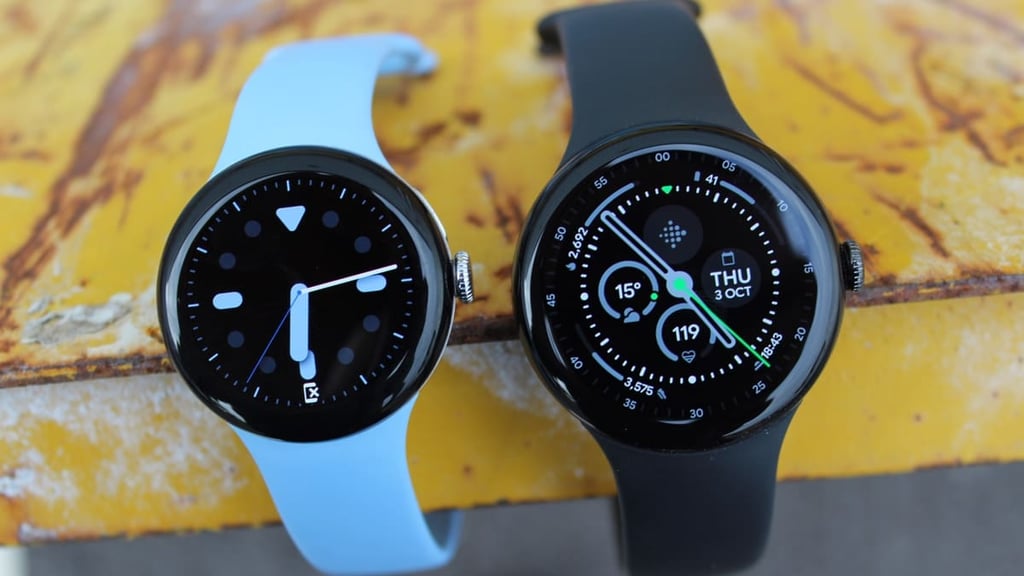
Confirmed to support Wear OS 6:
- Google Pixel Watch 1-3 (given they can all run the Wear OS 6 preview)
- Google Pixel Watch 4 (available from 9 October)
- Samsung Galaxy Watch 8 series (available now)
- Samsung Galaxy Watch Ultra (2024 and 2025 models)
Likely to support Wear OS 6 (or currently in beta):
- OnePlus Watch 3 (and the 43mm edition)
Which watches run Wear OS 5?
- OnePlus Watch 3
- Samsung Galaxy Watch Ultra
- Xiaomi Watch 2
Which watches run Wear OS 4?
- Mobvoi TicWatch Pro 5
You can also find the latest info on Google's OEM checker.
Final word
Choose an Android smartwatch based on what matters the most for you: app support, fitness tools, battery life, or design. All of the watches in this guide pair with Android, but they suit different users.
Google Pixel Watch 5 is our top all-around pick, delivering Google’s smartwatch experience and health tracking in a refined, compact design. It works with compatible Android phones, making it a good choice beyond the Pixel ecosystem.
Samsung Galaxy Watch 9 is the best fit for Galaxy phone owners, while Galaxy Watch Ultra 2 is the premium option for buyers who want a larger, tougher design, LTE connectivity, and stronger outdoor credentials.
Choose OnePlus Watch 3 if multi-day battery life is your Wear OS priority. Garmin Venu 4 is the better fitness-first alternative, with detailed training tools, multi-band GPS, and substantially longer battery life than most Wear OS watches.
Amazfit Balance 2 and Xiaomi Watch 2 are worth considering for more value-focused smartwatch features, while the Withings ScanWatch Light suits anyone who prefers a discreet hybrid design with everyday health tracking.