Why You Can Trust Wareable
Founded in 2014, Wareable brings together journalists and experts who have reviewed over 1,000 products, including smartwatches, fitness trackers, smart rings, smart home gadgets, and health tech devices.
Our team combines hands-on testing, in-depth research, and expert insights to evaluate product performance, assess manufacturer claims, and help readers make informed decisions.
Whoop plots yet another new data point to bolster sleep and recovery data

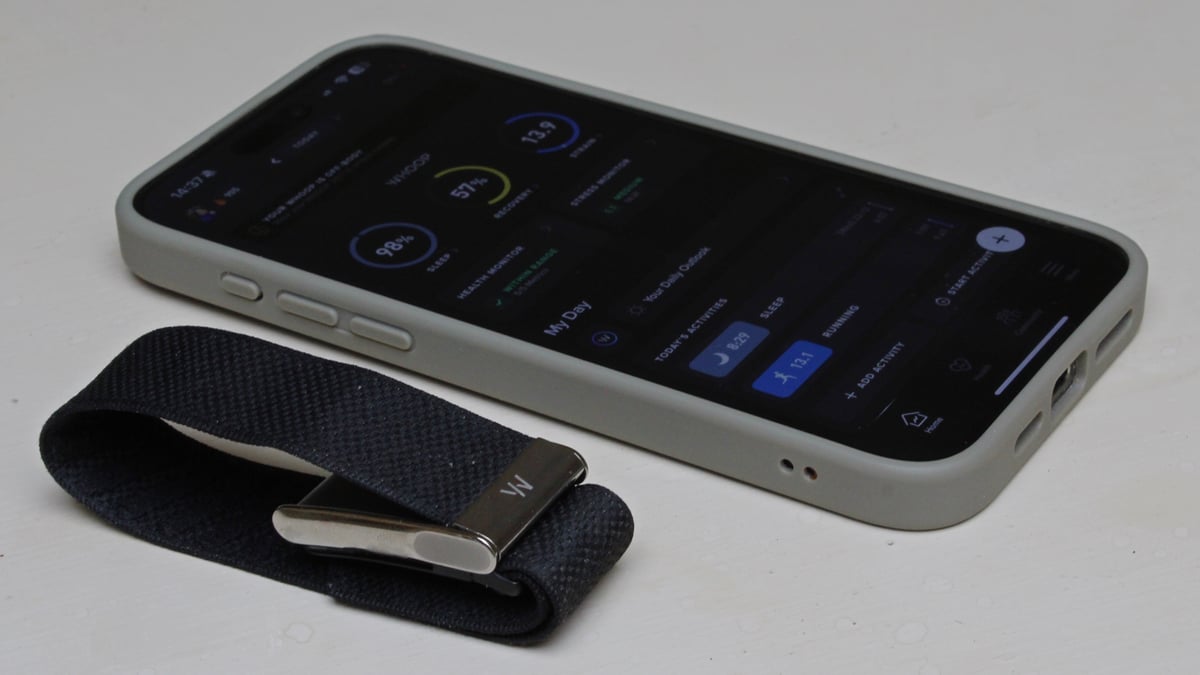
You may know about HRV, but what about RRV? A new patent explains how respiratory rate variability could be the next go-to metric
Whoop is working on introducing a new respiratory rate variability (RRV) metric that could help users gain deeper insight into their sleep and recovery.
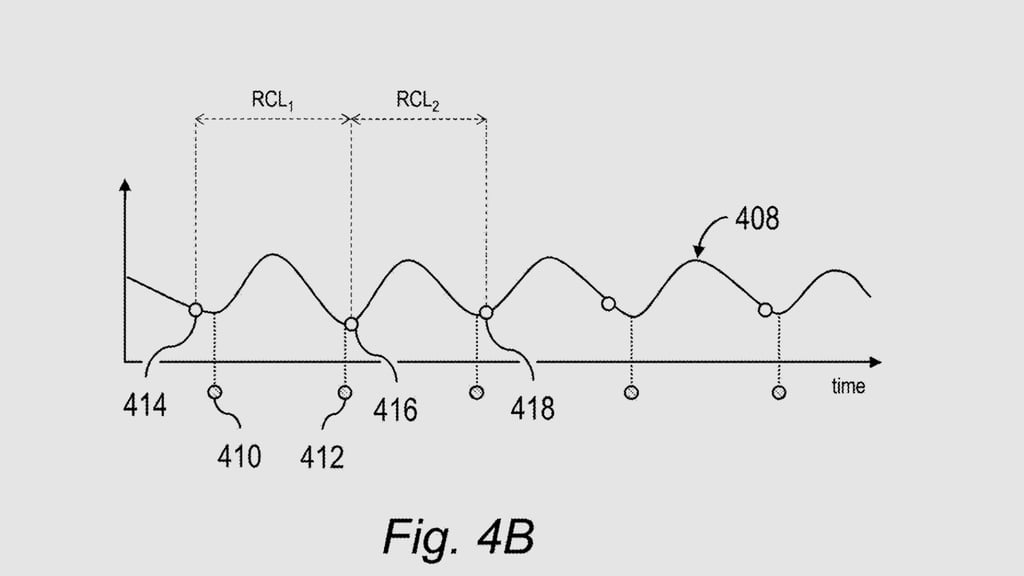
The company has patented a system in which the pulse sensor and accelerometer on the screenless fitness tracker work together to detect the onset of respiratory cycles and determine the respiratory cycle length (RCL), or—to you and me—the time between the start of one inhale and the next.
Learning the RCL would enable Whoop to measure the variances between these breath onsets and calculate a respiratory rate variability score. You still with us? Ok.
An all-new metric to digest
Now, we should note that RRV is not to be confused with the existing heart rate variability (HRV) metric, which measures differences in the time between individual heartbeats. It’s also different from respiratory rate (RR), which measures the average number of breaths per minute.
RRV measures the breath-to-breath changes within that respiratory rate—making it, potentially, a much more granular metric than respiratory rate.
So, how does that help the user? In the filing, Whoop says RRV could further inform recovery rate, sleep stage detection, non-invasive detection of respiratory conditions and even guidance for activities like meditation.
“Respiratory rate variability refers to the natural fluctuations in a user's rate of breathing over time,” the patent says.
“The respiratory rate variability (RRV) score quantifies the estimated respiratory rate variability of the user during the time window from the plurality of respiratory onsets. The RRV score may be calculated using one or more metrics and the plurality of respiratory onsets.
“The respiratory onsets are used to calculate a respiratory rate variability score for the user that can be used to identify physiological conditions such as recovery rate and/or sleep stage. As such, there is provided an efficient, accurate, and non-invasive approach for estimating respiratory-related physiological conditions associated with the user from heart pulse data.”
In terms of informing the wearer’s sleep-based recovery score, a low RRV score would indicate good recovery, while a high RRV score could indicate poor recovery. Whoop says that RRV score could directly infer recovery status, or it could be used in a weighted combination with “other physiological metrics such as heart rate variability, sleep score, and recent strain.”
A shot in the arm for sleep stage analysis?
When it comes to sleep, Whoop believes it could further enhance its estimation of sleep stages with various thresholds used to determine deep, REM and non-REM sleep.
“The sleep stage prediction model may be rule-based, where the RRV score is compared against threshold values to determine the sleep stage. For example, if the RRV is below a first threshold, then it is predicted that the user was/is in a stage 3 (deep sleep) non-REM sleep stage during the time window, and if the RRV is above the first threshold but below a second threshold, then it is predicted that the user was/is in a stage 2 non-REM sleep stage during the time window,” the patent reads.
“The sleep stage prediction model may be a machine learning model trained to map from RRV score to sleep stage. For example, a training dataset of RRV scores and associated sleep stage labels (e.g., 0 for REM sleep, 1 for stage 1 non-REM sleep, 2 for stage 2 non-REM sleep, etc.) may be used to train a classifier to predict a sleep stage label from a given RRV score.”
Technically, the existing PPG sensor in the Whoop 5.0 and Whoop MG hardware appears capable of detecting respiration cycle onset. It uses a waveform derived from pulse data captured by the optical sensor, which measures breathing peaks and valleys.
The patent adds: “Extrema of the estimated respiratory waveforms can be used as estimates of respiratory onsets for the user. That is, the user's pulse data may latently encode the user's breathing patterns in a relationship referred to as respiratory sinus arrhythmia—the manner in which pulse rate changes due to cycles of inhalation and exhalation… [This] provides an efficient, accurate, and non-invasive approach for estimating respiratory onset of a user from heart pulse data.”
The accelerometer within the Whoop device assists by capturing the subtle movements that accompany each inhale and exhale, like the lift and fall of the chest.
Whoop already has a robust system for measuring strain and recovery which countless people rely on. It’s not clear whether the technology explained within this patent will make it into the proposition soon, but any data point that could further inform those numbers would doubtless be welcomed by the userbase. Watch this space.