Amazfit T-Rex Ultra 2 review: Bigger and bigger

- Excellent battery life
- LED flashlight
- Improved color maps
- Robust titanium bezel and back panel
- Absolutely gigantic
- Still no automatic re-routing
- A little sluggish
- Not all voice commands can be turned off
The T-Rex Ultra 2 is the latest release in Amazfit’s ever-growing family of outdoor watches, which generally aim to emulate the success of the latest Garmin Fenix series.
All the watches in this ecosystem are rugged pieces featuring outdoor tools such as color maps and flashlights. And this one continues the bigger-and-bigger trend, with a larger build, longer battery life, greater storage capacity, and—you guessed it—a higher price tag.
Despite that introduction, it’s not enormously different from last year’s T-Rex 3 Pro, and for that reason, our review of it might not be that different.
When it comes to Amazfit watches, we always seem to reach the same conclusion: they pack an impressive number of features, especially for the price, but they’re always glitchy.
The brand seems content to operate on the premise of releasing unfinished products to market, then promising to refine them through software updates, which sometimes happens and sometimes doesn’t. To cut to the chase, the Ultra 2 is a bit of the same old story.
Compared to the T-Rex 3 Pro, the Ultra 2 uses higher-quality materials, and the battery life is much improved, which is nothing to scoff at if you’re looking for an adventure watch.
The flashlight has been upgraded, and the maps have been improved. It still falls short of being a true match for the Fenix 8, though it probably is now a rival to the Enduro 3 thanks to the bright AMOLED screen. However, if we stay within its ecosystem and assume you’re looking for an adventure watch with a lot of smartwatch capabilities, the real question we’ll try to answer here is: do you need to pay more for this watch when the 3 Pro is available?
How we tested
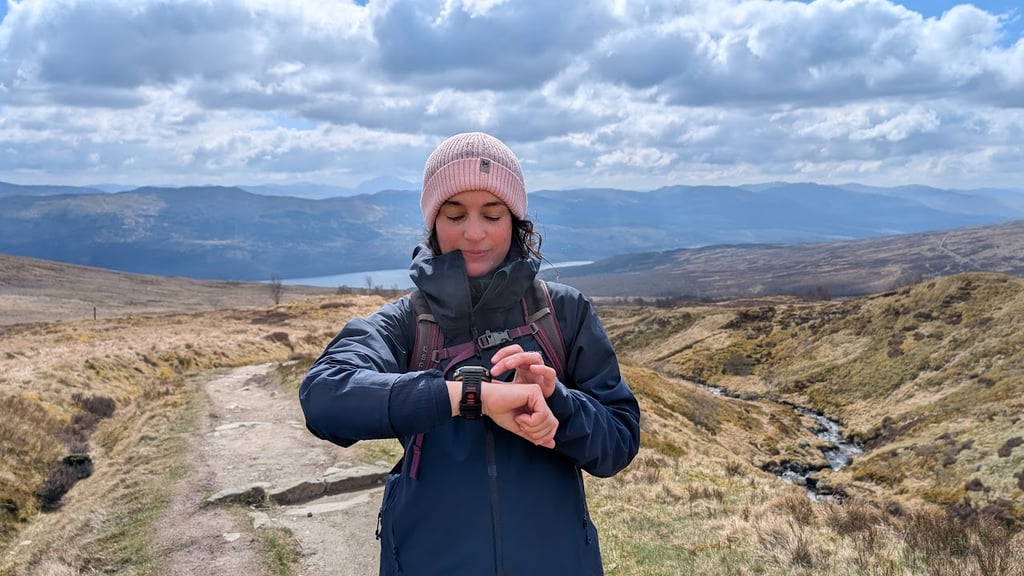
Julia Clarke is an outdoors writer, hiker and trail runner from Scotland, and she used her country’s highest peaks to test the capabilities of the Amazfit T-Rex Ultra 2.
Over a two-week period, she climbed six Munros to trial the Amazfit T-Rex Ultra 2 against the Garmin Fenix 8 and the Suunto Vertical 2.
Price and competition
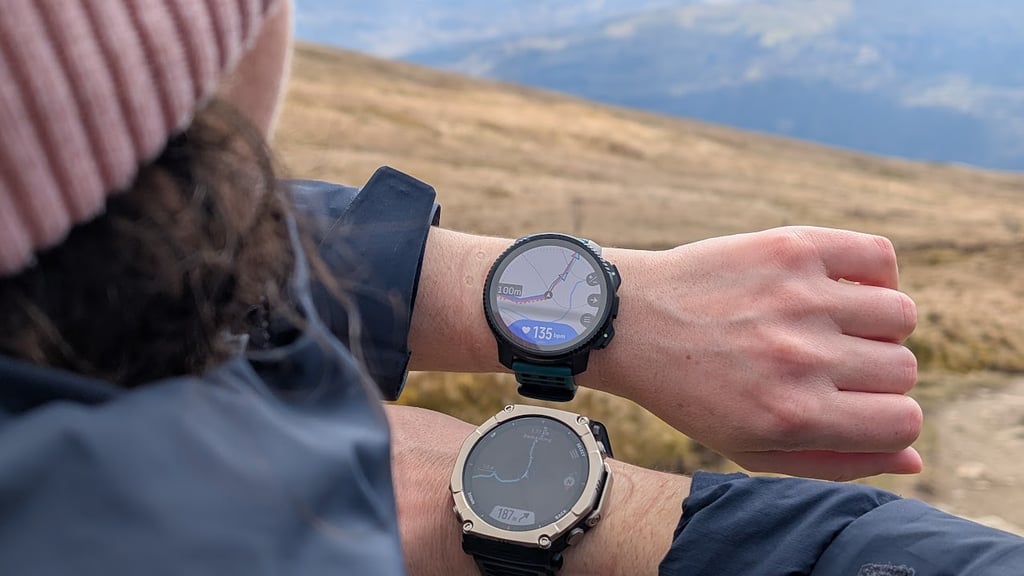
With a retail price of $549.99 / £549.99, the T-Rex Ultra 2 is officially Amazfit’s first premium-priced watch. It’s a staggering $150 / £150 more than the 3 Pro and on par with the Suunto Vertical 2, which is an adventure-focused watch that shies away from smartwatch capabilities.
It’s still half the price of the fully featured Fenix 8, which starts at $999 / £869 for the smaller sizes, but it's still the better watch. Perhaps then it’s more helpful to compare it to the Enduro 3, which costs considerably more at £769.99 / $899.99, has a similar battery life, but lacks the T-Rex's AMOLED screen.
Design and display
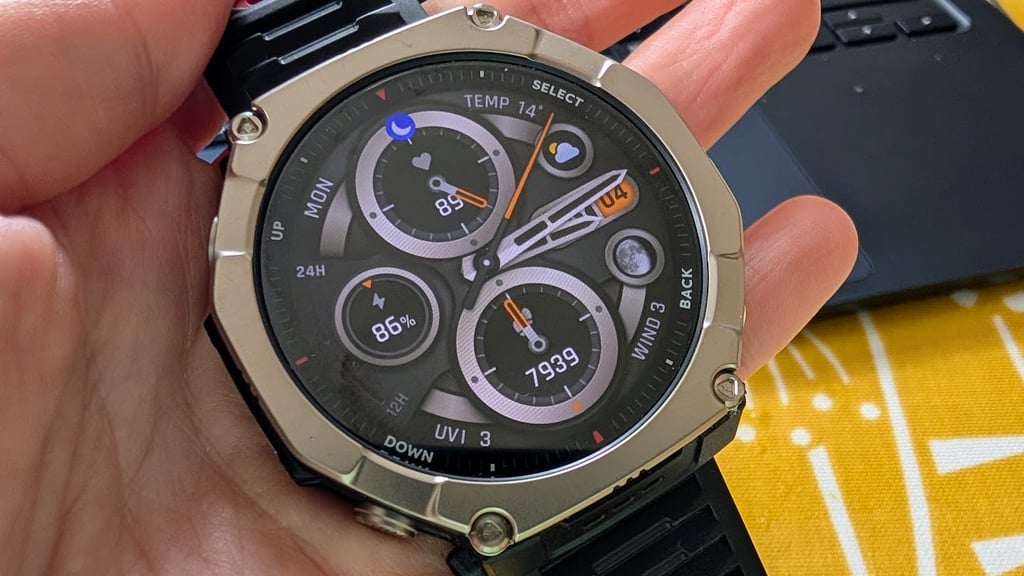
The overall design of the T-Rex Ultra 2 is largely the same as that of the 3 Pro.
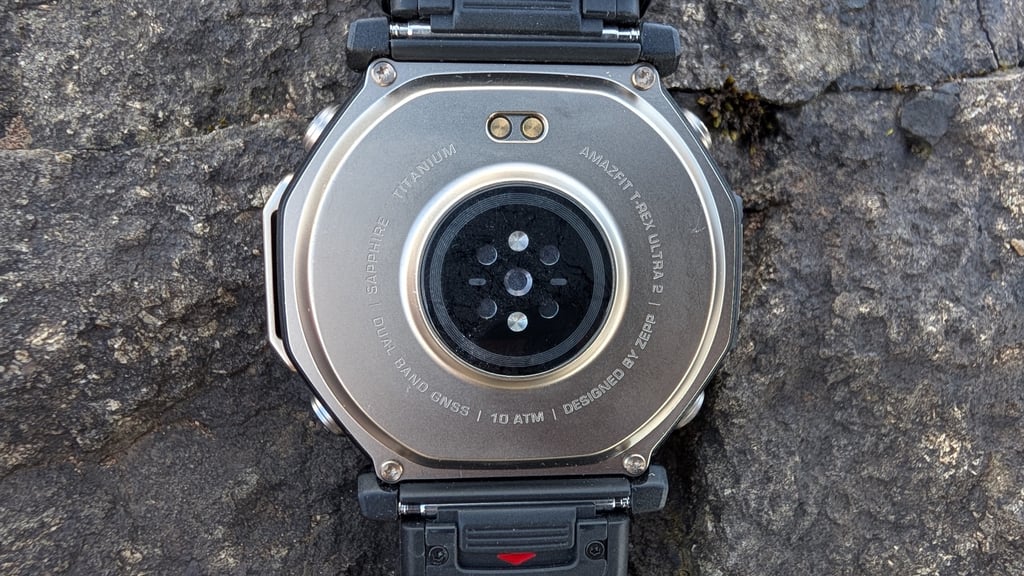
Its waterproof rating is 10 ATM, and it’s operated via a touchscreen or four buttons, all of which do the same thing as its predecessor. It also has the same sapphire glass screen, which is a cheaper material than the sapphire crystal used in the Fenix 8 and gets smudged more easily.
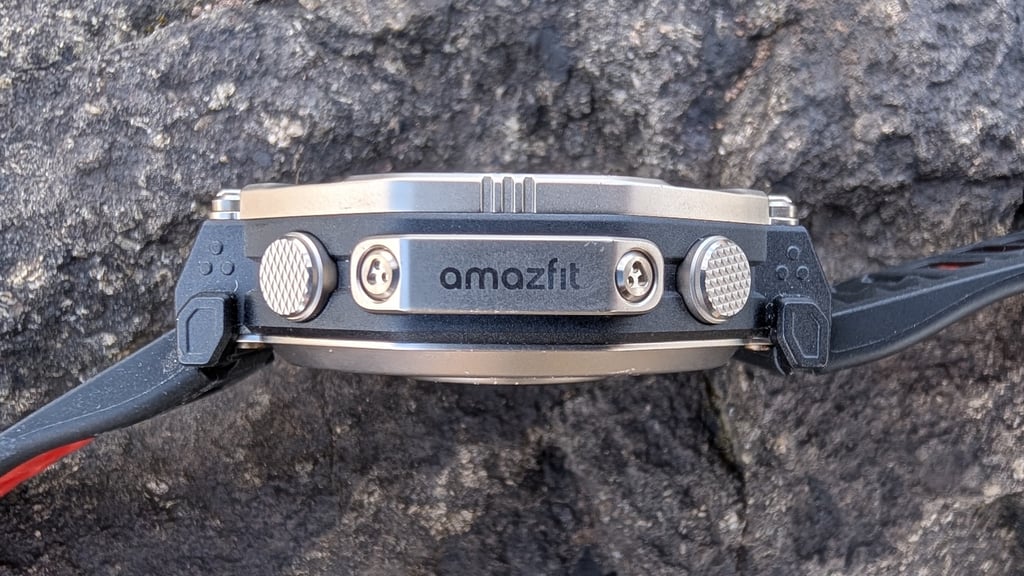
However, the titanium bezel and back panel give this watch a higher-quality feel than the polymer 3 Pro and also mean that, at 89.2g, it’s nearly 15g heavier.
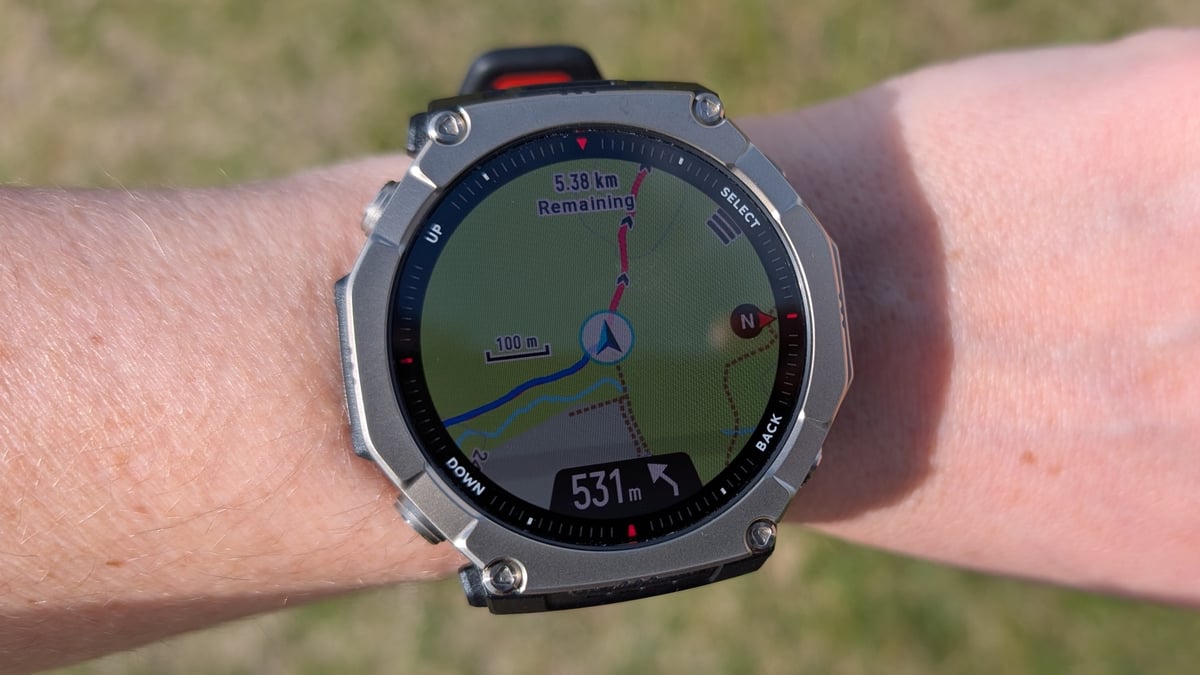
It’s absolutely gigantic, with a 51mm screen that dominates even a medium-sized wrist.
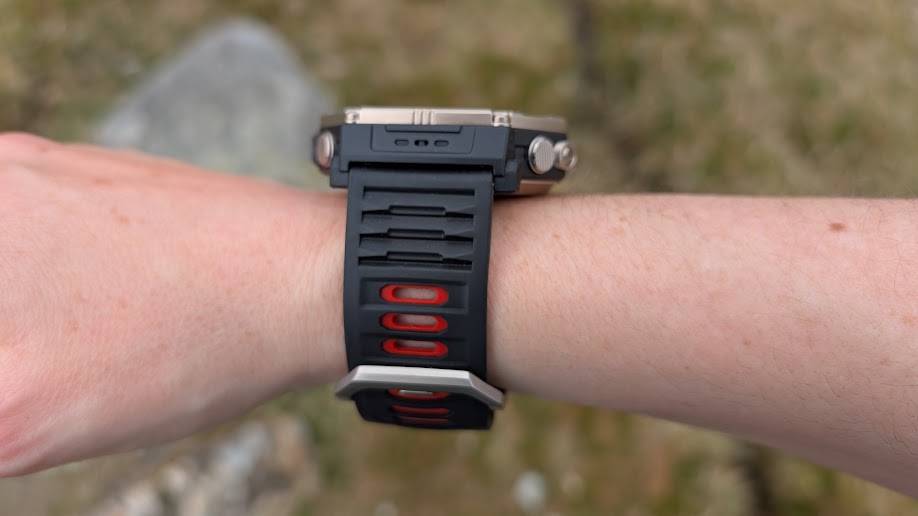
That does make it all the easier to see the screen, but with a 1.5-inch AMOLED touchscreen display with a 480 × 480 resolution and a peak brightness of 3,000 nits, it’s not clear that such an immense size is warranted.
It protrudes more than 15 mm from your wrist, making it difficult and uncomfortable to wear with layers. Its magnitude calls for a 26 mm silicone strap, which, again, is larger than on the 3 Pro but necessary to anchor it in place. It also means we experienced bruising for the first couple of days of use.
Battery life and charging
Battery life is one area where the T-Rex family beats the Fenix 8 hands down. The 3 Pro had a very decent battery life, but Amazfit shows there’s always room for improvement in this department.
The official specs show this watch delivers up to 30 days in typical use, which is five more days than the 3 Pro. With heavy use, that drops down to 15 days (versus 10 for the 3 Pro).
You can expect up to 50 hours in Accurate GPS Mode, which increases to 90 in Power Saving (this is adequate for regular hikes and runs outdoors where you’re not using the watch to navigate).
In comparison, the 3 Pro promises 38 hours in Accurate mode and 74 hours in Power Saving mode.
What we found in real-world testing
The Ultra 2 charges using the provided cradle (plus USB-C cable), which holds the watch securely, and there are no charging issues.
In our tests, we only charged it once so we could download maps. On the trail, it lost 7% during a four-hour hike on Ben Lomond using maps to navigate, which equals less than 2% per hour – that’s really quite impressive and makes this watch a solid contender for longer adventures where you might be in GPS mode for eight hours a day, losing less than 15%.
Of course, you have to take into account that it’s using the battery all the time, and we found it loses about 2% overnight and around 4% every 24 hours in regular use.
Nonetheless, you could reasonably expect to use it for a five or six-day trek without needing to charge it, and in regular use, you could go 3 - 4 weeks without needing an electrical outlet.
GPS navigation and mapping
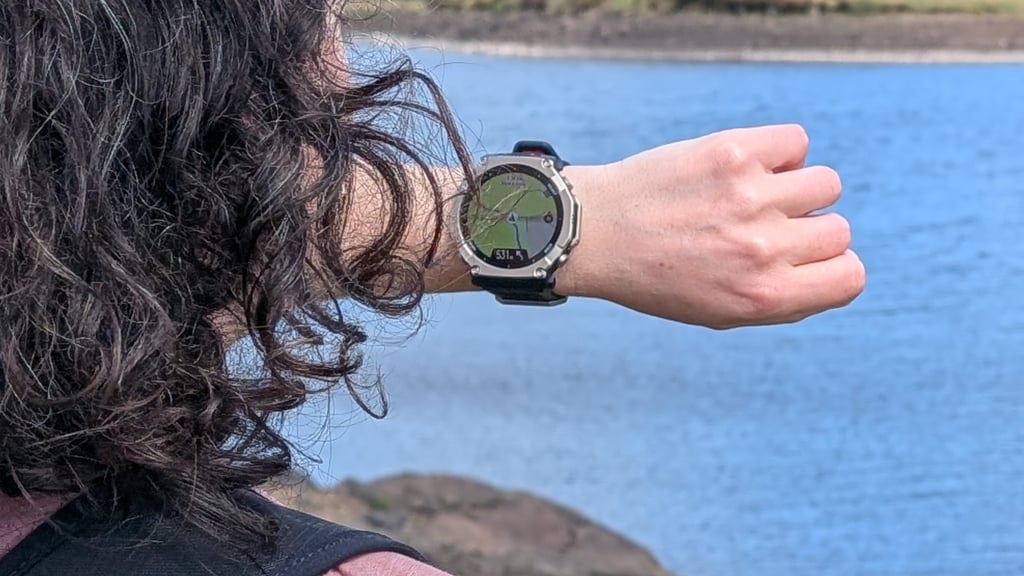
There are several key upgrades to adventure features, such as the flashlight (which you can access by long-pressing the top-left button), which now has a green light instead of red. Survival experts say green light provides better clarity in the dark, while red light is kinder on your eyes.
It allegedly comes with pre-downloaded color maps, but when we tried using it to navigate for the first time with a downloaded GPX file, we discovered it only supported line and pointer navigation. Back home, it was easy enough to download color maps on the Zepp companion app for next time, thanks to added storage (64 GB up from 32 GB). Next time, we managed to send a GPX file to the watch during an activity, and it automatically displayed, which is great.
The new maps do show more detail than the previous watch, with added features such as trails appearing as dotted lines to differentiate them from roads. The Points of Interest feature is interesting, if a little inexplicably comprehensive, giving you the option to search nearby for just about everything from water sources in the wild to coffee shops and police stations.
A not-so-perfect guide
The turn-by-turn guidance is perfect, and the preset orientation always shows your route pointing towards the top of the screen, making it easier to follow than on the 3 Pro.
The screens also offer generally useful information about where you are on your route and what’s coming up. In general, though, the watch can be a little sluggish, both in responding when you lift your wrist and in populating stats like distance or remaining elevation.
Like its predecessor, this watch promises automatic re-routing, but this feature doesn’t appear to have been ironed out yet. We downloaded a GPX file for a circular hike, but instead turned back at the summit and returned the way we came. The maps merely warned us that we were off route, then failed to recompute our remaining distance.
Voice memos and heart rate monitoring
Finally, Amazfit has added the option to long-press the bottom left to record a voice memo during an activity—if this is a feature you’re interested in, it works a bit better than on the Coros Nomad.
All your metrics are tracked by the same BioTracker 6.0 PPG as the 3 Pro, and we noticed some sluggishness here in accurately reading heart rate at the very beginning of an activity compared to both the Fenix 8 and Vertical 2. Once it caught up, it was beat for beat in line with those watches.
It also uses the same six-satellite GPS system as the T-Rex 3 Pro and works perfectly on the trail. Offline route navigation has been increased from 30 km to 100 km.
Training, health, and smart features
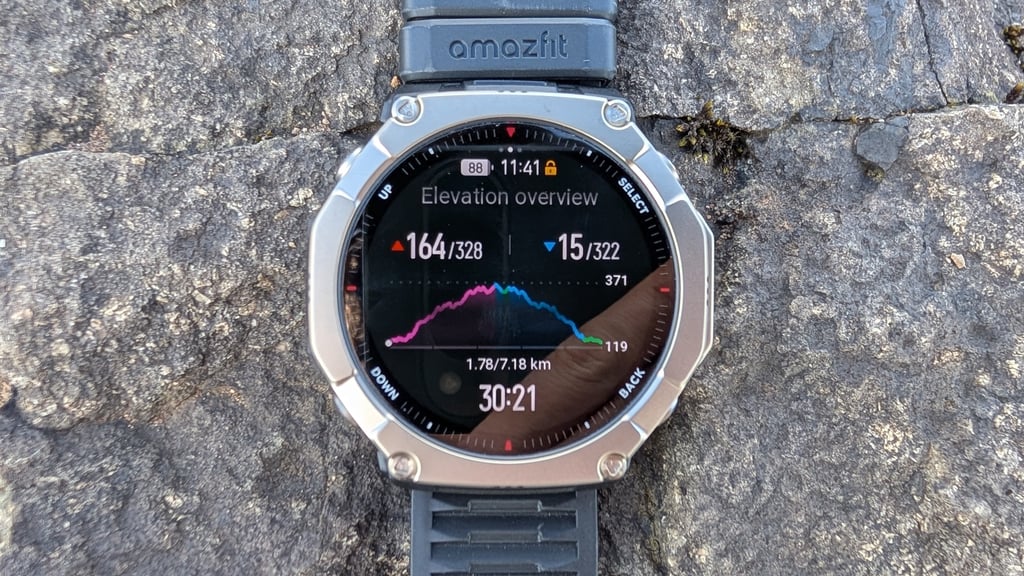
What sets the T-Rex family apart from something like the Vertical 2 is that it is a true smartwatch offering up just about every feature you can think of, from calls and texts to Jet Lag Manager and One Tap Measuring.
New to this watch is Grade Adjusted Pace, which brings it in line with the competition and is useful for hikers and trail runners. If you live and die by your watch, you’ll like the possibilities, although most of them require navigating the labyrinth that is the Zepp app.
In practice, the voice commands and constant notifications are a headache, and we still can’t figure out how to turn off the “Start workout” prompt, which frankly makes you look like a wally at the trailhead.
In the end, we turned off every notification we could and then used the watch in Do Not Disturb mode, which seems to be the only way to survive it if you don’t like an American accent coming out of your wrist.
Also consider
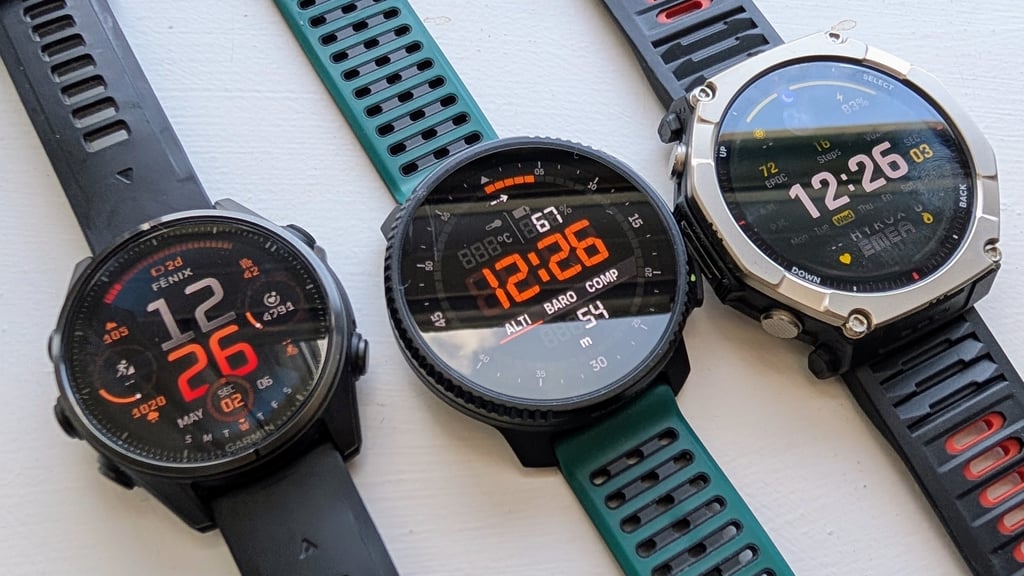
Considering this watch is $150 more than the T-Rex Pro 3, it’s worth noting that the upgrades probably only matter to those who want to use it for outdoor pursuits like hiking, trail running, cycling and diving.
And if it is an adventure watch you seek, this one has enough question marks that it’s worth considering the Suunto Vertical 2, which boasts an equally incredible battery life, free offline maps, a proper flashlight, and is blissfully free of glitchy software.