How Britain's most successful gymnast is using a smartwatch to chase Olympic gold


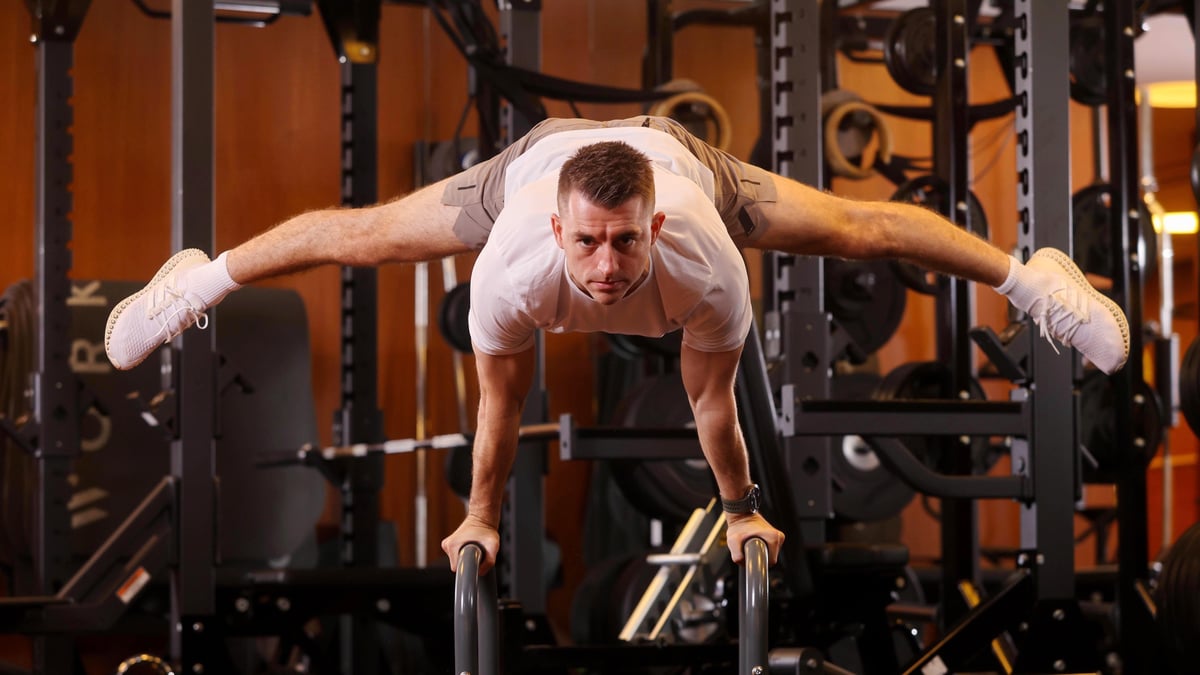
At 33, Max Whitlock trains half the hours he used to—and now leans on a Samsung Galaxy Watch to make the rest count
Earlier this year, we spoke with elite runner Jacob Kiplimo about training for his 2:00 marathon while wearing a Samsung Galaxy Watch. It was another entry in a familiar story: smartwatches as essential kit for managing training load, tracking sessions, and side-stepping injury.
Yet, gymnastics is a different game entirely. I found that out the hard way in a one-on-one session in London, working through an hour of ab crunches, plank variations, and plyometric drills to build up to a (very assisted) handstand under the eye of Max Whitlock—six-time Olympic medallist and Britain's most decorated gymnast in history.
Partway through, I mention that the Samsung Galaxy Watch 9 on my wrist is recording an erratic heart-rate spike during the warm-up. Whitlock, naturally, finds it funny; it's not a metric he's ever paid much attention to. It's an early clue to how differently wearable data gets used at the sharp end of a sport built on 90-second bursts rather than steady-state endurance.
In a discipline where peak physical performance traditionally arrives in a person's early twenties, Whitlock is 33. Having initially stepped back after finishing fourth on the pommel horse at Paris 2024, he's now training for a comeback aimed at LA 2028. If he qualifies, it'll be his fifth Olympic Games, at 35.
To stay competitive against rivals a decade younger, Whitlock can't simply out-train them on volume. Instead, his build-up now leans on a smarter, data-backed strategy: less time in the gym and more focus on recovery.
After surviving my handstand tutorial uninjured—somehow—I sat down with him to find out how an elite gymnast actually gets value from a smartwatch.
Tracking things differently
Most sports watches and fitness trackers are built around linear, continuous endurance activities—running, cycling, swimming. They measure GPS pace, calculate cardio load, and map heart-rate zones across extended durations. For elite gymnastics, almost none of that applies.
A competitive pommel horse routine lasts around 90 seconds: an explosive burst of maximal exertion where live heart-rate tracking tells you almost nothing useful during the routine itself.
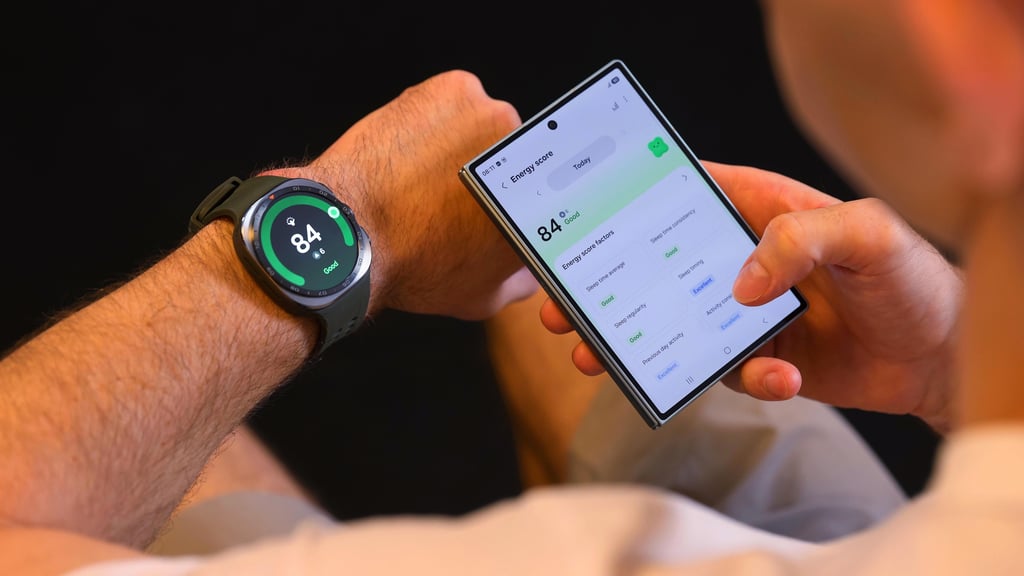
For explosive, skill-dominant sports like this, live workout metrics are secondary. The value the Galaxy Watch Ultra 2 provides Whitlock isn't in tracking the routine—it's in capturing the hours he's not on the gym floor: HRV trends, baseline stress, and sleep, all used to gauge overall physiological strain.
"You don't really care if your heart rate's 150 beats per minute during a 90-second routine, because you're just executing banked skills," Whitlock says.
"Where the watch actually helps is everything that happens after. It's about being on top of recovery."
Tapping into 30,000 hours of muscle memory
Whitlock estimates he's banked more than 30,000 hours in the gym over his career, a foundation deep enough to let him restructure his week entirely.
During his prime, building up to Rio 2016 and Tokyo 2020, he was logging up to 35 hours of heavy gym work a week. Today that's dropped to roughly 12–15 hours, spread across four or five days in three- to four-hour sessions.
"I've done the work; I trained so hard for so many years that it makes it easier now," Whitlock says.
"It's not to say it's plain sailing from here; I wish it were. But it's not about doing seven rounds in an event anymore. I'll do three really good ones, and the rest of my focus goes on recovery."
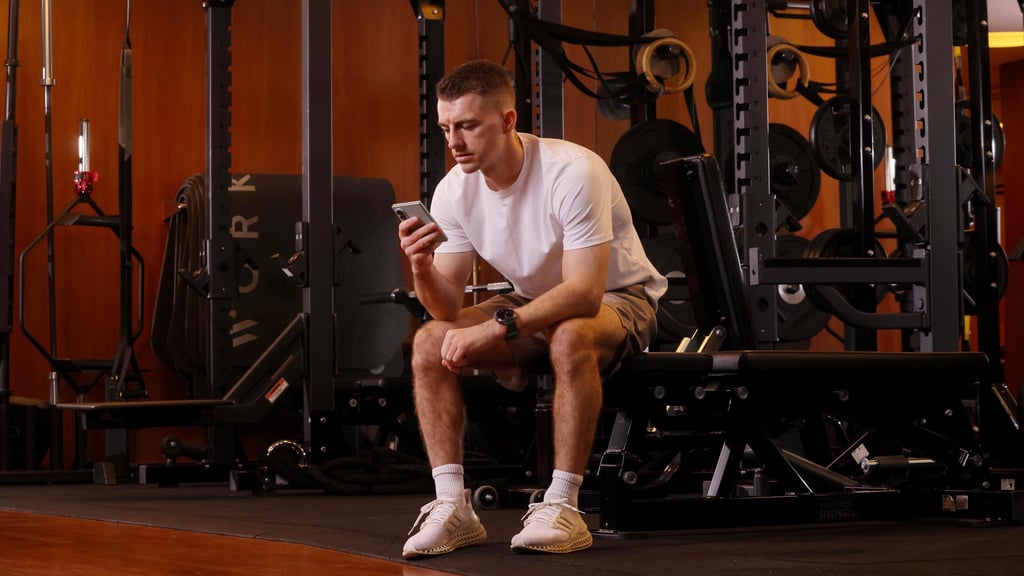
Advice on when to push and when to hold back is something we've noted of the refreshed Samsung Health platform in this year's Galaxy Watch 9 and Ultra 2 reviews. A feature like Daily Cardio Load, for example, shows whether your current activity level is right for you—and not just for elite athletes managing a comeback.
"I think we're all guilty of not getting enough rest and recovery time, especially when we're training for a specific fitness goal," Samsung product expert Lee Dinham told us.
"The Daily Cardio Load feature gives a great indication of whether I'm doing too much—or not enough—in the gym, and will give me a nudge to take it easy every so often."
What the data might have found a decade ago
Whitlock is candid that this calculation looks completely different depending on your age. At 14, he was competing five days straight at the Commonwealth Games, and, by his own account, wasn't remotely fazed.
"When you're coming up, you almost feel invincible," he says. "I look back now and think, 'God, that injury-innocence was incredible'."
Only in hindsight does he see where data might have helped.
"If I'd been tracking sleep early on, I could have had a baseline for what my optimum actually was and tried to get closer to it. That could have found me a percent, maybe," he says.
A big number in a sport decided in hundredths of a point, and a rare admission from an athlete who otherwise leans on feel over metrics.
Validating the feel—not replacing it
For elite athletes, sleep is consistently rated the single most important recovery tool—and Whitlock doesn't disagree.
In his early twenties, he was routinely getting up to 12 hours a night. As a father now, that's gone.
"I used to get 11 or 12 hours, easy—it's the cheapest, simplest form of recovery there is," he says.
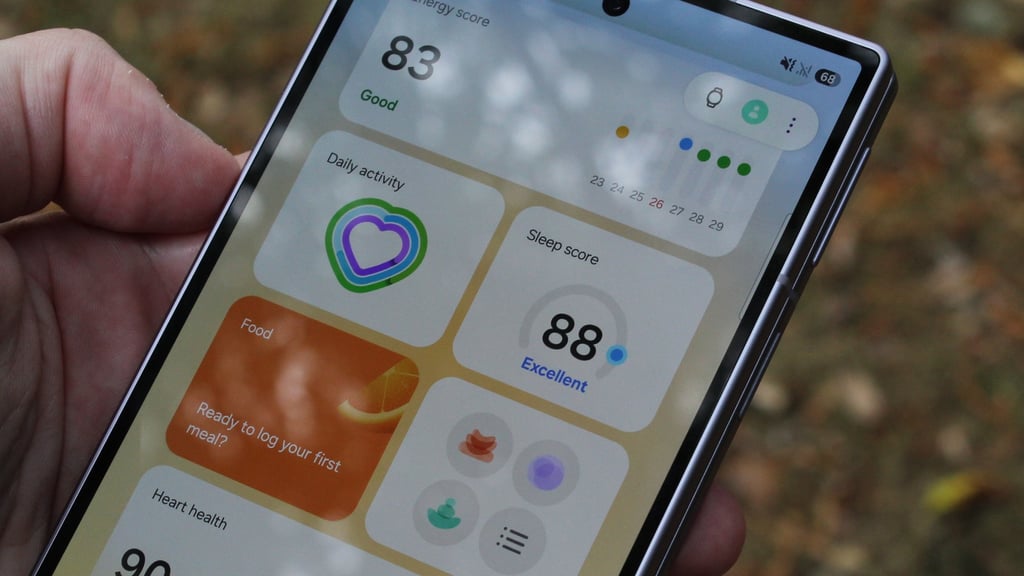
"Now, with school runs and family life, that's impossible. If I can't get the hours, I use the watch to protect the quality of the sleep I do get: consistency, timing, all of it."
He's blunt about where that leaves the rest of his recovery toolkit.
"Saunas, ice baths, compression, stretching—I do it all, and it helps. But that's maybe one or two percent. Sleep is 70-80 percent of it, I think" he says.
Learning to get the most out of insights
A health setback shaped how Whitlock thinks about all of this.
In 2015, around a year before winning a historic Olympic double at Rio, he contracted glandular fever.
"It might sound funny, but it kind of stunted my peak, I believe," he says. "I had to become a lot smarter with recovery from that point—I had no choice."
Today, Whitlock uses wearable data to confirm—rather than override—his physical intuition. For example, he rates himself as naturally calm, and his stress data mostly backs that up.
For Whitlock, the point isn't choosing data over feel, or vice versa.
"The feeling is really important, because that's how you learn. But I'm fascinated when the data backs it up—and it's interesting when it doesn't, because it shows that you might be missing something."
That combination pays off most on competition day, when feeling alone isn't enough.
"Sometimes it doesn't matter how you feel—you've got no choice; you have to perform anyway," he says.
"But you can look at the data and think, 'I felt similar two weeks ago in training, and I still performed well'. That gives you confidence."
An evolving blueprint for longevity
Whitlock's approach points to a broader shift in elite sport: less 'more is more', and a broader trend of biometric-literate recovery.
He isn't training harder than he did in his early twenties—by his own account, he's training roughly half as much. What's changed is how he protects the hours in between.
Ask him for the one piece of recovery advice he'd give the average person—parents especially—and he doesn't reach for the watch at all.
"Everyone always says sleep, and I know that's annoying when you can't just go and get more of it," he says.
"It's about making the sleep you do get as good as it can be—same time, same routine, as consistent as you can manage. If I could get 12 hours again, I would in a heartbeat. I can't, so the watch is how I make the most of what I've got."
As Whitlock builds toward the European and World Championships on the road to LA 2028—a fifth Olympic Games, at 35—that's the real headline.
The extra percent he's chasing isn't coming from more hours in the gym; it's coming from paying much closer attention to the ones he's not.