We tested these two trackers side-by-side—here’s what type of user may like each one
With so many types of health and fitness trackers on the 2026 market, you may want to try something more unique than a traditional smartwatch. After all, we now have screenless bands, smart rings, hybrid watches, and clip-on trackers—wearables of all kinds designed to blend into your daily outfits.
So, we decided to compare Hume Band 2.0 vs. Oura Ring 5, highlighting what type of person may find each tracker both useful and appealing.
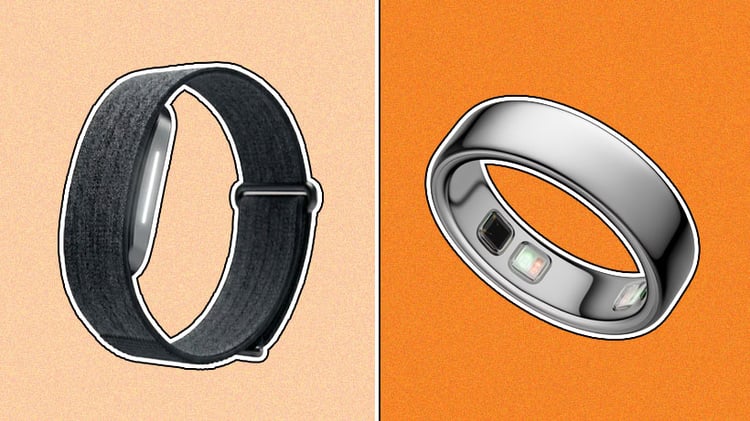
Hume Band 2.0 removes the smartwatch screen entirely, offering a more discreet and passive experience with a focus on wellness. Oura Ring 5 takes a smart ring approach that doubles as an accessory while tracking key health and fitness metrics.
For our Oura Ring 5 vs. Hume Band 2.0 guide, we look closely at both devices, comparing design, comfort, tracked metrics, app experience, and everything in between to help you find the best tracker for your needs.
| Product | Hume Band 2.0 | Oura Ring 5 |
| Form type | Screenless band | Smart ring |
| Price | $199.25 | From $399 |
| Subscription | Not required ($8.99/month) | Needed for most features ($5.99/month) |
| Battery life | Up to 14 days | Up to 6–9 days |
| Wellness metrics | Heart rate, HRV, SpO₂, blood pressure trends, skin temperature, sleep stages, biological age, pace of aging, metabolic momentum, metabolic capacity | Sleep stages, sleep score, heart rate, HRV, SpO₂, respiratory rate, skin temperature trends, stress, cardiovascular age, cycle insights |
| Fitness metrics | Recovery, strain, activity levels, movement, steps, automatic workout detection | Readiness score, steps, heart rate during workouts, VO₂ max, automatic workout detection |
| Third-party app integration | Apple Health and Google Health Connect | 800+ apps, including Apple Health, Strava, Flo, and more |
| Best for | People who want distraction-free tracker focused on longevity, metabolic health, and trends | People who want discreet and visually appealing tracker with polished app ecosystem |
| Official website | Visit Hume Health | Visit Oura |
Hume Band 2.0 vs. Oura Ring 5: Key differences you must know
Before diving into the details, there are a few key differences between Hume Band 2.0 and Oura Ring 5 that are worth knowing right off the bat.
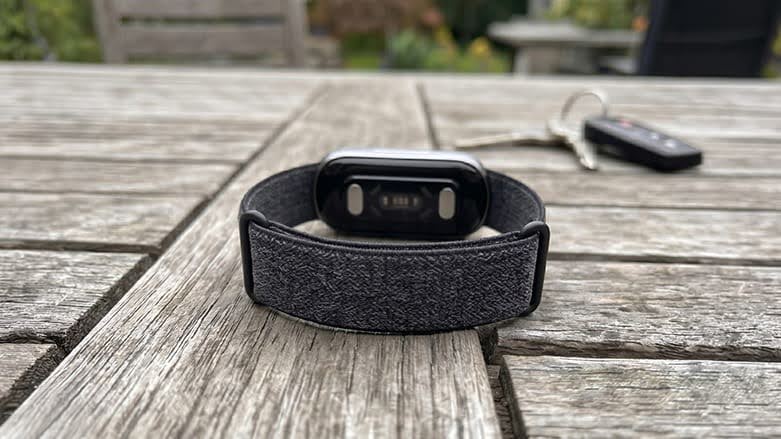
The most obvious one is the form factor. Hume Band 2.0 is a screenless wrist band with a sensor that sits against your skin, while Oura Ring 5 is a smart ring designed to be worn on your finger. Both designs are intentional, as the wrist and finger are suitable locations for collecting optical heart rate and other physiological data.
Another important difference is the subscription model. At a glance, both brands suggest you can use their devices without paying a monthly fee. In our experience, that’s only partly true.
Hume Band 2.0 works well without its optional Hume Plus subscription, with the premium plan just adding a few extra features. Yet Oura Ring 5 is a different story. While the ring does function without a membership, many of its headline features—Readiness Score, detailed sleep insights, long-term trends, and Cardio Capacity—require an active subscription.
The last aspect you definitely want to know before choosing is the goal of the product. Hume Band 2.0 focuses on wellness, metabolic health, and longevity, presenting your data in a beginner-friendly way. Oura Ring 5, on the other hand, places more emphasis on sleep, readiness, stress, and recovery metrics while continuously expanding its feature set through software updates.

Design and comfort
Whether a wearable feels comfortable really depends on you. For instance, if you’re generally not a fan of jewelry, Oura Ring 5 probably won’t change your mind. In other words, the form factor is a personal choice.
The materials and overall feel are very different as well. Oura Ring 5 uses titanium, giving it that premium, sleek, jewelry-like appearance. You can also choose from several finishes, including silver, black, stealth, brushed silver, gold, and deep rose, so it’s easier to match your style.
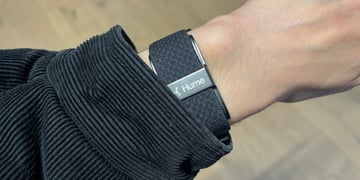
In contrast, Hume Band 2.0 doesn’t try to look like jewelry or a smartwatch. It comes with Hume Health’s UltraLux band, which feels soft, smooth, and lightweight. It’s only available in dark gray, but, in our opinion, the slim design is discreet enough that it doesn’t attract much attention.
Oura Ring 5 sizing kit
If you’re worried about sizing, Oura makes the process fairly straightforward. Before shipping you the actual ring, the company sends a free sizing kit so you can test different sizes over a few days before making your final choice. Currently they’re available in standard US ring sizes 6–13.
Mind you, it does make delivery take a little longer, but we’d much rather wait than end up with a ring that’s too tight or constantly sliding off.
Daily wear: Which one fits your routine better?
Both Hume Band 2.0 and Oura Ring 5 are designed to be worn 24/7, but after testing them, we found they each have situations where they’re more convenient—and a few where wearing them isn’t ideal.
Oura Ring 5 during everyday activities
Oura Ring 5’s biggest strength is also its biggest limitation—it sits on your finger. For everyday activities like walking, working, commuting, or sleeping, we barely felt it, just like with any ring. But we found quite a few situations where the experience wasn’t as convenient.
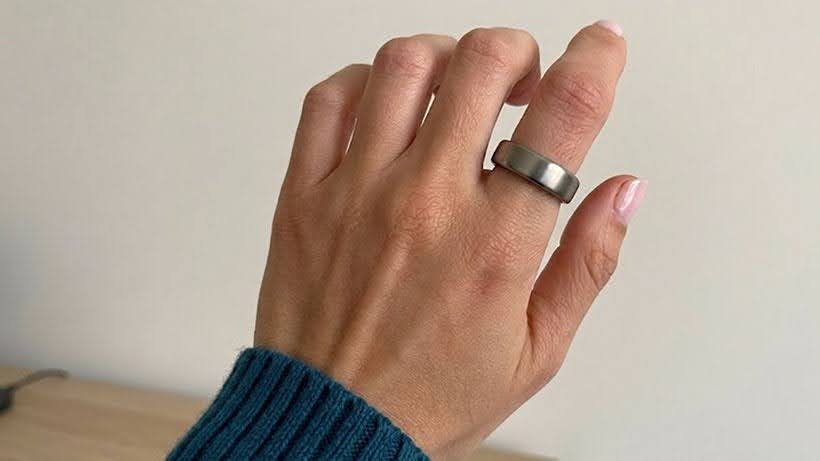
Weightlifting was one of the most prominent examples during our testing. The ring can make gripping a dumbbell or barbell less comfortable, and because it’s made from titanium, it’s more likely to get scratched from metal gym equipment over time.
Ball sports such as basketball, volleyball, or tennis were generally manageable. We still found the ring more noticeable than a wrist-based tracker, but whether that’s an issue largely depends on your preferences.
For swimming, Oura Ring 5 is water resistant (rated IP68), so wearing it in the pool isn’t a concern. We did notice, though, that active movements in the water can make the ring feel not as secure, especially if you’re between offered ring sizes.
Around the house, it rarely got in the way. The only time we’d recommend taking it off is while preparing food, simply to keep the ring cleaner and reduce the chance of damaging it.
Hume Band 2.0 during everyday activities
For us, Hume Band 2.0 felt more familiar. If you’ve worn a fitness band or smartwatch before, wearing it on your wrist requires almost no adjustment period.
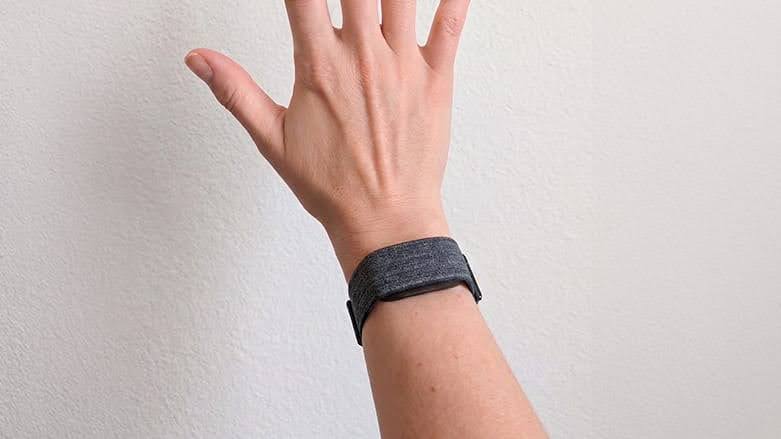
During workouts, household chores, and everyday tasks, we generally found it easier to manage than while wearing Oura Ring 5. It never interfered with gripping equipment or using our hands, which gives Hume Hand 2.0 a huge advantage.
The band is also suitable for swimming and other water activities. However, our biggest criticism is the clasp, since it occasionally came loose.
It wasn’t something that happened every day, but it was often enough that we found ourselves checking whether the band was still securely fastened. During daytime you’d probably notice it fairly quickly, but if it comes undone while you’re asleep, you could lose an entire night’s worth of sleep data.
The clasp issue aside, we think Hume Band 2.0 is easier to live with on a daily basis. Its wrist-based design simply gets in the way less often, though that’s just our take on comfort.
Battery life: Our testing results
One advantage both of these trackers have over most smartwatches is battery life. Without displays, the battery doesn’t drain as fast, meaning you simply don’t need to reach for the charger as often either.
According to Hume Health, Hume Band 2.0 has up to 14 days of battery life on a single charge—a huge improvement over the original model’s roughly 4–5 days. That said, our testing results were inconsistent. One tested unit exceeded the two-week claim, and another needed charging after around seven days.
After speaking with Hume Health support, we ruled out setup issues (including removal of the protective plastic film) and confirmed the shorter runtime was caused by a faulty device. Thankfully, with both units charging was quick, usually taking 20–80 minutes.
Oura Ring 5 doesn’t last quite as long, but 6–9 days per charge is still very respectable. A full recharge took around 80 minutes in our testing. If you’re willing to spend a bit more, you can buy Oura’s optional Charging Case. It stores enough power for multiple additional recharges, making it a handy tool for travel.
Health and fitness tracking: Similar data, different priorities
First, it may seem like Hume Band 2.0 and Oura Ring 5 offer a similar focus on wellness. They both track sleep, heart rate, HRV, SpO₂, skin temperature trends, activity, and recovery.
Yet, while testing, we noticed that Oura is all about explaining how your body is recovering and how your habits may influence that. Hume, meanwhile, leans into metabolic health, introducing metrics you usually don’t find on most wearables.
Sleep, recovery, and daily readiness
Sleep-related metrics are some of the strongest features on both devices, but we believe Oura does it better.
Both trackers automatically detect sleep, estimate sleep stages, monitor resting heart rate, overnight HRV, and skin temperature trends. In Oura’s case, this data is brought together into its Sleep Score and Readiness Score. We’d say these features are truly well-developed and may actually be useful—the companion app points out inconsistent bedtimes and elevated heartbeat, and explains how these may affect your recovery and readiness.
As for Hume Band 2.0, it also provides sleep scoring, HRV trends, resting heart rate, and recovery insight. Alongside these, it introduces features like Metabolic Capacity and Metabolic Momentum, which aim to summarize how your body responds to daily activities and overnight recovery. They’re very interesting additions if you’re curious about metabolic wellness, but not as evolved yet as Oura’s features.
Fitness tracking and workout performance
When it comes to fitness, neither Hume Band 2.0 nor Oura Ring 5 can compete with dedicated sports watches. If structured training, pace analysis, or detailed workout metrics are your priority, we recommend looking at trackers from Garmin, Coros, or WHOOP.
Despite that, both Hume Band 2.0 and Oura Ring 5 automatically detect many common activities like walking and running, while also allowing you to log workouts manually.
Oura has expanded its exercise tracking in recent years, now supporting a large selection of workout types and offering some post-workout recovery guidance. Yet, we still wouldn’t recommend it for serious strength training. Wearing a ring while lifting weights isn’t particularly comfortable, and regular contact with metal may leave scratches on the ring over time.
Hume Band 2.0 views exercise as a contribution to its wellness metrics. Activity data is used for metabolic scoring and daily recovery insights, but overall, we didn’t see much emphasis on workout analysis.
Which app ecosystem is better?
When your wearable doesn’t have a screen, the companion app becomes just as important as the hardware itself. With both Hume Band 2.0 and Oura Ring 5, you’ll wear the devices around the clock, but you’ll spend most of your time interacting with your data inside the app.
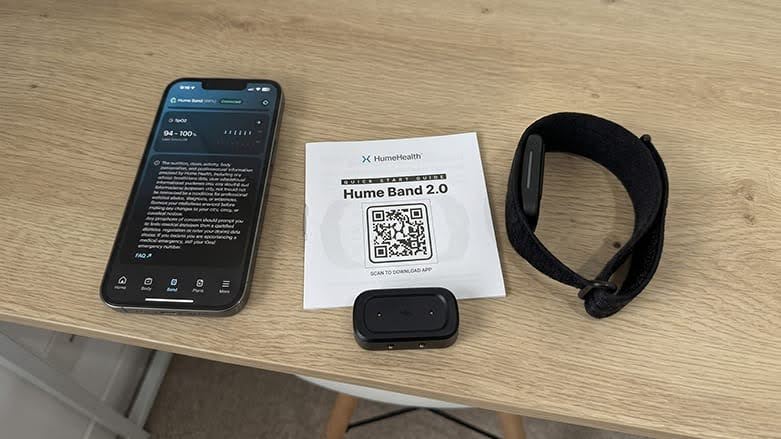
Hume Health’s app actually displays more metrics than Oura’s. It may scare you at first, but we found the overall experience surprisingly beginner-friendly. Navigation is intuitive, the dashboard is clean, and the metrics are organized into easy-to-follow sections with trend graphs and summaries.
We especially appreciated the plain language used to explain what the data means and how it changes, making the trends feel more understandable and approachable.
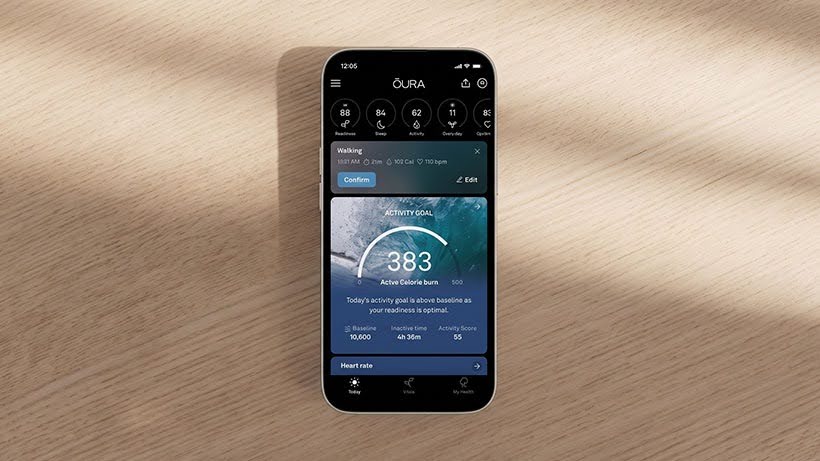
That said, we’d still give the win to Oura. Its interface feels more aesthetically pleasing and polished, though that’s ultimately a matter of personal preference.
What really stood out during our testing was how actionable the experience felt. The home screen immediately highlights your Readiness, Sleep, and Activity scores, while also explaining what likely influenced them that day. Instead of making you dig through graphs, Oura presents the most important insights and points out potential patterns.
Oura also has a clear advantage when it comes to integrations. The platform connects with over 800 third-party apps and services, making it a much better ecosystem than Hume Health.
Pricing and subscription
There’s a noticeable price gap between these two health and fitness trackers. Hume Band 2.0 is currently listed at $199.25, while Oura Ring 5 starts at $399 and goes up to $499, depending on the finish you choose.
Hume Band 2.0 value
Hume Band 2.0 is generally considered a mid-range priced wearable, and it’s often available for less thanks to Hume Band 2.0 deals available online. The brand also includes free shipping, a 45-day money-back guarantee, and a 1-year warranty, making the purchase feel fairly low risk.
Hume Plus is an optional subscription you can get for $8.99 per month. It basically adds a few new features like Health Score, Wellness Report, weekly insights, and guided workouts. We have to say, they’re welcome additions that make the app feel more personalized, but the core metrics remain available without paying a monthly fee.
Oura Ring 5 value
Oura Ring 5 is the more expensive investment, both upfront and over time. Your purchase includes a 30-day money-back guarantee, a 1-year warranty, and a free sizing kit before the ring ships. If you choose the wrong size, Oura allows a one-time size exchange when purchased directly from the official website.
The tension point is the Oura Membership, which costs $5.99 per month. While technically optional, you’ll need it to unlock most of the ring’s advanced insights, including Readiness, detailed sleep analysis, trends, and personalized recommendations—everything that makes Oura a worthwhile device. Without a subscription, the experience is limited and basic.
More articles you should check out
Hume Band 2.0 review: Is the upgrade worth it?
Oura Ring 5 vs. Oura Ring 4: Key differences compared
Oura Ring 5 vs. Fitbit: Top trackers compared
Oura Ring 5 review: The new gold standard
Verdict: Hume Band 2.0 or Oura Ring 5?
Hume Band 2.0 and Oura Ring 5 approach screen-free health tracking from different angles, each catering to different priorities.
Hume Band 2.0 focuses on simplicity, long battery life, and wellness insights without requiring a mandatory subscription. Its wrist-worn design makes it a comfortable choice for everyday wear, while features like metabolic health tracking set it apart from many competitors.
Oura Ring 5 takes a more polished smart ring approach. It excels at sleep, recovery, and stress tracking, pairing detailed insights with one of the most refined companion apps and wearable ecosystems available.
Choosing between them ultimately comes down to what you value most—Hume's approachable, subscription-free wellness experience or Oura's premium smart ring design and advanced sleep and recovery insights.
FAQ
Is Hume Band 2.0 a good alternative to Oura?
Depends on your preferences. Hume Band 2.0 is a solid alternative if you prefer wrist-worn trackers, want core wellness metrics without a required subscription, and are interested in metabolic health. Oura may be better suited if sleep and recovery tracking are your main priorities.
Does Hume Band 2.0 require a subscription?
No, Hume Band 2.0 works without a subscription. Yet, the optional Hume Plus membership is available for $8.99 per month and adds extra insights and features.
Does Oura Ring 5 require a subscription?
For the full experience—yes. Technically, Oura Ring 5 works without a membership, but you won’t have access to many important features that make Oura valuable.
Which wearable has better battery life?
Hume Band 2.0 has better battery life, with the company advertising up to 14 days on a single charge. In comparison, Oura Ring 5 lasts around 6–9 days.
Does Hume Band 2.0 have discounts?
Yes, Hume Health regularly offers promotions. Discount availability can change, but currently, you can use the code WRBL20 for an additional 20% off your Hume Band 2.0 purchase.