Best TENS units for shoulder pain: Our top picks for everyday pain relief

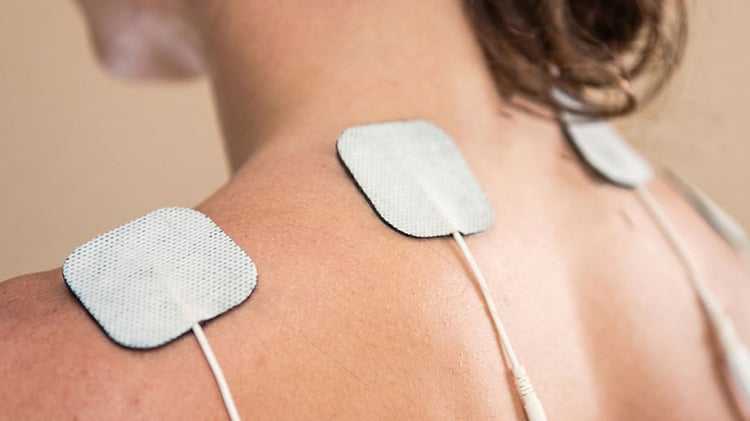
We have been testing TENS devices for a while—and here are our top picks for shoulder pain in particular
Shoulder pain is complicated—it can be caused by a wide range of conditions and injuries, making each case different. If your healthcare provider recommended looking into TENS as an adjunct in your treatment plan, now comes the hardest part: actually choosing the best TENS unit for shoulder pain.
TENS is sought after for various reasons, and not every device will suit you. So, to narrow down your options, we spent time testing various TENS devices with shoulder pain in mind, paying close attention to how each handled the practical stuff, such as pad placement on a curved area and one-handed setup.
Quick picks: Best TENS units for shoulder pain
- Oxiline TENS XS Pro: Best overall option
- iReliev TENS + EMS Pain Relief & Recovery System: Broadest intensity levels range
- Comfytemp Wireless TENS Unit Muscle Stimulator: Best wireless
- TENS 7000 Digital TENS unit: Highest intensity levels
How we tested TENS units
Our Wareable team has been testing TENS units for some time now, and this has helped us build a database of how these devices perform in real life. During this testing phase, we were asking questions such as how well the pads stick to the skin, whether there are enough intensity levels, whether the device feels flimsy or sturdy, and so on.
For this article, we also spent additional time with each device, putting it through short, session-length trials with the pads placed on the shoulder area to test it specifically for shoulder pain. We completed these tests in everyday scenarios, such as sitting at a desk typing, winding down before bed, immediately after light exercise, or stretching.
During those scenarios, we judged each device against a consistent set of criteria: how well the pads adhered through arm movement, how manageable the setup was when using only one hand (a real concern if you do not have anyone to help you), and the range of intensities.
In the end, we ranked the devices, filtering out those that did not seem suitable for shoulder pain—for example, if a product was too difficult to position on the shoulder area.
Oxiline TENS XS Pro: Our top choice for TENS units for shoulder pain
- Channels: Dual
- Preset programs: 24 therapy modes, 10 intensity levels
- Battery type: Rechargeable
- Price: Mid-range
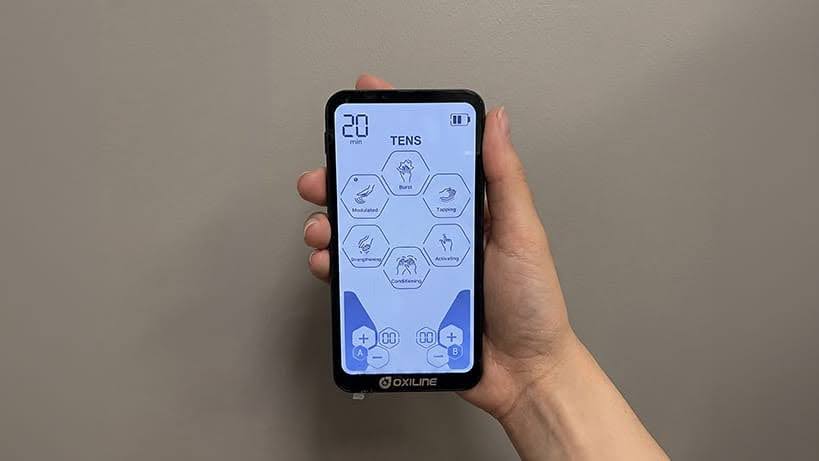
After evaluating a wide range of TENS units, we still come back to Oxiline TENS XS Pro as our top pick. It doesn’t require you to compromise on features, and we found it to be one of the most versatile products on the market.
For shoulder pain in particular, the setup was simple enough during our testing. The pads stick to the area well, and we liked that they come in different sizes: some of our testers noted that the large pad suited their shoulder better, while another one noted that a medium one was more comfortable, so you have some wiggle room with Oxiline.
Oxiline TENS XS Pro is a touchscreen-driven device, and that touchscreen turns out to matter more than we expected for shoulder pain specifically. Instead of fumbling with side buttons while reaching over your other arm, you can see exactly what mode and intensity you're on at a glance.
Besides that, it runs on dual channels, so you can apply the pads to two different areas, each with its own unique settings. This may be useful for you if you experience stiff neck and shoulder pain after overexertion or a long day at a desk job.
It is also a small device that can easily fit in your backpack. So, if you are looking to use TENS at work or on the go, Oxiline will suit your needs.
- Lifetime warranty
- Versatile applications
- Easy-to-navigate display
- Portable
- More expensive than competitors
iReliev TENS + EMS Pain Relief & Recovery System: The broadest range of intensity levels for this list
- Channels: Dual
- Preset programs: 14 modes, 25 intensity levels
- Battery type: AAA batteries
- Price: Mid-range
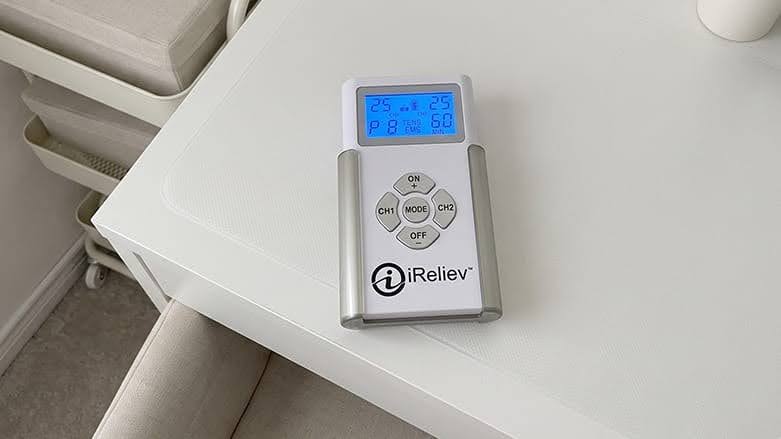
This is a straightforward, wired dual-channel unit that may be used on various areas, including shoulders. Where iReliev stands out is intensity control: it offers 25 levels of adjustable output, more granularity than anything else on this list, which matters once you've been using a device for a while and want to fine-tune.
It also runs 14 preset programs covering everything from general acute and chronic pain to a setting built specifically for arthritis-related pain. Additionally, because the device integrates EMS, it includes specific programs—such as warm-up and endurance—designed specifically for active individuals, which may be helpful if your shoulder pain is related to sports trauma.
Compared to the lifetime warranty provided by Oxiline, this device only comes with a one-year warranty and feels somewhat less robust and sophisticated than Oxiline TENS XS Pro. This is the main reason why we placed it lower, but both products are quite similar in terms of functionality.
- 1-year warranty
- Versatile applications
- Portable
- Runs AAA batteries instead of being rechargeable
Comfytemp Wireless TENS Unit Muscle Stimulator: Best cordless for the most freedom to move around during use
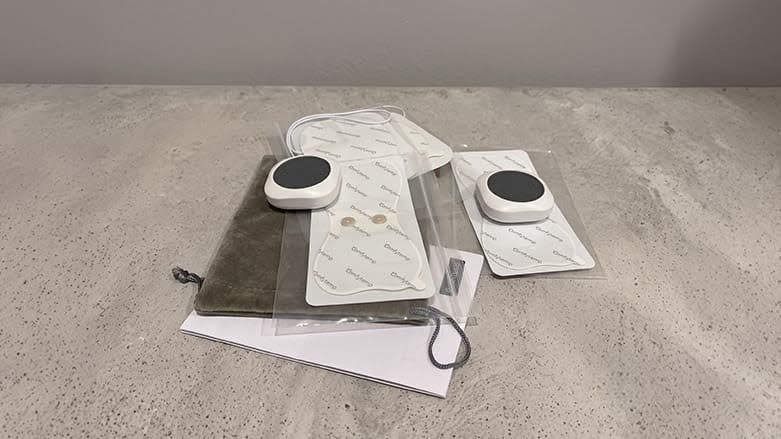
- Channels: Two independent wireless units
- Preset programs: 30 modes, 20 intensity levels
- Battery type: Rechargeable
- Price: Budget option
Comfytemp is fully wireless and app-controlled—and our team found it easy to use on the shoulder, even if you do not have anyone to help you out with placing the pads. The app has an intuitive design: it prompts you to select the body part you're targeting, so you're not stuck scrolling through all 30 modes to find what you need.
The pads also held up well over time. Comfytemp says they're good for over 60 uses, and that lined up with what we saw in our own testing.
The device itself is pretty basic: you will not find any extras like EMS technology that are available on Oxiline and iReliev. For shoulder pain, it is not a dealbreaker, especially since this product is more affordable.
While the battery is rechargeable and will suit those who don’t want to rely on external batteries, it doesn’t last long. The brand doesn’t specify the expected battery life, but in our testing, it lasted anywhere from one to three days, and the full recharge will take only about an hour for you.
- Budget-friendly option
- Several application possibilities
- Portable
- Needs to be recharged often
TENS 7000 Digital TENS Unit: The highest power output from our reviewed products
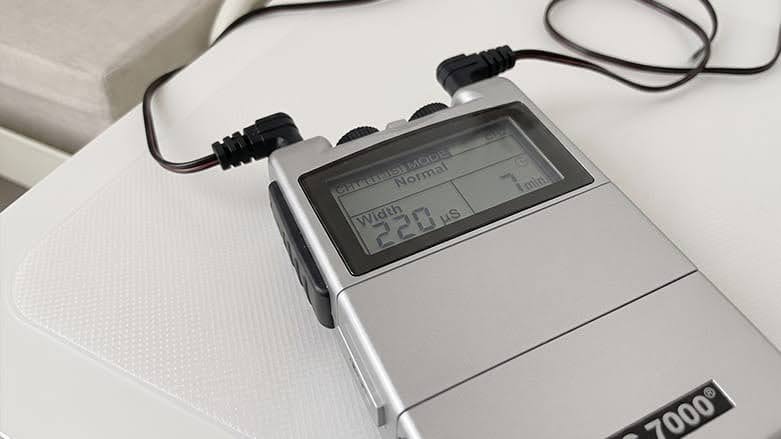
- Channels: Dual
- Preset programs: 5 modes, 8 intensity levels
- Battery type: 9V battery
- Price: Budget option
What makes TENS 7000 unique is its maximum output current: up to 100mA. Other devices we evaluated either didn’t specify their output voltage or had slightly lower ones. For instance, iReliev can deliver up to 80mA. So, if you are looking for the maximum intensity, TENS 7000 would be an option for you—although keep in mind that more intensity doesn’t mean more effect, as the sensation still should be comfortable for you.
However, the device itself only allows you to choose from eight intensity levels, meaning there is quite a large jump between settings. For our testers, this was a problem—finding the most suitable level was tricky.
What we also didn’t particularly like was how this unit is operated: we had to reread the instructions several times before we got the hang of it.
Other than that, TENS 7000 is quite similar to the other reviewed products and has the features we usually look for in a TENS unit, such as dual channels for independent settings for different areas.
- Versatile applications
- Cheaper than competitors
- Limited intensity levels to choose from
How can a TENS unit help shoulder pain?
TENS stands for transcutaneous electrical nerve stimulation. In plain terms, the device sends a low-level electrical current through electrode pads placed on the skin, which may do two things at once: it may interrupt pain signals before they register fully in the brain, and it may prompt the body to release its own natural pain-relieving endorphins.
For the shoulder specifically, that may translate to helping reduce pain from such causes as overuse. However, it won’t treat any underlying condition. This is why it is always best to consult your healthcare provider if you are thinking about using a TENS unit. They will be able to assess your situation, diagnose the cause of pain, and prepare a treatment plan, which may include TENS as an adjunct to reduce symptoms while you heal.
How to use a TENS unit for shoulder pain
There are no universal guidelines on how a TENS unit should be used for shoulder pain—and you should always follow your healthcare provider's and manufacturer’s instructions first. However, some common tips prevail, so we will delve into them in more detail in this section.
Start by cleaning the area where you will be sticking the electrode pads. Wipe down the skin before placing any pads, so they adhere properly.
Most people place one pad above the painful area and a second below or behind it, bracketing the joint rather than stacking pads directly on top of one another. Check your device's manual for a placement diagram specific to the shoulder.
Start on the lowest intensity setting and work your way up gradually. You're aiming for a strong tingling sensation that's noticeable but never painful—if a jolt or sharp discomfort shows up, dial it back immediately.
A typical session runs somewhere between 15 and 30 minutes, which lines up with the built-in timers on most of the units above.
What to look for in a TENS unit
After analyzing a range of TENS units, here are some things we would consider if we were looking for a device for shoulder pain.
- Intensity range. Products that offer a broader range of intensity allowed us to find the sweet spot more easily.
- Modes. While having more modes to choose from may make the device more universal and suitable for various applications, it can make the process murkier—so we wouldn’t necessarily say that more is better. We recommend choosing a product that offers just enough without being confusing to operate.
- One-handed usability. If shoulder pain limits your reach, a device that's simple to apply and operate with your unaffected arm is worth prioritizing over one with a longer feature list.
- Wired vs. wireless. Wired units tend to offer more intensity range and longer battery life per charge, while wireless designs let you move more freely during a session. Neither is objectively better—it comes down to whether you plan to sit still or stay active while using it on your shoulder.
- Portability. If you experience shoulder pain in your desk job, you may want to choose a product that is easy to carry.
Safety and things to know before using a TENS unit
TENS units are generally considered safe for most healthy adults when used as directed, but may not be suitable for everyone.
Do not use a TENS unit if you have a pacemaker or any other implanted device, or a history of seizures. Pregnant individuals should check with a doctor before use.
Pads should never be placed over the front or sides of the neck, directly over the heart, wounds, rashes, or bruises.
For more specific information, it is best to consult your healthcare provider. Always follow the manufacturer’s instructions.
Other recovery and wellness guides:
Best wireless TENS units: For people who find cords annoying
Best red light therapy devices for pain relief: Find out more about red light therapy and how it may help dull the pain
Best leg compression sleeves: For active people who want to improve their recovery routines
Final verdict
While TENS won’t cure the underlying cause of pain, it may support it—which can be a helpful addition to your treatment plan devised by your healthcare provider.
Oxiline TENS XS Pro is our overall pick for its touchscreen control and dual-channel flexibility, especially if neck or upper-back pain tends to tag along with your shoulder soreness.
We also included iReliev, which could be a great option for those who want the most control over the intensity, as it offers the broadest range of levels.
Comfytemp and TENS 7000 are our budget picks. We liked Comfytemp because it is cordless—although the battery life was not impressive, lasting only a few days. TENS 7000, on the other hand, provides the maximum power output, but that comes with one caveat: you are limited to just eight intensity levels, which could make finding the perfect level a challenge.
Best TENS units for shoulder pain: FAQs
Do TENS units work for shoulder pain?
Yes, they may, although their effectiveness will vary greatly. Moreover, TENS may help support pain relief temporarily, but it should be used alongside rehabilitation exercises rather than instead of them.
Where should you place TENS pads on your shoulder?
Most users bracket the joint by positioning one pad above the painful spot and another either below or behind it. Be sure to read your device's manual to find a shoulder-specific placement diagram.
Can a TENS unit help a rotator cuff injury?
It may help support the pain that comes with a rotator cuff injury, but it won't heal a tear. Anyone with a suspected rotator cuff injury should see a doctor or physical therapist for proper diagnosis and treatment, and can ask whether TENS is appropriate alongside that care.
Is TENS or EMS better for shoulder pain?
TENS has stronger evidence than EMS for shoulder pain. However, think of these devices as an adjunct to your treatment plan, as they can’t cure the underlying condition. For the most suitable option for you, discuss the matter with your healthcare provider.
How often can you use a TENS unit?
Most devices may be used daily (for 15–30 minutes per session), but always follow your specific manufacturer's guidelines, since settings and recommendations vary by device and power output.
-
The Journal of Pain.
Transcutaneous electrical nerve stimulation: Basic science mechanisms and clinical effectiveness
-
Medicina (Kaunas).
Using TENS for Pain Control: Update on the State of the Evidence
-
Pain Research and Management.
Two Transcutaneous Stimulation Techniques in Shoulder Pain: Transcutaneous Pulsed Radiofrequency (TPRF) versus Transcutaneous Electrical Nerve Stimulation (TENS): A Comparative Pilot Study
-
The Journal of Strength & Conditioning Research.
Electromyostimulation--a systematic review of the effects of different electromyostimulation methods on selected strength parameters in trained and elite athletes
-
Database of Abstracts of Reviews of Effects (DARE): Quality-assessed Reviews.
Neuromuscular electrical stimulation during recovery from exercise: a systematic review