Best red light therapy for shoulder pain (2026): Tested picks

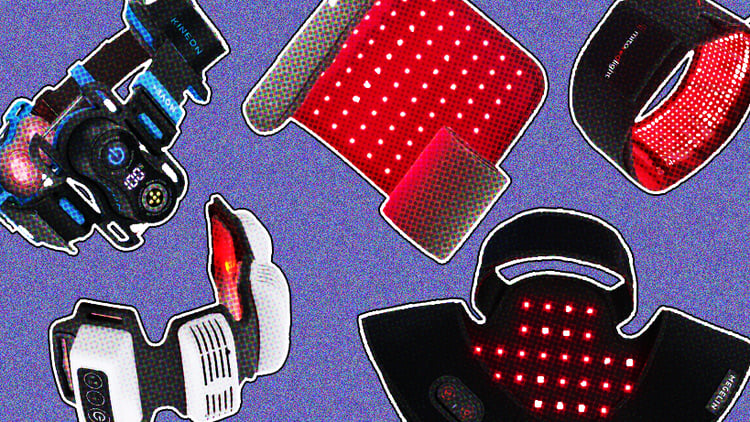
We have been reviewing various red light therapy (RLT) devices for a while now—and they appeal to very different types of audiences as their potential benefits range from skin appearance improvements to hair growth support. And while red light therapy is not a cure for shoulder pain, for some people, it may offer a non-invasive way to help manage pain and support recovery.
And since RLT can be applied to different goals, we decided to sit down and evaluate the products from the perspective of shoulder pain. We created this list based on our personal experiences with these items and what the research says about RLT and pain management, so you don’t have to go through a bunch of general devices and pick the one that suits your needs best.
Quick picks: best red light therapy devices for shoulder pain
- Kineon: Best overall
- FlexBeam: Best durable device
- Novaa: Best flexible pad for versatile applications
- Megelin: Budget-friendly option
- Mito Red Light: Broader treatment profile option
Red light therapy devices for shoulder pain compared
| Device | Wavelengths | Form factor | Session time | Price | Best for |
| Kineon | 660nm (red) and 808nm (near-infrared) | Wearable system | From 5 minutes per day | $499.00 | Most users |
| FlexBeam | 610-650nm (red, peaking at 622nm) and 800-850nm (near infrared, peaking at 814nm) | Wearable system | 10 minutes | $479.00 | Long-term value |
| Novaa | 660nm (red) and 850nm (near-infrared | Pad | 20 minutes | $349.90 | Users who want versatility |
| Megelin | 660nm (red), 850nm and 1064nm (near-infrared) | Specialized neck-shoulder wearable | 15 minutes | $169.00 | Shoppers on a stricter budget |
| Mito Red Light | 630nm and 660nm (red) 810nm and 850nm (near-infrared) | Belt | 20 minutes | $349.00 | Users who want impressive specs in a belt format |
Kineon MOVE+ Pro
Best for: shoulder pain overall
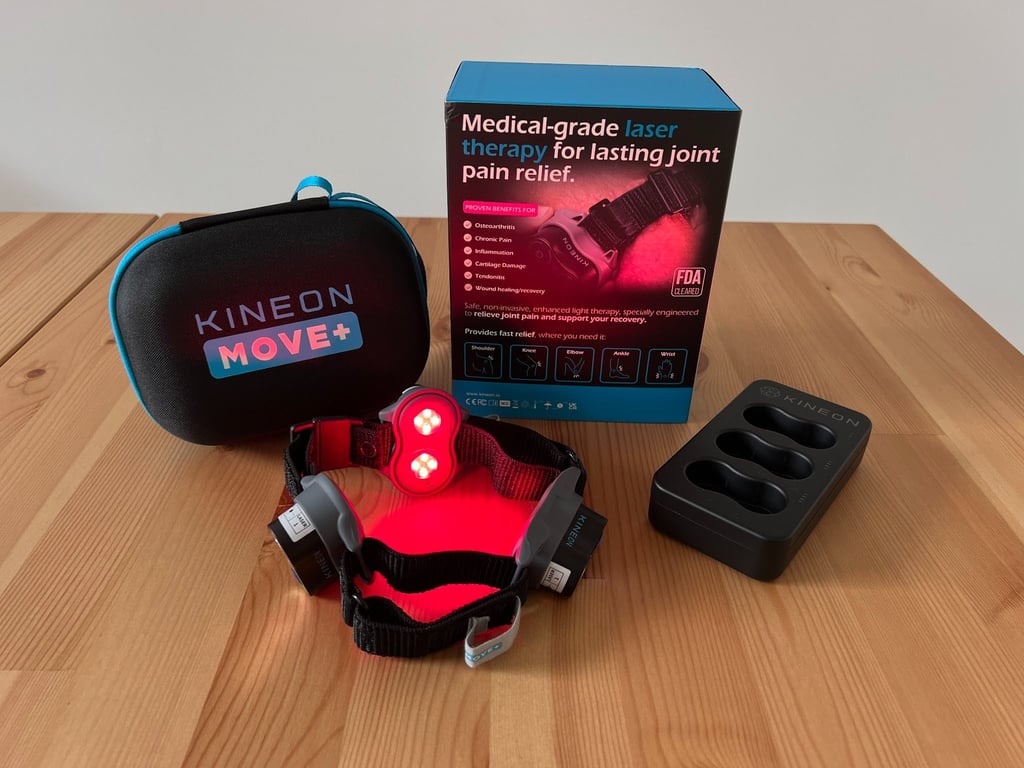
- Wavelengths: 660nm (red) and 808nm (near-infrared)
- Session length: From 5 minutes per day
- Price: $499
Kineon MOVE+ Pro is one of the more distinctive options in this category because it is built around targeted treatment rather than broad coverage. Instead of a wraparound pad or belt, it uses three connected modules that can be strapped into place around a joint or smaller treatment area, which makes it a natural fit for shoulders if you want something more precise than a general red light therapy wrap.
What really sets it apart is the combination of 660nm red LEDs and 808nm near-infrared lasers. That gives it a more technical edge than most LED-only wearables, and it helps explain why Kineon positions it as a device for joint pain and mobility rather than simple wellness use.
In testing, we found it easy to operate, portable, and thoughtfully designed, with a more refined build than many rivals. On the official website, you’ll find that the device may be used from 5 minutes per day, although it is recommended to stick to longer sessions lasting from 10 to 20 minutes daily—still quite manageable, especially since the device is wireless and can be used on the move.
At this price range, however, we would expect a longer warranty period, as Kineon comes with a standard 1-year warranty only.
- Wireless
- Quick sessions
- Versatile option for various body parts
- Quite expensive
FlexBeam
Best for: shoppers looking for durability
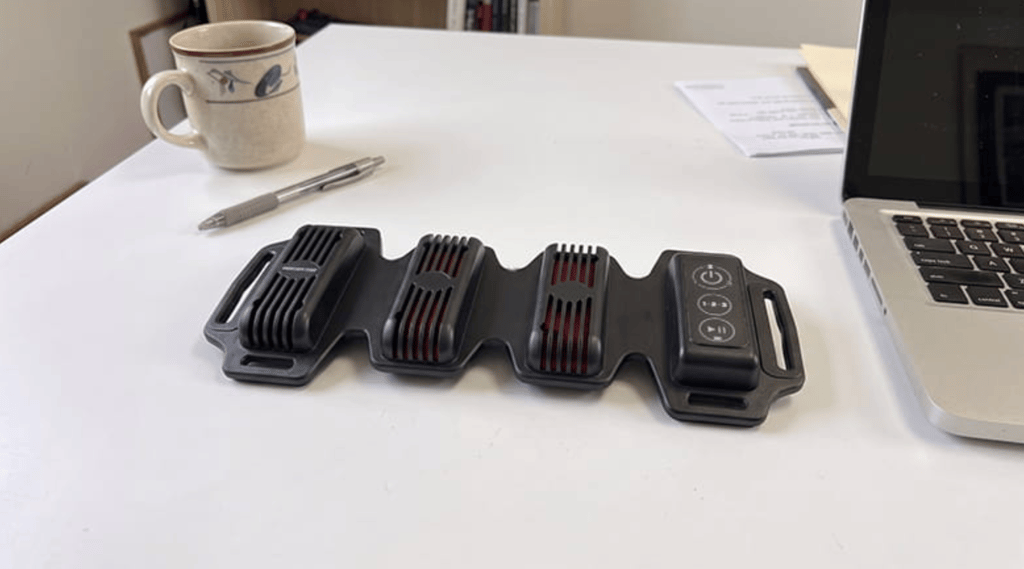
- Wavelengths: 610-650nm (red, peaking at 622nm) and 800-850nm (near infrared, peaking at 814nm)
- Session length: 10 minutes
- Price: $479
FlexBeam earns its place here mainly because of its 5-year limited warranty, which is much longer than what you usually see in this category. That added coverage makes it a more reassuring option for buyers spending at the premium end of the market, especially if long-term reliability matters as much as performance.
FlexBeam is designed as a targeted wearable for areas like the shoulders, making it a practical choice for users who want a more focused treatment device. In our testing, the device was straightforward to use, and with only 10 minutes per day, we had no trouble sticking to the protocol.
Like Kineon, it is wireless—so, you will need to recharge the battery quite frequently. Although the manufacturer does not specify the exact battery capacity, our testing showed that a single charge lasts for roughly 60 to 70 minutes of total use, requiring a recharge after every 6 or 7 sessions.
- Wireless
- Targeted modular design
- Short, manageable 10-minute programs
- Expensive option
- Not the best battery life
Novaa Deep Healing Pad
Best for: joint pain and arthritis
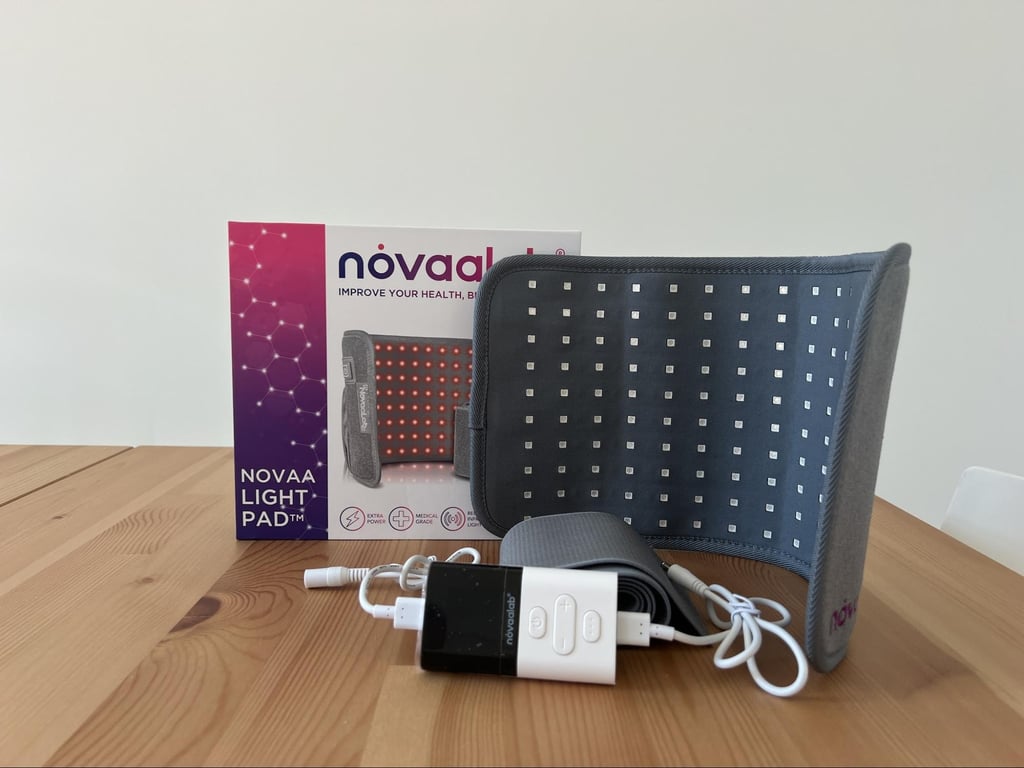
- Wavelengths: 660nm (red) and 850nm (near-infrared)
- Session length: 20 minutes
- Price: $349.90
Novaa's Deep Healing Pad is built specifically with joint pain and arthritis in mind. It uses a flexible pad format that can be wrapped around knees, hips, wrists, or hands, making it a practical option for anyone who needs targeted relief across more than one joint rather than a single fixed area.
In testing, our team members reported reduced muscle soreness after 3–5 weeks of use. As with all red light therapy, individual results will vary.
For the shoulder area, we found it to be acceptable. While it might not be the easiest product to position, and you’ll need to hold the device during the session, it is still a suitable option, especially if you are looking for a device you can use in other areas as well. The recommended session is 20 minutes, which is longer than some of the competitors.
Price-wise, Novaa is more accessible than several premium wearables in this category while still offering a legitimate combination of red and near-infrared wavelengths.
- Budget-friendlier option
- Flexible pad
- 60-day money-back guarantee
- Positioning for the shoulder area might be a bit awkward
Megelin
Best for: budget-conscious shoppers
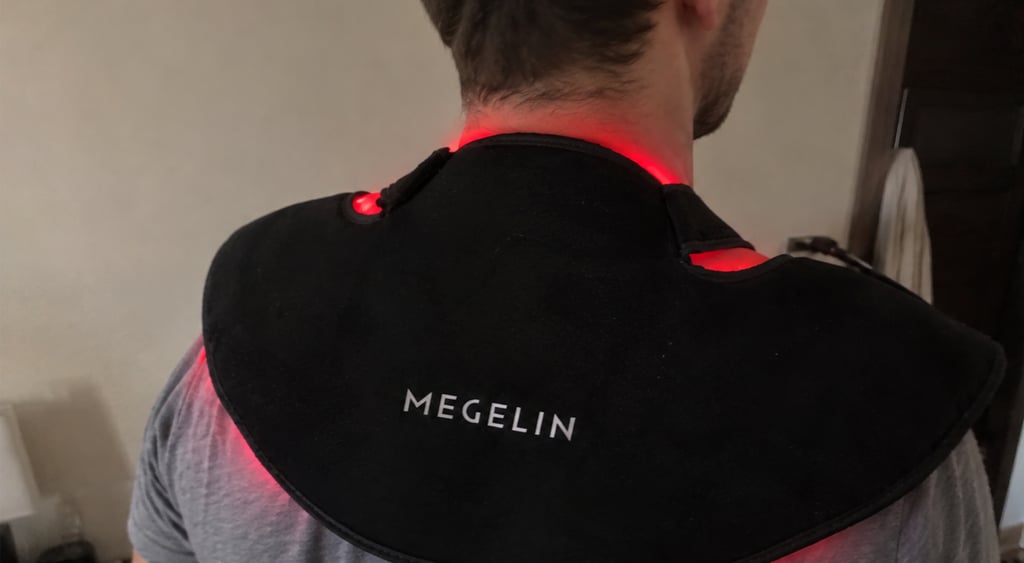
- Wavelengths: 660nm (red), 850nm and 1064nm (near-infrared)
- Session length: 15 minutes
- Price: $169.00
Megelin WrapLux stands out as one of the more affordable options for neck and shoulder pain, especially considering that it combines both laser and LED therapy in one device. At its sale price, it comes in well below many premium competitors.
The design is specifically for neck and shoulder tension, so we would recommend this product if your pain comes from sitting at the computer for long hours.
In day-to-day use, WrapLux looks easy to fit into a routine. It has a soft wearable design, a rechargeable wireless build, and several operating modes. The full battery should last you around 3 to 5 sessions, and that matches what we saw during hands-on testing. Compared to Kineon, however, the battery is weaker—but we still appreciated the cordless design.
The trade-off is that this is still a more specialized device than a general red light pad, and some buyers may prefer a product that could be used for multiple reasons, not just shoulder pain.
- Budget-friendly
- Cordless
- Targeted treatment
- For shoulder and neck pain only
- Battery life could be better
Mito Red Light MitoQUAD™ Wavelength Belt
Best for: users who prefer a belt design or want a broader wavelength coverage
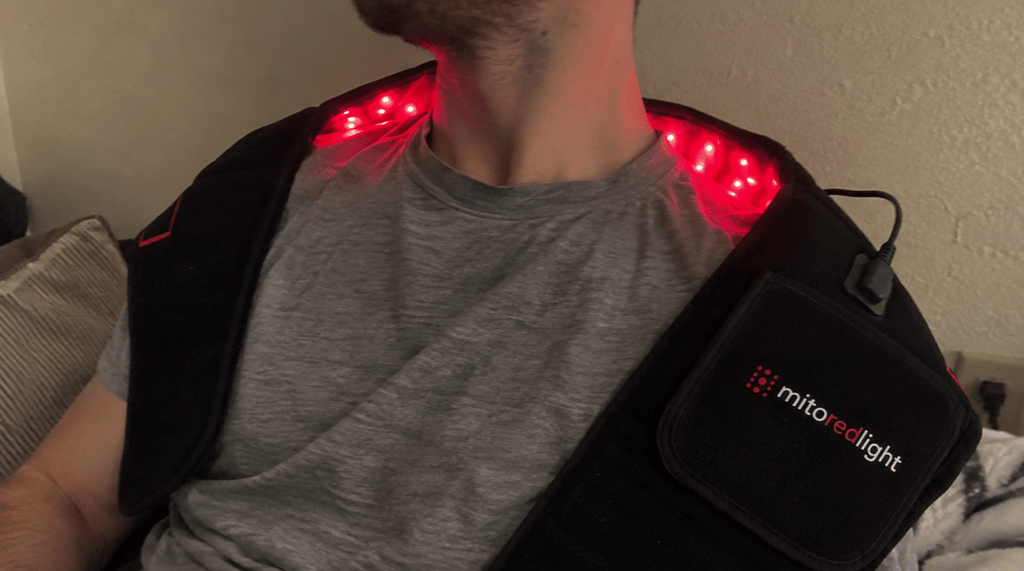
- Wavelengths: 630nm and 660nm (red), 810nm and 850nm (near-infrared)
- Session length: 20 minutes
- Price: $349
While commonly worn around the waist, a belt can also be used for shoulder pain—when we were testing MitoQUAD™ Wavelength Belt, this is what we tried as well. Admittedly, not the most straightforward application, but since the belt is flexible, it can be draped and adjusted around the shoulder joint to offer targeted coverage.
MitoQUAD™ stands out for combining four wavelengths instead of the more typical two. In practice, that gives it a broader-spectrum setup, which may appeal to users who prefer a device that covers multiple red and near-infrared wavelengths rather than relying on a simpler light profile.
One of the drawbacks is that the battery is sold separately, meaning that you’ll not be able to use it cordless without it. Also, since it is not exactly tailored to be used on shoulders, the positioning can be somewhat tricky and not the most convenient.
- Four wavelengths instead of the usual two
- Can be used on multiple body areas
- Budget-friendlier option
- Battery is sold separately
How we tested red light therapy devices for shoulder pain
For shoulder pain, we focused on devices that made sense for the area itself rather than just for the most impressive spec sheets. The shoulder is a trickier body part than the lower back: it is rounded, mobile, and harder to cover comfortably, so fit and positioning mattered just as much as wavelengths or power claims.
In testing, we paid close attention to how easy each device was to place, how well it stayed in position during a session, and whether it felt realistic to use consistently. Some devices looked strong on paper but were awkward to wrap, too rigid, or better suited to flatter body areas. Others stood out because they offered a more targeted fit or made it easier to treat the shoulder without having to hold the device in place the whole time.
We also considered practical factors like comfort, coverage, portability, build quality, warranties, return policies, and safety credentials. Lastly, we weighed manufacturer claims against the actual state of the evidence, which is promising in some areas but still far from conclusive for consumer devices.
How to choose a red light therapy device for shoulder pain
Not all red light therapy devices are built the same way, so it helps to look past marketing claims and focus on a few practical factors.
Wavelengths are the first thing worth checking. Most reputable devices combine red light (around 630-660nm) with near-infrared light (around 800-850nm), since the two are believed to act on different tissue depths, with red light working more on the skin's surface and near-infrared reaching deeper into muscles and joints.
Beyond wavelengths, consider the shape and fit of the device. Shoulders are an awkward area to treat consistently, since they are curved and constantly moving, so a wrap, pad, or modular design that can be strapped securely in place will usually be preferred.
Session length and ease of use matter too. Consistency is important with RLT—it is not a fast relief tool—so think about whatever you can stick to using the product.
Finally, it's worth factoring in build-quality signals like warranty coverage. Most devices offer only a 1-year standard warranty, so anything more is a big plus.
Potential benefits of red light therapy for shoulder pain
Research on photobiomodulation (the broader category that red and near-infrared light therapy falls under) suggests it may help with several aspects of shoulder pain.
Potential benefits include reduced pain intensity, improved range of motion, and support for the body's natural tissue repair processes, especially when light therapy is combined with exercise-based rehabilitation rather than used alone.
But keep in mind that RLT will not cure the underlying problem. In other words, it is a tool that may help you reduce your symptoms, not a medical treatment.
Also, not everyone will experience the same results, and they may be modest or mild only. For a proper treatment plan, it is best to consult your healthcare provider.
Other devices for pain:
Best TENS units for shoulder pain: Learn how these devices work and whether they could be helpful for your pain
Best red light therapy devices for pain: Discover other RLT devices designed to soothe the pain
Kineon review: We tested it for joint pain and this is what we found out
Final verdict: which red light therapy device should you choose?
There's no single best device, and it depends on what you value most.
Choose Kineon MOVE+ Pro for precise, joint-focused shoulder treatment; FlexBeam if a long warranty and versatility across body areas matter most; Novaa Deep Healing Pad for an affordable, arthritis-friendly option; Megelin WrapLux if you're on a budget and want neck-and-shoulder-specific relief; and Mito MitoQUAD™ if you prefer a broader, multi-wavelength setup that can adapt to different body parts.
No matter which device you choose, it is also recommended that you consult your healthcare provider about your shoulder pain, especially if it is chronic.
Red light therapy for shoulder pain: FAQs
It may help with some types of shoulder discomfort, particularly mild soreness, stiffness, or post-exercise irritation. But the evidence is not strong enough to treat red light therapy devices as proven treatments for all kinds of shoulder pain.
That depends on the device and the brand’s protocol, but consistency usually matters most. RLT devices are intended for repeated use across the week, not occasional treatment.
You generally want to place the device over the area that feels sore or restricted, usually around the shoulder joint, upper shoulder, or upper arm, depending on where the discomfort is coming from. The main goal is good coverage and close, consistent positioning.
Near-infrared is often considered especially relevant for shoulder pain because it is generally used to target deeper tissue. That said, many of the better devices combine red and near-infrared light rather than treating them as an either-or choice.
-
Wound Repair and Regeneration
Effectiveness of Photobiomodulation and Exercise‐Based Rehabilitation on Pain and Functional Recovery in Patients With Rotator Cuff Pathology.
-
Lasers in Surgery and Medicine.
Photobiomodulation self-treatment at home after rotator cuff arthroscopic repair accelerates improvement in pain, functionality, and quality of life: A double-blind, sham-controlled, randomized clinical trial.
-
Photodermatology, Photoimmunology & Photomedicine.
Modulation of gene expression in skin wound healing by photobiomodulation therapy: A systematic review in vivo studies.
-
Wiener klinische Wochenschrift.
Effects of low-level laser therapy on symptomatic calcific rotator cuff tendinopathy : A prospective randomized controlled study.