We picked the best heart rate monitor for running models that balance dependable readings with real-life comfort
Heart rate training has become one of the most useful ways to guide running, because it gives us a clearer read on effort than pace alone. But there isn’t a single perfect monitor for everyone: a casual runner, a marathoner, someone doing intervals, and a trail runner will all value different things in a device.
Wrist-based watches are undeniably easier to wear day to day, while chest straps still tend to deliver the most accurate readings when intensity rises. In this roundup, we’ve focused on the monitors we think make the most sense for different runners, judging them on testing, comfort, running features, heart rate performance, GPS experience (where relevant), battery life, and overall value.
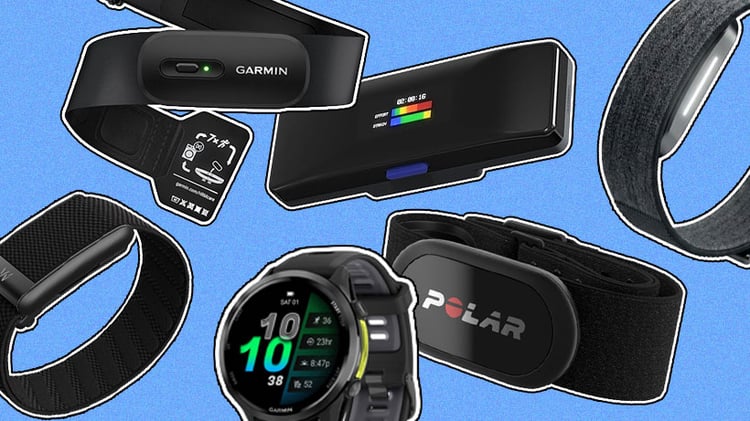
Quick picks: Best heart rate monitors for running
- Hume Band 2.0: Best for all-day recovery tracking
- Polar H10: Best for accuracy
- WHOOP 5: Best for recovery-led runners
- Garmin HRM 200: Best for Garmin users
- Frontier X2: Best for ECG-grade chest monitoring
- Garmin Forerunner 970: Best for serious runners and triathletes
How we test heart rate monitors for running
We test heart rate monitors the way runners actually use them, across easier runs, interval sessions, hill workouts, and long efforts where comfort starts to matter a lot. For watches, we also look at GPS accuracy and how well the wrist sensor copes with pace changes, while chest straps are judged on cadence lock resistance, pairing reliability, and how consistently they hold data at higher intensities.
We pay close attention to comfort on marathon-length runs, battery life, companion app experience, and how easily each monitor connects with running apps. Just as important, we weigh value for money, because the best heart rate monitor for running is not always the most expensive one.
Hume Band 2.0: Best for runners who want no-fuss tracking
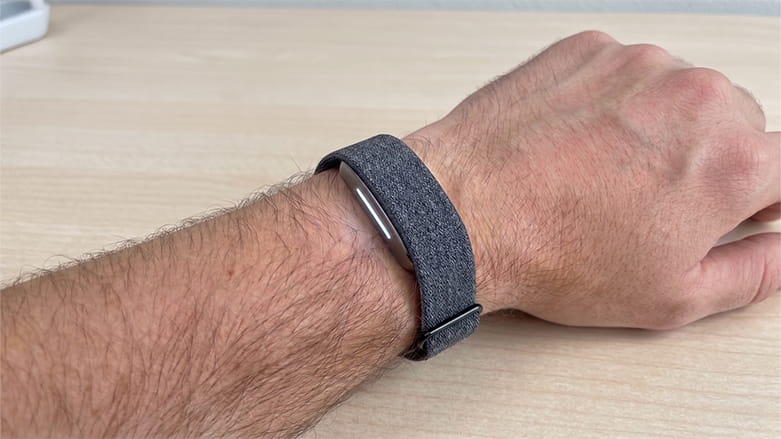
| Battery | Up to 14 days |
| Heart rate technology | Optical sensor with 5 LEDs and 4 photodiodes |
| GPS | None |
| Connectivity | Bluetooth; compatible with iPhone and Android |
| Water resistance | IP68; up to 1m for 2 hours |
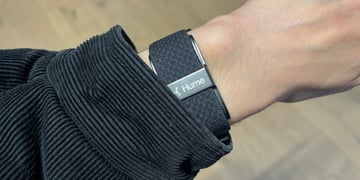
Hume Band 2.0 is more about steady, all-day monitoring than run-specific bravado, but that’s part of its appeal. On easy runs and longer efforts, it sits quietly on the wrist and does a solid job of tracking heart rate without the bulk or screen distractions of a watch. It’s especially comfortable for marathon-length wear, and the long battery life means we’re not constantly thinking about charging.
The trade-off is that it isn’t built for GPS-based running, so it won’t replace a proper running watch. And while the Hume app gives you a lot of recovery and wellness context, runners who want the sharpest workout-by-workout precision may still prefer a chest strap. Overall, this is a good fit for runners who want one wearable that blends training data with recovery insight.
- Very comfortable for all-day wear
- Long 14-day battery life
- Strong recovery and wellness tracking
- No required subscription
- No built-in GPS
- Not a run-first device
- Less useful for hard-session precision than a chest strap
Polar H10: Best for runners who want more accuracy
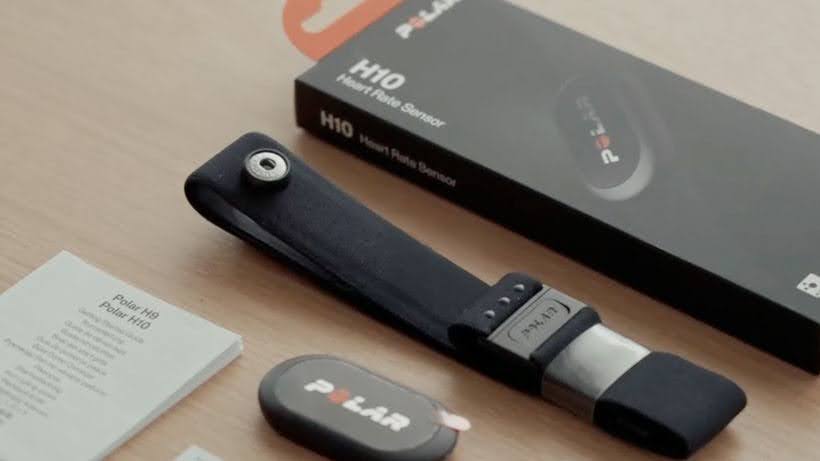
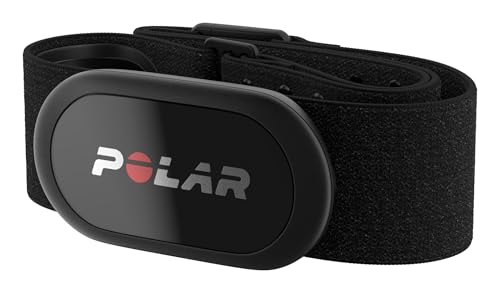
For runners who care most about heart-rate accuracy, the Polar H10 still feels like the safe bet. It responds quickly on easy runs, stays steady during intervals, and avoids the wobble and lag we often see from wrist-based sensors when the pace changes sharply. That makes it especially useful for threshold sessions, hill reps, and zone training, where a clean signal matters more than extra features. It is also comfortable enough for long runs, with a soft strap that stays put once fitted properly, and the battery life is excellent for a chest strap.
The downside for some is that it is deliberately simple: there’s no GPS, no fancy training guidance, and swimming use is less straightforward than the spec sheet suggests. But if you want a monitor that just does the key job very well, the H10 remains one of the most convincing options.
- Extremely accurate heart-rate tracking
- Excellent battery life
- Comfortable for longer runs
- Broad compatibility with apps and devices
- No GPS
- No built-in training features
- Best results depend on a good strap fit
WHOOP 5.0: Best for runners who want recovery data to shape the plan
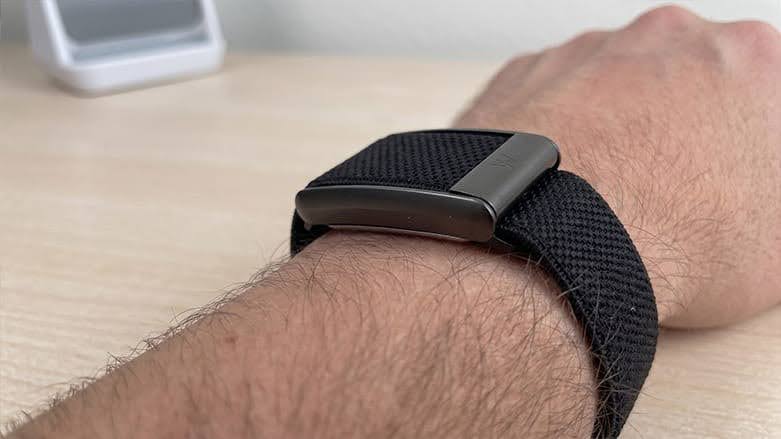
| Battery | Up to 14 days |
| Heart rate technology | Optical sensor with improved strain and recovery tracking |
| GPS | No built-in GPS; uses phone GPS |
| Connectivity | Bluetooth |
| Water resistance | IP68 / 10ATM |
WHOOP 5.0 suits runners who care less about live run metrics and more about the bigger training picture. It’s comfortable enough to wear all day and through long runs, and its screen-free design makes it easy to forget about once it’s on. Heart rate tracking is strongest for steady efforts and recovery-focused training, but harder sessions can still expose some limits, especially if you want instant pace or zone feedback on the wrist.
That’s the key trade-off here: WHOOP is excellent as a background coach, not a standalone running watch. If you already use GPS for pace and distance, it can add useful strain, sleep, and recovery context without getting in the way. If you want one device to do everything on the run, though, this isn’t it.
- Very comfortable for 24/7 wear
- Strong recovery and sleep insights
- Two-week battery life
- Screen-free and distraction-free
- No built-in GPS
- No on-device run data display
- Subscription required
Frontier X2: Best for runners who want ECG-level insights, not just heart-rate numbers
| Battery | Up to 24 hours or 12–14 days based on 1 hr/day usage. |
| Heart rate technology | ECG (electrodes) on a chest strap. |
| GPS | No built-in GPS; uses phone GPS |
| Connectivity | Bluetooth Low Energy (BLE 5.0). Connects to iOS, Android, Apple Watch, and BLE sport watches (Garmin, Wahoo, etc.) |
| Water resistance | IP67 / 1.5m submersion (sweat, splash, and shallow swim resistant) |
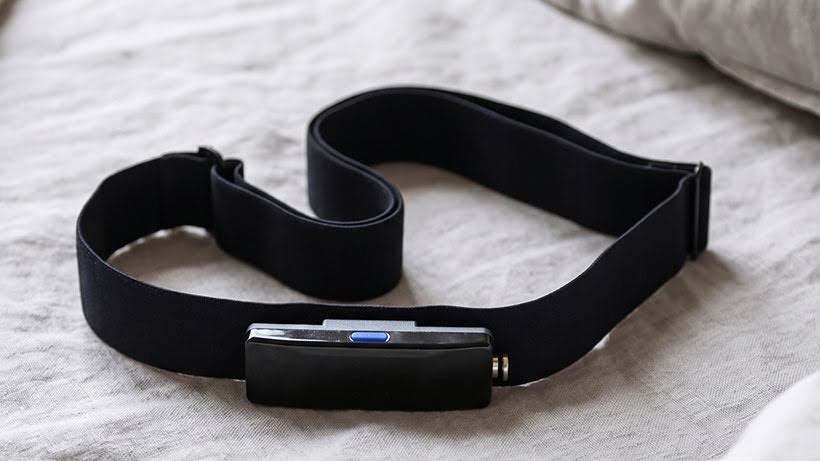
Frontier X2 is a niche pick, but a compelling one if you want more than standard heart-rate tracking. On runs, it feels at its best when you’re curious about what your body is doing under the hood, because the ECG-focused setup gives you a level of detail most chest straps simply don’t try to offer. It can handle easy runs and harder efforts alike, and the chest fit keeps the readings steady once it’s in place, though this is not the lightest or simplest monitor to live with.
The lack of built-in GPS is an obvious downside for runners who want an all-in-one device, and the app-led experience will suit data-hungry users more than people who just want to start and forget. Still, for runners who value medical-style insight, the Frontier X2 stands out as one of the most interesting monitors in this roundup.
📢 LIMITED OFFER: Use code DEAL30 for 30% OFF
- Continuous ECG data
- Strong integration with training platforms
- Good battery life for a specialist strap
- Water-resistant for sweaty or wet sessions
- No built-in GPS
- More niche than most runners need
- Not the lightest or simplest option
Garmin HRM 200: Best for Garmin runners who want a no-nonsense chest strap
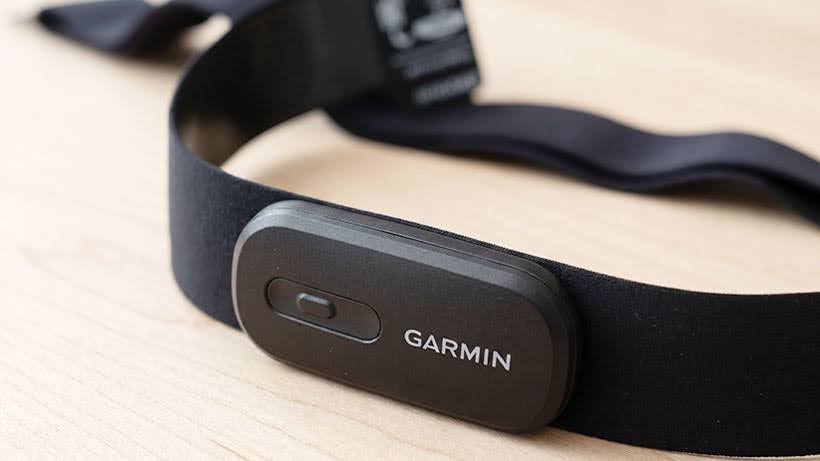
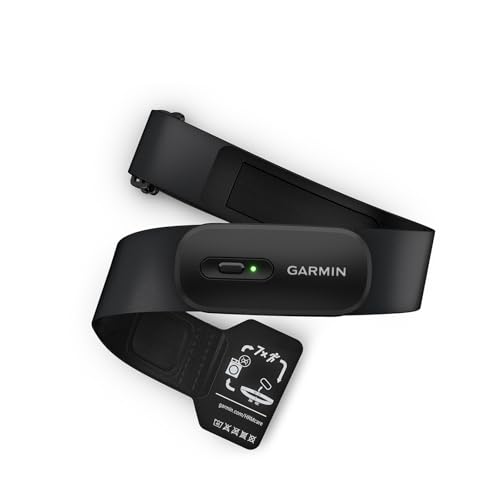
Garmin’s HRM 200 is the sort of chest strap we’d recommend to runners who want reliable heart-rate data without paying for extras they won’t use. In testing, this kind of strap is at its most convincing on easy runs, intervals, and hill sessions, where wrist sensors can get flaky, and the HRM 200’s chest-mounted signal should stay steadier through pace changes. It is also simple to live with: the strap is soft enough for longer efforts, the battery lasts around a year, and pairing with Garmin watches and apps is straightforward.
What you do not get is onboard memory, running dynamics, or anything that makes it feel like more than a heart-rate tool, so it is best viewed as a focused training accessory rather than a multi-sport powerhouse. For runners already in the Garmin ecosystem, though, that simplicity is a strength, not a weakness, because it keeps the HRM 200 affordable, practical, and easy to trust when the workout gets serious.
- Accurate, steady chest-strap heart rate
- Easy Garmin pairing and app support
- Comfortable for regular training
- Long battery life with replaceable coin cell
- No GPS
- No onboard memory
- No running dynamics
Garmin Forerunner 970: Best for runners who want a complete training watch
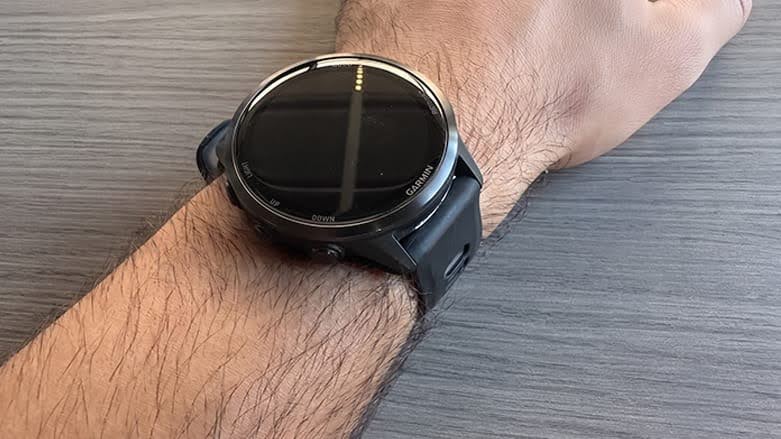
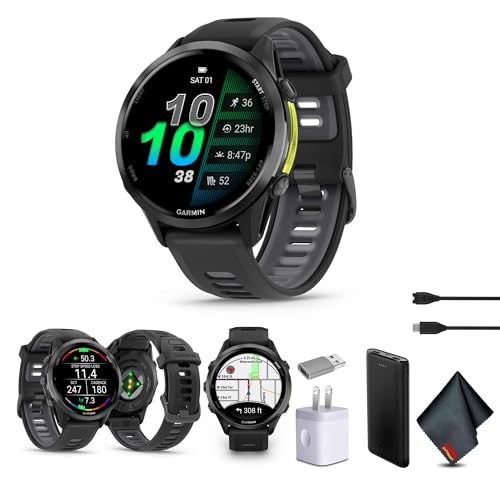
Garmin’s Forerunner 970 is the most complete running option in this lineup, combining dependable wrist-based heart rate with the GPS, mapping, training plans, and performance metrics that serious runners actually use. On easy runs and steady long efforts, its optical sensor is impressively close to a chest strap; testing found it was generally within 1–2bpm, although rapid heart-rate changes after a pause can still expose a little lag. That makes a chest strap a sensible addition for hard intervals, but the watch is accurate enough for most daily training, marathon preparation, and trail runs.
Multi-band GPS also performs strongly under trees and around buildings, while the 56g design remains comfortable over long distances. The bright AMOLED screen is easy to read mid-run, although the premium price and reduced battery life compared with the previous model are genuine drawbacks. For runners who want one device to handle training, navigation, recovery, and smartwatch duties, it is hard to beat.
- Excellent GPS and running features
- Strong wrist-based heart-rate performance
- Comfortable for long training sessions
- Advanced mapping, training, and recovery tools
- Expensive
- Heart rate can lag during sudden surges
- Battery is shorter than the Forerunner 965
Comparison table: Our top running heart rate monitors
| Product | Type | Heart rate accuracy | GPS | Battery | Running features | Bluetooth/ANT+ |
| Hume Band 2.0 | Watch/band | Good for everyday tracking; not a run-first precision device | No | Up to 14 days | Recovery and wellness-led, not run-focused | Bluetooth |
| Polar H10 | Chest strap | Excellent; one of the most accurate options for runners | No | Up to 400 hours | Basic by design; focused on heart-rate capture | Bluetooth, ANT+, GymLink |
| WHOOP 5.0 | Watch/band | Strong for steady efforts and recovery tracking | No; phone GPS only | Up to 14 days | Recovery, strain, sleep, and coaching | Bluetooth |
| Frontier X2 | Chest strap | High-end ECG-style tracking | No built-in GPS | Up to 24 hours of continuous ECG recording | ECG, breathing-rate, and deeper heart data | Bluetooth |
| Garmin HRM 200 | Chest strap | Very reliable chest-strap accuracy | No | Up to 1 year | Simple heart-rate and HRV tracking | Bluetooth, ANT+ |
| Garmin Forerunner 970 | Watch | Excellent wrist-based tracking for a watch | Yes; premium GPS watch | Long battery for a flagship running watch | Advanced training, mapping, and multisport tools | Bluetooth, ANT+ |
Watch vs chest strap: Which is better for runners?
Chest straps remain the benchmark because they read the heart’s electrical signal directly, making them faster and more reliable when effort suddenly changes. That matters most in interval workouts and hill reps, where wrist sensors can lag or briefly miss the spike, but it also helps in tempo runs and marathon training when you want a clean read on zone control. For trail running, the gap can widen again because arm movement, poles, cold weather, and terrain can all interfere with optical sensors.
That said, a modern running watch is often accurate enough for everyday training, steady easy runs, and long sessions where you mainly want a useful trend rather than lab-level precision. In practice, we see watches as the more convenient option and chest straps as the more trustworthy one.
If you want simplicity, wear the watch. If the number drives the workout, wear the strap. For most runners, the best setup is a watch for daily use and a chest strap for the sessions where accuracy really matters.
What makes a good running heart rate monitor?
A good running heart rate monitor needs to get the basics right, but the details matter just as much. For runners, the best devices combine accuracy, comfort, and easy connectivity without turning the experience into a chore.
- Sensor type: Optical wrist sensors are convenient, but electrical chest straps still deliver the most reliable data when effort changes quickly
- Comfort and fit: It should stay secure without rubbing, slipping, or bouncing during the run
- Cadence lock resistance: A good monitor avoids confusing your stride rate with your heart rate, especially on watches
- Interval responsiveness: It should react quickly when pace or effort changes, so the numbers stay useful in hard sessions
- Connectivity: Bluetooth and ANT+ help it pair with watches, phones, and running platforms
- Durability: Sweat, rain, and repeated washing should not cause problems
How to choose the right running heart rate monitor
Choosing the right running heart rate monitor comes down to the information you need and how much effort you want to put into using it.
- Accuracy: Choose a chest strap if you want the quickest, most dependable readings for intervals, racing, or closely managed training zones. Modern watches are usually accurate enough for easy runs and general effort tracking
- Watch or chest strap: A watch is simpler and shows pace, distance, and heart rate in one place. A strap is more focused but typically requires a watch or phone to display the data
- GPS and metrics: Choose a GPS watch if you need routes, pace, distance, elevation, or advanced running metrics. A standalone monitor is better if heart rate is the only number you care about
- Battery and comfort: Look for enough battery to cover your longest runs, and choose a secure fit you can tolerate for hours. Chest straps can offer much longer battery life, while watches are easier to wear every day
- Ecosystem and compatibility: Check support for your phone, running app, training plans, and existing watch. Bluetooth is useful for phones and apps, while ANT+ offers broader sports-device compatibility
- Budget: Spend more on precision only if your training will use it; otherwise, a reliable watch or affordable strap may offer better value
Which heart rate monitor should you choose?
Let’s talk things practically. If you run a few times a week and want a comfortable, low-maintenance option, the Hume Band 2.0 is a good starting point, particularly if recovery and everyday wellness matter as much as live run data. Then, for the most accurate readings during intervals, tempo runs, racing, or marathon training, we’d choose the Polar H10. It responds quickly when intensity changes and remains a dependable option when precise heart-rate zones matter. WHOOP 5 is better suited to runners who want recovery, sleep, and training-load insights rather than a screen full of live metrics.
Those who are already using Garmin devices should consider the HRM 200 for a straightforward chest strap that fits neatly into the Garmin Connect ecosystem, while the Frontier X2 is aimed at data-focused runners who want continuous ECG-style monitoring.
If you want one device for GPS, pace, training plans, and advanced running features, the Garmin Forerunner 970 is the most complete option here. Watches are generally more convenient, but chest straps remain our preference for hard sessions.
Ultimately, the best heart rate monitor for running depends on whether you prioritise simplicity, recovery guidance, ecosystem features, or maximum accuracy.
Are wrist heart rate monitors accurate enough for running?
For many runners, yes. Still, accuracy depends on how and when you use them. Optical sensors use LEDs and photodiodes to detect changes in blood volume beneath the skin, then estimate heart rate from that signal.
On steady, easy runs, a well-fitted watch can provide useful data, but accuracy can vary as movement and conditions change. A loose fit lets the sensor move, while wrist movement can add noise and create “cadence lock”, where the watch mistakes your stride rate for heart rate. Cold weather can reduce blood flow near the skin, and sweat or water may also affect the optical signal.
A wrist monitor is usually convenient enough for everyday training, relaxed long runs, and tracking broad effort trends. A chest strap performs better when you need fast, consistent responses during intervals, hills, tempo sessions, or racing, where heart rate changes quickly.
It can also be the better choice if your watch regularly shows readings that do not match how hard you feel you are working. No consumer monitor should be treated as a replacement for medical equipment or clinical advice; these devices are designed to support training, not diagnose health conditions.
Other recovery and wellness reviews
Best heart rate monitor watches: Tested for fitness, sports, and everyday tracking
Best ECG smartwatch: Tested for ECG-based efficiency
Best smart rings: Tested Oura alternatives
Best heart rate monitors: Tested straps, watches, and rings
Best fitness tracker: Tested for practical fitness goals
Heart rate monitors for Strava: Tested for effective Strava compatibility
Final verdict
Hume 2.0 takes our top spot, offering an unrivaled balance of next-gen tracking accuracy, refined comfort, and rich recovery insights. Right behind it, the Polar H10 remains the gold standard for pure chest-strap accuracy and bulletproof reliability, while the WHOOP 5.0 is the ultimate pick for continuous 24/7 strain and recovery tracking without a screen.
For athletes needing advanced cardiac metric monitoring, the Frontier X2 delivers specialized insights that few can match. If you want dependable heart-rate data on a budget, the Garmin HRM 200 provides solid readings and seamless ecosystem integration. Finally, for runners who demand built-in GPS, full mapping, and comprehensive training metrics in a single device, the Garmin Forerunner 970 is the ultimate specialist tool (provided you're willing to pay for its premium feature set).
References
-
National Center for Biotechnology Information.
-
National Center for Biotechnology Information.
-
National Center for Biotechnology Information.
-
National Center for Biotechnology Information.
-
Frontiers.