I packed one wearable for a two-week vacation—here's why it wasn't my Apple Watch
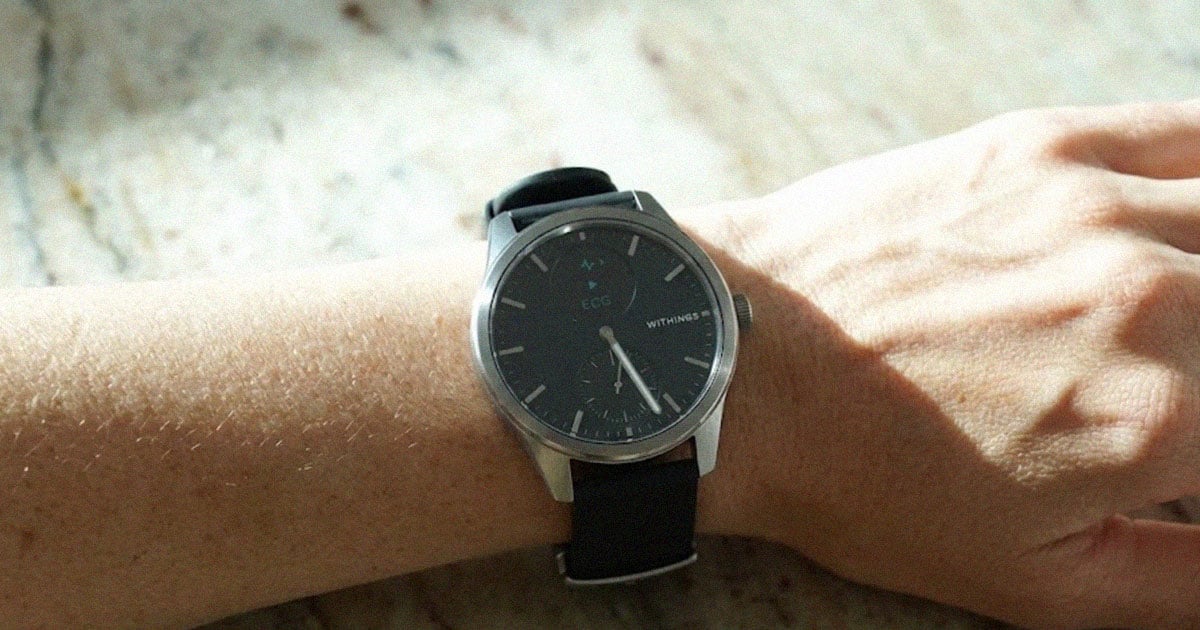
If you’re trying to pack one wearable for a proper two-week vacation, try Withings ScanWatch 2. I wore it instead of my Apple Watch for 14 days of flights, city walks, pool time, dinners, and one mildly overambitious coastal hike—and the biggest upgrade was not needing to think about charging.
That sounds like a small thing until you’re sharing one travel adapter, waking up early for a transfer, and already worrying about your phone, earbuds, and power bank.
ScanWatch 2 is not a smartwatch in the Apple Watch sense. It is a hybrid: real analog hands, a small monochrome display, passive health tracking, basic notifications, and a manufacturer-claimed battery life of up to 35 days. On holiday, that restraint made it feel more useful, not less.
The battery made the whole trip calmer
I charged ScanWatch 2 fully the night before leaving, packed its proprietary charger in my cable pouch, and then deliberately ignored it.
My tests included a 14-day trip with two flights, 11 nights in a hotel, three nights in an apartment, eight tracked workouts, four pool swims, and sleep tracking every night. I paired the watch with an iPhone, kept call, text, and calendar notifications on, and disabled noisy app alerts before boarding.
On my final morning of the trip, ScanWatch 2 was still at 45%.
That changed the experience more than I expected. I didn’t have to do the late-night ‘do I charge it or track sleep?’ calculation. I no longer had to bring a charger to dinner for ‘just in case’. And I didn’t have to worry about waking up to a dead watch because I forgot to charge it overnight.
For comparison, my usual Apple Watch routine involved charging almost every day. While it is more capable, it also behaves like another tiny phone with a battery deadline.
| My 14-day travel test | Withings ScanWatch 2 result |
| Starting battery | 100% |
| Battery after 7 days | 72% |
| Battery after 14 days | 45% |
| Mid-trip charges | 0 |
| Nights of sleep recorded | 14/14 |
| Workouts manually tracked | 8/8 |
| Total steps logged | 173420 |
| Charger used while away | No |
Just a heads-up: I was not trying to drain the battery for this test. I used the watch the way I would actually use it on holiday: mostly passive tracking, a few workouts, glanceable notifications, and very little fiddling.
If you enable every alert, constantly wake the display, take repeated blood oxygen spot checks, and track long workouts daily, your result will be lower. But the practical travel win still stands. This is a watch I could take away for two weeks without having to plan my evenings around a charging puck.
It looked right in places my smartwatch felt wrong
The second thing I appreciated was how normal ScanWatch 2 looked. I could wear it to the airport, sightseeing, and dinners, without worrying about it ruining my outfit.
In a museum, it did not light up like a wrist-mounted billboard. Even when I wore a linen shirt in the evening, it did not drag the outfit back toward ‘person checking work Slack by the pool’.
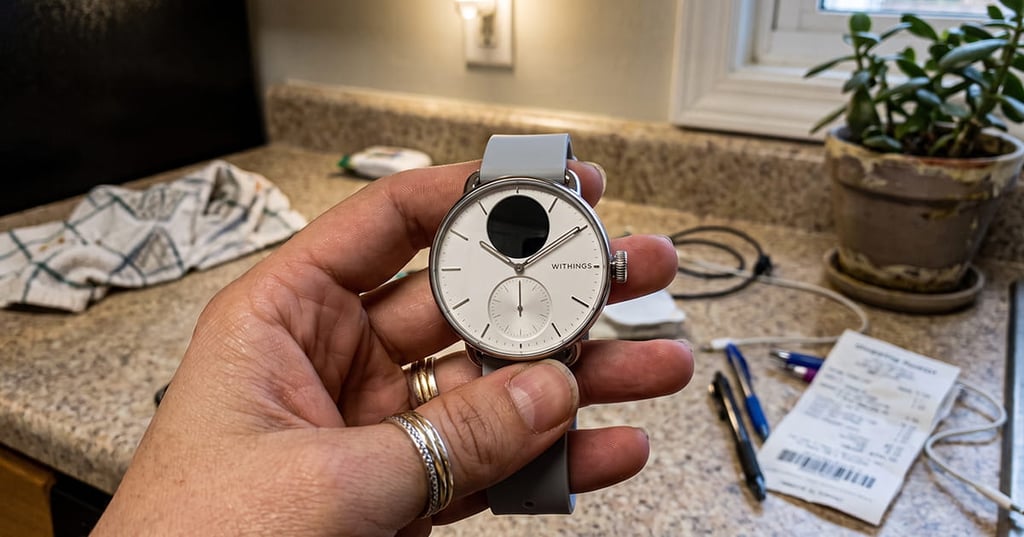
The analog hands do a lot of quiet work here. I could check the time without raising my wrist dramatically or waking a full-color screen. The small inset display handled the basics: steps, heart rate, battery, workout status, and simple notifications.
That tiny screen is also one of ScanWatch 2’s biggest compromises. It’s fine for receiving message notifications; it’s not so good for reading long texts, checking travel details, following directions, or dealing with anything interactive. I used my phone for boarding passes, maps, translations, restaurant bookings, payments, and proper messages.
But that division felt healthy on holiday. The watch told me enough. The phone did the jobs that actually needed a phone.
The health tracking was best as a travel diary, not a medical tool
ScanWatch 2 tracks heart rate, activity, sleep, breathing-related metrics, temperature variation, blood oxygen spot checks, and ECG, where available. Withings also lists 5ATM water resistance, which made me comfortable wearing it for pool sessions rather than treating it like a fragile dress watch.
Keep in mind that I used the health features for trend tracking, not diagnosis. A consumer watch cannot tell you why you feel tired, whether you are ill, or whether a symptom is harmless. If you have worrying chest pain, breathing issues, fainting, unusual swelling, or any urgent symptoms, a watch reading is not the decision-maker.
For an ordinary travel context, though, the data was useful.
After the first flight and a late dinner, my sleep duration dropped to 5 hours 42 minutes, and the app showed a higher overnight heart-rate average than my trip baseline. After two calmer nights, earlier meals, and less alcohol, my sleep duration moved back above 7 hours. However, I did not treat that as science. I treated it as a reminder to stop pretending holiday wine and midnight gelato were recovery tools.
The watch also made walking days visible. My highest step count was 22860 on a sightseeing day. My lowest was 6140 on a pool-and-reading day, which felt about right.
During the whole trip, ScanWatch 2’s total step count sat a few percent above my phone’s total, but the pattern matched: big walking days looked big, rest days looked restful.
Withings’ sleep tracking was quite comfortable because the watch is slimmer and less screen-like than most smartwatches. I did not have a bright display waking me up, and I did not feel the urge to check notifications in bed.
It’s limitation—lack of depth. If you want the richest sleep coaching, detailed training readiness, or athlete-grade workout analysis, ScanWatch 2 is not the most ambitious option. Its value is continuity: it kept collecting useful enough signals every day because I never had to remove it for a daily recharge.
Workouts were good enough for holiday, not for serious training
I tracked four long walks, two hikes, and two swims. For a vacation watch, the experience was perfectly adequate: start the session, let it record, check the summary later.
For a running watch replacement, I would not be so generous.
The small display does not give you rich live metrics. There is no big, glanceable workout screen with multiple data fields. Besides, connected GPS means you are leaning on your phone for route tracking rather than getting the self-contained sports-watch experience some runners expect. And the physical interaction is basic compared with a dedicated training watch.
On my coastal hike, I missed having a bigger map and clearer live stats. I wanted elevation, route confidence, and easier pacing at a glance. ScanWatch 2 gave me a record of the activity, but it did not feel like a tool actively helping me manage the effort.
That is the buying line. If your vacation includes casual activity, walking, swimming, sightseeing, and sleep tracking, ScanWatch 2 fits beautifully. If your vacation is a marathon block with structured sessions, intervals, routes, and recovery analysis, take a proper sports watch.
The biggest Apple Watch losses were payments, maps, and safety features
I was excited to leave my Apple Watch at home after a long time of wearing it, but there were a few things that I missed.
I missed wrist payments at convenience stores, turn-by-turn directions when I had my phone in a bag, and being able to triage messages properly from my wrist. I also missed richer timers and quick app interactions while traveling.
There are also more serious considerations. If you rely on cellular calling, fall detection, emergency tools, accessibility features, medication reminders, or a specific health feature from your smartwatch, you should not casually swap it for a simpler hybrid before a trip.
ScanWatch 2’s philosophy is that your phone can do the smart stuff. That worked for me because I wanted fewer screens, not more. It will annoy anyone who uses a smartwatch as a genuine phone replacement.
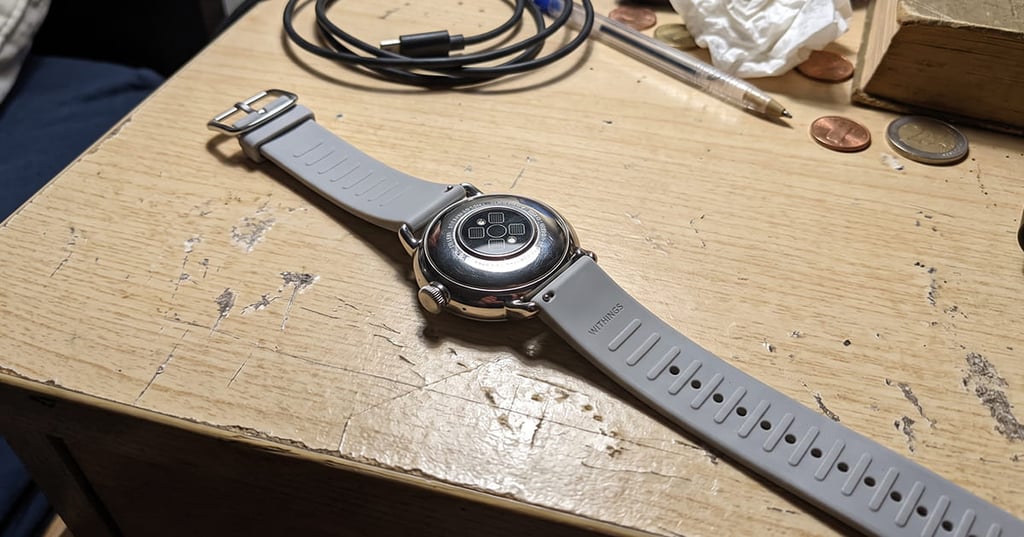
The proprietary charger is the other practical gripe. I did not need it during the trip, but I still packed it because losing access to a specific cable is more annoying than borrowing a USB-C. If you buy this as a travel watch, label the charger and keep it with your passport pouch or main cable kit.
The alternatives make sense if you want something quieter, cheaper, or more functional
ScanWatch 2 was the best middle ground in my test because it still looked and behaved like a watch. But it is not the only sensible travel wearable.
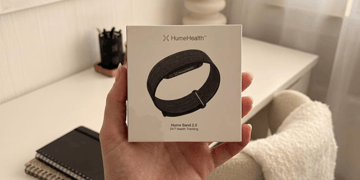
Hume Band 2.0 is the quieter choice if you don’t want a screen at all. I would consider it if wellness tracking matters more than checking the time or seeing notifications. The obvious trade-off is that it cannot replace even a basic watch face.
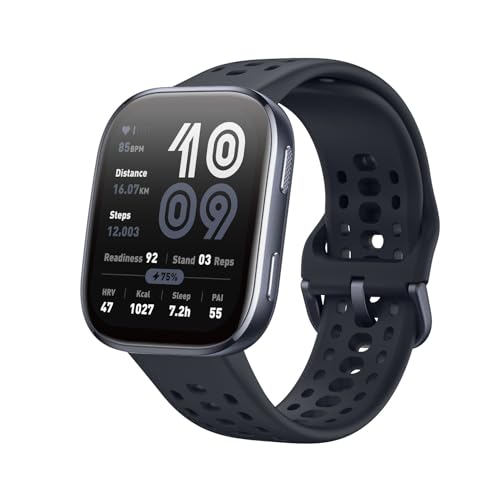
Amazfit Bip 6 is the more functional travel pick if you want a bright display, more smartwatch-style features, and a lower-cost route into GPS-friendly fitness tracking. I would pick it over the Withings for more active trips, but not for dinners or low-distraction travel.
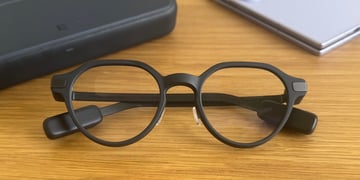
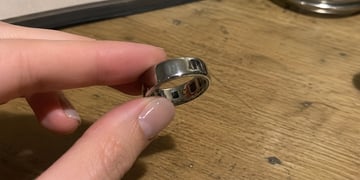
RingConn Gen 2 is the most discreet option for sleep and wellness tracking. A ring is brilliant if you hate wearing a watch overnight, but it cannot show the time, display a notification, or help during a workout in the same direct way.
That is why ScanWatch 2 kept winning the packing argument for me. It did not do the most. It did the right amount.
ScanWatch 2 is the rare travel wearable that made me check my phone less
By the end of the trip, I realized that ScanWatch 2 was quite different from my Apple Watch, but it solved a problem I didn’t know I had.
With Withings ScanWatch 2, I was able to relax more without a screen blast and constantly track my activity and sleep without even charging it.
It logged walking days, swims, and basic health trends without asking me to manage another app-heavy device. It looked appropriate with shorts, swimwear, and dinner clothes. And it returned home with enough battery left that I felt slightly silly for packing the charger at all.
I would not buy it for on-wrist maps, payments, app support, cellular features, or serious run training. I would buy it for exactly this job: one good-looking wearable that can cover a two-week vacation, track the basics, and stay out of the way. For my next low-stress trip, I’d pack Withings ScanWatch 2 again and leave Apple Watch on its charger.