You don't need to break the bank for a smart ring—I found these affordable Oura alternatives
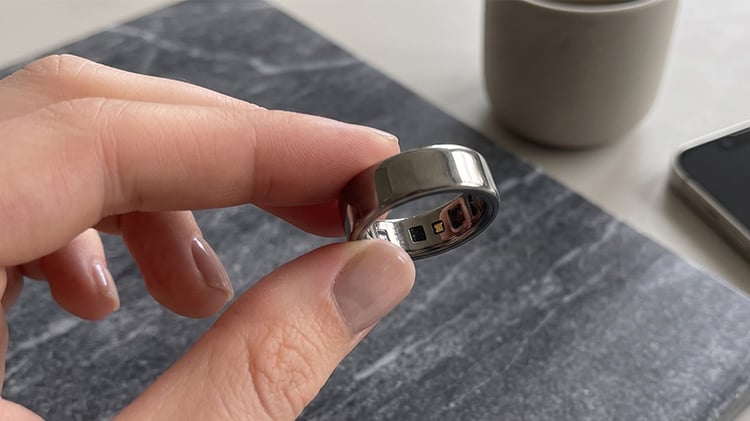
If Oura Ring 4 price makes you hesitate, start smaller. After a month rotating through five budget-friendly smart rings, Mirlray Smart Ring is the cheap Oura alternative I’d try first. Not because it matches Oura, but because it answered the question that matters the most: do I actually want to sleep, shower, work, and travel with a sensor on my finger?
That is the real value here. Oura Ring 4 is quite costly, and its fuller insights require a membership after the included trial, which will cost you even more in the long-run. By contrast, Mirlray competes at the budget end of the category.
The catch: ‘Oura alternative’ does not mean ‘Oura for less.’ It means a cheaper way to try the ring’s design, watch basic overnight trends, and decide whether a ring makes more sense for you than a watch. These are wellness gadgets, not diagnostic devices, and I would not use any of them to make medical decisions.
Mirlray is the one I’d buy first because it solves the cheapest smart-ring problem
Mirlray Smart Ring is definitely way less expensive, so my expectations weren’t very high. I didn’t expect polished recovery coaching, deep platform integrations, or lab-grade confidence.
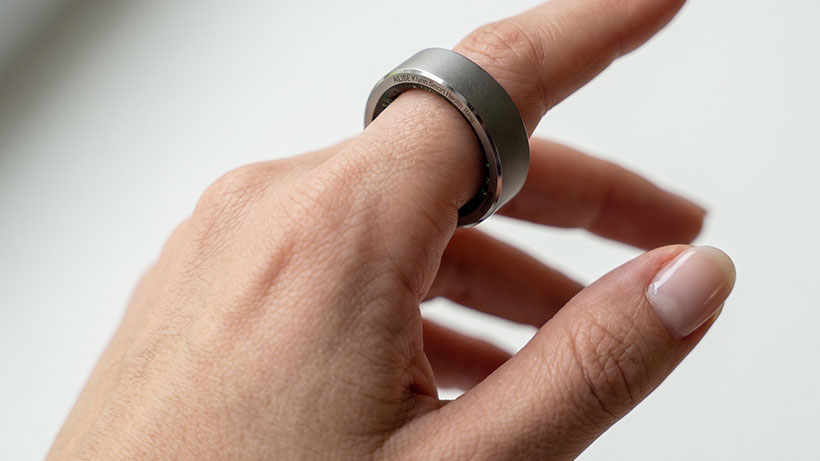
I wanted to know whether the ring could do three practical things: stay comfortable overnight, capture a readable sleep and heart-rate trend, and avoid turning into another annoying device that needs constant charging.
For that narrow job, it was better than I expected.
I wore Mirlray for 14 consecutive nights on my left index finger, with an Oura Ring 4 on my right ring finger as a familiar comparison point. I also wore it when working, walking the dog, two easy 5K runs, three strength sessions, showering, and one overnight hotel stay. I kept the same bedtime window, charged it every four days, and checked the app once after waking up and once before bed.
Mirlray advertises sleep, heart-rate, and blood oxygen tracking. I treated those numbers as estimates rather than proof, but the overnight pattern was useful. On nights when I had some wine, went to bed after midnight, or woke up repeatedly, the app reflected a worse-looking sleep summary. On calmer nights, it usually moved in the right direction.
That sounds basic, but it is exactly what many people want from their first smart ring.
My 14-night Mirlray test made the savings feel real, with obvious trade-offs
Here’s a compact version of my Mirlray Smart Ring test log:
| What I tracked over 14 nights | Mirlray Smart Ring result | Oura Ring 4 comparison | What it meant in use |
| Average sleep duration shown | 7hr 04min | 7hr 18min | Mirlray usually spotted the main sleep window, but trimmed more restless time |
| Average difference in sleep/wake timing vs my diary | 13 minutes | 8 minutes | Good enough for trend watching, not a precision sleep study |
| Nights I noticed it on my finger | 3 of 14 | 1 of 14 | Mirlray felt slightly chunkier at the edges |
| Average morning app sync time | 42 seconds | 18 seconds | Not painful, but less seamless |
| Battery life in my routine | 3.8 days per charge | 6.2 days per charge | Weekend charging is manageable; week-long trips need the charger |
| Failed or incomplete sleep logs | 1 night | 0 nights | Mirlray had one messy night after a late sync |
The biggest win was behavioral, not scientific. I stopped wearing my Apple Watch to bed during the test because the ring was less distracting and didn’t light up when I rolled over. I also liked waking up to one simple sleep view instead of a notification stack.
The biggest limitation was trust. Mirlray app gave me numbers, but not enough explanation. When my HRV-style score dipped after a hard leg session, it looked plausible. When it dipped again after an easy day, I had no clear way to know whether that was my body, the algorithm, the fit, or the sensor having an off night.
That is where Oura still outperforms other smart rings. Mirlray gives you data. Oura is much better at turning data into a story you can understand.
The comfort was good enough that I forgot the price before I forgot the ring
I expected the cheapest ring to feel like a toy. It didn’t.
Mirlray was light enough for sleep, smooth enough under a duvet, and much less irritating than I expected it to be. I did notice it during kettlebell work and removed it for deadlifts because rings and gripping metal are never my favorite combination.
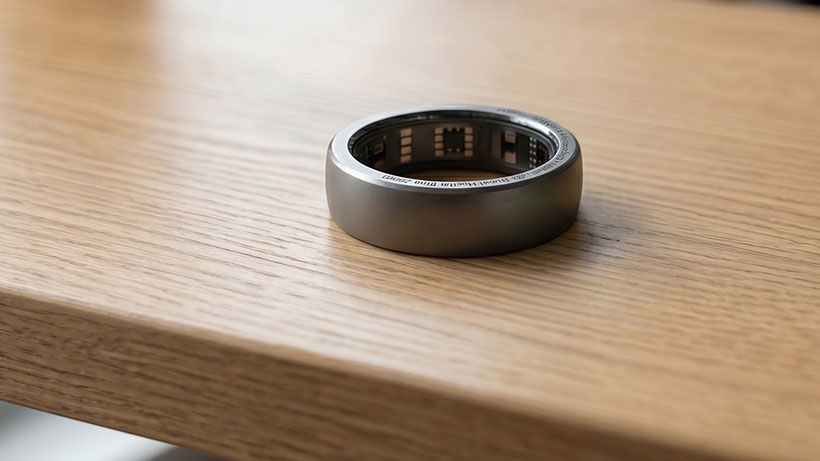
Sizing matters more than the listing makes it sound. My test unit fit well in the evening but felt looser during cold morning walks. That matters because optical sensors need stable skin contact. If you are between sizes, I would be cautious and check the return window before wearing it everywhere.
Charging was also fine rather than seamless. I charged it on days 4, 8, and 12, usually while making coffee and showering. The small charger is easy to lose, though, and I would not travel without putting it in a zip pouch.
The app is where the ‘cheap yet premium device’ illusion breaks
The hardware made a better first impression than the software.
Mirlray app gave me the basics quickly: sleep duration, overnight heart-rate trend, blood oxygen estimate, activity, and a simple readiness-style view. It was enough for morning curiosity and light habit tracking.
But it did not feel like a long-term health database. I wanted clearer data export, better explanations of how scores were calculated, and more confidence that the app would still be maintained in two years. I also disliked how little context was given when a metric moved sharply.
That does not make the ring useless—it just defines the buyer. If you want a low-risk trial before buying a premium smart ring, Mirlray makes sense. If you want dependable longitudinal health data, I would save for a stronger ecosystem.
Other cheap Oura alternatives are more interesting on paper than on my finger
I also rotated through four other low-cost rings, wearing each for four nights with the same bedtime routine and app-check schedule.
Aoyool Smart Ring was the one I’d consider if no advertised subscription is your top priority. Its listing claims IP68 protection and family-oriented features, and it felt similarly comfortable to Mirlray. My caution is the app model: before using any shared or family feature, I’d want to understand permissions, consent, and who can see what.
UniJethro Smart Ring had the broadest wellness pitch in my test. Its listing advertises HRV, temperature, stress, and sleep tracking, which sounds closest to the Oura-style readiness idea. In use, I liked having more trend tiles, but I trusted it less when the app gave confident-looking scores without enough explanation. More metrics are only helpful when the interpretation is credible.
VAMOTRA Smart Ring is the deal-hunter option. Its listing advertises HRV and sleep tracking with no subscription. The ring itself was comfortable, but the overall experience felt more dependent on the current listing, coupon, and app state than I’d like. I’d only buy it if the return policy and app permissions looked right on the day.
Herz P1 Smart Ring felt like the most ambitious budget option. Its manufacturer claims include more than 20 wellness metrics, a free app, and up to six days of battery life. In my four-night testing, it lasted the full stretch with battery left, but the app felt busier rather than clearer. If you like dashboards, it has appeal. If you want calm guidance, I preferred Mirlray’s simpler approach.
What you give up by choosing a cheaper alternative is exactly why Oura costs more
The Oura Ring 4 is not expensive only because it is a ring. You are paying for a more mature product: better-feeling hardware, a slicker app, a longer software track record, clearer readiness and sleep interpretation, broader integrations, and a sizing and support experience that feels less like a marketplace gamble.
The more affordable rings made me more convinced that smart rings are useful. They did not convince me that Oura is overpriced for people who genuinely rely on recovery trends.
The biggest gaps were:
- less confidence in data consistency;
- thinner explanations behind readiness-style scores;
- limited export and ownership clarity;
- less polished app design;
- uncertain long-term support;
- basic chargers that are easy to misplace;
- fewer useful integrations with fitness platforms.
That said, the price difference changes the buying logic. A budget ring does not need to replace Oura forever. It just needs to stop you making a premium commitment to a form factor you might hate.
If you can stretch above $100, I’d skip the bargain-bin gamble
Cheaper rings are best treated as experiments. If you already know you want a smart ring and simply want to avoid Oura’s subscription, I’d look higher up the ladder.
Renpho LYNX has been positioned as a no-subscription option with a charging case and straightforward core tracking. It is bulkier than Oura, but the ownership pitch is stronger than most ultra-cheap rings.
RingConn Gen 2 Air is another step-up option, with no subscription and a manufacturer claim of up to 10 days of battery life. It gives up some extras from pricier RingConn models, but it is the kind of ring I’d consider if battery life matters more than the absolute lowest price.
Leep Ring also sits above this strict budget category, with no required subscription as the main appeal. The caution is long-term availability and support, which matters more with rings than with cheap bands because the charger, sizing, and app are so specific.
My wallet-friendly pick is the Mirlray—but only as a smart-ring trial run
After a month of testing cheap alternatives, I would buy the Mirlray Smart Ring first because it is the lowest-risk answer to the most important question: will you actually live with a smart ring?
It was comfortable, the battery was manageable, and its sleep and heart-rate trends were useful enough to show me why this category works. But I would not buy it expecting Oura-level accuracy, coaching, privacy clarity, or long-term support.
If you want a cheap experiment before committing to Oura, buy Mirlray. If you already know you want serious recovery insights you can trust over years, skip cheaper alternatives and save for a better-tested ring.