Four years after the last MARQ, Garmin’s Creative Lead admits the company isn’t a natural storyteller—and explains why he wants that to change with its most luxurious watch line
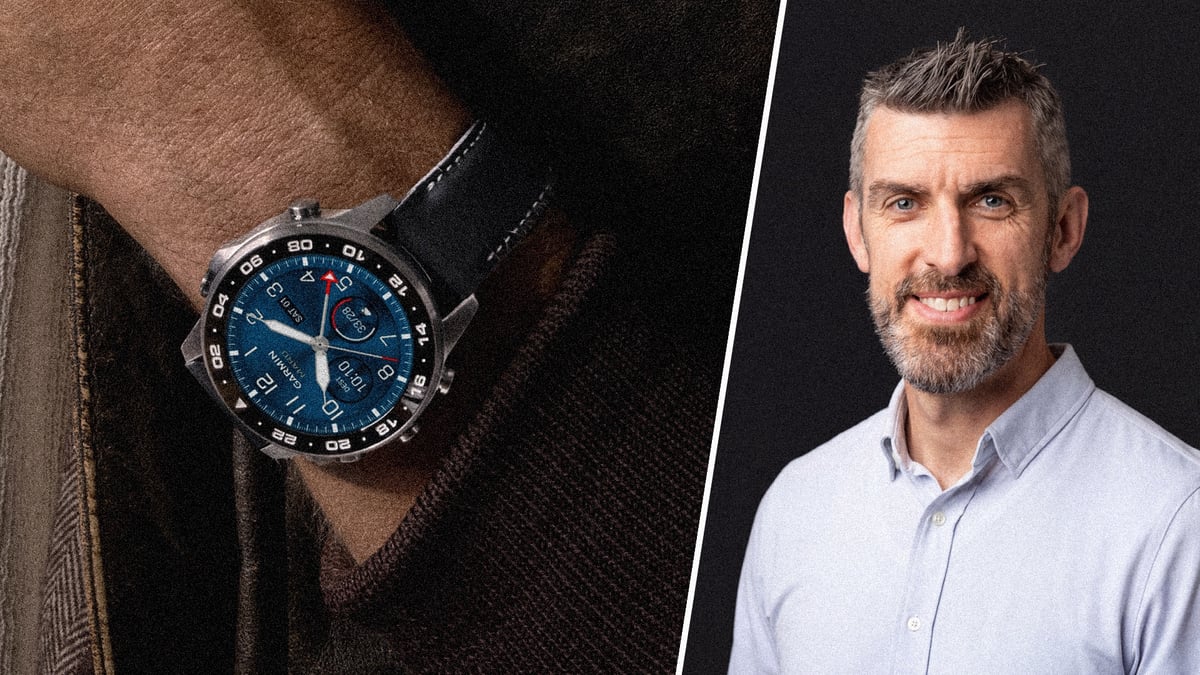
When I last sat down with Todd Register, Garmin’s Creative Lead for Outdoors, it was in Lisbon, Portugal, for the launch of MARQ Gen 2.
I remember him telling me the brand had sent scouts across Europe to find the right suppliers for ultra-premium straps and gone on field trips to figure out which tool watch models made the most sense for Garmin. None of it felt underconfident, but it was clear the brand was still new to the space, because the demands of watchmaking are so different from those of a company best known for heart-rate graphs and GPS tracks.
Four years on, it doesn’t feel that way. We’ve both grown beards since, so we’ve both been iterating, but the bigger change is that MARQ no longer feels like a wacky, left-field play. If anything, Garmin looks better placed than any other smartwatch maker to do this.
The numbers are on its side: record 2025 revenue of $7.25 billion and, for the first time, more than 20 million units shipped. The Swiss watch industry has been heading the other way, with exports slipping 1.7% to CHF 25.6 billion last year, a second straight annual decline, and unit volumes down almost 5%. (Garmin is, as it happens, legally registered in Switzerland itself—so call it a family affair.) Exports measure shipments rather than sales, but the contrast says plenty about where the momentum sits.
I’d even argue it makes more sense than Swiss names like TAG Heuer and Montblanc going the other way, into smartwatches. Garmin already knows how to build the machine; what it has been working out is how to dress it, and how to tell people why that matters.
Last month, coincidentally, Apple showed the industry how a tech giant tells a watch story. The Series 12 and Ultra 4 arrived with a new Health Sensing System and a claim of the “most accurate heart rate sensing in a wearable”, backed—interestingly—by its own study of more than 1,000 participants. Whatever you make of the claim, it was a confidently told story—and a strong headline.
Garmin isn’t quite there yet, and its engineering roots still show. But it is growing more comfortable telling its own story, and MARQ is where it feels most at home doing so.
Now, on Mallorca’s coast, as MARQ Gen 3 arrives, I’m back with Register to see how far that confidence goes.
“They’re telling a story—I give them credit for that”
Before we dive into MARQ, though, I asked him about Apple. And the answer was refreshingly honest; Register is generous about the Cupertino brand and frank about Garmin.
“They have this whole video, this spaceship-like video… and they updated the heart rate sensor. We do that every generation almost,” he says. “But they’re telling the story. And I give them credit for that.”
Garmin, he says, has been too quiet. “We’re so hush-hush about our capabilities, I feel like, and kind of leave it for people to find, as opposed to telling the story. I wish we did a better job, but I think we’re making a lot of progress there.”
The root is cultural. “Mechanical watches are amazing micro-machines, and they’re inspiring on their own. But traditional watch collecting is about history and story,” he says. “Because we’re an engineering company, that doesn’t come naturally to us.”
That doesn’t mean abandoning the old instinct. “I would still rather have the product do the talking than us just talking,” he says, “but at the same time, let’s make a fantastic product and tell a great story.”
MARQ is the rare occasion when the company gets the chance.
Design first, engineering second
That ambition runs counter to Garmin's usual approach. For a brand whose reputation rests on battery life, gold-standard GPS tracking, and training metrics, letting aesthetics set the brief is borderline heresy. Register, who proposed the line in the first place, knows it.
“What I love about MARQ is that it’s design-first. And that’s not always the case,” he says. “As a designer—that’s how I was trained, and I’m doing product management now as well—a lot of times, if we have project priorities, there are performance, design attributes, cost, and schedule. Design is not always at the top. But for MARQ, it is.”
In practice, the pipeline runs the other way round.
“We established early on that MARQ was going to be driven by the design piece, and then leverage all of the technology and engineering,” he explains.
“But we don’t let engineering drive MARQ from the beginning. It’s really a design play from the get-go.”
A different watch that looks the same
The MARQ Gen 3 doesn’t make a show of being new. It builds on its predecessor’s silhouette, and Register is deliberate about why.
“I don’t feel like we need to reinvent the wheel. I think we got to a really good place with the second generation of MARQ, and we just want to build on that now instead of trying to reinvent.”
Underneath, it’s another story.
“While it looks similar, it is a massive change from Gen 2 to Gen 3. This is really a different watch,” he says.
“It doesn’t look wildly different, and that’s by design—we wanted to keep what was good. But from a technology standpoint, it is light-years ahead of Gen 2.”
He references how the traditional watch world sells its updates: “In the watch industry, they’re like, ‘We made a green dial!’ and the whole article is on this color green that they did. Okay, great, I’m not downplaying that—but there were also 300 things for MARQ Gen 3 that we could list.”
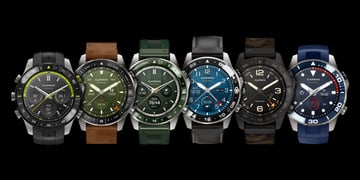
Register isn’t exaggerating, either. All six Gen 3 watches are made of Grade 5 titanium and feature a larger, borderless 1.4-inch AMOLED display (up from 1.2 inches) under sapphire.
The headline feature is embedded inReach connectivity, letting the watch send text and voice messages, share its location, and trigger 24/7 SOS over LTE or satellite without a phone nearby. With a built-in speaker and microphone for calls, an LED flashlight, the ECG app, and up to 18 days of battery life, it lands alongside the Fenix as the brand’s most complete software experience.
The collection goes on sale globally on 5 November.
Loud and proud ceramic
The Fenix line matters beyond software comparisons. When the flagship outdoor line went all-metal with the Fenix 9 and Fenix 9 Pro in August—a design fixture previously associated with MARQ—we asked whether there was concern that the two now sit too close together.
“Right off in the design phase we said, ‘Okay, we are putting this ceramic bezel front and center, and we’re going to have this borderless display,’” Register recalls.
As he works on Fenix design too, he knows the trade-off: Fenix bezels keep shrinking as lenses push out and displays grow, leaving less room for markings.
“So we made the conscious choice: okay, it’s going to be a little bit thicker, but we are going to have this really loud and proud ceramic piece on the front that we can decorate with traditional watch markings.”
It’s a canvas, too, and “a fun piece that we can own,” Register says.
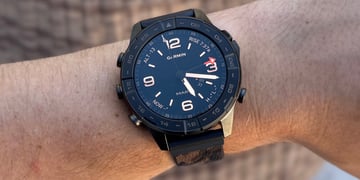
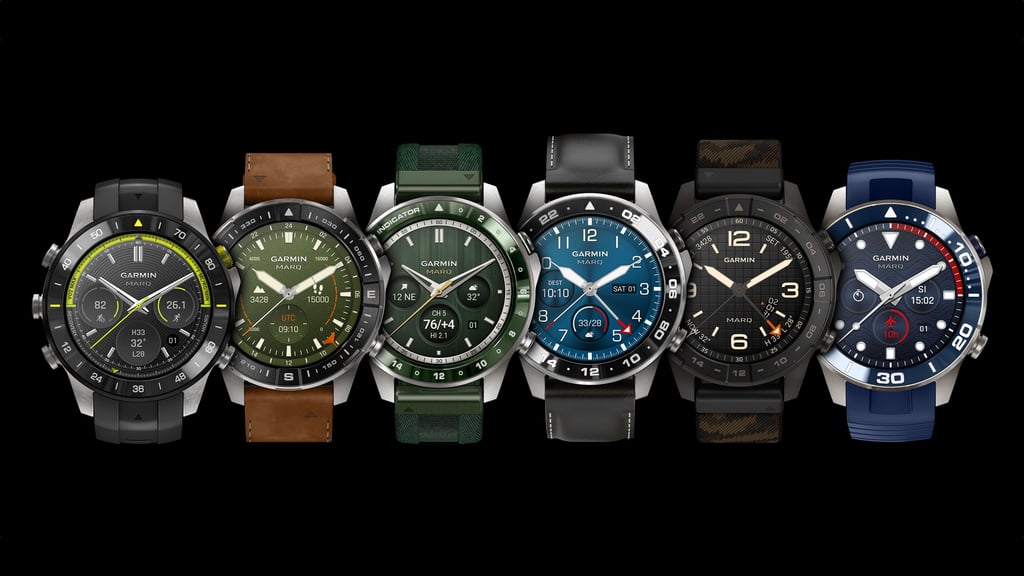
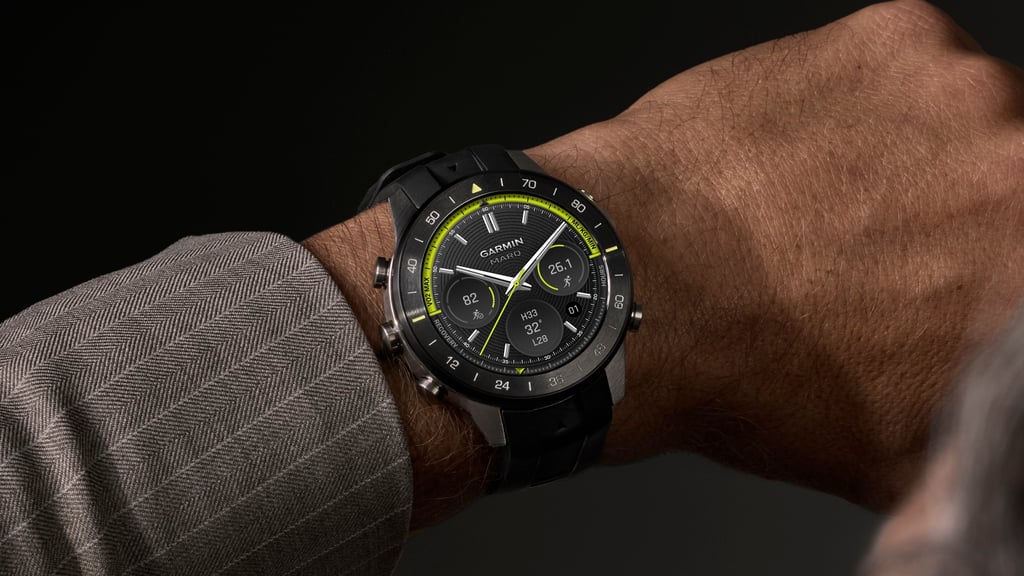
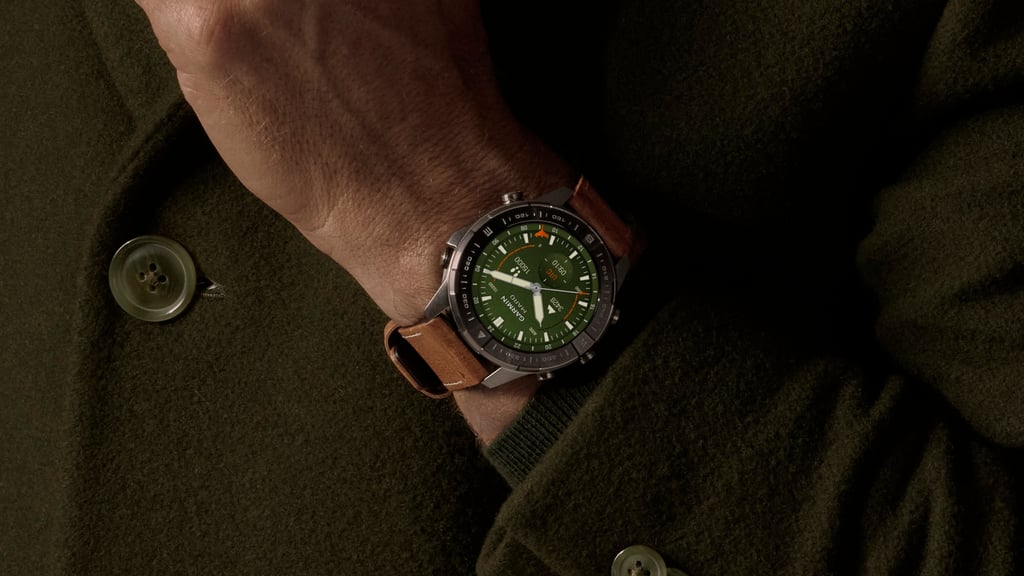
Each watch uses it differently: the Athlete (£2,199.99) has a VO2 max scale, the Adventurer (£2,199.99) a 360-degree compass inlay, the Golfer (£2,299.99) a green 18-hole inlay, and the Aviator (£2,399.99) a polished black ceramic UTC bezel.
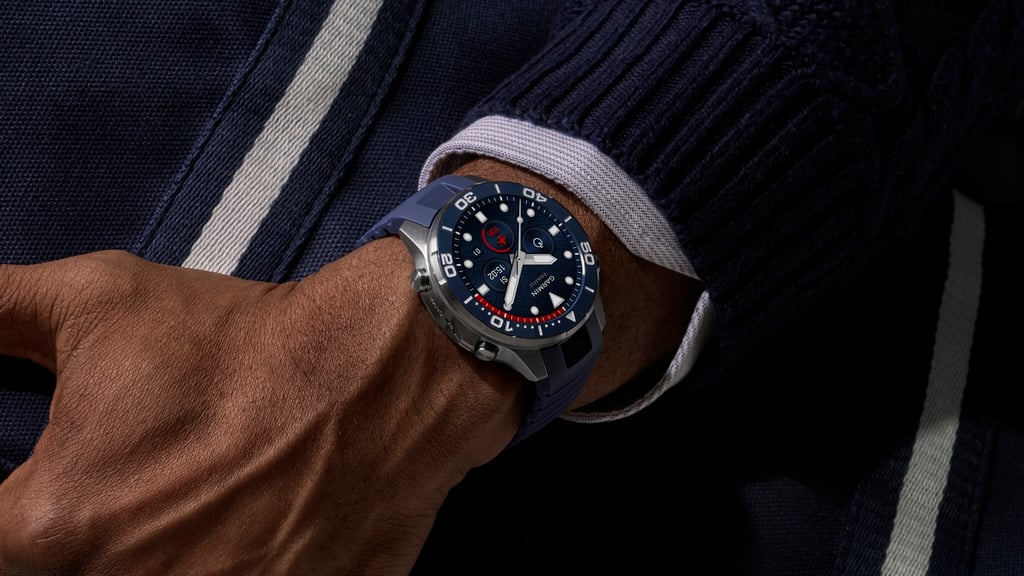
The Diver (£2,299.99)—the reborn Captain—is rated to 40 meters for scuba, apnea and snorkel diving. After wearing the Adventurer in Mallorca for the past couple of days, the difference from a Fenix 9 Pro is obvious: the bezel is a much bigger part of the MARQ.
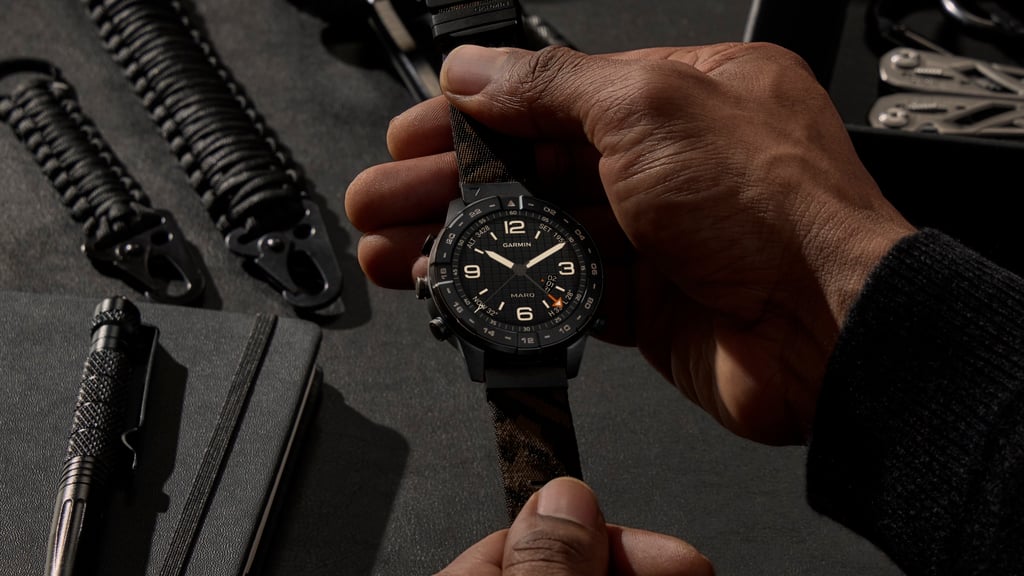
The newcomer, the Commander (£2,399.99), effectively folds the brand’s Tactix idea into MARQ: a camo jacquard strap, micro-knurled titanium buttons, a matte-black ceramic UTC bezel, Stealth Mode, and an Applied Ballistics solver.
“I mean, it’s badass, right?” Register says. “People want to feel a little bit of that, I think.”
Tactix isn’t that different from a Fenix, he adds, “but the vibe is different.”
Standing next to a century of heritage
The long game for all these pieces in the collection is a recognizable design, and Register is frank about how hard that is to develop.
“We want to establish a design language for MARQ, and that’s a hard thing to do when you’re being put in display cases next to companies that have been doing this for a century.
“We’re in it for the long haul, so we want to do what’s smart and try to gently evolve,” he says, adding that the case “has an energy to it. It’s pretty bold.”
With around half of MARQ buyers new to Garmin, recognizability matters all the more.
And Register is relaxed about the comparison with the old guard.
“We can take inspiration where it makes sense, but we’re not directly compared,” he says. “Because, honestly, there’s no one that’s doing what we’re doing.”
“And retailers see the value of having Garmin in there,” Register says, and it brings “a different kind of customer that they can potentially attract. And we see a lot of people who, once they do pick it up, find it’s really sticky.”
The small print
Prices have gone up, and Register doesn’t pretend otherwise. “Unfortunately, prices have gone up for all kinds of things,” he says, but as a specialized line, “we’re not making hundreds of thousands of these.”
Then there’s the charger. The magnetic charger that debuted with Gen 2 has stayed a MARQ exclusive rather than trickling down to Fenix, the way software features often do.
Was that a deliberate line in the sand?
“No, not at all,” Register says. “It is more expensive to do it that way. I know it’s not a very satisfying answer, but that does play into it.”
The bigger reason is geometry: it was built for the MARQ’s case, and “it didn’t fit on Fenix.”
“We understand it could be a frustration, and we hear the issues that people have had with the proprietary plug charger. But good things are coming,” he adds, though he describes the fix as longer term.
And then there’s the wait between generations, which Register concedes was too long.
“Four years, from our perspective, was not great. We waited so that we could get on the right platform moving forward,” he says.
“Going forward, I think you’ll see tighter release windows for MARQ. And I think that’s going to be a good thing. It’s a fine balance between not releasing every single year, but keeping it fresh in people’s minds.”
Garmin hasn’t turned into a traditional watchmaker overnight, and it isn’t quite Apple yet, either. It is still an engineering company at heart, as Register readily admits. But that is rather the point.
Four years ago, MARQ felt like a brand working hard to prove it belonged: scouring for suppliers, taking field trips for inspiration. Gen 3 feels like a watch line that's found its rhythm. The engineering is all still there, but it sits underneath the design rather than in front of it, and Garmin is more comfortable telling people why that matters.
A company that spent years letting its spec sheets do the talking has put on a tuxedo, and it wears it well. It may not have Apple’s flair for the grand reveal yet—perhaps, arguably, for the best—but it grows more confident with every generation, and MARQ is where that confidence shows most.
For once, it is dressing for the occasion, and starting to work out what to say while it does.