Apple explains the science behind its 'most accurate heart sensing in a wearable' claim

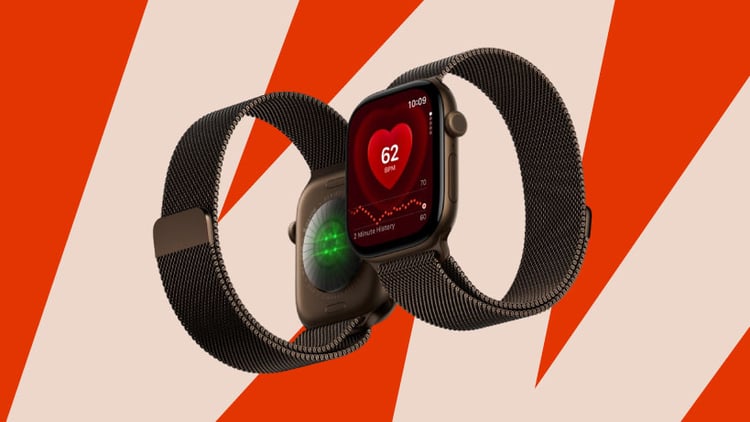
The paper details how hardware optical redesigns and on-device machine learning back up Apple's boldest health claim yet
In its latest Apple Watch announcement, Apple made a bold health statement about the new Series 12 and Watch Ultra 4. The company said that its new Health Sensing System “delivers the most accurate heart rate sensing in a wearable.”
To support this claim, Apple also released a study comparing the Series 12 heart rate measurements to other popular wearables, like smart rings and fitness trackers, using the Polar H10 chest strap as a reference.
The new Health Sensing System
According to Apple, the new Health Sensing System in the Apple Watch Series 12 and Apple Watch Ultra 4 uses improved optical and electrical heart sensors. These upgrades let the watches check heart rate and heart rate variability (HRV) more often.
The system now also includes a new readiness score, adds HRV to the Vitals overview, and updates the Heart Rate app.
“Apple Watch Series 12 is the most advanced health and fitness companion we’ve ever created,” said Kaiann Drance, Apple’s vice president of Worldwide Apple Watch Product Marketing.
Apple’s heart rate accuracy study
Apple decided to put Series 12's heart rate sensing to the test. The company ran a study across five locations in the US and Malaysia during July and August 2026. Although 1 460 adults participated, only 1 254 provided usable paired measurements for the final analysis.
During the study, each participant wore an Apple Watch Series 12 on one wrist and a different wearable on the other. Those tested devices were the Garmin Forerunner 970, Google Pixel Watch 4, Huawei Watch 5, Samsung Galaxy Watch 8, and Whoop 5.0.
The Oura Ring 5 was also included, and the Polar H10 chest strap was used as the reference.
Apple didn’t just test the watches while people were sitting. Participants ran outdoors and on treadmills, cycled, completed HIIT workouts, and did strength training. They also included everyday activities like resting, working at a desk, cooking, and walking.
This allowed Apple to see how the sensors performed in different situations, such as quick wrist movements and changing heart rates. The test also analyzed the tricky “cadence lock,” when a sensor mistakes running rhythm for heart rate.
What do the results say?
According to the study, Apple Watch Series 12 showed more accurate heart rate readings than the other wearables during both workouts and daily activities.
Out of 159 comparisons, the Series 12 was more accurate in 139 cases with 99% confidence. In another 18 cases, the results were unclear, while two favored another device.
Wareable will be putting the Series 12 and Ultra 4’s new sensor to the test over the coming weeks as part of our independent reviews, so stay tuned for our full verdict.