Polar Verity Sense vs. COROS HRM: Which armband heart rate monitor should you buy?


We compare two similar heart rate tracking devices: here’s what you need to know before you buy
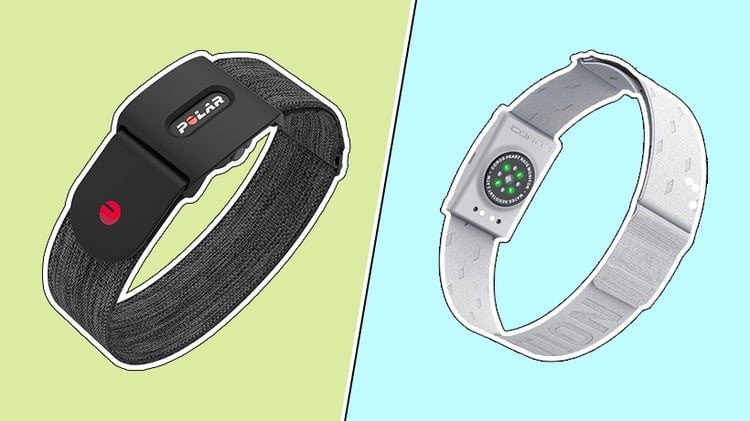
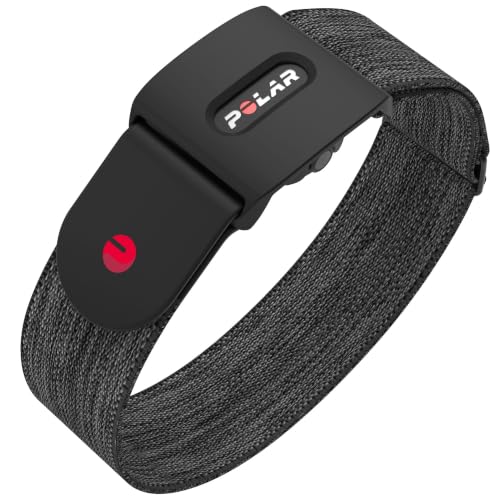
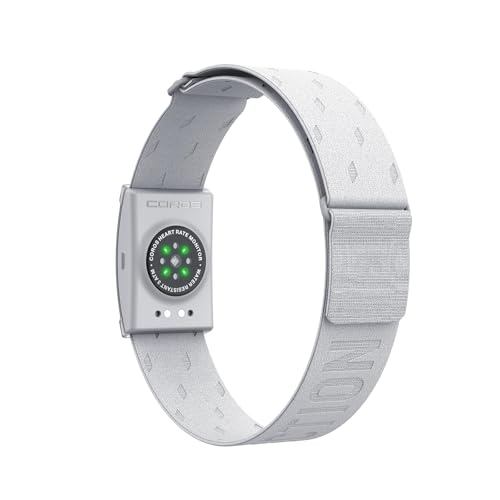
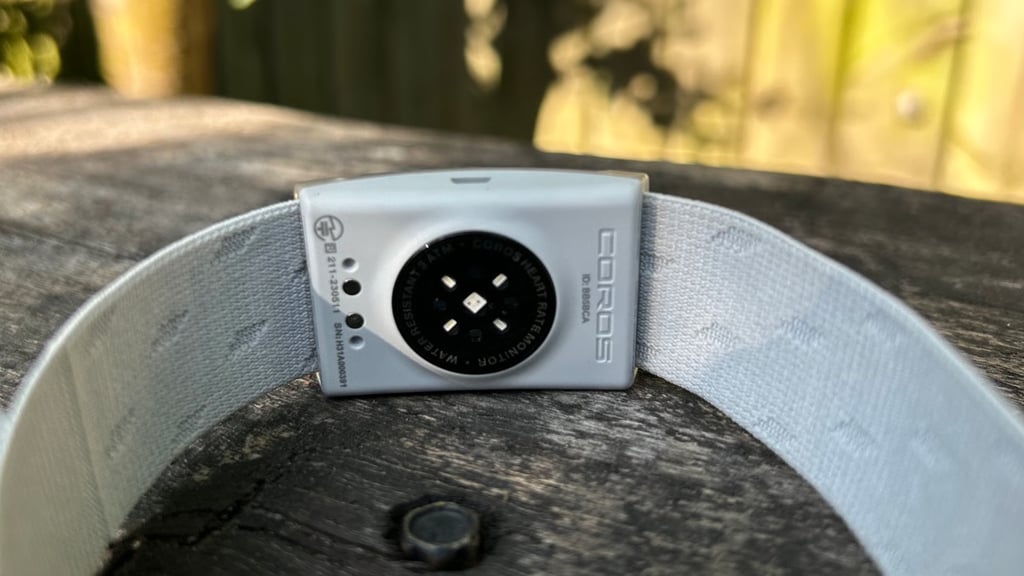
Both devices ditch the traditional chest strap in favor of a more comfortable, armband-style optical sensor—but that's largely where the similarities end. Polar Verity Sense is designed to be worn just about anywhere on your body, from your forearm to your swim goggles, while COROS HRM is purpose-built as a dedicated sports armband with automatic wear detection.
Our team has tested the COROS HRM extensively, putting it through runs, yoga classes, and weightlifting to see how it holds up. We break down how they compare so you can figure out which one fits your training routine.
|
|
|
| Title | Polar Verity Sense | COROS Heart Rate Monitor |
| Price | $104.95 | $79.00 |
| Sensor type | Optical sensor | Optical sensor |
| Wearing position | Arm or temple (inserted into the goggles) | Arm |
| Battery | Rechargeable | Rechargeable |
| Battery life | Up to 30 hours of active use | Up to 38 hours of active use |
| Internal memory | Yes | No |
| Bluetooth support | Yes | Yes |
| ANT+ support | Yes | No |
| More info | Buy on Amazon | Buy on Amazon |
Polar Verity Sense vs COROS HRM: Key differences
Polar Verity Sense is designed to be a bit more versatile than your regular fitness tracker, and it offers a few good-to-have features that COROS does not.
For instance, you can slip Polar onto your upper or lower arm, or clip it onto swim goggles. That flexibility means one device can adapt to running, swimming, and gym sessions alike, without being tied to a single wear position. COROS HRM, by contrast, should be placed on the upper arm, which is comfortable, but not a perfect match for all workout types, especially swimming.
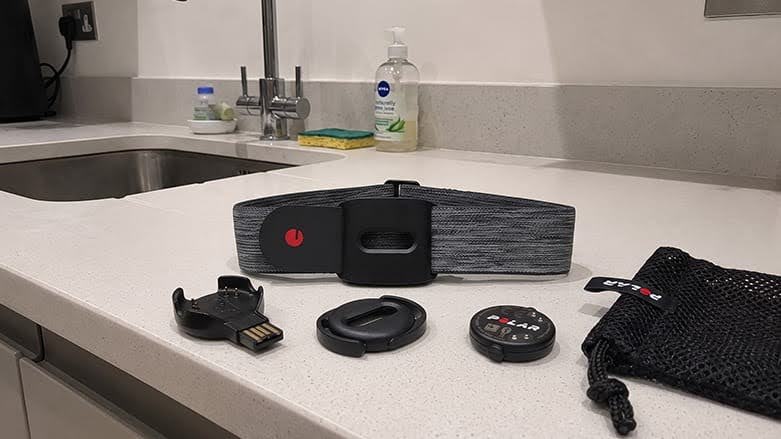
Polar Verity Sense also has an internal memory—this is great for tracking workouts without a phone or watch nearby, or if you often train in remote locations with spotty mobile data. COROS has none, so expect to have your phone close.
Polar offers ANT+ support for broadcasting your workout metrics on other devices live, while COROS omits this functionality to extend battery life (30 hours of active use for Polar and 38 hours for COROS).
Lastly, Polar is the more established brand, while COROS is a newer brand that is growing—so if you value a proven track record, Polar is probably worth the extra money.
However, if you want similar core functionality at a lower price, COROS offers better overall value—given you do not need the ability to insert the device into the swimming goggles or the internal memory.
Winner: Polar Verity Sense
Design, comfort, and everyday use
If you use these bands as armbands, they are quite similar.
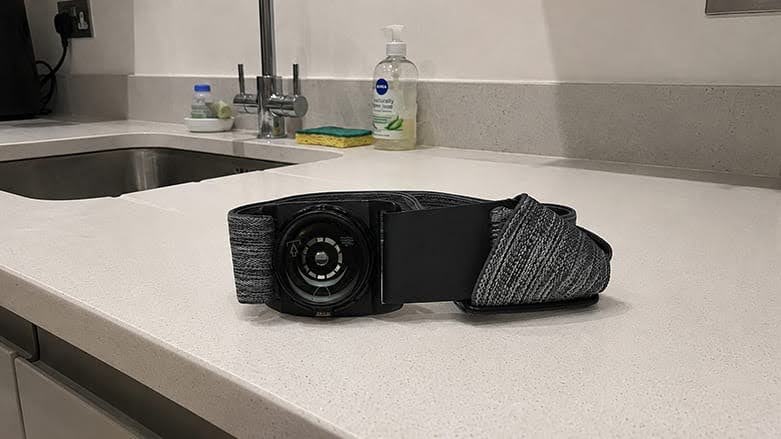
Polar Verity Sense's band is designed to sit snug and firm against the skin, whether worn on the arm or under tight-fitting clothing. Our team found the device to be lightweight and comfortable, staying in place without feeling constrictive.
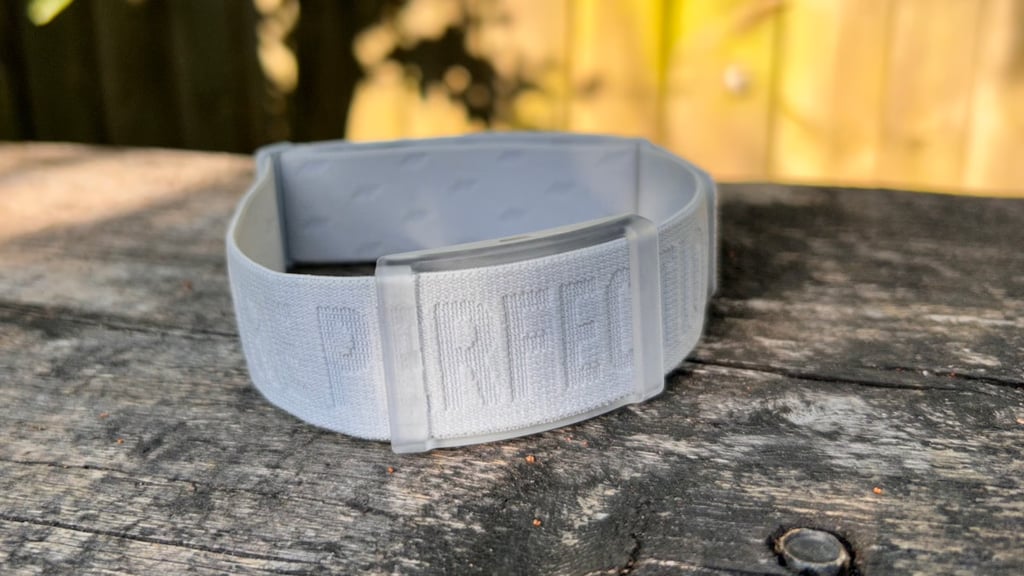
Similar things can be said about COROS HRM comfort-wise. The main friction point during setup was getting the band sized correctly the first time, which took some trial and error.
But COROS HRM is designed to be used as an armband only—Polar Verity Sense is way more versatile, as it is made to be used on either arm or temple. The temple placement is for goggles—so you can track your swimming practices without a strap on your arm.
Winner: Polar Verity Sense
Heart rate accuracy
This is an area where our team put COROS HRM through direct testing against Garmin HRM-Pro chest strap. Across runs, yoga classes, and static workouts, accuracy held up well—on one hour-long run over mixed terrain with hill sprints, COROS averaged 164 bpm versus 165 bpm on the chest strap, with a max heart rate of 183 bpm compared to 185 bpm on the chest strap.
Our team found the optical sensor lagged slightly behind the chest strap at the very highest peaks, such as during hill sprints, but called the difference negligible.
For Polar Verity Sense, our team compared the data with Apple Watch during various cardio exercises such as stair master and HIIT workouts. Both performed quite similarly, although it seemed like both of them tend to lag behind a bit—which is expected for optical sensors.
This is when one of our team members compared Polar Verity Sense with Polar H10, which is a chest strap. As expected, Polar H10 was quicker to pick up changes in heart rate—again, this is because optical sensors have the drawback of falling behind compared to chest straps.
So, if you are looking for a reliable device, both of these perform quite well—but if you want to capture even the smallest changes in your heart rate, a chest strap is the better choice.
Winner: Tie
Connectivity and compatibility
COROS HRM connects via Bluetooth 5.3 only, with no ANT+ support—as per the brand, no
ANT+ support helps to prolong the battery life.
Polar Verity Sense, meanwhile, supports both Bluetooth and ANT+, which opens it up to a wider range of devices and apps—useful if you use older ANT+-only sports watches, cycling computers, or gym equipment alongside newer Bluetooth gear.
Our team tested COROS HRM with a Garmin Forerunner 255 as well as an iPhone running Strava and MapMyRun, and found it seamless to sync every time.
If ANT+ compatibility matters to you, Polar is the only option here. If your setup is entirely Bluetooth-based, COROS syncs just as reliably in our team's testing—and also supports up to three simultaneous connections versus Polar's two.
Another thing to highlight here: only Polar Verity Sense has an internal memory. This may not sound like a big deal at first, but this means that only Polar can record your workouts if you go too far away from your phone or if you happen to end up in a location with poor mobile data coverage. For marathoners, this is something to consider—while most of your runs may not be far in the wilderness, having this internal memory may give you some extra peace of mind that your workout data won’t be lost if your phone connection drops.
Winner: Polar Verity Sense
Polar Flow vs. COROS app
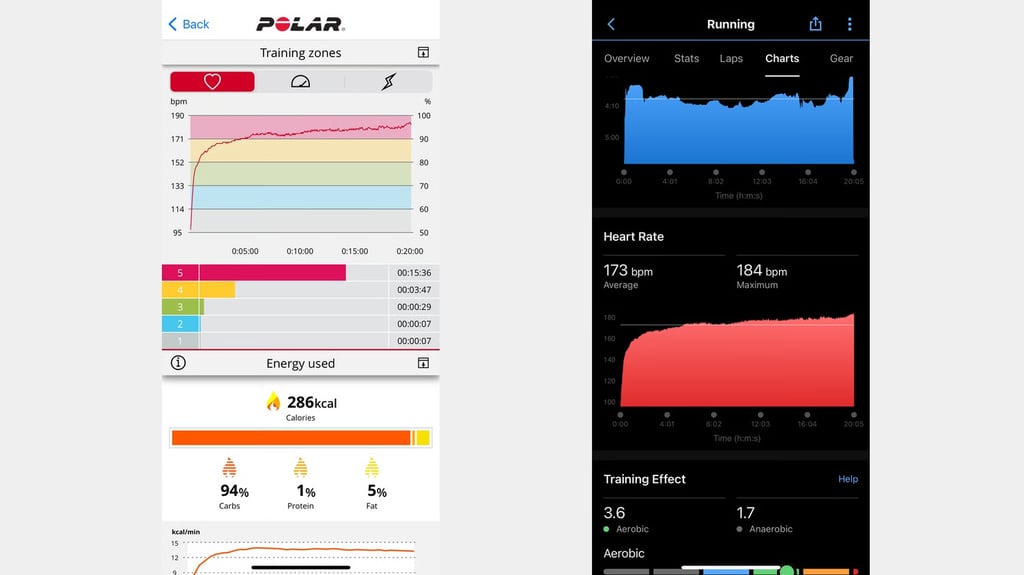
Polar Flow has been around longer and leans into recovery data, such as Cardio Load Status and detailed heart rate zone breakdowns. The tradeoff is a more dated interface that many users still find less intuitive.
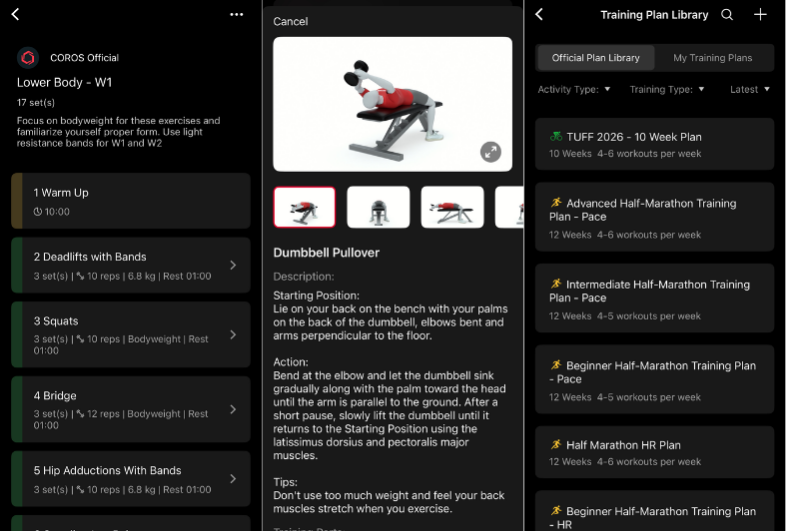
COROS app, by contrast, is cleaner. It reminded us of the Apple Health app, but with the training as the focus—with a bunch of training plans to explore, which can be especially helpful for beginners.
Polar Flow also offers a full desktop web platform, useful if you like reviewing training history on a laptop.
In short: choose Polar Flow for deeper recovery insights and desktop access, COROS for a simpler, free, training-plan-friendly experience.
Winner: Tie
Battery life and everyday practicality
The distinction between Polar and COROS is most evident here.
Polar Verity Sense uses a lithium-polymer battery rated for up to 30 hours of continuous training time, taking roughly 1.5 to 2 hours to fully charge. 30 hours is plenty, but our team noticed that the battery drains a bit faster—but we still managed to use the device for around half a month before it needed to be recharged.
COROS HRM claims up to 38 hours of full operation, or as long as 80 hours on standby, on a single charge. Our team's real-world testing backed this up: after two weeks and three workouts, the battery still sat at 83%, showing it manages standby power efficiently as well as active use. Charging is also notably fast—our team found it takes around an hour via the proprietary magnetic USB charger, quicker than Polar's 1.5–2 hour charge time.
So, COROS HRM is a clear winner here—but not only because of its superior battery life. Polar Verity Sense needs to be turned off after training, or it will continue to track, which drains the battery fast. Meanwhile, COROS HRM turns on and off when put on or removed, eliminating accidental power loss.
Winner: COROS HRM
Price and overall value
Both devices are competitively positioned within the heart rate monitor market, though their pricing reflects some differences.
Polar Verity Sense is slightly more expensive, but that reflects the added flexibility it offers: Bluetooth and ANT+ connectivity, internal memory for recording sessions without a paired device, and underwater tracking for swimmers.
COROS HRM comes in at a lower price point, and our team considers it competitive against Polar Verity Sense. Buyers should know that the tradeoff is no ANT+ support and no internal memory—but if that’s totally fine with you, COROS HRM wins against Polar Verity Sense when it comes to battery life.
In terms of long-term ownership, COROS has an edge: its longer battery life and automatic wear detection mean less day-to-day upkeep. Polar's slightly shorter battery life and manual on/off button mean you will need to charge it more often, especially if you forget to turn off the device.
Winner: Tie
More heart rate monitor comparisons:
Garmin HRM 200: Budget-friendly, but capable
Wahoo Trackr Heart Rate Monitor review: Reliable and easy to use
Best heart rate monitors: From chest straps to rings, here are our trustworthy options
Best heart rate monitor watches: Tested, ranked, and reviewed
Verdict: Polar Verity Sense or COROS HRM?
Both are good devices—and the price is probably not the main factor you will be considering when choosing between Polar Verity Sense or COROS HRM. So, we summed it up for you below.
Choose Polar Verity Sense if:
You want ANT+ support for live broadcasting the data on other devices, such as phones or gym equipment. It also has an internal memory, which can be useful if you want to work out without your phone nearby or take it to areas with poor cellular coverage. And lastly, Polar Verity Sense can be used as an insert in swimming goggles, while COROS can be placed on the arm only.
Choose COROS HRM if:
You want a longer battery life (38 hours versus 30 on Polar). It is also a bit cheaper (though this may not always hold due to discounts) and delivers similar performance in terms of accuracy and comfort.
However, if capturing the changes in your heart rate during peak moments, such as HIIT workouts, is quite important for you, we also recommend checking out chest straps such as Garmin HRM 600, Frontier X2, as these have an advantage in latency over even the best optical sensors.