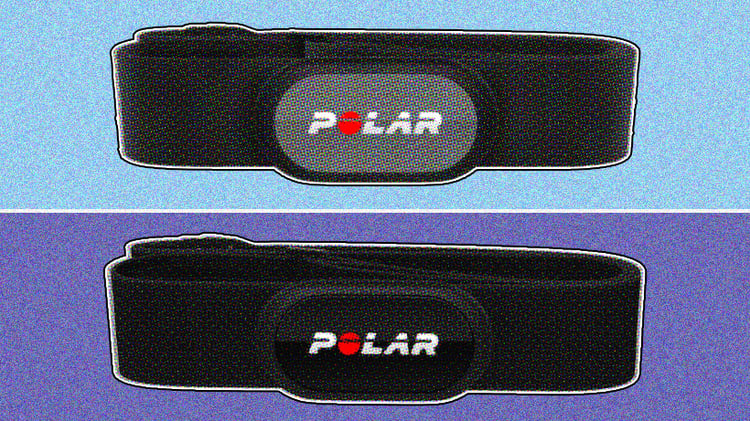
Two chest straps from Polar built around slightly different priorities—here’s which heart rate monitor is the better fit for your training
While both the Polar H9 and H10 easily outperform wrist-based heart rate sensors on raw accuracy, they target slightly different athletes. Choosing the right chest strap comes down to matching their features to your specific training style, connectivity needs, and budget. It really comes down to how much connectivity and feature flexibility you actually need.
Both use electrical heart rate measurement, while H10 adds features aimed at more demanding setups, including two simultaneous Bluetooth connections and memory for recording a workout without a connected device.
H9 takes a simpler approach, making it a potentially better-value option if you mainly train with one phone, watch, or fitness app. We’ve assessed the differences through hands-on testing, official specifications, and independent research, focusing on what they change during real runs, rides, and gym sessions—not just what appears on the spec sheet. So, do Polar H10’s extras justify choosing the higher-tier model, or will H9 give most people the data they actually need? Read on to see where the gap matters.
|
|
|
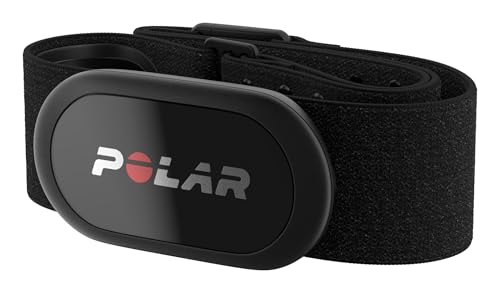
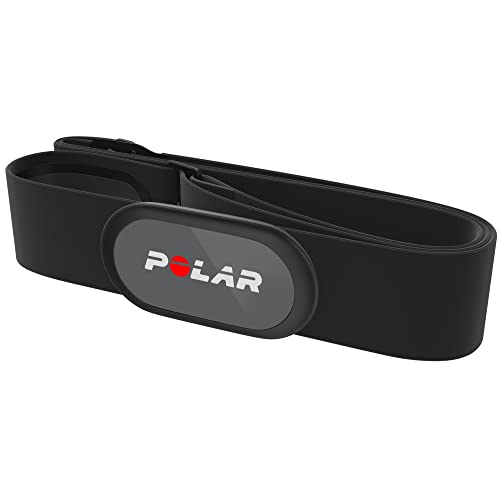
| Title | Polar H10 | Polar H9 |
| Price | $104.45 | $69.90 |
| Bluetooth/ANT+ | Dual Bluetooth, ANT+, 5kHz | Bluetooth, ANT+, 5kHz |
| Onboard memory | Yes; one session, up to 30 hours | No |
| Battery life | Up to 400 hours; replaceable CR2025 battery | Up to 400 hours; replaceable CR2025 battery |
| Heart rate measurement | Electrical chest measurement | Electrical chest measurement |
| Swimming support | 30m water resistance; 5kHz support | 30m water resistance; 5kHz support |
| Compatible apps/devices | Polar Beat, Polar Flow, watches, gym equipment, third-party apps | Polar Flow, watches, gym equipment, third-party apps |
| Best for | Multi-device and phone-free training | Simple, accurate workout tracking |
| More info | Buy on Amazon | Buy on Amazon |
Key differences between Polar H9 and Polar H10
The Polar H9 vs. H10 comparison is less about basic heart rate accuracy and more about how much flexibility you want around your training setup. Both use electrical chest-based measurements, support Bluetooth, ANT+, and 5kHz transmission, and offer up to 400 hours of battery life.
Polar H10’s advantage lies in its additional features: dual Bluetooth connections, onboard recording, and the more advanced Polar Pro Strap. Polar H9 keeps the core experience simpler, with no internal memory and support for only one Bluetooth connection at a time.
Similar tracking, different feature sets
For normal runs, rides, and gym sessions, both should provide the responsive heart rate data people choose a chest strap for. H10 is not automatically a different class of monitor in every workout; its extra hardware matters most when your equipment or routine demands more.
Connectivity and phone-free workouts
H10 can connect to two Bluetooth devices simultaneously, which is useful if you want to send heart rate to a watch and training app together. It can also store one workout of up to 30 hours through Polar Beat, allowing you to leave your phone behind. H9 cannot record internally, so a connected device must capture the session.
That makes H9 the more sensible choice for single-device users who want reliable data without paying for features they will rarely use. H10 becomes more compelling for multi-device training, swimming-compatible setups, or phone-free workouts.
Winner: Polar H10
Design, comfort, and strap fit
Both monitors use a small, detachable sensor pod that clips onto a soft textile chest strap, so the basic wearing experience is similar.
H9’s ergonomic soft strap is comfortable enough for runs, rides, and gym sessions, while its adjustable fastening helps keep the electrodes against the skin without feeling overly restrictive. H10 comes with Polar’s Pro Strap, which adds silicone grip dots and improved adjustability. In practice, that extra grip is most useful during hard intervals, strength training, and longer workouts, when sweat and movement can make a looser strap shift.
Neither pod is bulky, and both should sit unobtrusively under a training top once positioned correctly. For either model, wetting the electrode areas before exercise improves initial contact, while a snug (not tight) fit reduces gaps and erratic readings. Both straps should be rinsed after every use and machine-washed at 104°F (40°C) with the sensor removed. Polar advises against bleach, fabric softener, ironing, dry-cleaning, and tumble-drying.
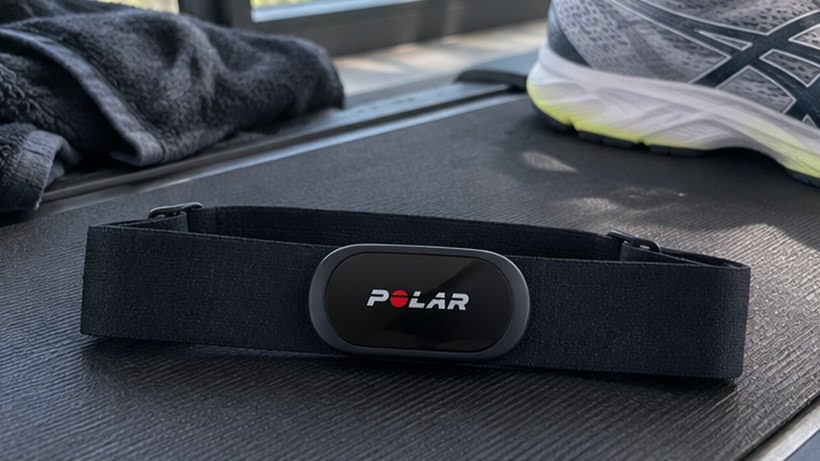
Replacement straps are available separately, and Polar lists its Soft Strap as compatible with both H9 and H10 sensors, although H10’s Pro Strap is the more secure replacement choice. H9 therefore remains perfectly comfortable for everyday running, cycling, and gym use, particularly if you are happy to adjust it before training. However, H10’s strap is better suited to repeated high-intensity sessions and users who want a more dependable fit over extended workouts.
Winner: Polar H10
Heart rate accuracy and workout performance
For the Polar H9 vs. H10 accuracy question, the important point is that H10 is not automatically more accurate simply because it costs more. Both use electrical chest-based heart rate measurements, and independent testing describes H9 as delivering essentially comparable accuracy for ordinary training. That makes both a stronger choice than many wrist optical sensors when you need responsive data rather than an averaged estimate.
During steady-state running, cycling, and gym cardio, both HRMs should settle quickly and provide stable readings when the strap is moistened and fitted correctly. The same applies to longer aerobic sessions, where neither model has a clear measurement advantage.
Intervals and changing intensity
Rapid pace changes are where chest straps generally earn their place. During running intervals, hill repeats, and cycling sprints, electrical sensing can respond faster than wrist-based optical tracking, which may lag or produce brief spikes. Available H10 validation research shows close agreement with reference ECG measurements, including during exercise, while long-term independent testing reports fast, consistent responses across different sports.
However, although those findings validate H10 directly, they do not prove a meaningful accuracy gap over H9. Polar’s H9 uses the same basic measurement approach, and independent reviews report similar workout reliability.
Strength training and fit
During lifting, gripping equipment, wrist movement, and changing muscle tension can challenge optical sensors. Both chest straps avoid much of that problem, although a loose or dry strap can still create dropouts.
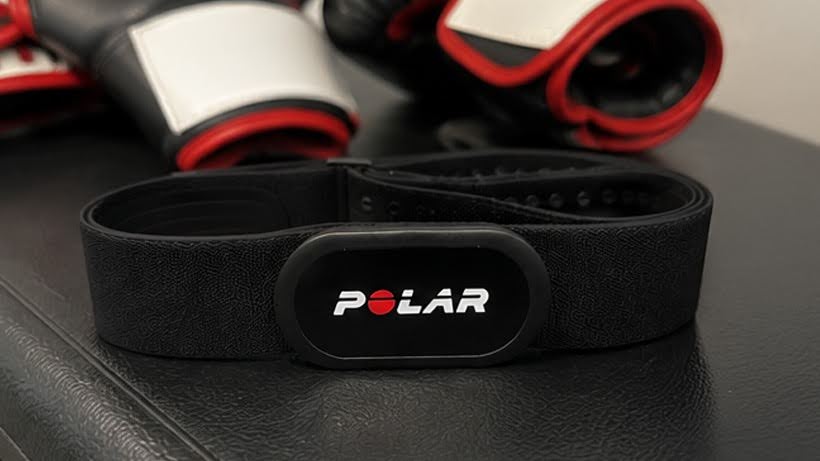
H10’s Pro Strap may improve signal stability by staying in place more securely during demanding sets, but this is primarily a fit advantage rather than a different heart-rate sensor. For steady cardio and regular running, cycling, or strength sessions, H9 offers nearly the same performance.
Winner: Polar H9
Connectivity and compatibility
Both Polar H9 and H10 connect to compatible devices through Bluetooth, ANT+ and Polar’s 5kHz GymLink signal, so either can work with Polar watches, many Garmin and other sports watches, phones, fitness apps, and compatible gym equipment.
Pairing H9 with a single watch or phone is straightforward, and ANT+ allows it to share heart rate with compatible cycling computers, watches and indoor training hardware. It can also work with platforms such as Zwift, provided the receiving device supports the relevant Bluetooth or ANT+ heart rate standard. The practical limitation is Bluetooth: H9 supports one simultaneous Bluetooth connection, so switching between a watch and phone app may require disconnecting one first.
H10’s multi-device advantage
H10 supports two simultaneous Bluetooth connections, allowing your heart rate to appear on, for example, a Polar or Garmin watch and Zwift at the same time. It can also broadcast through Bluetooth and ANT+ concurrently, making it better suited to athletes who combine a watch, phone, bike computer, gym equipment, or indoor-training platform. Polar’s compatibility guidance confirms support for compatible apps and devices rather than guaranteeing every platform, so the receiving hardware still needs to support standard heart-rate data.
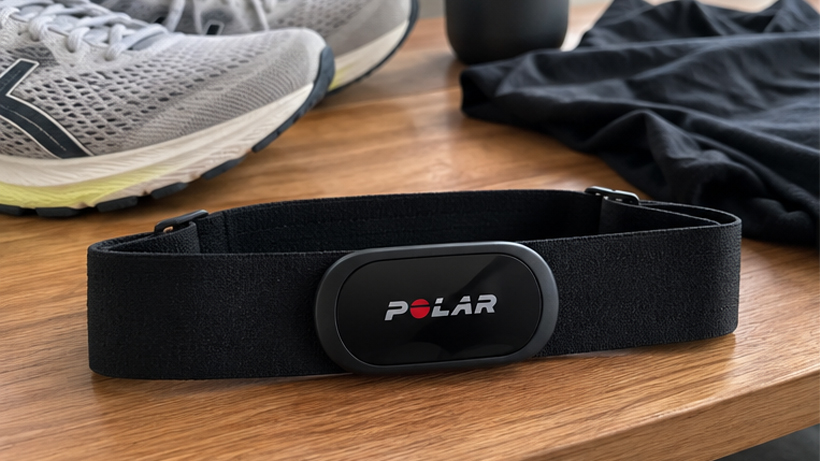
For one-device workouts, H9 offers essentially the same connection types and should be almost all most users need. For multi-device training, H10 avoids the inconvenience of managing Bluetooth connections and gives you more freedom to change platforms.
Winner: Polar H10
Battery life and phone-free training
Battery life is effectively a tie: both Polar H9 and H10 use a replaceable CR2025 coin cell rated for up to 400 hours of training. That means neither needs frequent charging, and replacing the battery is a straightforward, user-serviceable job when performance eventually drops.
The everyday difference is onboard recording. H9 has no internal memory, so your phone, watch, or other compatible device must remain connected and record the workout. H10 can store one training session up to 30 hours when recording through Polar Beat, letting you train without carrying a phone or wearing a watch. That is useful for simple runs, gym sessions, or activities where a watch is inconvenient. That said, you still need to start the recording in the app beforehand and sync it afterward.
For normal watch-based training, H10’s storage may sit unused, so it does not improve every workout. Both require similar maintenance: detach the sensor from the strap after training, rinse the strap and connector, dry them separately, and wash the textile strap regularly according to Polar’s instructions. This helps limit sweat-related buildup, snap corrosion, and unreliable readings.
Winner: Polar H10
Price and overall value
Polar H9 is the lower-cost entry point, while H10 asks you to pay more for features rather than a fundamentally different heart-rate system. Both offer electrical chest measurement, Bluetooth, ANT+, and up to 400 hours of battery life powered by replaceable CR2025 cells, so H9 can be the stronger value for runners, cyclists, and gym users who record workouts through one phone or watch. Its lower upfront cost also makes it easier to recommend as a first chest strap or a backup sensor.
In turn, H10 earns its premium through dual Bluetooth, one-session onboard storage of up to 30 hours, and the more secure Pro Strap. Those additions matter to athletes who train with a watch and Zwift simultaneously, leave their phone behind, or regularly perform demanding sessions where strap stability is important. Long-term ownership is broadly similar: both sensors use replaceable batteries, and both straps are detachable and replaceable.
However, frequent users should budget for a replacement strap eventually, making H10’s higher-quality original strap potentially better value if it lasts longer in their routine. H9 remains the sensible saving for straightforward, single-device training, whereas H10 is easier to justify when its extra flexibility will be used regularly.
Winner: Polar H10
Verdict: Polar H9 or Polar H10?
Both heart rate monitors deliver identical gold-standard ECG accuracy, reliable Bluetooth/ANT+/5kHz connectivity, and a robust 400-hour battery life.
Polar H9 excels in raw value, giving you top-tier tracking for less, though its major downside is standard single-device Bluetooth pairing and a simpler strap. Polar H10 adds high-end flexibility with dual Bluetooth channels, onboard memory for phone-free workouts, and a slip-resistant Pro Strap, though you pay a premium for features you might not use.
Choose Polar H9 if you want solid accuracy on a budget and always train with a device nearby. That said, choose Polar H10 if you have a larger budget, train device-free, or need simultaneous connections to multiple platforms (like Zwift and a sports watch).
More heart rate monitor reviews:
Garmin HRM 600 review: Tested for data accuracy
Polar H10 vs. Garmin HRM 600: Tested for overall value
Best chest strap heart rate monitors: Tested for performance
Best heart rate monitor watches: Tested for everyday tracking
Best wrist heart rate monitors: Tested for day-to-day use
FAQs
What's the main difference between Polar H9 and Polar H10?
Polar H10 supports dual simultaneous Bluetooth connections, has onboard memory to store one workout without a phone, and includes an upgraded non-slip Pro Strap. Polar H9 supports single-device Bluetooth pairing, lacks internal memory, and uses a standard Soft Strap. Both share identical 400-hour battery life.
Is Polar H9 as accurate as Polar H10?
Yes, both use the exact same ECG tracking module for identical baseline accuracy. However, during high-intensity interval training, Polar H10’s Pro Strap offers slightly better signal reliability. Its extra anti-interference electrodes and silicone grip dots prevent the sensor from shifting on sweaty skin.
Is Polar H10 more accurate than Apple Watch?
Yes, particularly during dynamic or high-intensity workouts. Polar H10 uses electrocardiography (ECG) to measure direct electrical activity from the heart instantly. The Apple Watch relies on optical (PPG) sensors that read blood flow through skin tissue, which are prone to motion lag during rapid heart rate spikes.
Can I use Polar H10 with iPhone?
Yes, Polar H10 pairs seamlessly with iPhones via Bluetooth Low Energy. It works directly with the Polar Beat and Polar Flow apps, syncs with Apple Health, and streams live heart rate data into popular third-party iOS apps like Strava, Nike Run Club, and Zwift.
Can I use Polar H10 or H9 for swimming?
Yes, both have a 30m water-resistance rating and transmit data underwater via a 5kHz GymLink signal to compatible Polar watches. However, H10 is better for pool sessions because its onboard memory stores your workout without needing a watch within Bluetooth range in the water.
Can I do an Orthostatic Test or track HRV with these straps?
Yes, both H9 and H10 capture accurate heart rate variability (HRV) metrics required for Polar's Orthostatic Test and recovery tracking on compatible sports watches. Their ECG-grade precision makes both straps superior to wrist-based optical sensors for elite HRV and recovery monitoring.
-
National Center for Biotechnology Information.
-
National Center for Biotechnology Information.
-
National Center for Biotechnology Information.
-
National Center for Biotechnology Information.
-
Frontiers.
-
National Center for Biotechnology Information.