Two chest straps with different strengths—here’s which monitor makes more sense for your training, budget, and wider fitness setup
Choosing a chest strap can feel like a small upgrade, but it can make a meaningful difference when we want steadier heart-rate data for runs, rides, and gym sessions. Garmin HRM 200 and Polar H10 are two of the most popular options, and both put accurate, real-time tracking ahead of unnecessary extras.
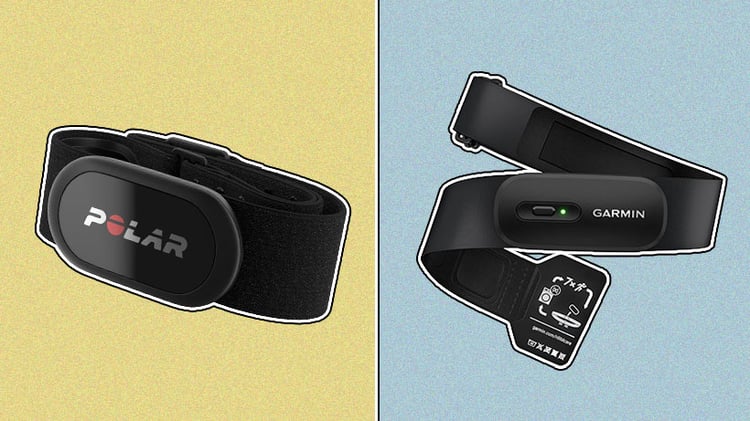
However, this comparison really comes down to how you train and which devices you already use. Garmin’s HRM 200 is designed as a simple, affordable fit for the Garmin ecosystem, while Polar H10 has earned its reputation through strong accuracy, broad device compatibility, plus memory for a single phone-free workout. In this Garmin HRM 200 vs. Polar H10 comparison, we combine hands-on testing, official specifications, and independent research to show how those differences affect everyday training.
|
Winner
|
|
|
| Title | Polar H10 | Garmin HRM 200 |
| Price | $104.95 | $74.95 $79.99 -6% |
| Battery life | Up to 400 hours | Up to 1 year at 1 hr/day |
| Bluetooth connections | 2 | 3 |
| ANT+ support | Yes | Yes |
| Internal workout storage | Yes (one session) | No |
| Waterproof rating | WR30 (30m) | 3 ATM (30m) |
| Compatible devices/apps | Polar, Bluetooth/ANT+ apps and equipment | Garmin, Bluetooth/ANT+ apps and devices |
| Replaceable strap | Yes | Yes |
| Best for | Multi-platform training and phone-free sessions | Straightforward Garmin use |
| More info | Buy on Amazon | Buy on Amazon |
Garmin HRM 200 vs. Polar H10: Main differences
Garmin HRM 200 and Polar H10 both deliver the core benefit we expect from a chest strap: live heart-rate data for training. But the real choice here is between Garmin’s straightforward, ecosystem-led option and Polar’s more established, flexible sensor.
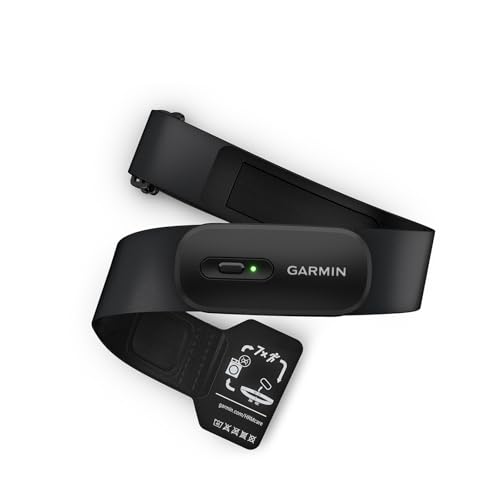
HRM 200 is designed to be a simple companion for a Garmin watch or bike computer, with a long-lasting replaceable battery and an optional secure Bluetooth connection. H10 offers broader connection options and can save one workout directly on the sensor when we start it through the Polar Beat app.
Simplicity vs versatility
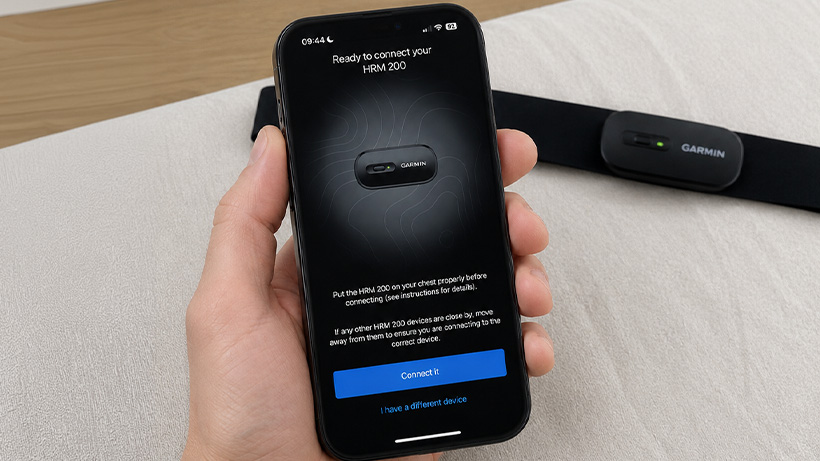
Garmin keeps things intentionally uncomplicated. You wear the strap, pair it to our compatible device, and see your heart rate in real time. HRM 200 does not record an activity by itself, so we will need a watch, phone, or bike computer with us if we want a saved workout.
Polar H10 adds a useful layer of independence. It can retain heart-rate data from one session, which is handy for a swim, gym workout, or run where carrying a device is inconvenient. It is not unlimited storage, though: you must begin the session in Polar Beat and sync afterward before recording another one.
Garmin ecosystem vs. universal compatibility
Both straps use Bluetooth and ANT+, so either can work beyond its own brand. However, H10 also supports Polar’s older GymLink transmission, which can make it the safer choice for people using a mix of older gym equipment, apps, watches, and bike computers. It also supports two simultaneous Bluetooth connections.
Garmin HRM 200 can handle three Bluetooth connections and unlimited ANT+ connections in its open mode. Its standout feature is secure Bluetooth pairing, which encrypts the connection with compatible Garmin devices. That is useful for privacy-minded Garmin users, although it does not transform the day-to-day training experience.
Entry-level value vs premium reputation
HRM 200 is the more focused, lower-cost route into chest-strap tracking. Polar H10 earns its higher-end reputation through its flexibility and standalone recording option, rather than a needlessly complicated feature list.
Winner: Polar H10
Design and fit
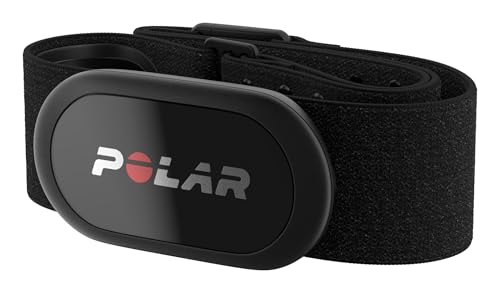
These are both conventional soft chest straps, so neither changes the basic experience: you wear the sensor snugly just below the chest, wet the contact areas before starting, and forget about it once training begins. Polar H10 is the more refined option overall, thanks largely to its Polar Pro Strap, but Garmin HRM 200 is simpler to fit, comes in useful size ranges and should feel unobtrusive for most sessions. Both are rated for water resistance equivalent to 30m, so sweat, rain and regular rinsing should not be a concern.
Workout comfort
For easy runs, long rides and steady gym sessions, the two straps are close. Their textile bands sit flatter and move less than a watch can during arm-heavy exercise, which makes them practical for runners who dislike checking their wrist mid-session and cyclists who want heart rate visible on a bike computer.
H10 has a small comfort advantage during longer, sweatier workouts. Its strap combines soft textile material with silicone grip dots and a firm buckle, designed to help keep the sensor in position as we move. That matters most in HIIT, rowing, or strength training, where quick changes in posture and heavy breathing can make a loose chest strap creep or twist.
Stability and fit
Garmin offers HRM 200 in XS–S and M–XL sizes, while H10 is available in XS–S and M–XXL, with an XXXL replacement strap option. Neither needs to feel restrictive: the key is a secure fit rather than overtightening it. If the strap slides during intervals or barbell work, heart-rate readings can suffer regardless of which sensor we choose.
For cycling, both sit securely beneath a jersey and avoid the wrist-position issues that can affect optical sensors when we grip handlebars. Polar H10’s grippy strap gives it the edge for high-sweat indoor rides and fast interval work, although the difference will be modest if we achieve the right fit with Garmin’s HRM 200.
Maintenance and strap replacement
Both sensor modules detach, so we can replace the strap rather than discard the full monitor when the elastic eventually wears out. That is important for a product exposed to repeated sweat and salt.
Garmin advises rinsing the HRM 200 after every use and washing its strap after every seven uses. So, remove the module first, avoid water hotter than 40°C, and never use a dryer. Polar likewise recommends rinsing after every workout, detaching the connector, and machine-washing the H10 strap after five workouts or at least weekly, at 40°C. Regular cleaning is not cosmetic—it helps preserve the electrode contact and strap elasticity that reliable readings depend on.
Winner: Polar H10
Heart rate accuracy and performance
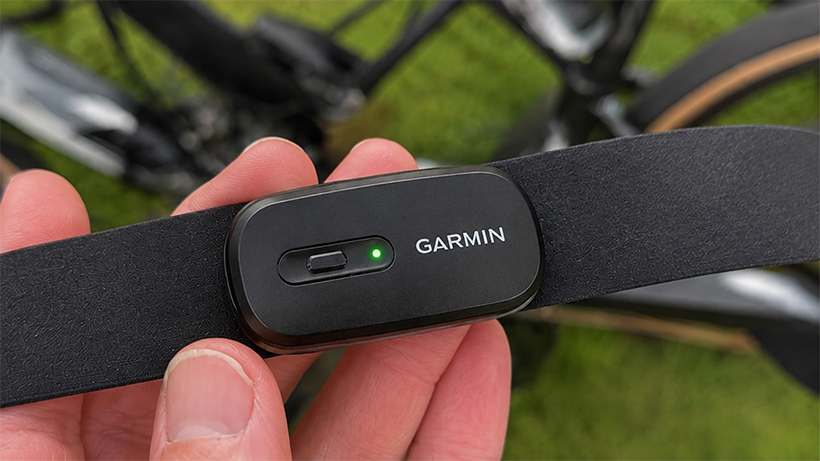
For training data we can trust during hard efforts, both of these chest straps are a meaningful step up from relying on a watch alone. Garmin HRM 200 and Polar H10 use electrode-based sensing across the chest, which measures the heart’s electrical activity rather than estimating pulse from blood flow at the wrist.
In real life, that usually means faster reactions when effort changes, fewer odd readings when we grip handlebars or lift weights, and more confidence in heart-rate zones during a race. A chest strap still needs good skin contact (especially during the first cold, dry minutes of a session), so wetting the electrodes and fitting it snugly remains important.
Accuracy during steady workouts
On an easy run, recovery ride, or continuous treadmill workout, you should expect very similar results from Garmin HRM 200 and Polar H10. Once the strap is settled and we begin to sweat, both should provide a smooth, believable heart-rate trace that closely follows effort.
Polar H10 has a stronger independent evidence base. Heart rate measurements from the H10 chest strap align almost perfectly with clinical-grade Lead II ECG systems, delivering highly accurate individual and moment-to-moment readings with negligible systematic bias. That does not make Garmin HRM 200 inaccurate; rather, it means Polar H10 has more publicly available validation supporting its performance.
Performance during interval sessions
Intervals, hill repeats, and HIIT expose the difference between a chest strap and an optical watch most clearly. When we surge from a jog into a hard effort, wrist sensors can lag because they need to detect a change in blood flow. A chest strap can respond more directly, helping us see whether we have genuinely reached a target zone before the interval ends.
Independent testing found Garmin HRM 200 and Polar H10 broadly aligned in running use: one comparison recorded average and maximum results within 1bpm of each other. That is not a controlled laboratory validation, but it supports the practical conclusion that neither strap should hold us back in speedwork.
Signal consistency
The main causes of dropouts are normally the fit, dry electrodes, depleted batteries, or a dirty strap, but not an inherent flaw in either model. Both are well-suited to sweaty sessions once properly moistened and tightened. During strength training, the chest can compress against benches or shift through overhead movements, while rowing and burpees can tug at any strap; this is where H10’s silicone grip pattern may offer a small stability benefit.
For racing, either is a dependable choice for displaying real-time effort on a compatible watch or bike computer. We would choose the Garmin HRM 200 for a Garmin-based race setup, where its secure pairing and three Bluetooth connections are useful. We would choose Polar H10 if we switch between platforms, want to record without a device, or value its deeper validation record.
Optical watch comparison
A quality optical watch can be accurate for steady running, but wrist readings become less dependable as intensity rises, particularly above 150bpm in one review of wrist-worn devices. Chest straps tend to track heart rate with accuracy close to an ECG across various types of cardiovascular exercise (including treadmill running, elliptical training, and stationary cycling), whereas wrist-based monitors tend to show a higher margin for error. That makes a chest strap the better choice for structured training, threshold testing, and race pacing—not a medical diagnostic tool.
Winner: Polar H10
Features, compatibility, and connectivity
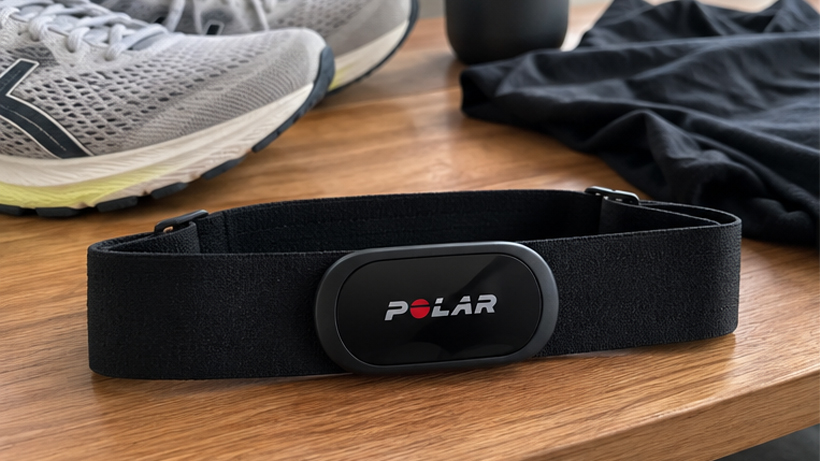
This is where the Garmin HRM 200 vs. Polar H10 comparison becomes clearest. Both broadcast live heart-rate data through Bluetooth and ANT+, so either can work with a compatible watch, bike computer, gym machine, or workout app. The difference is how independently they can operate and how easily they fit into a mixed-device setup. Garmin’s HRM 200 is designed to slot neatly into Garmin training, while Polar H10 offers more flexibility when using several platforms.
Bluetooth and ANT+ compatibility
Garmin HRM 200 supports up to three Bluetooth connections, plus ANT+ in open mode. That is useful when we want to see heart rate on a Garmin watch, an indoor-training screen, and a phone app at the same time. It also offers a secure Bluetooth mode with compatible Garmin devices, which encrypts the connection but does not change the quality of our workout data.
Polar H10 supports two Bluetooth connections and ANT+ simultaneously. It also retains Polar’s 5 kHz GymLink connection, giving it an edge with older Polar devices and some gym equipment. In practice, both straps will cover most modern training setups; Polar H10 is simply the safer choice if our equipment is more varied.
Internal workout memory
Polar H10 has the standout feature: it can save heart-rate data from one workout internally. We start the session in Polar Beat, leave our phone or watch behind, then sync the workout afterward. That is genuinely useful for gym sessions, swimming, team sports, or short runs where carrying another device feels inconvenient.
Garmin HRM 200 does not store workouts. We need a paired Garmin watch, bike computer, or compatible app to save the session. For runners and cyclists who already record every activity on a Garmin device, this is unlikely to matter. For everyone else, it is a meaningful limitation.
Garmin Connect vs. Polar Flow
Garmin Connect makes HRM 200 feel almost invisible. You pair it once, and the compatible Garmin device handles recording, analysis, and uploads. Polar requires a little more app involvement, with Polar Beat used for stored sessions and Polar Flow for reviewing training. However, that extra flexibility makes H10 less dependent on a watch.
For Zwift, TrainerRoad, Peloton and other Bluetooth heart-rate apps, both should connect normally. Strava generally receives the completed activity from the watch, app or connected ecosystem rather than directly from the chest strap.
Winner: Polar H10
Everyday ownership and battery performance
Neither strap needs charging, which is a genuine everyday advantage. Garmin rates the HRM 200’s user-replaceable CR2032 battery for up to one year with one hour of daily training, while Polar quotes up to 400 hours from the H10’s replaceable CR2025 cell (also roughly a year for many regular users). Actual lifespan depends on workout volume, storage habits, and whether you detach the sensor after use.
Both are durable enough for regular sweat, rain, and washing, but the textile strap will usually be the component that wears first. Removing the module before cleaning, rinsing the strap after sweaty workouts, and allowing it to air-dry protects the electrodes and helps avoid premature battery drain. Polar advises washing its strap after five workouts or weekly; Garmin’s machine-washable strap also requires module removal.
Replacement straps make either monitor a more sustainable long-term purchase. Garmin’s simpler maintenance and integrated strap tool make battery changes especially straightforward, while Polar offers proven longevity if we follow its care guidance. Neither has a fixed lifespan, but a clean, well-maintained sensor and periodically replaced strap should support years of training.
Winner: Garmin HRM 200
Price vs. value
Garmin HRM 200 sits at the more affordable end of this comparison, while Polar H10 generally carries a higher retail price because it includes onboard workout memory, dual Bluetooth connections, and wider legacy compatibility. You should not choose the H10 simply because it costs more, but its extras can justify the premium when we actually use them. Garmin’s lower entry cost makes it a sensible starting point for anyone who only needs dependable live heart-rate data.
For beginner runners, the HRM 200 delivers the essentials without adding another app workflow. It is also the logical value pick for Garmin watch owners: we pair it with our existing device, record normally in Garmin Connect, and benefit from chest-strap responsiveness during intervals, hills, and races. Cyclists using a Garmin Edge or compatible indoor trainer will find the same straightforward experience.
Polar H10 offers better value for multisport athletes and people who switch between watches, phones, gym equipment and training apps. Its ability to save one session without a connected device is especially useful for swimming, gym classes and team sports, while its strong independent validation record makes it the more reassuring choice for users prioritising the highest possible heart-rate accuracy.
Long-term costs should remain low for either model: both use replaceable coin-cell batteries and offer replaceable straps. The better value is therefore not about lifespan, but whether we will use Polar’s extra flexibility.
Winner: Garmin HRM 200
More heart rate monitor comparisons:
Garmin HRM 600 review: Tested for data accuracy
Polar H10 vs. Garmin HRM 600: Tested for overall value
Best chest strap heart rate monitors: Tested for performance
Best heart rate monitor watches: Tested for everyday tracking
Best wrist heart rate monitors: Tested for day-to-day use
Verdict: Garmin HRM 200 or Polar H10?
Polar H10 is our overall winner because it combines consistently strong heart-rate performance with broader connectivity and the freedom to store one workout without a connected device. Its weaknesses are a higher retail price and the need to use Polar Beat to start a saved session. Garmin HRM 200 is the more straightforward alternative: it offers reliable live tracking, long battery life, three Bluetooth connections, and clean Garmin integration, but it cannot record independently.polPol
You may want to choose Garmin HRM 200 if you already use a Garmin watch or Edge computer and want an affordable, no-fuss chest strap for running, cycling, gym sessions, and racing. Choose Polar H10 if you prioritise proven accuracy, move between apps and devices, or want phone-free workout recording.
For most athletes seeking the most flexible long-term option, buy Polar H10; for committed Garmin users, HRM 200 makes more sense as the better-value fit.
-
National Center for Biotechnology Information.
-
National Center for Biotechnology Information.
-
National Center for Biotechnology Information.
-
National Center for Biotechnology Information.
-
Frontiers.
-
National Center for Biotechnology Information.