RayNeo Air 4 Pro review: Are these smart glasses really useful?

- Bright OLED display
- Lower price point
- High-quality audio
- Lightweight
- Plug-in design
- Lacks head tracking
RayNeo Air 4 Pro is a pair of extended reality glasses that project a virtual screen in front of your eyes. With them, you can game, binge-watch shows, and scroll TikTok while keeping your hands free and without constantly looking down at your smartphone.
Released earlier this year, these smart glasses stand out from the competition with bright OLED displays that support HDR10 at a price point never seen before.
To see what the buzz is all about, I purchased a pair for myself to test firsthand. This review covers my full experience using them, with a verdict on whether the brand really lives up to its promises. So if you are in the market for a wearable display, keep reading.
| Device | RayNeo Air 4 Pro |
| Price | $254 ($299 without sale) |
| Display | Micro-OLED with HDR10 support |
| Audio | 4 speakers designed with Bang & Olufsen |
| Connectivity | Connects via USB-C cable |
| Weight | 2.7 ounces (76 grams) |
What are RayNeo Air 4 Pro glasses?
RayNeo Air 4 Pro glasses display a virtual screen in front of your eyes by housing Micro-OLED panels at the top of the frame. Using angled prism optics, a kind of special lenses that bounce the image into your field of view, it creates an optical illusion that makes it look like you are staring at a 201-inch TV.
Due to this advanced technology, they are marketed as the first glasses in this category to support HDR10 for smooth video and enhanced contrast and brightness.
Designed to resemble sunglasses, the device remains lightweight by omitting a built-in battery. Instead, it connects to a phone, gaming console, or laptop via a single USB-C cable that provides power and mirrors the display.
To accommodate various head shapes, the glasses feature flexible hinges and nose pads. A proper fit is crucial to keep the displayed screen as stable and straight as possible. The design is also myopia-friendly, allowing users to order custom prescription lens inserts through RayNeo's official optical partner, Lensology, which magnetically snap into the inside of the frame.
However, since the glasses sit further from the face, the open design isn’t as immersive as a VR headset. Light leaks in from the sides, keeping you aware of your surroundings, though you can use them in a dark room for a more immersive experience.
The lack of a camera may appeal to privacy-focused users, and the built-in speakers deliver high-quality sound. Overall, they are an ideal, highly portable display for anyone looking to free up their hands and avoid looking down at a phone.
Design, fit and comfort
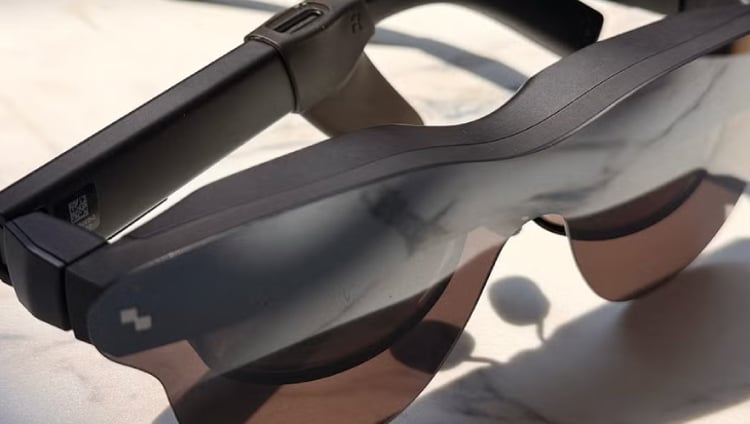
RayNeo Air 4 Pro looks like a slightly oversized pair of sleek black sunglasses, tinted to create a dark backdrop for a bright display. I have to admit that they don’t really pass for a real pair of sunnies, but they look discreet enough to not attract stares when you’re out and about. Behind the glass hide two Micro-OLED screens that project video. There is also an option to order custom prescription lens inserts through Lensology, with worldwide shipping available.
The glasses rest on the face using nose pads that adjust to three positions, helping dial in your ideal height and viewing angle. The thicker temples assist with this as well. They adjust in two places near the hinges and in the middle, while also distributing the weight more evenly for better comfort. The arms also store speakers designed to deliver 360-degree sound without disturbing others. Additionally, they house the manual controls, including the menu, volume, and brightness buttons.
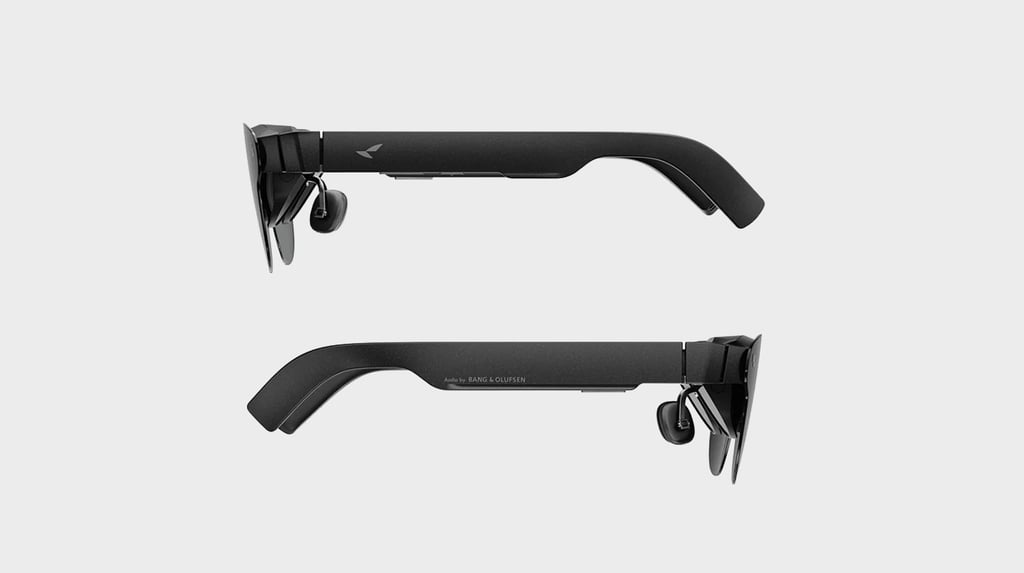
They are constructed from lightweight plastic to help minimize pressure. At 2.7 ounces (76 grams), the RayNeo Air 4 Pro sports one of the lightest designs in the extended reality category. While they are heavier than the AI smart glasses that most closely resemble regular eyewear, they are naturally packed with more technology and features. What allows for this lightweight design is the fact that the glasses don’t have a built-in battery and instead connect to other devices via a cable.
As a glasses wearer myself, I haven’t noticed any discomfort using these glasses. Of course, after using them for longer periods of time, you feel them more, but they are never too uncomfortable. That said, if you aren’t used to wearing glasses, the weight on your face might take some getting used to.
While they are comfortable, the experience using them isn’t fully immersive. Quite a lot of light leaks in from the sides, so if you want the full experience, you have to be in a dark room. The glasses come with a lens shade that helps block light to improve contrast and color depth, but the sides still allow for peripheral vision. Overall, RayNeo Air 4 Pro offers a comfortable and lightweight entry into extended reality, though you have to manage your environment for the best viewing experience.
How good is RayNeo Air 4 Pro display?
RayNeo Air 4 Pro display knocks it out of the park when it comes to bright and sharp colors. As the first pair of smart glasses to feature an HDR10 display, it packs over 10 billion colors and hues for higher contrast and video quality. This can really be felt on the 201" HueView™ 2.0 screen, as the colors feel very vibrant.
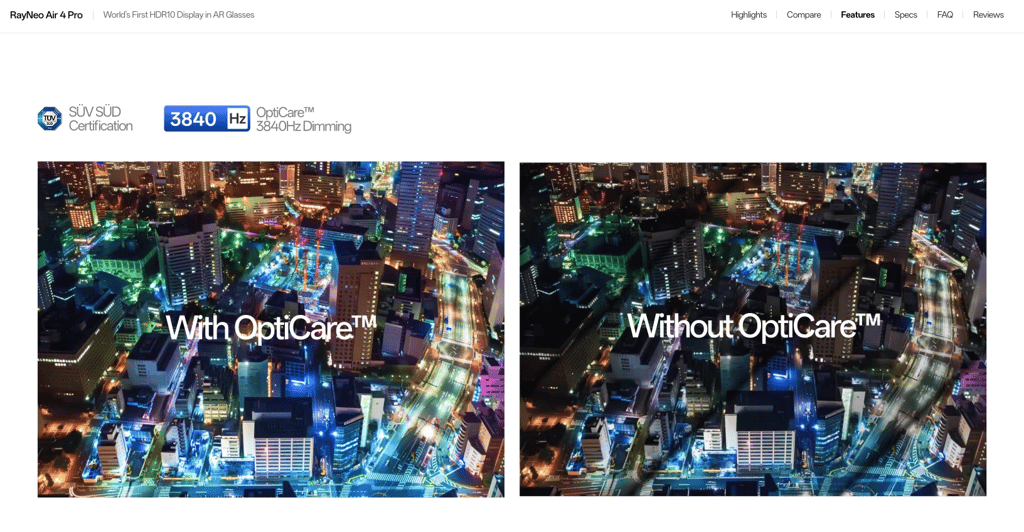
It also supports real-time AI-driven SDR-to-HDR enhancement, meaning it uses AI to artificially boost color contrast and depth for improved video quality. When compared to standard HDR10, it can adapt what is shown on the screen better. Plus, it features OptiCare™ Eye Protection, which provides 3840Hz dimming, low blue light, and a flicker-free screen for reduced eye strain. Even more, it seamlessly handles native stereoscopic 3D and AI 2D-to-3D conversion.
However, where it falls slightly short for me is that it uses a fixed display. It works well when you're sitting still, but the screen doesn't track your eyes once you move your head. Since you likely won't be moving around much while using them, it probably won't be a major issue. It introduces a bit of friction, but it's far from a dealbreaker.
I additionally noticed a bit of softness around the edges. It attracts more attention when gaming, where information is displayed around the edges. Apart from this, I overall really enjoyed the video quality its display provides. At this price, it's truly impressive.
Watching movies and gaming on RayNeo Air 4 Pro
Thanks to the Vision 4000 Processing chip that handles real-time AI SDR-to-HDR upscaling, visuals are smoother in movies, gaming, and even scrolling TikTok. This, plus vibrant colors, makes gaming or watching movies truly immersive in a dark room. Though when watching or gaming, I really recommend using the lens shade, which blocks light for a better experience.
As briefly mentioned before, the display’s edges could use some improvement. This is especially noticeable when gaming, as information is often placed in the corners. I often instinctively wanted to turn my head to see those edges, but that doesn't work since the screen is fixed. You must move your eyes rather than your head to view the periphery, which feels counterintuitive at first but is completely manageable once you adjust.
While no setting can fix this, you can adjust other features in the menu like picture mode (standard, cinema, eye care), picture quality, and sound effects. This is easily done by pressing the menu button on one of the arms and navigating with the volume rocker.
Is the corded design actually useful?
Note that due to the lack of an internal battery, the glasses must remain connected to your phone via a cable plugged into the end of one temple arm. While being tethered can feel restrictive in some cases, this can be very practical at the same time. For instance, you never have to fiddle with Bluetooth pairing, the connection remains perfectly stable, and you don't have to charge the glasses separately.
All things considered, it delivers a solid gaming and movie-watching experience, though I don't expect it to replace my standard TV or gaming setup even though they aren’t very advanced to begin with. While wearing them feels cool and somewhat futuristic, the experience isn't completely refined just yet—but given the price tag, the minor trade-offs make total sense.
RayNeo Air 4 Pro sound quality
RayNeo Air 4 Pro AR glasses feature four speakers that were custom co-engineered and tuned in partnership with Bang & Olufsen. As a high-end Danish consumer electronics manufacturer that has created quality audio products since 1925, Bang & Olufsen knows a thing or two about excellent audio, and that expertise carries over well to these glasses.
From my experience, the quad-speaker setup immerses you in 360° sound, providing clear audio and leaving no room for complaints. There is also an option to activate Whisper Mode, which is designed specifically for private listening. This mode effectively minimizes sound leakage, ensuring you don't disturb those around you in public spaces or quiet rooms.
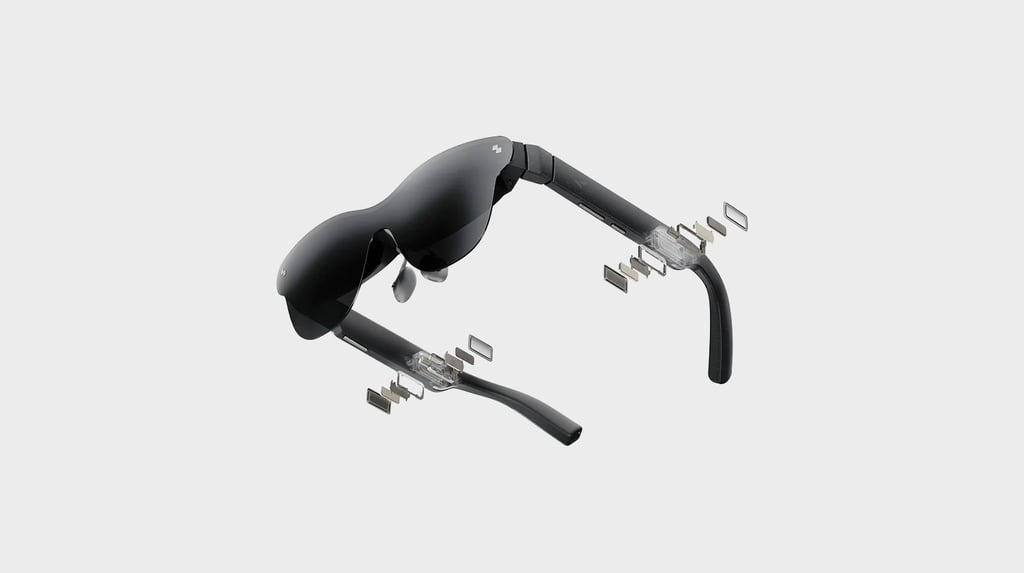
Conversely, if you find the default speakers too quiet in noisy environments, you can purchase the Sound Tube accessories separately. They provide a +15 dB audio boost by simply directing the sound straight into your ears and decreasing sound leakage by 80%. Volume can be easily adjusted via controls on the temple, though there isn't much audio customization available beyond that.
Overall, the sound system is designed to adapt to any environment, noisy or silent, while delivering clear, quality audio that definitely helps to create a more immersive experience.
RayNeo Air 4 Pro compatibility
RayNeo Air 4 Pro is compatible with most devices that support DisplayPort video output over USB-C. This includes a wide variety of smartphones, tablets, laptops, and handheld gaming consoles. If your specific device happens to be incompatible, RayNeo separately sells various accessories to solve this, such as HDMI adapters and the JoyDock.
Additionally, RayNeo Air 4 Pro features a companion app that allows you to update the device's firmware, tweak advanced display settings, and access a dedicated AR environment. However, using the app is completely optional, as all the essential controls you need are built directly into the arms of the glasses. Because of this, the setup consists simply of plugging the USB-C cable into the device you want to mirror.
What you should know before buying?
Before you buy this pair of smart sunglasses, consider a few slight drawbacks I noticed during testing. First is the lack of head tracking or spatial screen anchoring, which forces the screen to stay fixed in one place rather than moving with you. Because of this, you have to retrain yourself to move only your eyes—instead of your whole head—to focus on specific details.
Additionally, the display becomes quite soft around the edges, which can be a bit distracting, especially when gaming. It’s also worth noting that the device isn’t cordless, so if you're looking for a wireless option, this might not be the right fit.
While these aren’t dealbreakers for me, you might want to look into more expensive models if you're after a truly seamless experience. Overall, the device was cool to try out, and I feel like it accomplished what it is supposed to do well, especially at this price.
Is RayNeo Air 4 Pro worth the price?
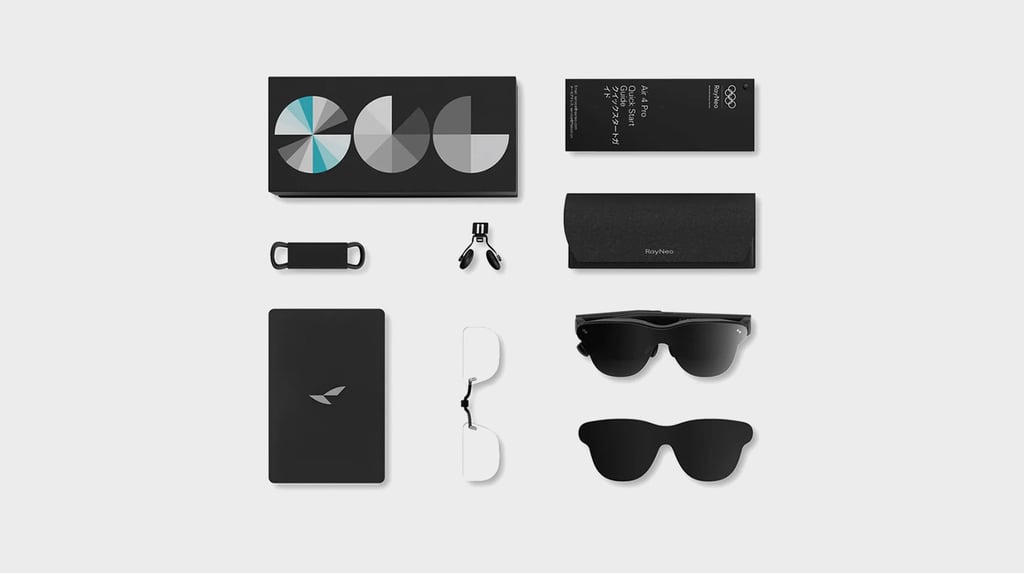
At the time of writing, RayNeo Air 4 Pro is on sale for $254, though without active promotions it typically retails for $299. With it, you get accessories like a carrying case, cleaning cloth, lens shade, and a connection cable that make maintaining and traveling with the device much easier.
Separately, you can purchase the Sound Tube to boost the audio, various adapters to help connect to incompatible devices, and even the RayNeo Pocket TV Streaming Box, which unlocks live TV and thousands of movies and series. So, while the base package is perfectly complete on its own, RayNeo gives you the option to upgrade your setup if you wish. Most importantly, there are no subscriptions or ongoing fees required to use the glasses.
Compared to competing smart glasses like the XREAL or VITURE models, the RayNeo Air 4 Pro costs almost half as much. While it doesn’t offer advanced features like spatial anchoring, it delivers a high-quality display and excellent sound at a fraction of the cost. When stacked against traditional portable monitors, these glasses provide a larger and more immersive screen in a much lighter and more travel-friendly form.
So, if you are looking for a portable XR/AR device for movies and casual gaming without breaking the bank, RayNeo Air 4 Pro is an option worth considering.
Other smart glasses reviews
Best smart glasses and AR specs: We test Ray-Ban Meta, Oakley, and more
Even Realities G2 review: Stealthy smart specs with serious software
Final verdict
RayNeo Air 4 Pro is worth considering if you’re looking for a lightweight virtual display that excels at delivering high-quality imaging and sound at a relatively affordable price point.
However, if you’re searching for a wireless design and seamless head tracking, these glasses fall a bit short in these areas compared to more premium competitors. Ultimately, they offer a solid entry point into augmented/extended reality glasses, making them worth trying out.
FAQ
Yes, you can use the RayNeo Air 4 Pro with an iPhone. It’s compatible with iPhone USB-C models right out of the box, while for others, you can purchase an adapter.
Yes, you can wear prescription lenses with the RayNeo Air 4 Pro. All you have to do is order prescription inserts separately through Lensology.
RayNeo Air 4 Pro holds up nicely against XREAL and VITURE glasses, considering its lower price point. While it delivers high-quality visuals and sound, it does lack features like spatial tracking—though entry-level users likely won't even notice they aren’t there.