Why You Can Trust Wareable
Founded in 2014, Wareable brings together journalists and experts who have reviewed over 1,000 products, including smartwatches, fitness trackers, smart rings, smart home gadgets, and health tech devices.
Our team combines hands-on testing, in-depth research, and expert insights to evaluate product performance, assess manufacturer claims, and help readers make informed decisions.
Best smart glasses and XR or AR specs: We test Ray-Ban Meta, VITURE, and more

We've reviewed all the major smart glasses—here are our top recommendations
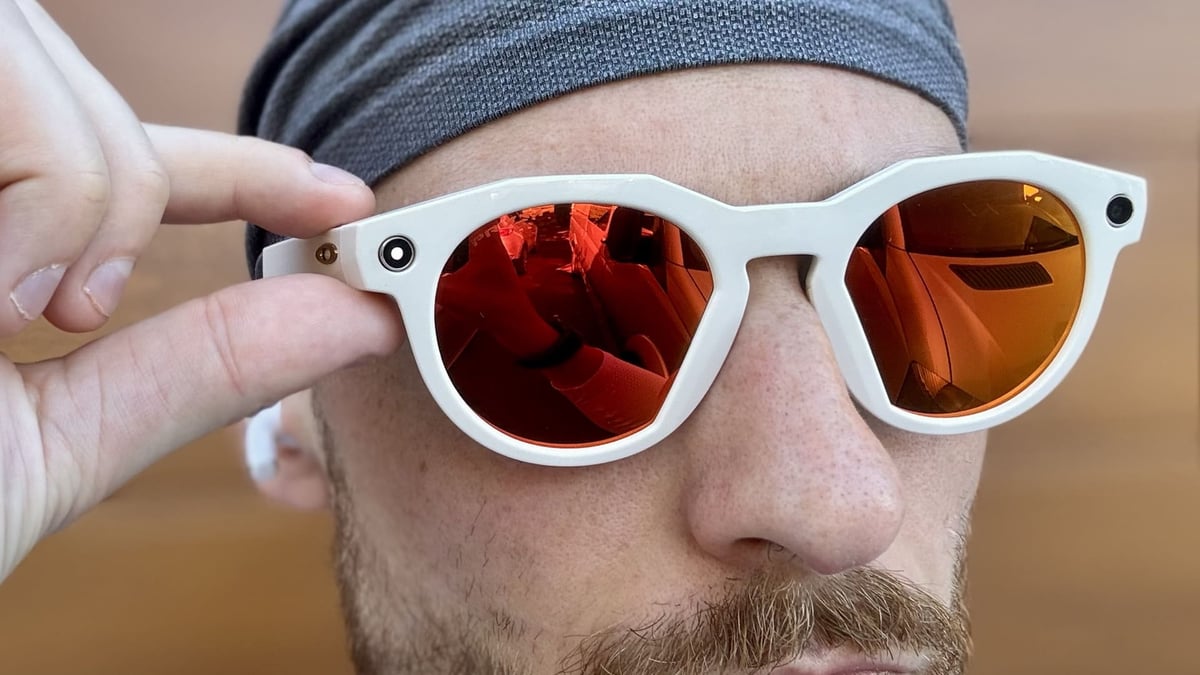
The smart glasses landscape has exploded in the last few years. What was once a niche, experimental corner of the wearables world has become one of its most exciting frontiers, with new devices launching at a blistering pace.
Whether it's frames with cameras and AR overlays or glasses that act as a personal cinema, the next generation of smart eyewear is here. And Meta remains the biggest reason why.
Between the original Ray-Ban Meta launch, last year's Gen 2 follow-up, and June's cheaper, in-house Meta Glasses line, Meta and EssilorLuxottica are estimated to account for roughly 75% of the smart glasses market. For most people shopping for a first pair, that dominance is still the simplest explanation for where to start.
However, 2026 has also been the year the camera-and-AI approach Meta popularized has faced real scrutiny.
Reports of secretly recorded footage, the reported 'Name Tag' feature facing pushback from 70 civil rights organizations, and courtrooms, restaurants, and theatres across the US and UK banning the glasses, have all pushed privacy from a footnote into a genuine buying consideration.
We dig into what that means for our recommendations below. In essence, it's created an opening for camera-free alternatives to make a real case for themselves—something that would have looked unlikely a year ago.
This guide reflects our own hands-on testing across both ends of the category, from audio-and-camera glasses to AR display glasses and everything in between. Here's where things currently stand.
Overview: The best smart glasses
- Best smart glasses for everyday wear: Even Realities G2
- Best XR display glasses: VITURE Beast XR
- Best audio smart glaces: Ray-Ban Meta Audio
- Best camera smart glasses: Ray-Ban Meta 2
- Best budget-friendly XR glasses: RayNeo Air 3s Pro
- Best glasses with spatial computing: XREAL 1 Pro+
- Best for hearing aid support: Nuance Audio
Smart glasses launches in 2026

The pace of new hardware hasn't slowed down in 2026. So, before we dive into our top picks, let's recap what's already landed this year—and what's still due before the year is out.
Meta doubled down on its own hardware in June, launching a self-branded Meta Glasses line—Adventurer, Fury, and a Kylie Jenner collaboration—starting at $299, undercutting Ray-Ban Meta Gen 2's $379 price while still being built with EssilorLuxottica. Meta has since expanded its lineup further, introducing the Ray-Ban Meta Gen 3 ($449) and camera-free Ray-Ban Meta Audio ($349) at September’s Connect event.
Rokid's AI Glasses Style beat almost everyone to market, launching globally back in January at the same $299 price point. XREAL has also made a significant move in the XR space with its AURA glasses, developed with Google and powered by Android XR. Officially launched on October 28, they’re now available to order in select markets.
Samsung used its most recent Galaxy Unpacked event to formally reveal its first pair of smart glasses, developed with Gentle Monster and Warby Parker on Google's Android XR platform. The glasses will offer hands-free access to Gemini and integrate with Samsung's own Bixby assistant.
Smart glasses launches we're still expecting
Google and Samsung's Android XR smart glasses are both expected to actually arrive this fall. Samsung has shown off the designs, but hasn’t confirmed an exact consumer launch date.
Snap is also preparing to bring its next-generation AR glasses, rebranded simply as SPECS, to consumers. Officially unveiled in June, the glasses are available to pre-order for $2195, with shipping expected to begin this fall in the US, UK, and France.
We’ll be testing as many of these as we can get our hands on and updating this guide accordingly.
What are the different types of smart glasses?

As the market evolves, smart glasses are being divided into two distinct categories. Understanding the difference is key to choosing the right pair for you.
Audio, AI, and camera glasses
These are the most common and consumer-friendly type of smart glasses right now. Think of them as super-powered headphones and a camera that you wear on your face.
Their primary functions include playing music and podcasts via open-ear speakers, taking phone calls, using a voice assistant (such as Meta AI), and capturing photos and videos from a first-person perspective. They connect wirelessly to your smartphone to function.
XR, AR, and display glasses
This category is more advanced and diverse, with fewer options ready for consumer use. XR, or extended reality, is the umbrella term for technologies that blend digital content with your view of the world or create immersive virtual environments.
Smart glasses in this category can project information or images onto their lenses, with capabilities varying significantly between models.
Some are primarily XR display glasses, focusing on projecting a virtual screen from a connected device like laptop or phone. Others offer more advanced augmented reality (AR) features, using cameras and sensors to understand your surroundings and place digital objects within them. This category also includes AI glasses with built-in displays, which can show notifications, navigation prompts, or information from a voice assistant.
Even Realities G2: Best everyday smart glasses
Even Realities G2 key features
- Camera-free, privacy-first design
- Sharp monochrome waveguide display, prescription-compatible
- Even Hub third-party app platform
- Optional R1 smart ring for controls
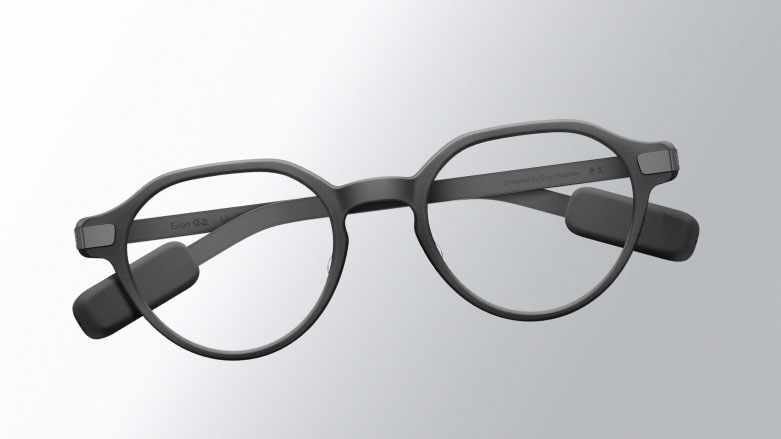
Even Realities G2 takes a different approach to almost everything else in this guide: no camera, no speakers, just a sharp monochrome waveguide display built into frames that pass for a completely normal pair of glasses.
Controls run through a touch strip on the temple or, better, the optional R1 smart ring, which also moonlights as a basic fitness tracker.
Software was thin at launch, but the arrival of the Even Hub app platform has changed that considerably. Third-party developers can now build directly for the glasses, and six months in, the catalog covers everything from live captioning and translation to sports scores and monitoring AI coding agents on the display.
At $599—or closer to $850 with the R1 ring—it's not cheap, and some native features like navigation and AI summaries are still a little inconsistent. But by leaving cameras and speakers out entirely, Even Realities has built the most convincing privacy-conscious alternative to Meta's glasses currently on the market.
- Read our full Even Realities G2 review
- Genuinely look like a normal pair of glasses
- Even Hub is evolving into a solid third-party ecosystem
- R1 ring is a clever way to solve the controls problem
- Prescription-friendly waveguide display
- $599 before you've added the $249 R1 ring
- Some native features are still inconsistent
- Touch-strip controls are fiddly without the ring
VITURE Beast XR: Best display glasses
VITURE Beast XR key features
- Sony Micro-OLED display with up to 1200p resolution per eye
- Up to 1250 nits of perceived brightness and a 120Hz refresh rate
- Clear HARMAN-tuned spatial audio
- Built-in 3DoF tracking and nine-level electrochromic dimming
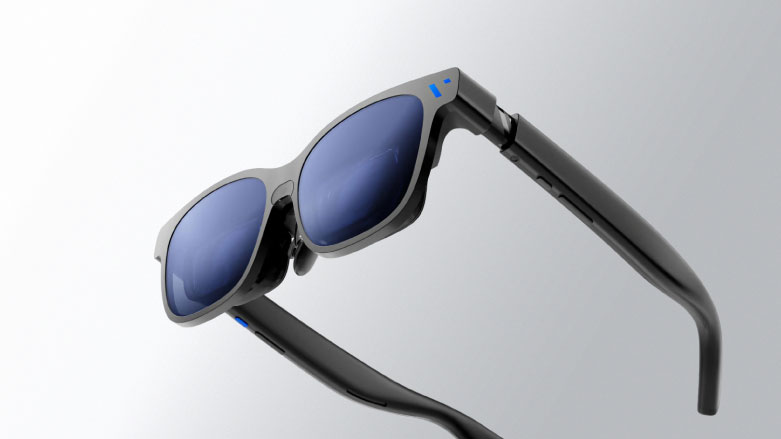
If you’re more interested in XR display than camera-based smart glasses, VIRTURE Beast XR is the most compelling option at its price point. Powered by Sony micro-OLED panels, it projects a massive 174-inch virtual screen with up to 1200p resolution per eye, a 120Hz refresh rate, and up to 1250 nits of peak brightness.
The built-in 3DoF tracking is a notable upgrade, allowing you to anchor the virtual screen in place or use modes like Smooth Follow and UltraWide. You can use VIRTURE’s SpaceWalker app for additional features, including multi-screen layouts and a more expansive spatial workspace.
That versatility makes it equally suited to binge-watching a series on a long-haul flight and to going through spreadsheets on the go. Compatibility is broad, too, with support for iOS, Android, macOS, and Windows devices.
The visual experience is one of its biggest strengths in our eyes. The display is bright, colorful, and detailed; the wide field of view helps make the virtual screen feel more immersive. However, there’s some slight blurring around the edges, which is more noticeable when reading something.
Also, while HARMAN speakers deliver clear audio, you still may want a pair of earbuds.
At $549, VITURE Beast XR is a serious investment. But for anyone who wants a taste of high-quality virtual display in a glasses-style design it is one of the strongest options.
- Bright, crisp video quality with impressive brightness
- Wide field of view makes gaming and films more immersive
- Useful screen-positioning modes
- No built-in myopia adjustment
- Not so budget-friendly
- Requires a USB-C connection and external power
Ray-Ban Meta Audio: Best for listening
Ray-Ban Meta Audio key features
- Smart features powered by Meta AI
- Up to 12 hours of use
- Open-ear audio with a six-microphone array
- Prescription lens options available
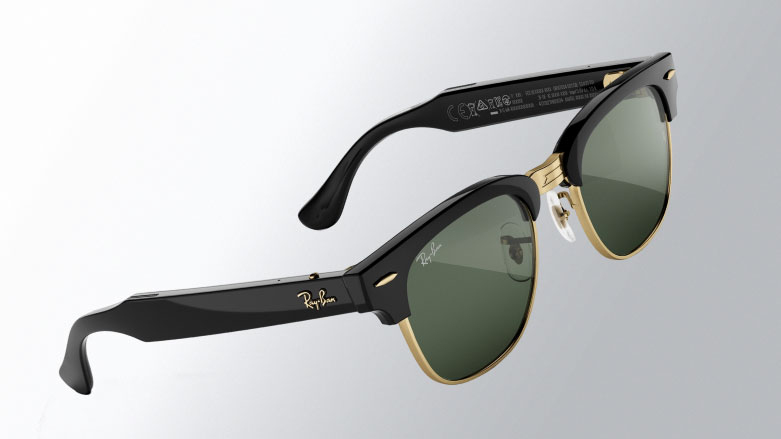
Ray-Ban Meta Audio is one of those stylish smart glasses that don’t look like a piece of tech strapped to your face. Developed through the partnership between two brands, these glasses combine Meta’s audio and AI technology with Ray-Ban’s recognizable eyewear design.
The result is a modern, understated look that feels closer to celebrity fashion staple than a typical wearable. Available in two styles, Clubmaster and Burbank, they offer a choice between a retro-inspired silhouette and a more classic rectangular frame. The temple tips are adjustable and nose pads are comfortable throughout the day.
Unlike the standard Ray-Ban Meta models, the Audio version doesn’t have a camera, so you won’t be capturing photos or videos. Instead, you can listen to music and podcasts, take calls, and use Meta AI hands-free. So, the audio experience is the key aspect here.
The glasses use two open-ear speakers built into the temples. Music doesn’t block out surrounding sounds, and the six-microphone array is designed to pick up your voice clearly during a call. Our only note is that bass response is limited and at higher volumes audio can leak out.
- Stylish, recognizable Ray-Ban design
- Impressive open-ear audio and call quality
- Long battery life up to 12 hours
- No built-in camera
- Quite pricey starting from $379
- Sound can leak at higher volumes
Ray-Ban Meta (Gen 2): Best camera smart glasses
Ray-Ban Meta Gen 2 key features
- Smart features powered by Meta AI
- Open-ear speaker design with immersive sound
- Up to 8 hours on typical use
- Can be purchased with prescription lenses
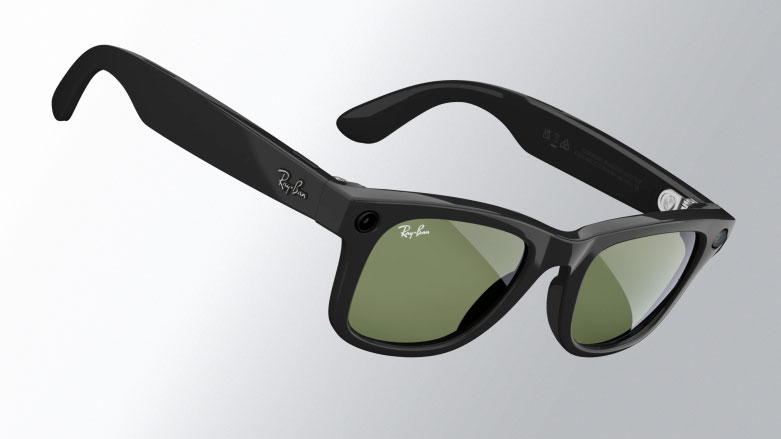
The new Ray-Ban Meta Gen 2 glasses are definitely an upgrade from the original Gen 1 glasses that made the smart glasses mainstream. By packing a better camera, dramatically longer battery life, and refined audio into the same iconic Wayfarer frames, Meta and EssilorLuxottica have turned an already great product into the definitive smart eyewear experience.
Let’s be clear: there’s no augmented reality here. These glasses have three core functions: capturing first-person photos and videos, acting as a pair of open-ear headphones for music and calls, and providing access to Meta AI. And Gen 2 does both better than ever.
The biggest upgrade is undoubtedly the camera quality. The dual cameras shoot in 3K Ultra HD, a massive leap from the previous 1080p, capturing content that looks good beyond social media. A small LED light illuminates to let people know when you’re recording, addressing some privacy concerns.
Additionally, the battery will now last up to 8 hours on typical use, doubling what you get with the Gen 1 model, although not as impressive as Ray-Ban Meta Audio’s 12-hour battery life. Also, in practice, heavy use will reduce it.
The ‘smart’ features of Ray-Ban Meta Gen 2 are relatively basic. However, by focusing on doing a few things extremely well in a stylish and high-quality package, these glasses set the standard for the entire category. Currently, the frame is priced at $379, with prices increasing for certain frame styles, lens options, and prescription-focused models.
- Check out our Ray-Ban Meta (Gen 2) summary
- Great photo and video quality
- Lovely audio
- Just a classic pair of Ray-Bans
- Charging case is lush
- Higher starting price ($379 vs. Gen 1's $299)
RayNeo Air 3s Pro: Best budget-friendly glasses
RayNeo Air 3s Pro key features
- 1200-nit brightness
- 1080p resolution per eye up to 120Hz
- No built-in cameras or spatial tracking, strictly a display device
- Prescription lens inserts available through Lensology
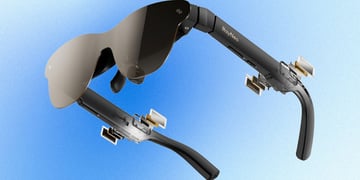
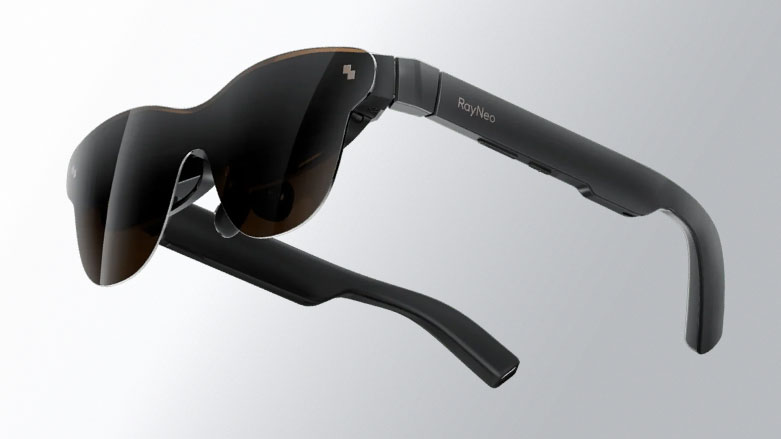
RayNeo Air 3s Pro are about giving you a colossal private cinema screen that you can take anywhere. And at $299, they do it for roughly half the price of the top-end competition such as VITURE.
The headline spec is brightness. At 1200 nits of to-eye brightness, the Air 3s Pro is among the brightest display glasses on the market.
Audio is handled by a quad-speaker system with spatial audio algorithms that deliver surprisingly immersive surround sound for a pair of glasses. A Whisper Mode narrows the sound stage to keep things private in public.
However, with no spatial computing capabilities, RayNeo Air 3s Pro are not as futuristic as its more expensive competitors. While marketed as AR glasses, they are technically a bright screen you can take anywhere you go. For travelers, gamers, and anyone who wants a portable screen experience without the bulk or price of premium alternatives, these are very hard to beat.
- Also consider RayNeo Air 4 Pro (our review)
- Stunning 1200-nit claimed brightness at a fraction of the competition's price
- Lightweight and well-balanced for extended wear
- No built-in spatial computing features
XREAL 1 Pro+: Best glasses with spatial computing
XREAL 1 Pro+ key features
- 1920 x 1080 pixels per eye display
- Native 3DoF spatial computing and anchoring
- Up to 1200 nits perceived brightness
- No built-in video or camera capture
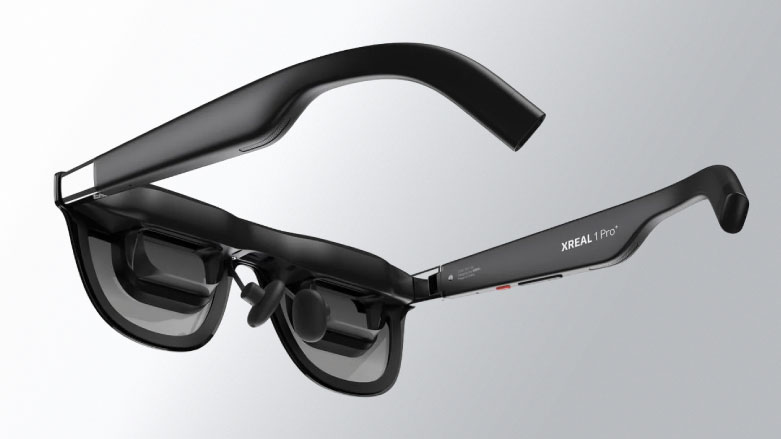
If you want a glimpse of the ‘spatial computing’ future that Apple’s Vision Pro promises in a much more accessible form factor, XREAL 1 Pro+ is your best bet. These wired glasses don’t offer true, world-altering AR. Instead, they excel at creating a massive, high-quality virtual screen that appears to float in front of you, with the option to anchor it in place even as you move your head.
Plugged into a compatible smartphone, laptop, or gaming console, the 1 Pro+ can simulate a display that ranges from around 34 to 556 inches, depending on viewing distance. The clarity is superb, making it a game-changer for watching movies on a plane, enjoying a private and expansive monitor for work, or immersive gaming.
XREAL’s X1 chip powers native 3DoF spatial anchoring, allowing you to fix the screen in a chosen position rather than having it follow your head movements. For more advanced 6DoF spatial anchoring and gesture controls, you’d need the optional XREAL Eye accessory.
XREAL 1 Pro+ are more technically ambitious, but they also serve a very different purpose than audio glasses. For frequent travellers or anyone craving a bigger screen on the go, they are a powerful and impressive piece of kit.
- Sharp, vibrant visuals with a convincing, large virtual display feel
- Great spatial anchoring
- Broad device compatibility
- Still requires a wired connection to a compatible device
- Expensive ($599)
Nuance Audio: Best for hearing loss support
Nuance Audio key features
- Designed as over-the-counter (OTC) hearing aids for adults with mild to moderate hearing loss
- Up to 8 hours of battery life
- Sleek design
- Don’t require fitting by an audiologist
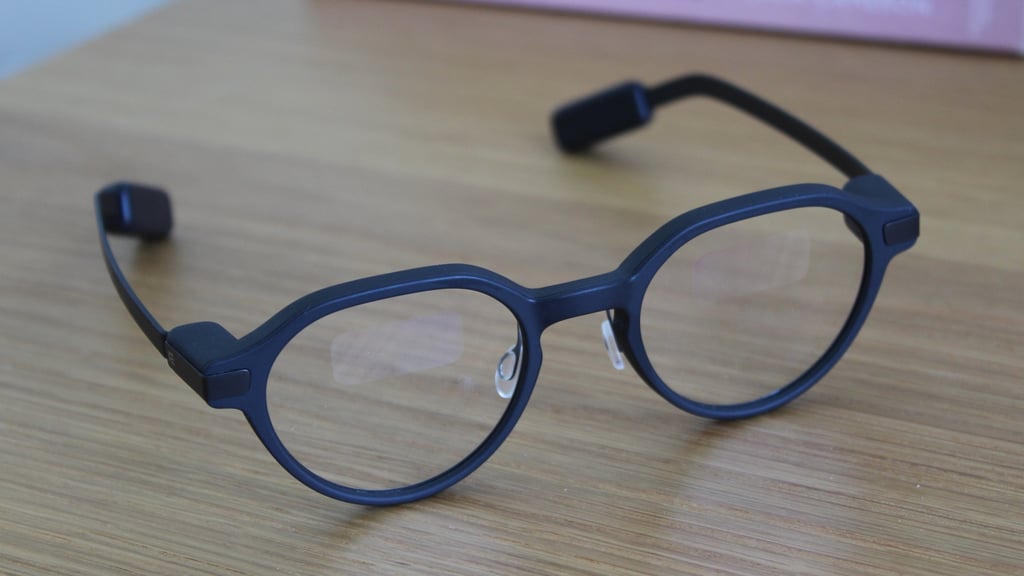
A collaboration between EssilorLuxottica and Nuance Audio, these smart glasses address a distinct issue: hearing loss. Disguised within a stylish pair of frames, this device is essentially a sophisticated OTC hearing aid designed to make conversations more straightforward in noisy environments.
Using beamforming technology and an array of six hidden microphones, the glasses focus on voices coming from the direction you’re facing while helping filter out background noise. The idea is to provide a solution for individuals with mild to moderate hearing loss who may not require or prefer a traditional prescription hearing aid.
By integrating the technology into a familiar and fashionable object, Nuance Audio aims to remove the stigma associated with hearing assistance devices. They don't require fitting by an audiologist and offer an unobtrusive way to enhance social interactions. It's a powerful example of how smart glasses can provide genuine, life-improving utility beyond notifications and photos.
- Read our full Nuance Audio hearing aid glasses review
- Specialized use case scenario
- Discrete design
- Tinny and metallic sounds, lacking natural warmth
- Expensive, from $699 for the frame
Bottom line
The smart glasses market is not one-size-fits-all, and the right pair depends entirely on what you want them to do.
For everyday wear, discreet smart features, and a more privacy-conscious experience, Even Realities G2 is our top pick. It doesn’t have a camera, which sidesteps many of the privacy concerns associated with camera-equipped smart glasses.
That said, we'd be doing readers a disservice if we pretended it’s the best choice for everyone. You’re trading photo and video capture for a more discreet experience. This display-focused approach won’t appeal to anyone looking for immersive entertainment or hands-free photography.
For those who want camera quality, audio, and AI features, Ray-Ban Meta Gen 2 remains the strongest all-round option. Meta and EssilorLuxottica have refined a truly great format, making these an easy recommendation. Ray-Ban Meta Audio is another interesting option if you want the luxurious design and open-ear audio without a camera.
Beyond those two, the rest of this guide serves more specific needs.
VIRTUTE Beast XR is our pick if you want a premium virtual screen and more immersive XR experience, while XREAL 1 Pro+ offers native spatial computing and anchoring. RayNeo Air 3s Pro remains the standout value choice for a portable, high-quality display without the price tag of the competition. And if hearing support is your priority, we suggest checking out Nuance Audio models.