- Sleek, well-built design
- Reliable GPS and heart rate tracking
- Exceptional battery life
- Limited third-party app ecosystem
- No music streaming integration
- Zepp app can feel cluttered and impersonal
Amazfit Balance 2 is another pivotal smartwatch refresh for Zepp Health.
While the 2023 original was a safe play for the budget-conscious, this successor arrives amid a glow-up, flanked by the impressive Bip 6 and Active 2. There's also the all-new Active Max to consider, as the company's watch lineup continues to expand into 2026.
Crucially, Amazfit is no longer just trying to keep up with the biggest names in smartwatches; it can deliver serious fitness trackers in its own right. With a jump to 10ATM water resistance for diving, an upgraded BioTracker 6.0 sensor, and sapphire glass, Balance 2 expertly straddles the line between a stylish accessory and a feature-packed sports watch.
As we generally find with Amazfit devices, Balance 2 proves that mid-range pricing doesn’t have to mean mid-tier performance. Not everything is perfect—and those who seek true smartwatch features should know by now to look elsewhere—but the brand continues to get plenty right with its tracking features. Below is our full review.
Price and competition
Balance 2 is a mid-range watch, which, compared to other major watches, is still notably more affordable. For instance, Apple Watch Series 11, Samsung Galaxy Watch 8, and Google Pixel Watch 4 already fall into the premium tier, exceeding the $300 mark.
It’s also important to consider sports watches in this context, especially given what Balance 2 provides. For instance, Garmin’s midrange models include Forerunner 570, which costs almost double. Meanwhile, Polar Vantage M3 and Coros Pace Pro sit in a similar price range.
Overall, Balance 2 remains quite competitive when compared to more sports-oriented alternatives.
Design and display
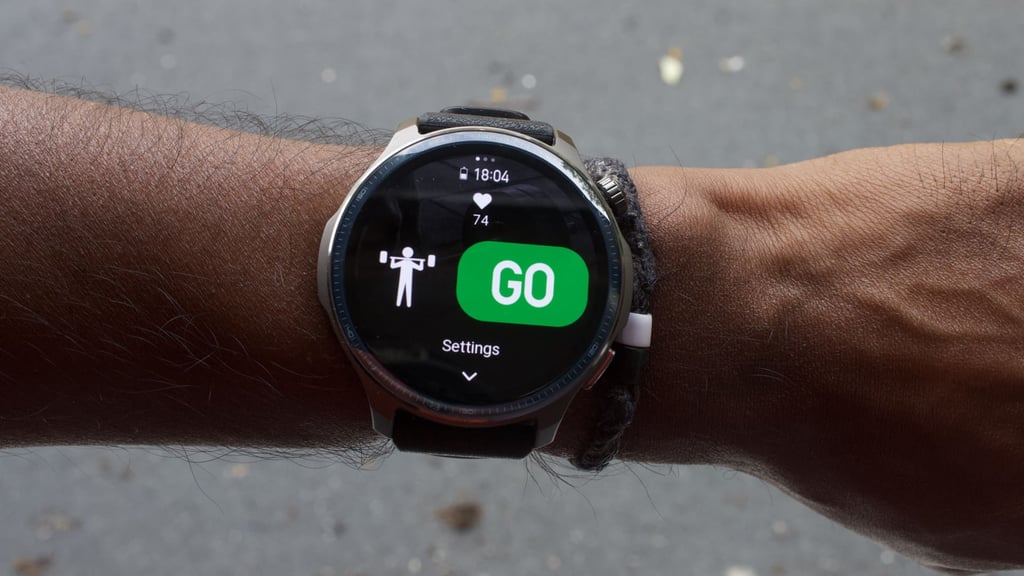
Balance 2 doesn’t offer the distinctive look you get on Apple Watch or Google’s Pixel Watch, but it does feel high-quality and include design materials found on more expensive smartwatches. In general, it’s been very comfortable to live with.
Unlike the first Balance, there’s only a single black color option. You do get two silicone straps in the box, each with a standard watch buckle and a pin mechanism for removal.
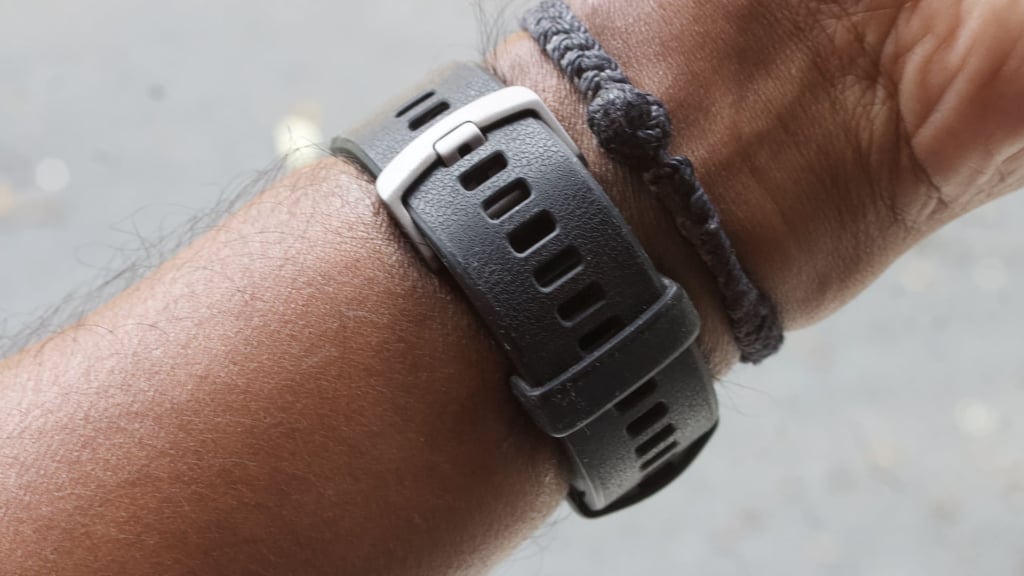
The new 47mm aluminium alloy case features a crown button and a larger textured button on the right side, maintaining a clean overall design. The weight feels comfortable, although it has increased slightly from the original, providing a satisfying heft that feels just right.
Familiar feel—but now with dive-ready design
The screen is the same size and resolution as the first Balance. It’s a 1.5-inch, 480 x 480 AMOLED display surrounded by a thin black bezel and a similarly slim, yet more noticeable, chronograph bezel.
The screen offers sharp and vibrant visuals for watch faces and menus. With a peak brightness of up to 2000 nits, it isn’t the brightest smartwatch display available, but we encountered no problems viewing it in more difficult outdoor conditions.
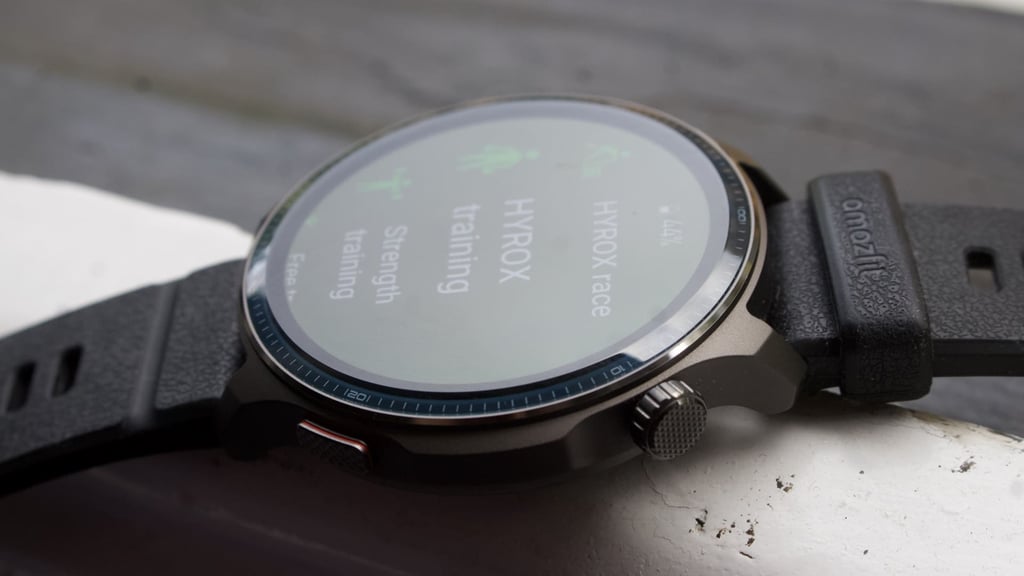
As a package, you receive a surprisingly robust level of water resistance. It now has a 10ATM rating, meaning it can be submerged to 100 meters. Plus, you can use it for recreational diving (indoor or outdoor) up to 40 meters.
Compared to this, only Apple Watch Ultra 3, Garmin Fenix 8, and Huawei Watch Ultimate 2 provide similar dive-proof features—but they’re only available for much higher prices.
Battery life
Battery life is something you rarely have to worry about on Balance 2. Whether you’re using it with the raise-to-wake mode or the always-on display, or turning to it for GPS tracking, it’s a solid performer overall.
Zepp Health reports a battery life of up to 21 days with typical use or up to 10 days under heavy usage. Our testing began with the raise-to-wake feature before switching to the more power-consuming always-on display mode. In the raise-to-wake mode, the daily battery drain was minimal. Under heavier use, the average drain was about 10%.
Going the extra mile
On paper, the GPS tracking numbers look pretty good. It’s 33 hours in the most accurate GPS mode or up to 67 hours in the power-saving GPS mode. For an hour of outdoor running, the battery dropped, on average, by 6%, so we’d say it’s a little short of those numbers.
Since a more expensive mid-range sports watch like Garmin Forerunner 570 offers around 8–18 hours of GPS battery life, it’s still a better performer than some other mid-range models.
Charging is handled through a small proprietary cradle that requires a USB-C cable for setup—nothing unexpected there.
When the battery is fully drained to 0%, it typically takes about an hour to recharge. And if you prefer to wake the display rather than keep it constantly on, the device could last for weeks before needing a recharge.
GPS and heart rate accuracy
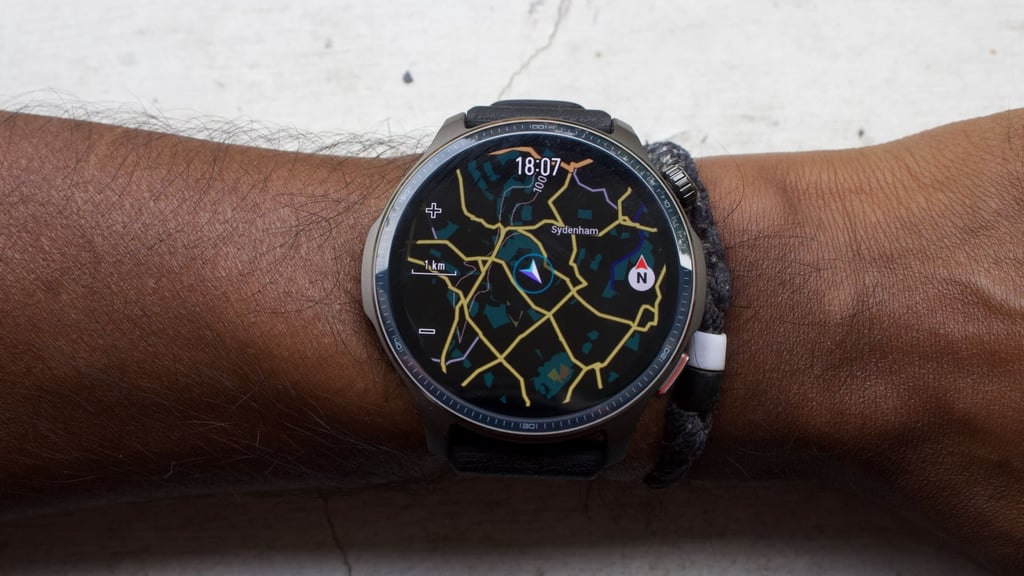
Amazfit smartwatches, ranging from budget models like Bip to more advanced options like T-Rex, generally deliver solid performance in GPS accuracy and heart rate tracking.
Overall, it’s the same result here: the sports tracking on Balance 2 is reliable. Whether you’re running, exercising indoors, or swimming, it performs well as a sports watch—more so than many other smartwatches.
The heart rate test
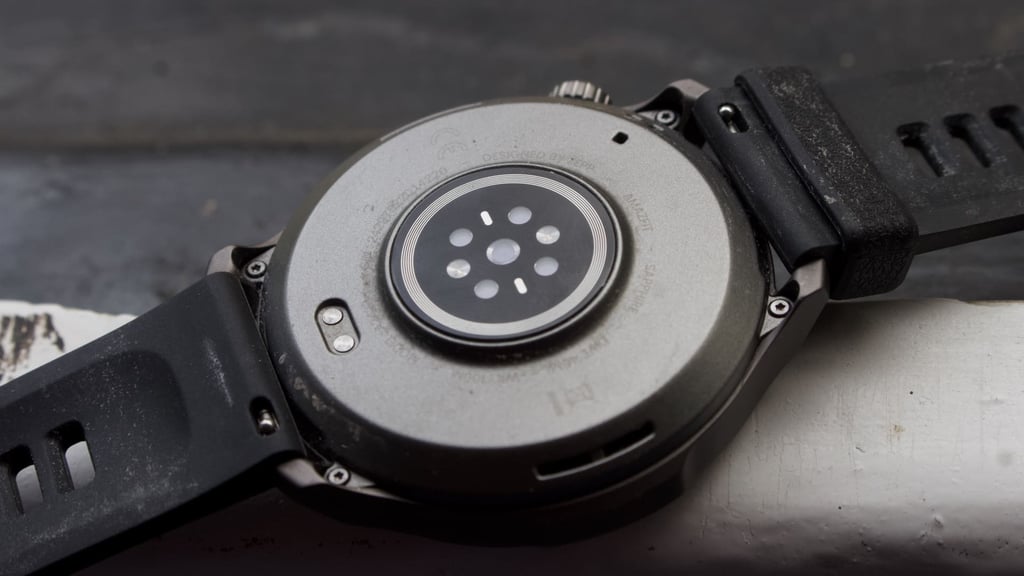
Starting with heart rate, we should note that Balance 2 harnesses Zepp Health’s BioTracker 6.0 optical sensor, a newer version of the sensor technology included on the first Balance.
This covers daily and nightly heart rate tracking, as well as heart rate tracking during exercise. It also includes monitoring blood oxygen levels and stress.
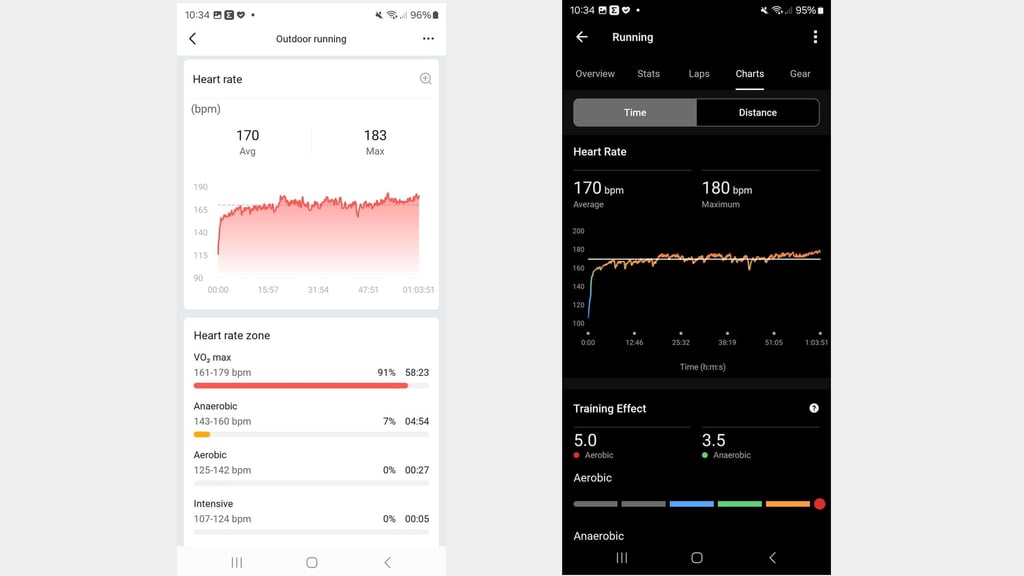
In addition, you can pair external heart rate monitors via Bluetooth. We were able to do that without issue with both Garmin and Polar heart rate monitors.
For daily resting heart rate measurements and sleep tracking, we’ve been quite pleased with the accuracy reported by Balance 2 compared to other dependable wrist-based monitors.
A similar positive experience occurred during exercise, even at higher intensities. During interval running and indoor cycling, it performed reliably in measuring average and maximum heart rates when compared to the Garmin HRM-600 chest strap heart rate monitor (shown above).
The GPS accuracy test
The GNSS features dual-band technology that supports six satellite systems—the same, essentially, that's become commonplace in smartwatches and sports watches over the last few years.
As we always say in our reviews, not all dual-frequency GNSS interpretations from brands provide identical results. With that said, we do consider Balance 2 (as we did with a device like Amazfit T-Rex 3) to be among the solid performers.
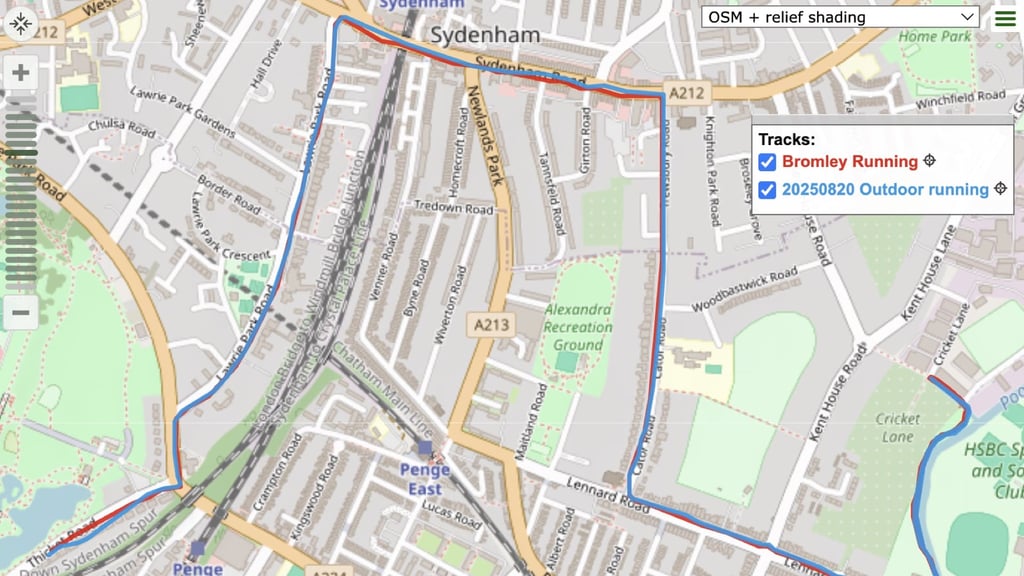
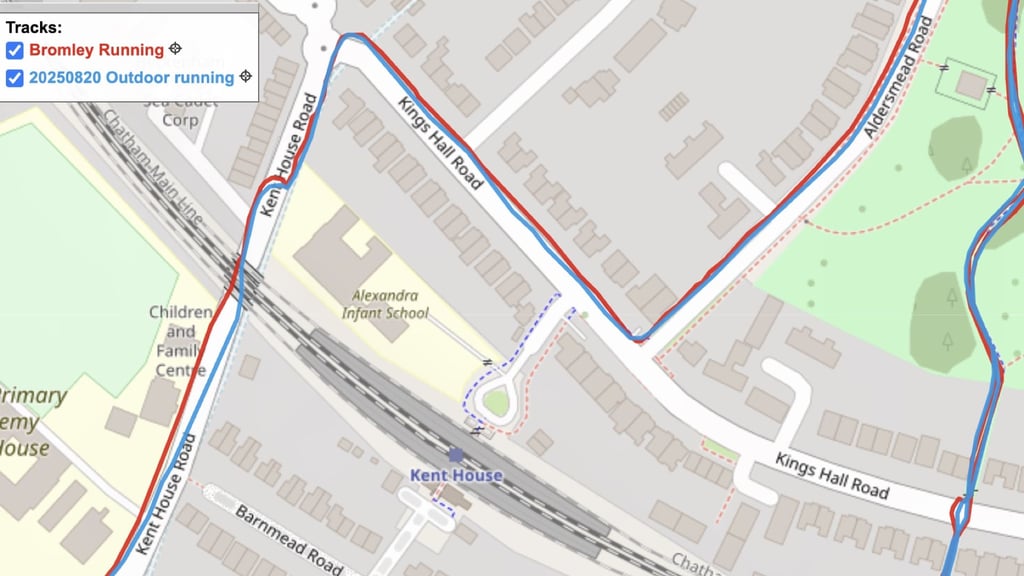
We’ve been testing it alongside Forerunner 970—and, for context, Garmin’s own take on the technology has consistently delivered some of the best results in our tests since it debuted back in 2022.
Balance 2 generally performed well against it, although it occasionally underreported distance slightly. The GPS tracks shown above offer a clear comparison of its performance relative to a more expensive Garmin. In our view, that’s more than good enough for most outdoor exercisers—especially given the price.
Training features and insights
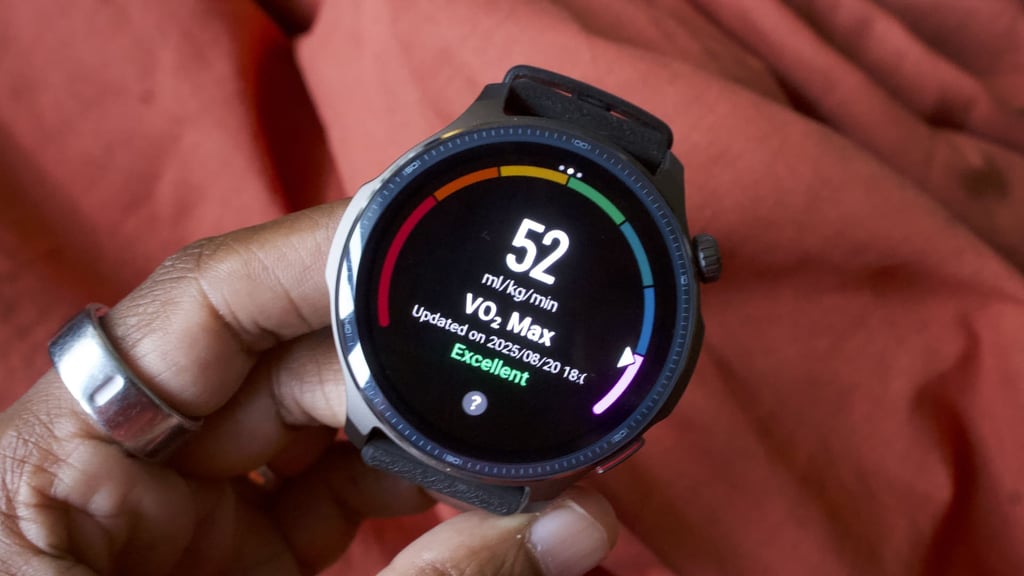
Amazfit smartwatches typically haven't matched the capabilities of Garmin, Polar, Coros, or other advanced sports watches in providing detailed data analysis and valuable fitness insights. The brand is rarely at the cutting edge of this area, where competitors instead deliver structured training guidance that helps users better understand their progress.
However, there are a few useful features aligned with the industry's broader trend of daily scores.
The most notable is Readiness, which actually resembles Oura’s wellness-focused score more than Garmin’s more targeted training readiness. It considers similar data, such as heart rate, heart rate variability (HRV) during sleep, and temperature.
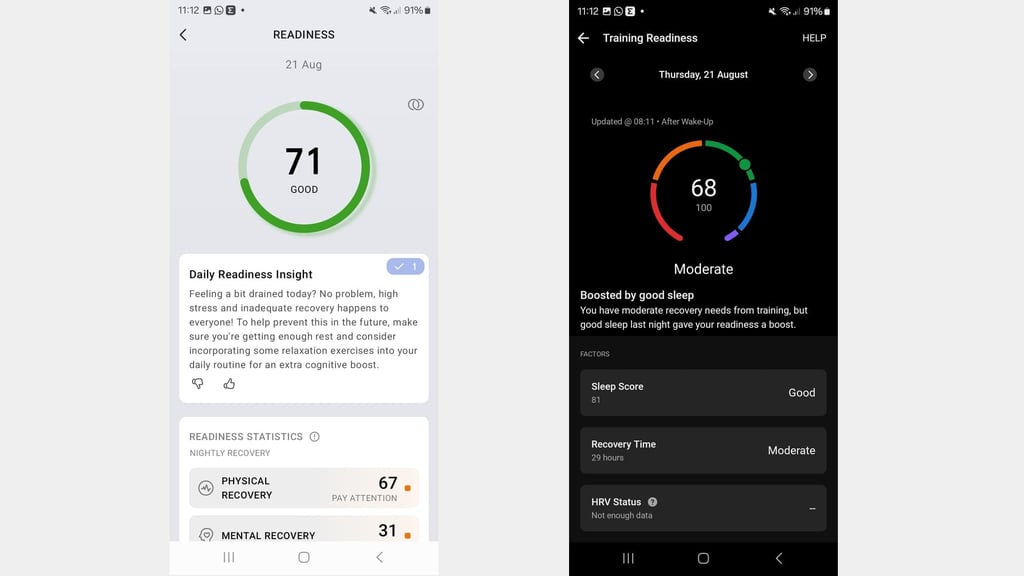
We’ve been wearing Balance 2 together with Oura Ring 4 and Forerunner 970, and the readiness scores have been very similar on most mornings.
This feature depends heavily on accurate sleep tracking, which has been consistently verified when using Oura Ring 4 alongside various other sleep trackers.
Insights that neatly tie into the readiness metrics include Amazfit's interpretation of your training load, VO2 max, and recommended recovery time.
These are pretty much staple training metrics for most sports watches now. And while, again, Amazfit isn't doing anything innovative or jaw-dropping here, we did find that training load and VO2 max estimates were in line with a Garmin watch (paired with a heart rate monitor).
Zepp Coach and AI features
Head to the Zepp companion app, and you get a much better sense of what this watch is like to train with.
First up is Zepp Coach, which offers the option to build a running plan or a basic AI Plan (as Zepp Health calls it) to improve general fitness. The first impression these plans give is that they feel a bit impersonal, and that’s definitely a theme in general when engaging with the app's features.
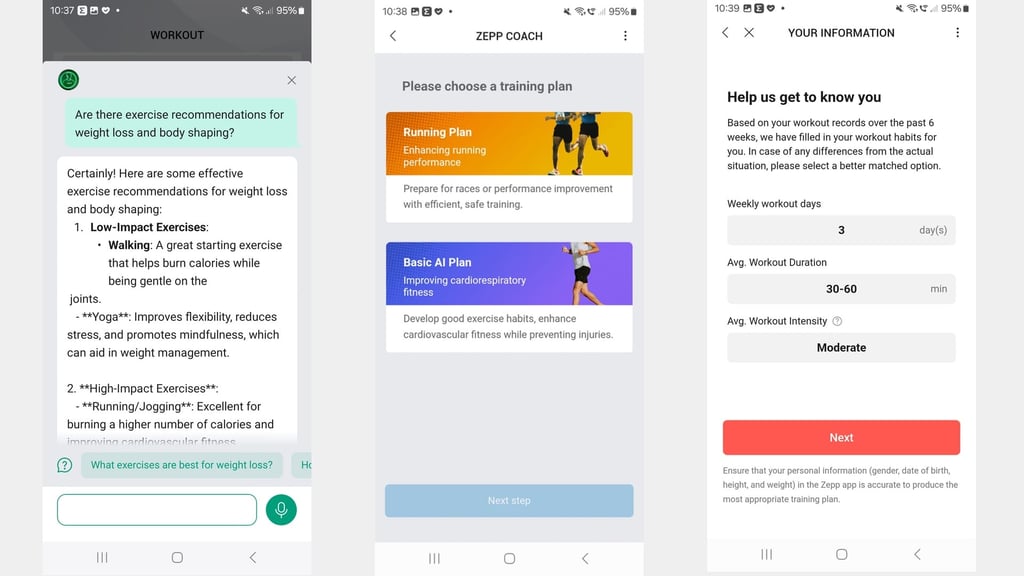
That continues with Zepp Coach Chat, which takes the form of a chatbot that offers some very dry responses to general fitness and workout queries and might be useful for some beginner users, but it could be presented much more nicely.
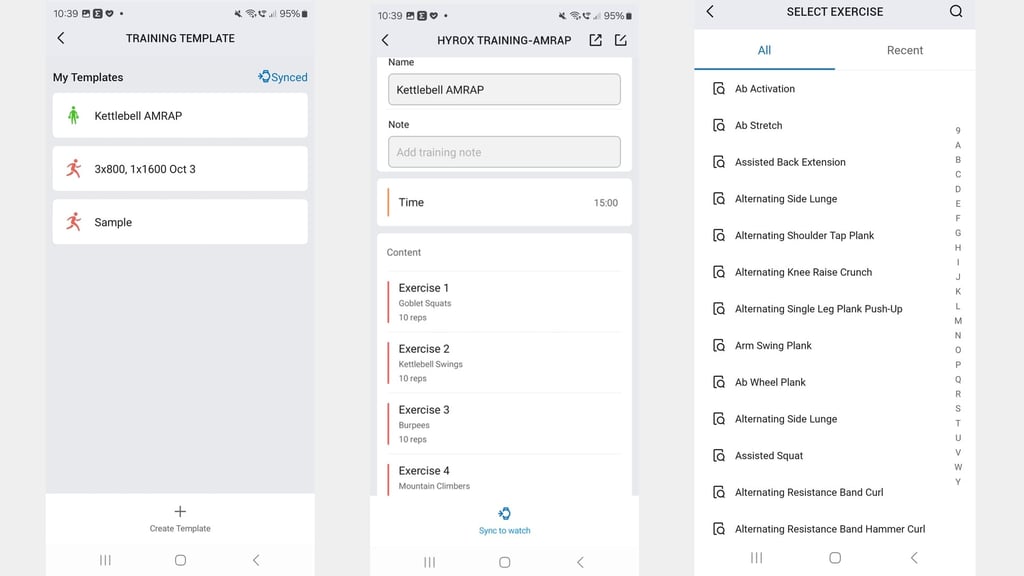
Scroll further down the page, and you’ll find more useful features, such as the ability to build workouts and upload routes for outdoor workouts. That’s in addition to the free full-color maps you have access to, which is great to have on a watch at this price.
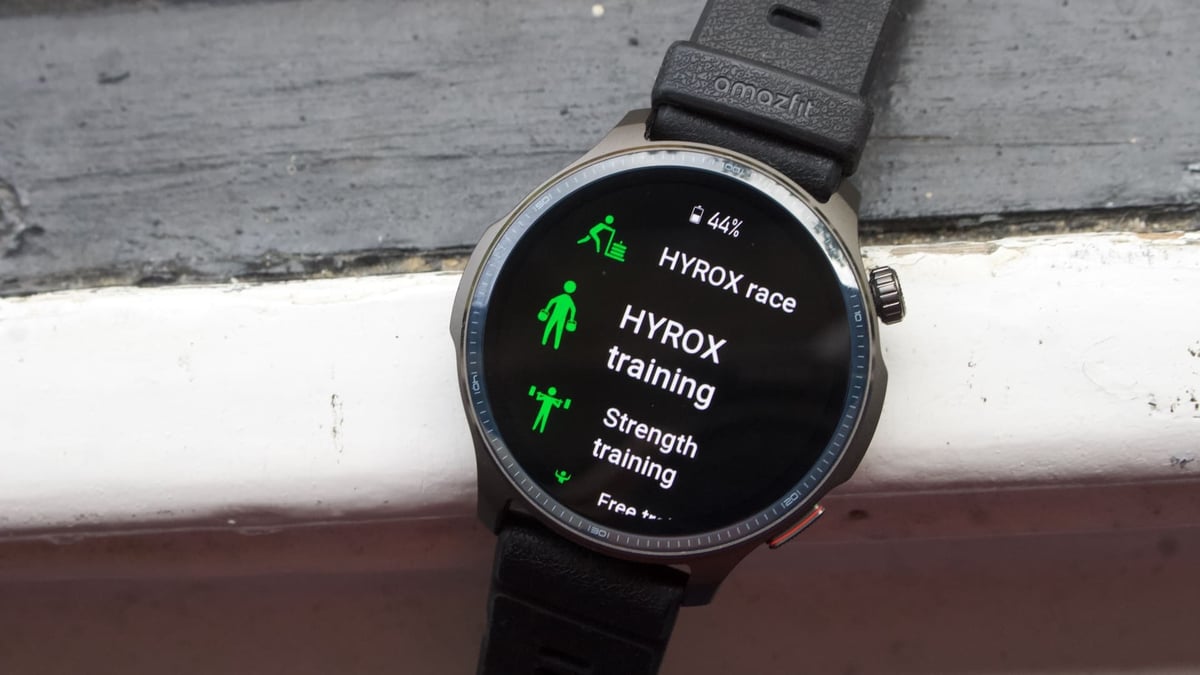
The workout building works well and does offer good support for strength training and Hyrox enthusiasts, with a selection of exercises that can be added to create sessions easily synced to the watch.
Balance 2 clearly gets some aspects right, but there are definitely issues with presentation and making certain features more user-friendly.
Smartwatch features
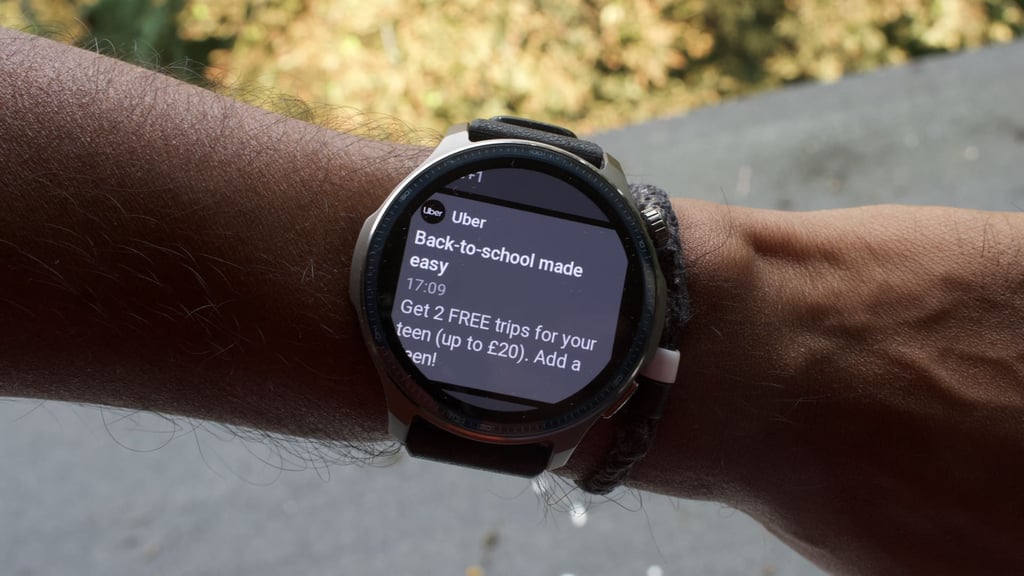
Balance 2 offers a solid middle-tier smartwatch experience when you’re not at the gym or on a hike. It has plenty of features, but it’s nowhere near as packed with smarts as you’ll find on Apple Watch or a Wear OS device.
It displays notifications from your phone effectively, including both native and third-party apps. And the music player functions when paired with an Android phone or iPhone—though you do need to own the music to sync it to the watch. Currently, there is no option to sync music directly from streaming services on the Zepp OS platform, which continues to be a real drawback.
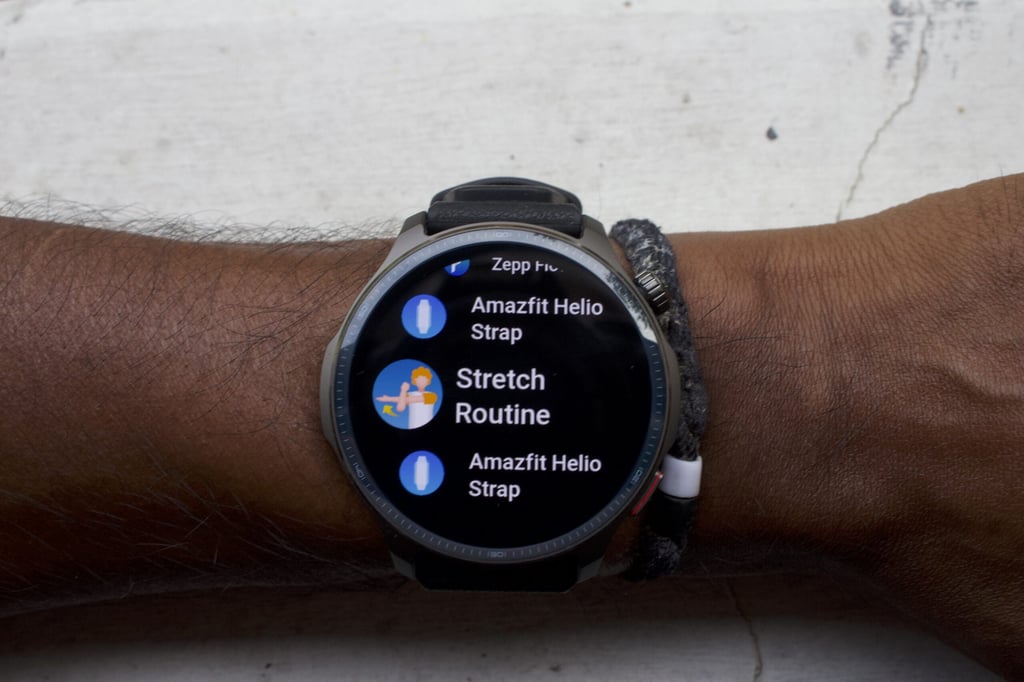
You don’t have LTE support, either, but you can make calls via Bluetooth using the onboard microphone and speaker. These features also enable speech-to-text replies for WhatsApp messages when paired with an Android phone. iPhone users, however, gain an additional feature: they can use the watch as a remote for their smartphone camera.
Lacking heavyweight integrations
There is an app and watch face store, but, again, if you’re expecting it to be brimming with the kind of apps and watch faces you’ll find on Apple or Google’s storefronts, it simply doesn’t match up.
We were actually a little more disappointed with the array of watch faces on offer, given that there's nothing to stop the brand from delivering plenty of its own downloadable options. Ultimately, like other brands offering these entry-level smartwatches—if you can even really call them that—it's part of the Zepp OS ecosystem that needs improvement.
As long as you’re aware of its limitations, Balance 2 handles notifications, reviews daily morning reports, swipes through widgets like Readiness and weather, and offers an intuitive on-watch software. However, those expecting it to match the top smartwatches may find it lacking.