Best running watches 2026: Smash your PB with these GPS picks

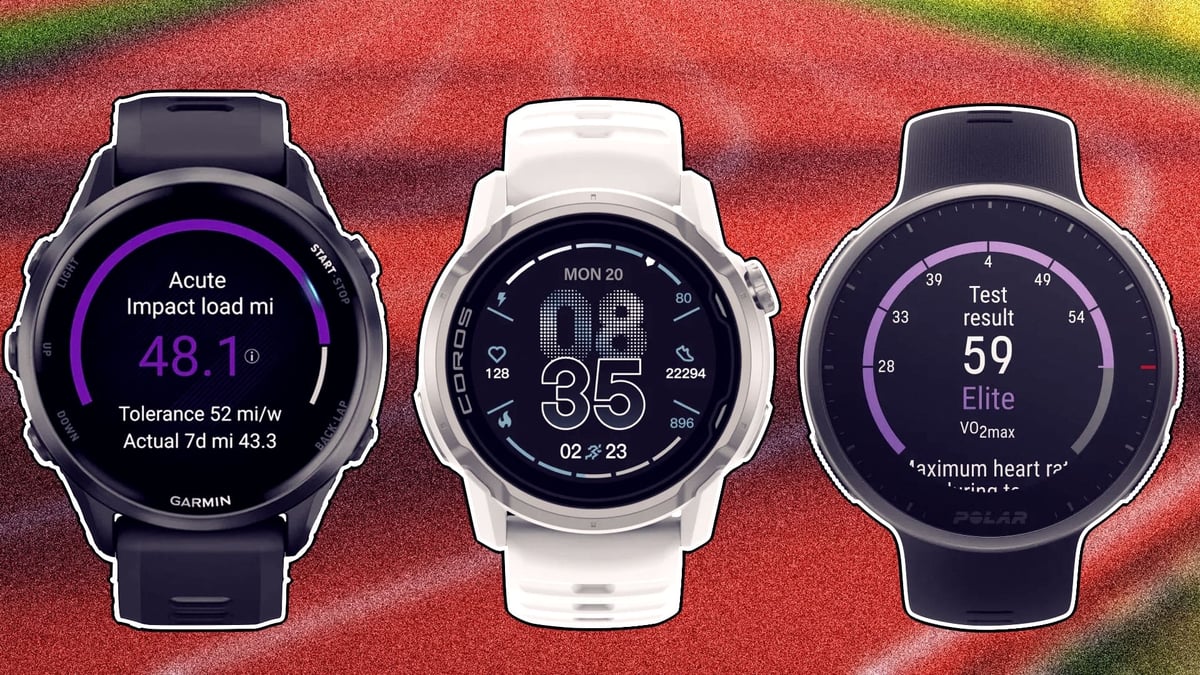
Whether you need a dedicated watch for running or a smartwatch with run-tracking powers, this guide includes the best from our testing
Top running watches are no longer just about tracking pace and distance. A modern running watch is a 24/7 coach, recovery analyst, and powerful smartwatch all in one.
The market has evolved, with traditional giants like Garmin, Coros, and Polar now facing a serious challenge from Apple and Google, who have integrated high-performance run-tracking features into their latest smartwatches in recent years.
This guide is designed to help you navigate this new landscape. We’ve tested and reviewed every major running watch, from simple GPS trackers for beginners to elite devices for ultramarathoners.
Whether you’re a road runner in a major city who needs pinpoint dual-frequency GNSS and phone-free music, or a trail runner who prioritizes battery life and topographic maps, we’ll help you find the perfect match.
Below, you’ll find our top recommendations, followed by a detailed breakdown of the key features to consider before you buy.At a glance. Best running watches:
- Garmin Forerunner 165
- Withings ScanWatch Nova
- Coros Pace 4
- Garmin Forerunner 265
- Garmin Forerunner 970
- Garmin Forerunner 55
For absolute beginners: Garmin Forerunner 55
Despite its age, Garmin Forerunner 55 remains slim, lightweight, and simple to use. It doesn’t complicate things with too many functions. It integrates with Strava, offers robust sleep and wellness tracking, and is highly recommended for beginners.
If you're chasing great value: Coros Pace 4
With excellent heart rate accuracy for runners, dual-band GPS, and top battery life, Coros Pace 4 still delivers unbeatable value. The MSRP has crept up slightly again from its predecessor but it remains a savvy purchase for runners who want to take the next step in their training. Plus, that AMOLED screen upgrade is a delight.
Best for budding athletes: Garmin Forerunner 265
For those who want a powerful running watch to power their training and recovery—and one that also branches out to other core disciplines—the 265 is the best choice. It may be a mid-range device in the grand scheme of Garmin’s offerings, but it boasts more than enough features to warrant the higher price tag—and it looks superb.
If money is no object: Garmin Forerunner 970
If money is no object and you want plenty of extras alongside the top-tier run-tracking experience, Forerunner 970 is perfect. Aside from stellar HR and GPS accuracy, it has detailed mapping (presented beautifully on the AMOLED display) that provides more reliable and relevant insights than rivals.
Garmin Forerunner 165
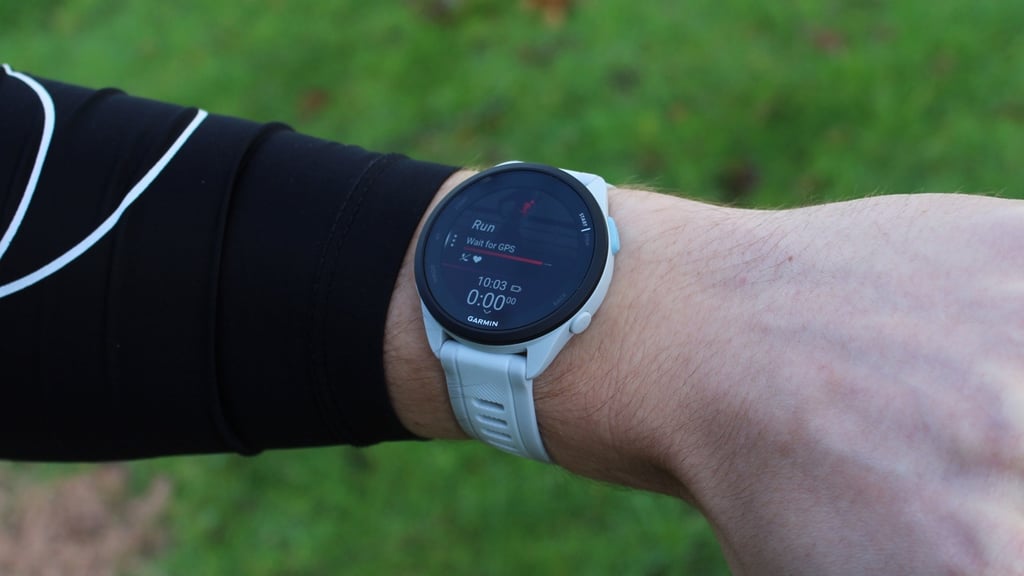
Forerunner 165 features and specs
- 1.2-inch AMOLED display
- 11 days smartwatch battery / 19 hours GPS
- Wrist-based Running Dynamics (cadence, stride length, etc.)
- Garmin Coach, Race Widget, and Daily Suggested Workouts
Forerunner 165 remains the gateway to the Garmin ecosystem for runners who want a modern display without the mid-range price tag of the brand’s mid-tier models.
While it’s slightly overdue for an update, it remains our top recommendation for beginners in 2026 thanks to Garmin’s tracking reliability. Plus, it’s incredibly lightweight, making it ideal for those transitioning from a basic fitness tracker or a smartphone app.
The 1.2-inch AMOLED screen offers the same punchy UI found on flagship models, making it far easier to read mid-interval than the aging Forerunner 55 (which we’ve featured below). It doesn’t skimp on essential metrics, either. You get wrist-based running dynamics and the excellent Race Widget, which adapts your daily suggested workouts based on an upcoming event in your calendar.
What you sacrifice for the price
To keep costs down, Garmin has omitted some power-user features. You won’t find the Multi-Band (dual-frequency) GPS here, which means GPS lock-on can be notably slower than on devices like Forerunner 970 or Coros Pace 4, and accuracy may dip slightly in dense environments like cities. It also lacks advanced recovery metrics, such as Training Readiness and Training Status.
Crucially, Garmin still sells this in two versions—one with music storage and one without—which feels increasingly dated in 2026. However, for the 90% of runners who just want accurate pace, distance, and heart rate data delivered through a colorful screen, the 165 is still the smart choice.
- Check out our full Garmin Forerunner 165 review
- Light and bright design
- HR and GPS
- Long-lasting battery
- Pricier than rivals at this range
- A separate edition for music
- Pretty slow GPS lock-on
Withings ScanWatch Nova
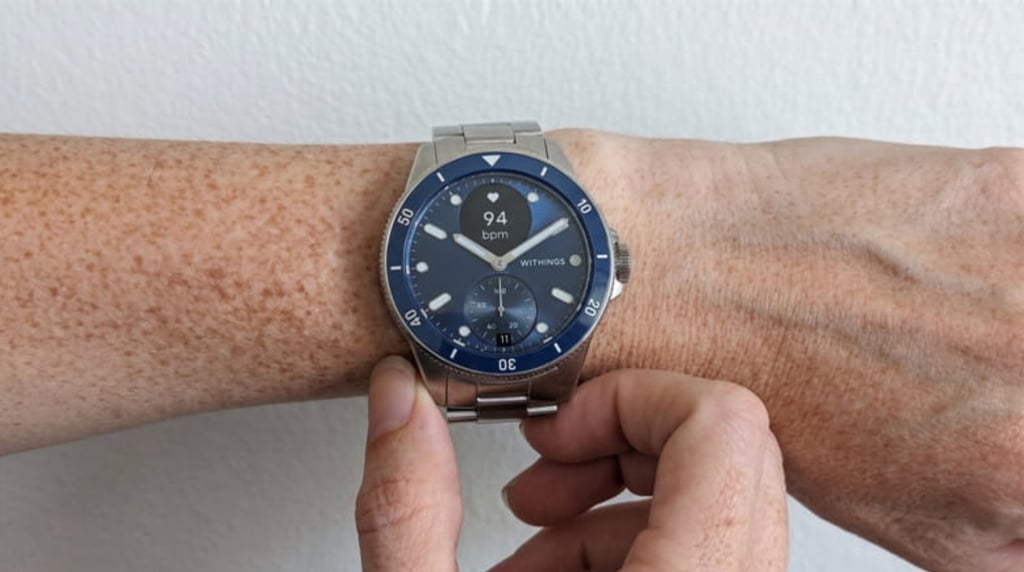
Withings ScanWatch Nova features and specs
- 0.63-inch grayscale OLED
- Up to 35 days of battery life
- No built-in GPS
- VO2 max, distance, pace, and elevation tracking
Instead of chasing ultra runners and marathon obsessives, Withings built a hybrid smartwatch for people who want traditional watch styling first and running features second.
It can track distance, HR, VO2 Max, and workouts, while Withings’ optional subscription adds AI-powered vitality insights and recovery metrics. Think of it as similar to Garmin’s Training Readiness. However, the app focuses more on holistic health than performance.
The standout feature is the battery. Without a traditional smartwatch screen, it uses less energy. ScanWatch Nova can last up to 35 days on a single charge. You can wear it for multiple runs without thinking about charging.
Best for casual runners, not serious training
It’s clear it’s not made for marathon or ultramarathon runners. There is no built-in GPS, so you’ll need your phone for accurate route and pace tracking. That’s a major limitation.
Heart rate accuracy can also be inconsistent during abrupt movements or workouts with lots of arm motion. Sometimes the sensor is slow to respond and may show readings that are too low during intense exercise.
Still, for 5k runners wanting a stylish watch that quietly collects health trends, Withings ScanWatch Nova is a great choice. Those wanting deeper performance analytics and more reliable training metrics should look for a different smartwatch on this list.
- Doesn’t look like a sports watch
- Battery life of up to 35 days
- Optional subscription adds AI-powered vitality insights
- No built-in GPS
- Not the best heart-rate accuracy during intense workouts
Coros Pace 4
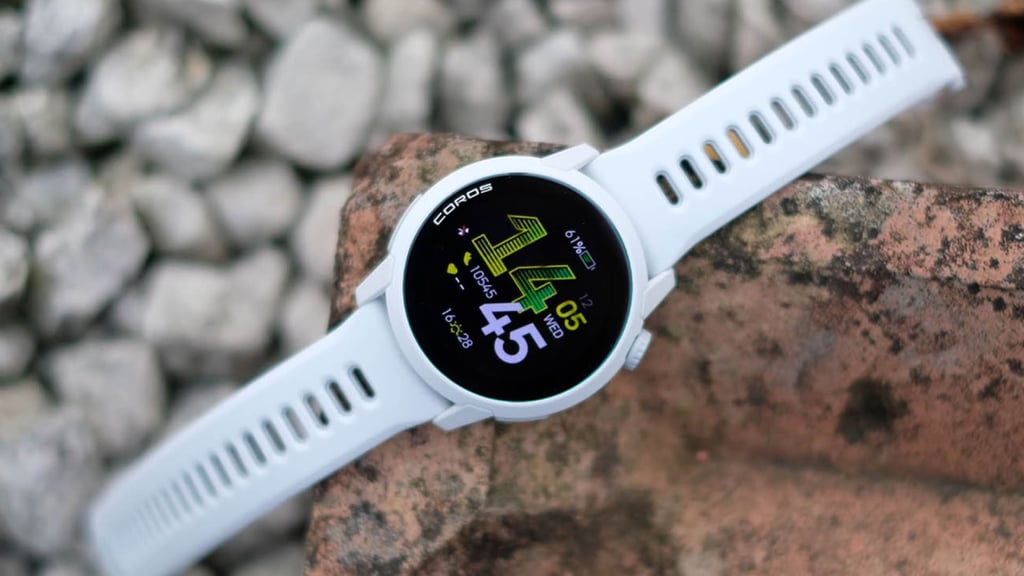
Coros Pace 4 features and specs
- 1.2-inch AMOLED display (390 x 390)
- 19 days smartwatch mode / 24 hours dual-frequency GPS
- Dual-frequency GPS; Wrist-based running dynamics, power, and training load
Coros Pace 4 continues the line’s legacy as our top recommendation for runners seeking unbeatable value. The headline upgrade is the one it was crying out for: a vibrant 1.2-inch AMOLED display. This finally puts it in direct competition with rivals like the Forerunner 165 (above), but it crucially retains its signature low price and monster battery life.
Pace 4’s biggest win over its rivals at this price is the inclusion of dual-frequency GPS. In our testing, its GPS performance was excellent, producing clean maps and accurate distance tracking. This is a feature you simply don’t get on other watches at this price—or, if you do, it generally doesn’t perform as well as this.
The heart rate tracking is also solid for general running, though, like with Pace 3, we found it still struggles with high-intensity intervals and gym work, putting it a small step behind its Garmin competitors.
Insights and battery life
Despite the new, power-hungry screen, the battery life remains phenomenal. We got almost 12 days of use (with 100km of running during that time), and the 23-hour dual-band GPS battery smashes Forerunner 165.
It’s also packed with advanced insights typically found on premium watches, including wrist-based running dynamics, running power, and training load. While the Coros app isn’t as polished as Garmin’s, the combination of an AMOLED screen, elite-level GPS, and massive battery life at this price is unmatched.
- Check out our full Coros Pace 4 review
- Light, petite, and comfortable
- Reliable dual-band GPS
- Superb AMOLED upgrade
- Long battery life
- HR still has accuracy hiccups
- Basic smart features (like music)
- No offline mapping
Garmin Forerunner 265
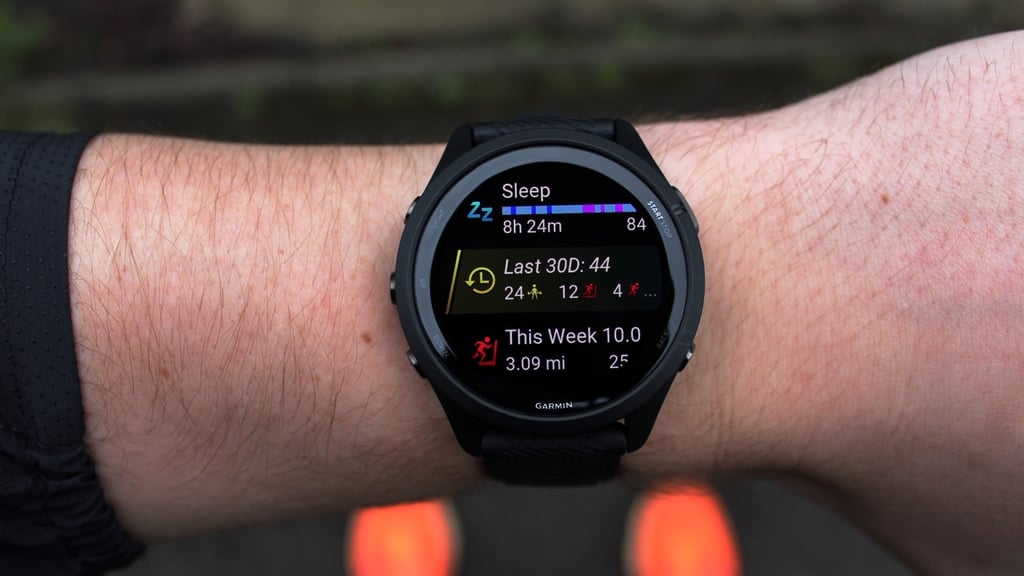
Forerunner 265 features and specs
- Available in 42mm or 46mm
- 4 days of typical, always-on battery life / 20-25 hours of GPS tracking
- Running features: Training Status, Running Dynamics, Garmin Coach, Suggested Workouts
Forerunner 265 is still one of the best running watches available, combining accurate tracking and superb insights into a neat design. Although it lacks essential upgrades and is only available at a significantly higher price, it ensures the 265 remains our pick for those looking for Garmin’s mid-range.
It’s also in this spot because the AMOLED display is both plenty good enough for most use cases and more power-efficient in daily use.
Battery life is worse, but you’ll still get around four days of heavy use with the always-on display turned on. We think the trade-off is worth it, especially since you can always tweak settings to extend battery life closer to a week.
A rounded tracking experience
The rest of the experience is typically brilliant. There are still two case sizes to choose between, Garmin’s excellent Multi-Band GPS is on board, and music streaming from the likes of Spotify is still an option.
On the run tracking front, Garmin’s Race Widget—something that helps you count down to your next big race—is available, with ‘Suggested Workouts’ and Garmin Coach plans also there to help you make it to the starting line in prime condition. Even wrist-based Running Dynamics, which delivers metrics like vertical oscillation and ground contact time, is on board.
If you want a running watch that provides more data, helpful training and analysis features, and a lightweight design, the 265 ticks the key boxes and more. And if you want to upgrade to a slightly more fun design that’s set to receive more significant software updates, the 165 is a superb running watch.
- Check out our full Garmin Forerunner 265 review
- Display and UI are hugely improved
- Battery life remains very good
- Great accuracy across the board
- AMOLED won't be for everyone
- Misses out on ECG hardware
Garmin Forerunner 970
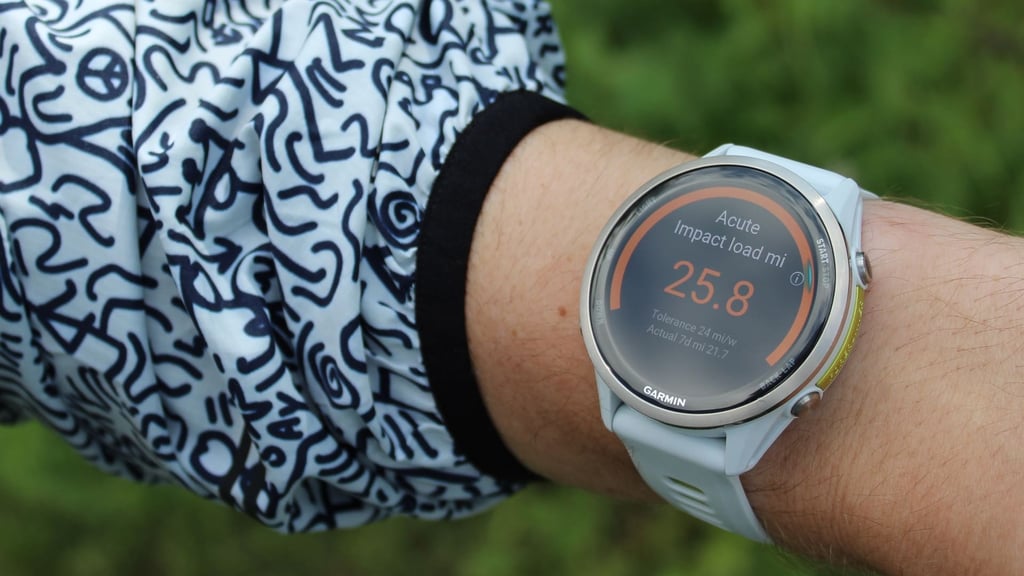
Forerunner 970 features and specs
- 1.4-inch AMOLED display
- Full-color touchscreen mapping
- 5 days of typical, always-on battery life / 25-30 hours of GPS battery life
If you’re looking for a running watch that combines gold-standard tracking accuracy and trend analysis features with a premium design, Forerunner 970 is a must-consider.
The improvements the brand has delivered for this 2025 generation make this the best premium option on the market.
The AMOLED panel’s brightness has been upgraded for this edition, which, although not entirely game-changing, is a convenient addition for those who prioritize outdoor features, such as using offline mapping. The screen’s durability has also seen much-needed improvements, now featuring a more scratch-resistant sapphire glass cover, while battery life (aside from smartwatch mode) remains steady.
The flagship Forerunner’s one key issue
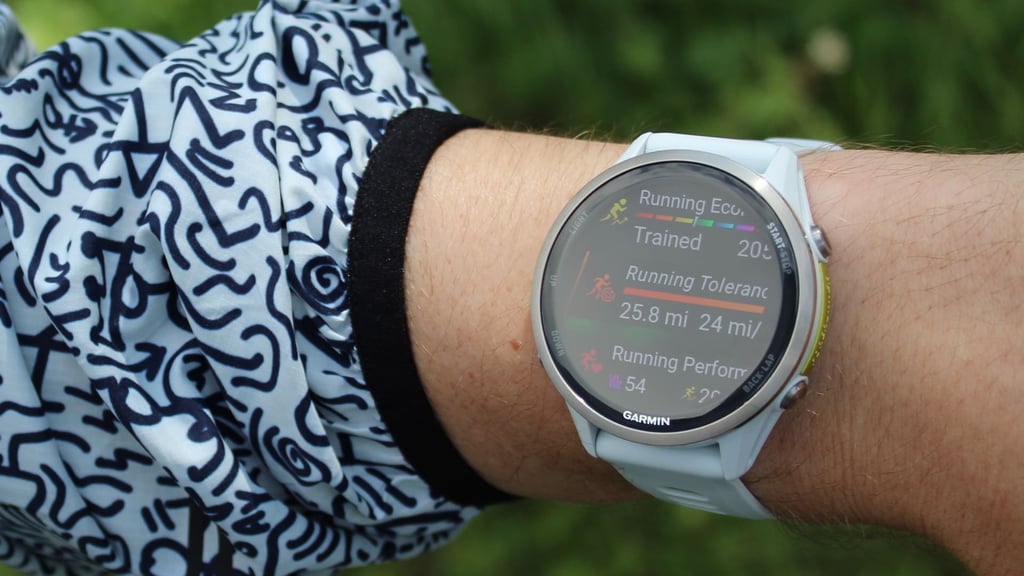
In testing, we also loved the built-in flashlight and some of the new software features (such as Running Tolerance, shown above). Others, like Step Speed Loss and Running Economy insights, require the additional help of a Garmin HRM 600 chest strap—and that brings us onto the key issue with the Forerunner 970: the price.
While there’s no better watch for managing training and race day, a price increase over the 965 generation (and the fact that you have to shell out for a new chest strap to access the latest insights) means the value has taken a considerable step back here.
- Check out our full Garmin Forerunner 970 review
- Improved display durability
- Unparalleled insights for runners
- GPS battery life gets a boost
- Flashlight
- Huge price increase from the previous generation
- Additional hardware is required to unlock its full potential
- Smartwatch battery life takes a hit
Garmin Forerunner 55
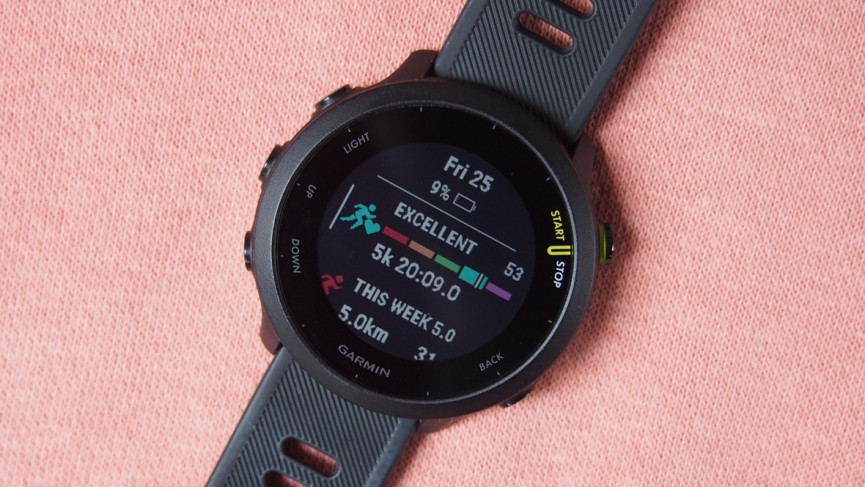
Forerunner 55 features and specs
- Two weeks of battery life in smartwatch mode (20 hours of GPS tracking)
- Tracks HR in running, swimming, and cycling workouts
- Adaptive training plans, PacePro, VO2 max, race predictor
The problem with Garmin running watches is that they’re often expensive. Take the new Forerunner 165 - it’s hardly the ‘entry-level’ it’s pitched as, which is why the older Forerunner 55 is a better budget choice for those wanting a Garmin.
Forerunner 55 boasts a low-profile, minimalist 42mm case design, delivering some of the more insightful training and analysis features usually reserved for pricier Garmin watches.
Front and center is a 1.04-inch, memory-in-pixel display, which offers decent visibility in all conditions and is kinder on battery life than an AMOLED display. It doesn’t look anywhere near as good, but it keeps the cost down and battery life up; we got 14 days in smartwatch mode and 20 hours of GPS battery life in testing.
Delivering essential features for runners
For runners, a key feature is PacePro, which helps maintain a grade-adjusted race pace via imported Courses. There are also VO2 max estimates, race-predictor data based on your fitness level, and Body Battery updates to help you monitor your energy levels. The 55 even supports Garmin Coach and suggested workouts, making it a more active participant in your training.
While the features are certainly good enough, a significant downside to be aware of is the heart rate sensor, which uses Garmin’s Gen 3 Elevate technology. In contrast, their modern devices are all on the more accurate Gen 5, so consider pairing this one with a chest strap to offset some of the inaccuracy.
- Check out our full Garmin Forerunner 55 review
- Small, light design
- PacePro and suggested workouts
- Full Connect IQ support
- Best HR accuracy with chest strap
- Low res screen
- Basic display
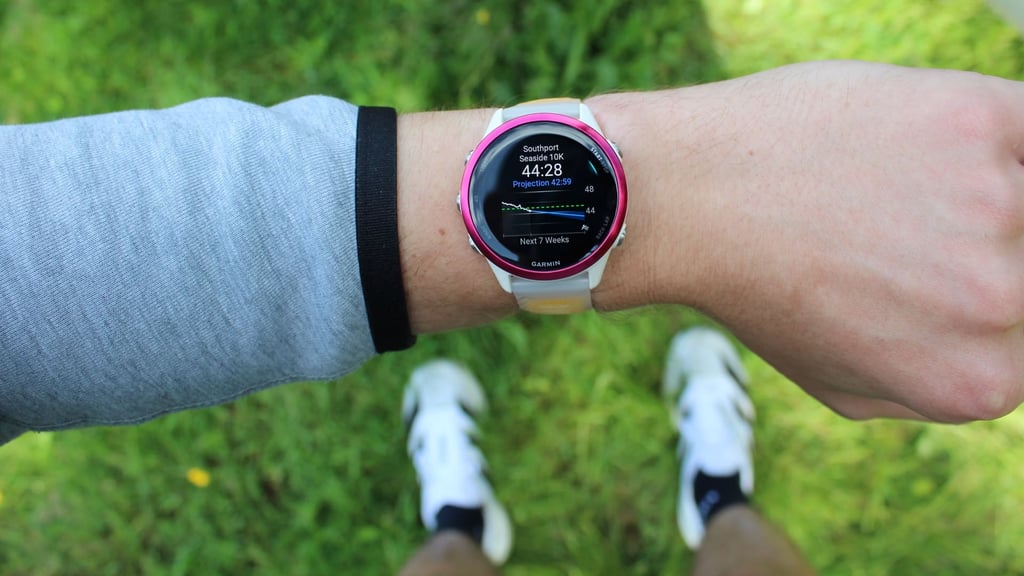
Buying a running watch can be overwhelming. Here’s what you absolutely need to consider to separate the marketing hype from the features that will actually help you run better.
GPS accuracy: Do you need dual-frequency?
This is the single most significant new feature in running watches. For years, all watches used single-band (L1) GPS, which worked perfectly well in open skies but struggled near tall buildings or under dense tree cover.
Dual-frequency, first arriving on watches around 2022, is now trickling down to even budget-friendly watches. However, it’s not a smoking gun; watches with support for dual-frequency GPS can still perform worse than some single-band devices.
Plus, skyscraper villages and dense woodland can still confuse even the best-performing dual-frequency devices on occasion—but it’s also the best technology we currently have in watches.
What is dual-frequency?
Found in watches like Garmin Forerunner 970 and Coros Pace 3, this essentially adds a more powerful signal (L5) to the existing L1. This allows it to filter out bounced signals, resulting in much cleaner, more accurate tracks and more responsive ‘current pace’ readings.
Who needs it and doesn’t?
If you run in a major city (like New York City, Chicago, or London) or on single-track trails in the mountains, dual-frequency will go some way to combating the inaccurate routing.
If you primarily run in suburbs or open countryside, a good single-band GPS is still perfectly accurate.
Heart rate accuracy: Wrist vs. strap vs. headphones
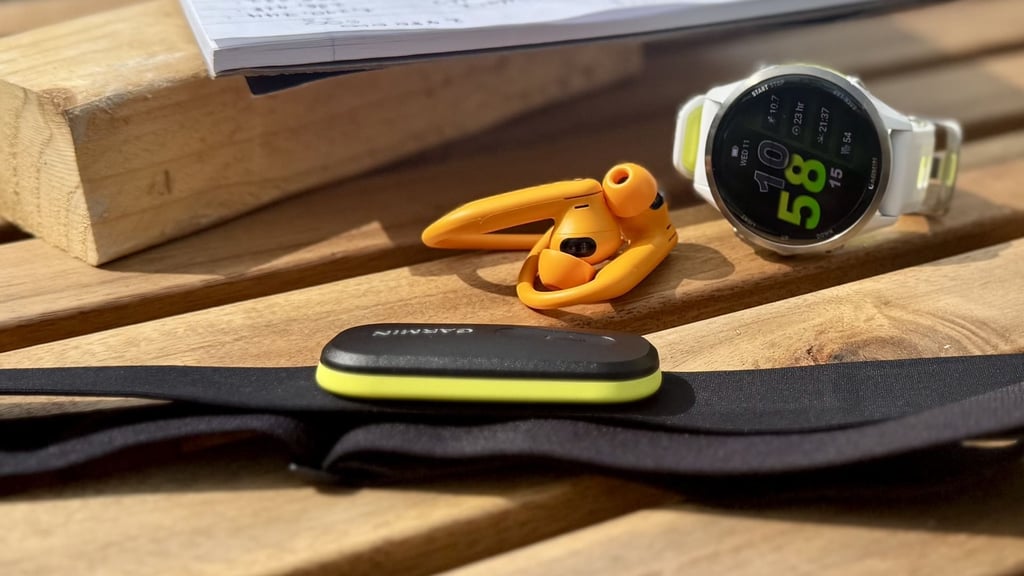
Wrist-based optical heart rate sensors have improved dramatically over the last decade. Garmin’s latest Elevate Gen 5 sensors are now excellent for steady-state runs. However, all wrist sensors can still fail during:
- Intervals: They can lag in detecting rapid spikes and drops in heart rate
- Cold weather: Reduced blood flow to the skin makes it hard to get a reading, while moisture on the skin interrupts the signal
- Gym/strength training: Clenching your fists and flexing muscles can throw off the sensor
- Dark skin and tattoos: This can affect accuracy by blocking or scattering the light produced by the optical sensor, thus affecting its ability to analyze blood flow
If you base your training on heart rate zones, a chest strap (like a Garmin HRM 600) is the gold standard for accuracy.
All watches on this list can connect to a chest strap via Bluetooth/ANT+.
Battery life: Smartwatch mode vs. GPS tracking
Don’t confuse a 10-day ‘smartwatch mode’ battery life with GPS-tracking battery life. The latter is the crucial number for runners.
- Smartwatches (Apple/Google/Samsung): Offer 7–12 hours of GPS tracking, which is more than enough for a 5k, 10k, or even a 5-hour marathon
- Dedicated running watches (Garmin/Coros): Offer 25–100+ hours of GPS tracking, which is essential if you’re an ultramarathoner or a hiker who needs tracking for 10+ hours a day
Smartwatch features: Music, payments, LTE, and satellite
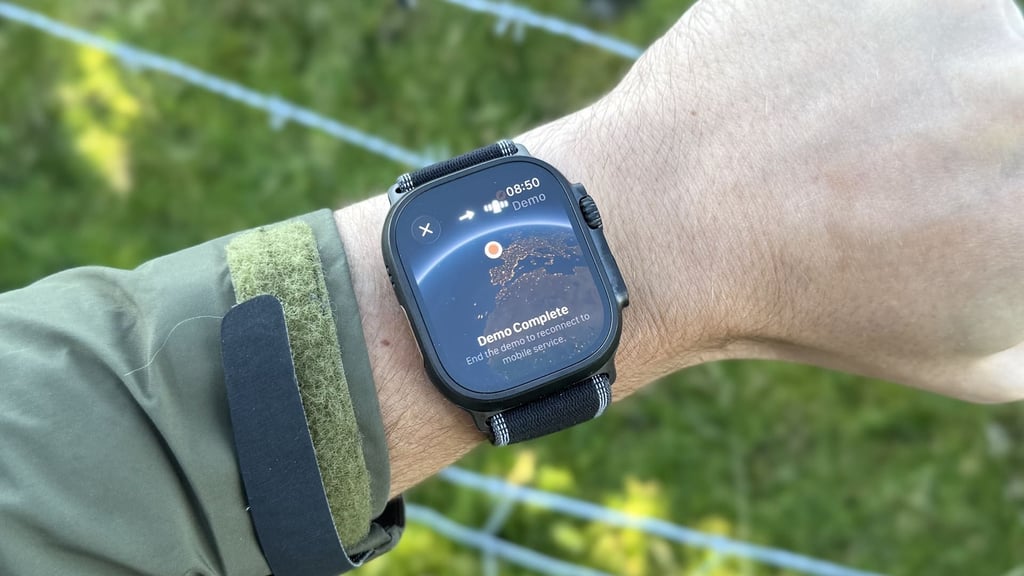
Do you want to run without your phone? This is where smartwatches can excel, broadening your device's usefulness for times when you're not working out.
Payments
Garmin Pay and Google Wallet both let you buy a post-run coffee or water. However, the usefulness of these systems can vary significantly by region. For example, in the UK, bank support for Garmin Pay is minimal, meaning Google’s platforms are far superior.
LTE and satellite features
An LTE or satellite-ready Wear OS watch doesn’t just let you stream music and podcasts on your run—they can also enable powerful safety tools.
It may allow you to make calls to emergency services even if you don’t have an active cellular plan, but sending SMS messages, updating your current location, or making calls very much depend on your subscription plan.
Training plans & recovery insights
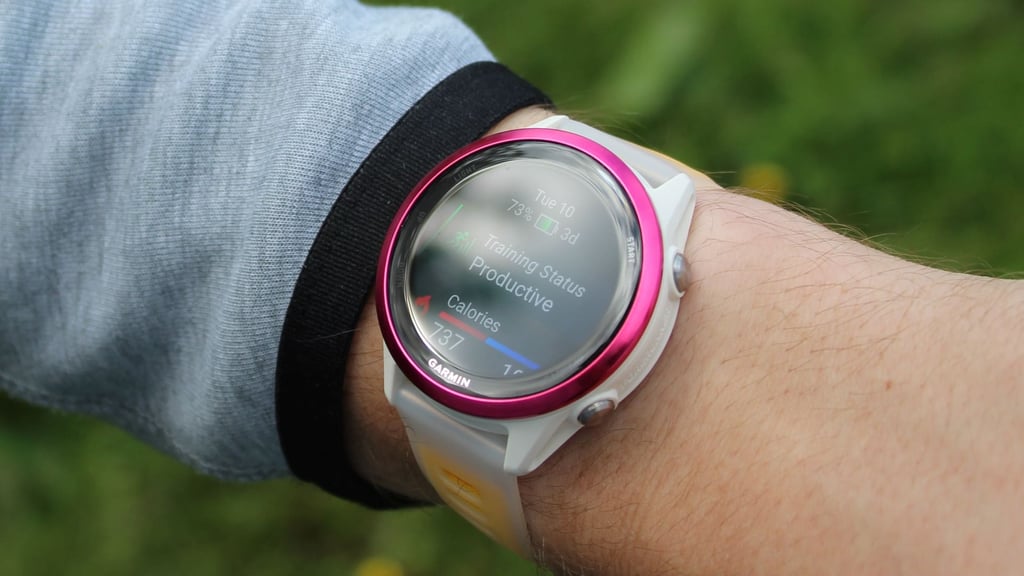
This is what separates a simple tracker from a coach. Most older or cheaper running watches will track your distance, pace, and heart rate. For some, that’s enough information.
However, there’s been a considerable trend towards more personalized, in-depth, training-focused analytics over the last half-decade.
Watches from Garmin and Coros may all analyze your overall training load and cross this with stress and sleep trends to give you insight into fitness life (are you productive or overreaching?), and a daily readiness assessment (should you train hard or rest today?).
This data—combined with goals and upcoming races you’ve locked in—may also be used to develop increasingly sophisticated training plans or daily workout suggestions. These tools may be helpful in peaking for a race. However, these trends will not replace the advice a physician can give you.