
The smart ring leader's new generation tackles its biggest flaw—and significant software upgrades land alongside
Oura has officially taken the wraps off the Oura Ring 5, claiming the crown for the world’s smallest smart ring.
The fifth-generation ring represents a design overhaul that shrinks the internal electrical, mechanical, and battery architectures by 40% compared to the Oura Ring 4.
However, despite the reduction in overall volume, Oura suggests the ring retains the previous generation’s week-long battery life and debuts a re-engineered sensor setup designed to improve biometric accuracy.
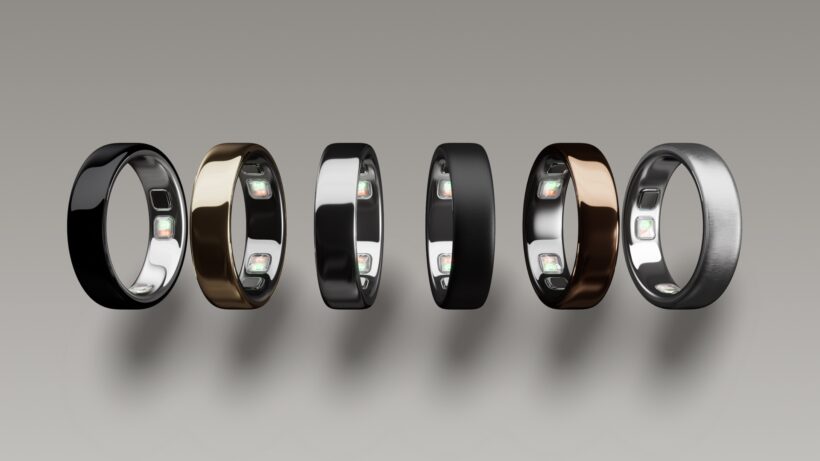
The Ring 5 is available for pre-order from $399/£399 for the base finishes (silver, black) and $499/£499 for the premium finishes (gold, matte black, brushed silver, and rose gold). Shipping begins on June 4th, with the device offered in sizes 6 to 13.
Slimmed-down hardware and an upgraded charging case
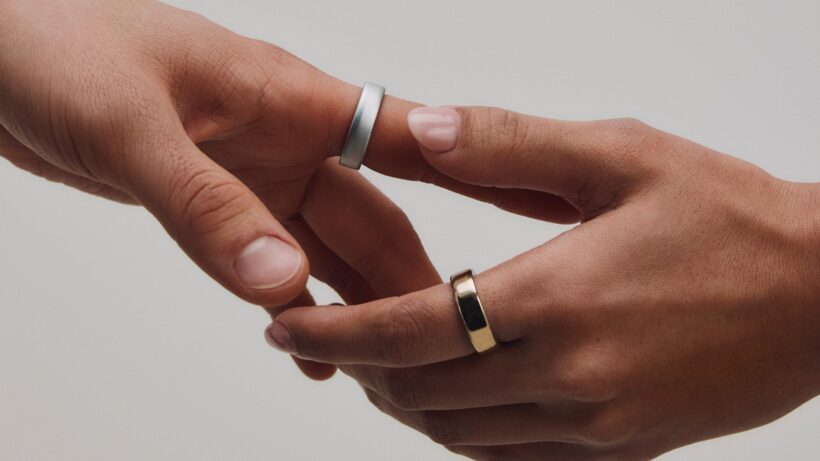
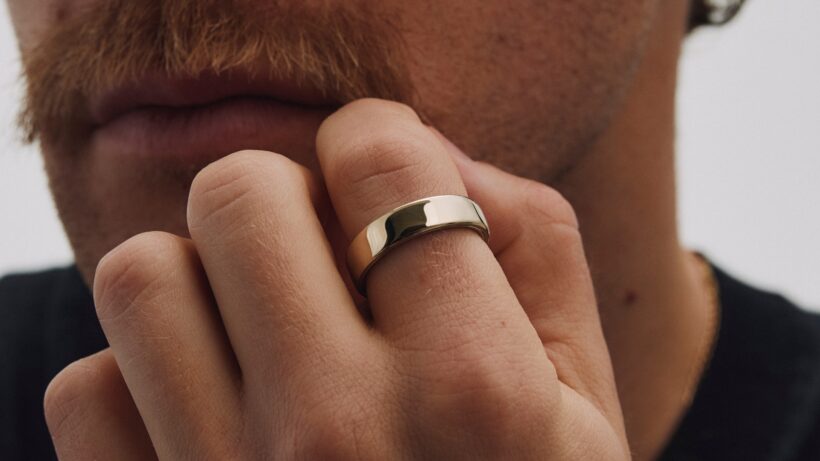
The exterior design change is the most notable and noticeable element here.
By slimming the ring down to just 6.09mm wide and 2.28mm thick—compared to the Ring 4’s 7.90mm width and 2.88mm thickness—the form factor should be significantly less intrusive.
The weight has also plummeted to 2-2.6g (depending on size), down from the Ring 4’s 3.3g starting point. The 12 signal pathways on the interior of the ring have been upgraded, as well, Oura says, to provide more precision across a wider spectrum of skin tones and finger types.
For durability, a physical vapor deposition (PVD) coating should also help resist everyday scratches, while the ring series retains its 100-meter waterproof rating.
On the power-up front, the Ring 5 arrives with a tweaked version of the Charging Case that debuted alongside the Ring 4 Ceramic Edition, which provides an extra month of power.
For this generation, Oura has added a physical action button to check the charging status and quickly pair the device in the app. It also features multi-ring software support, allowing users to pair and swap between multiple Oura rings on a single subscription account, and is available for $99/£99.
Live activity tracking gets a boost
As ever with Oura, it’s also tying the new hardware launch to some major software upgrades.
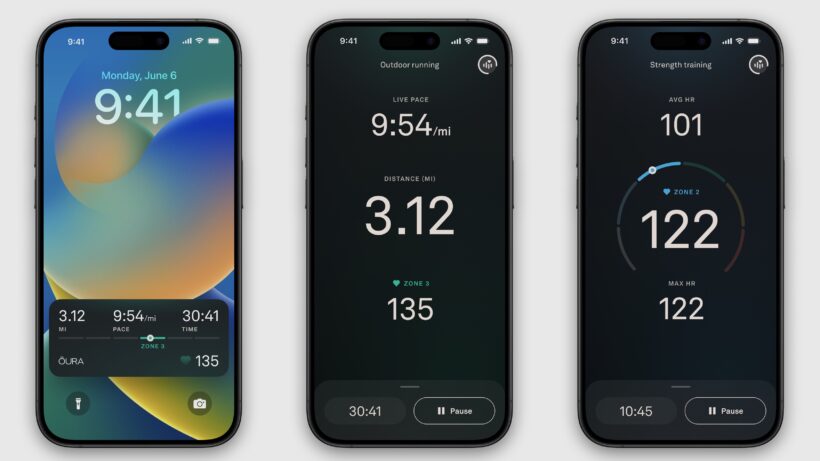
An all-new live activity-tracking experience now lets members start a workout directly in the app and monitor real-time pace and distance on their phone during core training sessions such as running, cycling, and lifting.
This includes handy lock screen widgets to keep metrics at a glance on the move, as well as the ability to connect third-party heart rate monitors such as the Apple AirPods Pro 3.
The brand also says that upgraded sensor pathway setup should have a positive effect on automatic activity detection—particularly for lower-movement workouts like yoga and pilates.
Expanding women’s health insights
The update brings a heavily expanded focus on women’s health under a unified software suite, too.
This includes the debut of Menopause Insights, which relies on Oura’s research-backed Menopause Impact Scale questionnaire to track how perimenopause explicitly disrupts daily activities, including cognition, sleep, physical functioning, and mood.
Alongside this, a new ‘Hormonal Birth Control’ feature furthers the existing Cycle Insights platform for women taking oral pills or with patches, implants, or IUDs.
This feature maps how different biometrics shift across hormone and hormone-free days, which should, in theory, allow users to better understand how their contraception interacts with their baseline data.
Rounding out the updated software suite is one we’ve seen roll out from other brands, such as Whoop, in the last year: a ‘Lab Uploads’ feature.
This one is pretty self-explanatory; it allows users to import clinical blood work results directly into the app to compare biomarkers side by side with daily ring data.
The Wareable take: Giving the people what they want
Though we’ll naturally reserve full judgment until our testing is complete, Oura’s announcement of the Ring 5 appears to be a formidable one.
Smart ring rivals have done a pretty good job of catching up to and surpassing the brand’s design (in thickness and width, at least) in the last couple of years, but this latest hardware update appears to address arguably the brand’s biggest weakness.
However, while that 40% size reduction is what the brand is (rightly) touting for this generation, it’s also still hard to actually get a true grasp of what that means in real terms.
We’ll be posting plenty of side-by-side size comparisons over the coming days with previous generations and rival rings to help with that.
Debates, we’re sure, will rumble on about the brand’s mandatory subscription fee and the overall price of the hardware, but Oura continues to provide a huge amount of value on the software front.