iRESTORE and Capillus are excellent hair growth products, but they are targeted for different audiences—here’s how to choose the most suitable fit for you
Hair loss is a tough topic: with so many underestimating its impact on one’s confidence, it is often brushed aside. Yet it affects millions, and once a new hair-loss product hits the market, the surge of interest shows that people take it seriously. Red light therapy, being one of these new approaches, has quickly gained traction as a non-invasive, at-home option—with brands competing to take the spotlight.
Among the growing competition, two brands keep coming up: iRESTORE, with its full-coverage helmets, and Capillus, offering sleek laser-only caps. After months of testing iRESTORE and Capillus, we're comparing price, design, technology, session time, results, and safety—so you can decide which approach actually fits your goals.
| Spec | iRESTORE | Capillus |
| Price range | $499–$1,799 | $1,189–$3,299 |
| Technology | Laser + LED | Laser-only |
| Session length | 12–25 min | 6 min |
| Coverage | Full scalp, including hairline and temples | Mainly crown/top scalp |
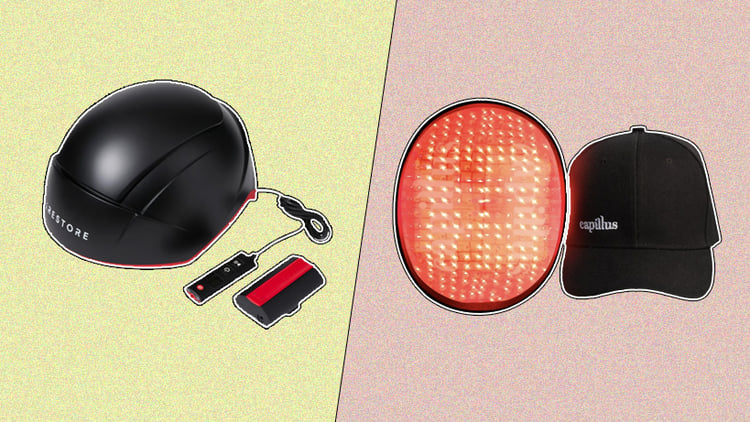
| Design | Full helmet | Baseball cap style |
| Best for | Value, broader scalp coverage | Convenience and shorter sessions |
| Official website | Visit iRESTORE | Visit Capillus |
Quick verdict: iRESTORE vs. Capillus
iRESTORE is the better value pick. It offers models at a lower price point, combines lasers and LEDs for potentially broader light coverage, and features a helmet design that covers more of the scalp. Capillus, on the other hand, wins on convenience. Its baseball cap design is far more portable, sessions take just six minutes a day, and it uses laser-only technology that some users prefer. But that convenience comes at a premium price that not everyone can justify.
Price and value
Let’s start with what matters a lot—cost.
Capillus is the more premium brand here, so its higher pricing wasn't a surprise. Their models range from $1,189 to $3,299.
If you're looking for a more affordable option, iRESTORE offers helmets starting at $499, with its flagship model costing $1,799.
After comparing both lineups, iRESTORE is the better fit if you want budget-friendly pricing and broad scalp coverage. But if short sessions and portability are your top priorities, Capillus could be more suitable for you. Its 6-minute daily session time is unmatched, and the baseball cap design gives you portability and discretion.
Capillus is a laser-only device, which increases the price; however, when it comes to efficacy, it is debated whether lasers work better than LEDs. For those who believe laser-only delivery has an advantage, Capillus may be more compelling. Other than that, iRESTORE would be our recommended pick.
Either way, both need months of consistent use, and paying more is not a shortcut.
Winner: iRESTORE
Design, comfort, and coverage
This is where the two brands diverge.
iRESTORE uses a full helmet design with a hard plastic exterior and a cushioned interior. It looks, frankly, like something out of a sci-fi movie—wearing one while out and about is out of the question.
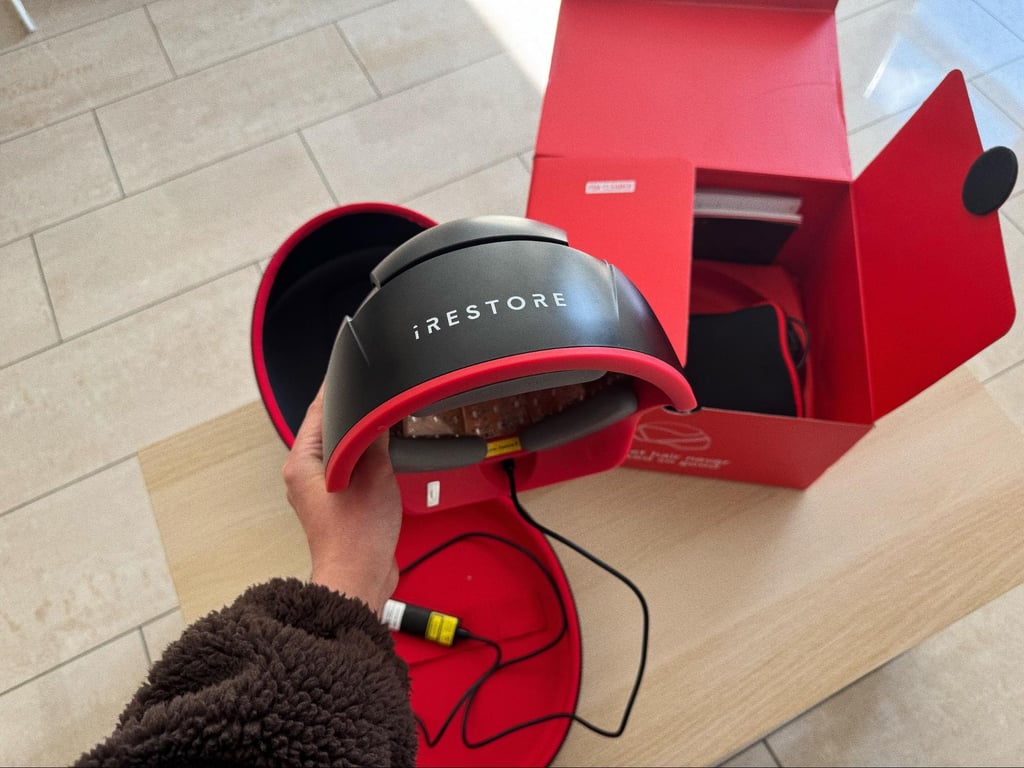
But the helmet shape serves a purpose. The Professional and Elite models feature extended side and back panels that cover the temples, hairline, and nape, not just the crown. For anyone experiencing thinning across multiple areas, that full-scalp coverage may be a real advantage.
All three iRESTORE models have ventilated interiors. Even so, expect a warm, mildly sweaty scalp during sessions—that's fairly standard with any RLT device.
Capillus takes the opposite approach. Its devices are designed as baseball-cap-style caps that look relatively normal. You could wear one outside; however, this is hardly an advantage—after all, the sessions take six minutes per day, and the RLT device is not intended to be an accessory anyway.
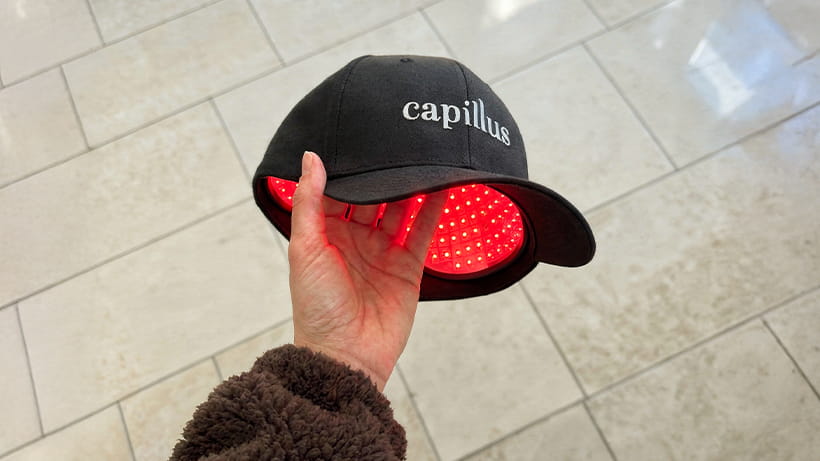
But the 6-minute sessions (compared to 12 to 25 minutes with iRESTORE, depending on the model) do make the Capillus cap more convenient and easier to integrate into one’s routine. And since consistency is crucial with RLT, consider if you can actually stick to longer iRESTORE sessions.
The trade-off? That cap design doesn't extend as far down the sides and back of the head as iRESTORE's helmet. If your thinning is concentrated around the crown, Capillus covers that well. But if you need broader coverage across the hairline and temples, iRESTORE's shape gives it an edge.
Winner: iRESTORE
Technology and effectiveness: Lasers vs. LEDs
Both brands use low-level laser therapy (LLLT), also known as photobiomodulation, to potentially support hair follicles. But the way they deliver that light is slightly different.
iRESTORE combines lasers and LEDs in all three helmet models. As per the brand, lasers may provide deeper spot support, while LEDs provide broader coverage, thus working together for potentially more even application across the scalp.
Capillus, on the other hand, uses laser diodes exclusively—no LEDs. Their argument is that medical-grade lasers deliver more consistent, clinically studied energy to the follicles. Some experts still prefer lasers, as the very first studies on LLLT were conducted using them, and some research papers suggest that they may perform better, but no conclusive answer has been given by the scientific community.
But one thing is important in the discussion regarding lasers versus LEDs. Lasers are usually more expensive to manufacture, meaning the Capillus price could be explained by their laser-only setup as well.
Since both light sources show benefits over placebo, iRESTORE's hybrid approach seemed more favorable for our team.
Winner: iRESTORE
Treatment time and ease of use
This is one of Capillus's strongest selling points. Every Capillus model requires just six minutes of daily use. That's it. The device auto-shuts off after the session, so you put it on, press a button, and you're done.
iRESTORE sessions are longer. The Elite requires 12 minutes daily, while the Professional and Essential need 25 minutes every other day. The Elite's shorter session time is one of the reasons it commands a higher price—but even 12 minutes is double what Capillus asks of you.
Both brands offer app integration, letting you track your progress via photos and set reminders. In our testing, this was greatly appreciated, since it can help you stay consistent—and consistency is what may matter for red light therapy.
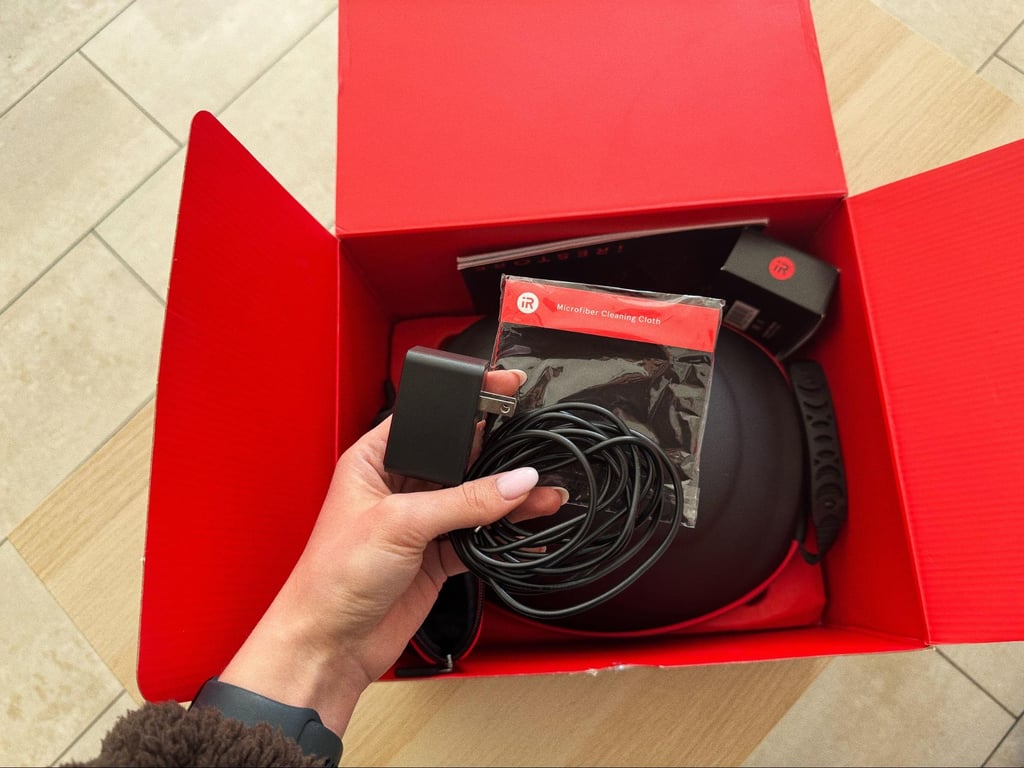
The setup for both is straightforward. iRESTORE ships with a helmet, controller, power adapter, user manual, and carry case (the wireless battery is extra). Capillus caps come with an integrated rechargeable battery, making the unboxing-to-first-session process about as simple as it gets.
To sum up, our winner was determined solely by session time: even the busiest bees can find six minutes in their schedule.
Winner: Capillus
Results and user experience
Let’s start with the bad news: don't expect a miracle from either device. Hair regrowth with red light therapy is an incredibly slow process. Most brands, including both iRESTORE and Capillus, suggest that the first noticeable changes may appear after 3–6 months of consistent use, with optimal results emerging over a year or more.
Our team tested the iRESTORE helmet for about four months. During the first month, one of the testers experienced the dreaded shedding phase—where weak hairs fall out as follicles cycle from the resting phase back into active growth. After powering through that period, however, they noticed stronger-feeling hair and a generally healthier-looking scalp.
For Capillus, our testers had similar experiences, though no one reported shedding. This does not mean that shedding won’t happen with Capillus at all, as this varies from person to person. From the benefits, our testers noted reduced hair shedding. However, the changes were described as minimal at best—but none of the testers used the cap for longer than several months.
Online reviews for both brands paint a similar picture. Many users report visible improvements in hair density and thickness after several months of daily use. But a vocal portion of users mentions seeing no meaningful change months after starting red light therapy for hair loss.
Why the inconsistency? It may come down to the cause of hair loss. According to research, red light therapy may be effective for androgenetic alopecia—hereditary or hormonal hair thinning—although studies also support its use for other causes. In some cases, however, red light therapy is just not effective, no matter which device is used. Besides that, even with the studied conditions, the effects may vary, as not all respond to red light therapy.
For this reason, we recommend talking to a trichologist first. Not only may it save a lot of money if red light therapy is not a suitable choice for you, but it will also prepare an actionable plan that includes other tools—after all, red light therapy works best as an adjunct to other measures.
Winner: Draw
Safety and side effects
Both iRESTORE and Capillus are considered to be generally safe. Red and near-infrared light doesn't carry the energy of UV rays, so there's no risk of skin damage associated with sun exposure.
That said, red light therapy may also cause side effects. Some people may experience mild scalp irritation. This usually happens only as you are getting used to the therapy, so if it persists, consulting a dermatologist is warranted.
As you adjust, hair shedding may also happen. Hair cycles through phases, namely anagen (active growth), catagen (regression), telogen (resting), and exogen (shedding), and red light therapy may accelerate the transition from the resting phase into active growth, which can temporarily increase shedding.
Again, this might be normal, but if you are experiencing a concerning increase in shedding, discuss it with your healthcare provider.
Both iRESTORE and Capillus are FDA-cleared. In the US, this is one of the main safety marks for at-home red light therapy devices. This means both products underwent FDA review to confirm they are "substantially equivalent" to existing market devices—sharing similar intended use and technology, with no new safety concerns identified.
A simple yet effective feature we noted in our tests was the autoshutdown function, which prevents overexposure—a beneficial safety measure for those who tend to lose track of time.
All things considered, we think iRESTORE and Capillus are equal in terms of safety and side effects. For both devices, follow the instructions closely, as any deviation may increase the risk of having side effects.
Winner: Draw
iRESTORE vs. Capillus verdict—which is right for you?
Both devices are close to each other, and we had to declare a tie on many of the aspects mentioned above. However, due to the price difference, our team favors iRESTORE, but this does not mean Capillus does not have its place.
- Choose Capillus if: convenience and portability are on your priority list. The 6-minute daily sessions are genuinely unmatched, and the baseball cap design is discreet and portable. But you'll pay significantly more for that convenience, and the cap's coverage area is more limited than iRESTORE's helmet.
- Choose iRESTORE if: you want the best value, the broadest scalp coverage, and you don't mind wearing a helmet at home for 12–25 minutes. The Professional model at $899 is a strong pick—it offers extended coverage and is lightweight enough for 25-minute sessions required every other day.
Whichever you choose, remember that LLLT is not a standalone cure for hair loss. It works best as part of a broader approach—ideally one guided by a healthcare provider who can identify the underlying cause of your thinning and recommend a comprehensive plan.
-
Skin Appendage Disorders.
-
PLOS One
-
Journal of Clinical Medicine.
-
Journal of Cutaneous and Aesthetic Surgery.
-
The Journal Of Clinical And Aesthetic Dermatology
-
Lasers in Surgery and Medicine