Best light therapy lamps for SAD: Find the right fit for you

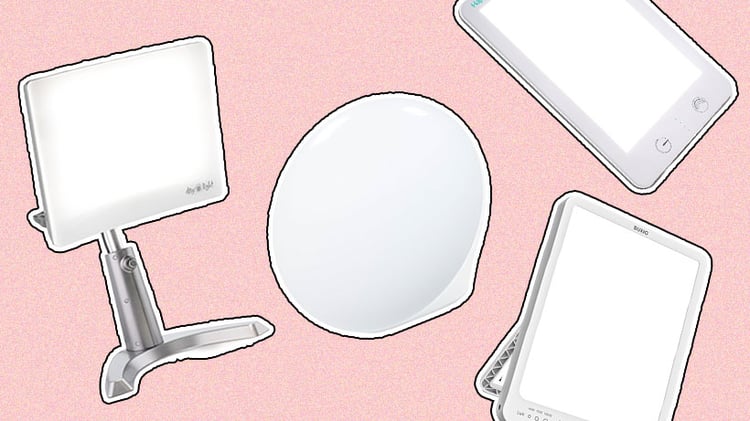
We’ve explored the most popular light therapy lamps for seasonal affective disorder—here’s our take on the technology and top devices ranked
Experiencing low energy, feeling unmotivated, and overall in a bad mood can be caused by many factors: from poor nutrition to medical issues. So before we dive in, we want to emphasize that it’s best to first talk with your healthcare provider about your symptoms and follow their professional advice on treatment.
If your symptoms are related to seasonal affective disorder (SAD) and you’re wanting additional support combined with prescribed treatment, the best SAD light therapy lamps might intrigue you.
SAD is most common during fall and winter months, and recurrence is notably frequent, meaning taking steps early on to manage symptoms could help prevent them from getting worse over time. Currently, light therapy lamps are among the most researched non-drug interventions for SAD at home. Since we, like you the first time, found the products confusing and just couldn’t understand their differences, we decided to explore their potential benefits ourselves.
In this article, we present you with the best light therapy lamps for SAD, focusing on devices that are practical, easy to set up, durable, and affordable.
Our quick picks: Best light therapy lamps for SAD
- Verilux HappyLight® Lucent: Best for simplicity seekers
- Verilux HappyLight® Lumi Plus: Best for portability
- Carex Day-Light Classic Plus Light Therapy Lamp: Best for convenient setup
- SUXIO Light Therapy Lamp: Best for budget-conscious buyers
- LASTAR Sun Lamp, 10000LUX Sunlight Lamp: Best for session personalization
How we evaluated light therapy lamps for SAD
Our evaluation spanned three weeks with each best lamp for seasonal affective disorder used regularly—comparably a short time, but long enough to assess real-world performance.
We started with research, trying to understand the science behind light therapy and what features actually matter. Then came hands-on work—unpacking each SAD lamp, documenting specs, and noting first impressions on brightness, adjustability, portability, build quality, and setup ease.
Finally, we kept daily logs throughout use: comfort levels, whether the light felt overwhelming or soothing, and how each lamp fit into our morning routines. This practical experience, combined with research, shaped our recommendations for the best light therapy lamps for SAD.
What is SAD and how may light therapy lamps help?
Simply put, seasonal affective disorder is a type of depression that affects roughly 5% of people, mostly during fall and winter months. Its primary trigger is daylight decrease—light exposure plays an important role in maintaining circadian rhythm mechanisms that help to keep your sleep, mood, and hormones balanced.
Here’s what scientists think may be happening: reduced daylight can alter circadian rhythms, lowering serotonin levels, and possibly overproducing melatonin (sleep hormone). This may leave you unmotivated and contribute to seasonal depression, even though nothing in your life might have actually changed.
What symptoms to look out for?
Typically, SAD symptoms start in late fall and fade once sunnier days arrive with spring. Less commonly, some people experience the opposite—SAD during summer months, though that’s just around 0.5% of people.
Either way, symptoms build gradually and can be easy to dismiss early on. Symptoms may include:
- Mood shifts. The drop in serotonin is associated with depression. You might feel persistent sadness and hopelessness, although life circumstances sometimes don’t justify it.
- Fatigue. SAD is associated with profound tiredness, so much so that even simple daily tasks may feel draining.
- Sleeping too much. You may want to sleep longer than usual, and feel sluggish for the rest of the day..
If you feel like these apply to your current situation—reach out to a medical professional for an actual diagnosis before trying any at-home treatments.
How does bright-light therapy work?
Bright-light therapy—typically at 10000 lux exposure—is essentially thought to help reset your circadian rhythm. When you sit in front of a light therapy lamp in the morning, it mimics outdoor light, and signals your brain to gradually shift back into its usual rhythm. This might help support your sleep-wake cycle and trigger changes in the brain that ease SAD symptoms.
We found many studies throughout the last few decades consistently suggesting bright-light therapy as being mildly to moderately effective in alleviating SAD symptoms for many people during darker months of the year.
That said, sometimes, the best lamps for seasonal affective disorder are just supportive tools, not a cure on their own. Talk to your doctor first and don’t use the lamp as a replacement for professional guidance.
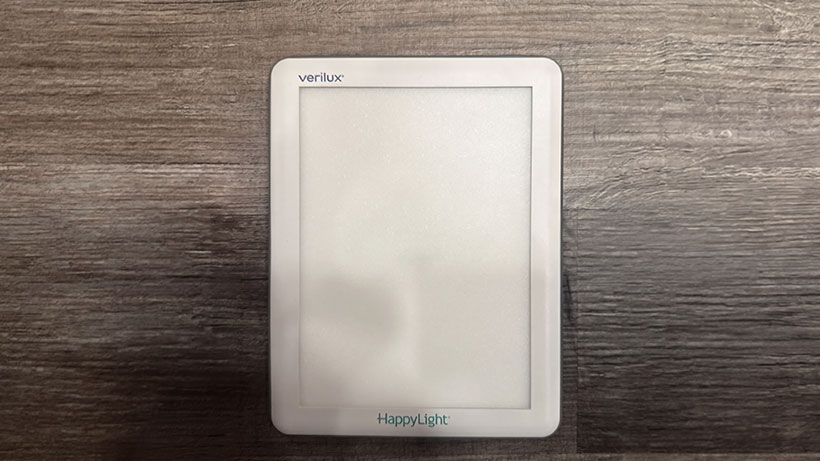
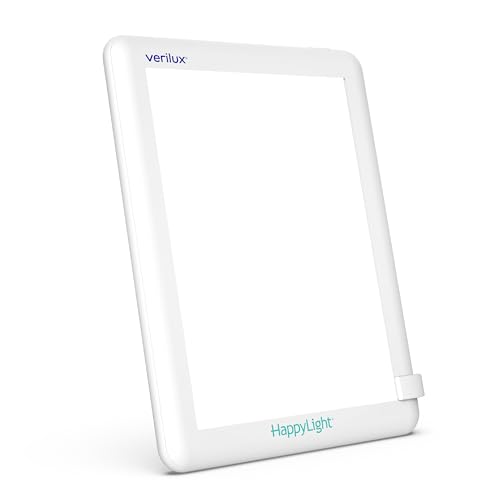
Verilux HappyLight® Lucent
Best for hassle-free use
- Size: 8.6 x 0.8 x 6.6in
- Weight: 1.2lbs
- Lux: Up to 10000 lux at 6in
- Session time: 15–30 minutes
If you’re looking for a no-fuss entry light therapy device, we believe Verilux HappyLight® Lucent is the most deserving of consideration. It’s super easy to use—just press the single button and your 15–30 minute session starts.
We love how compact it is. If you’re running late, you can just toss it in your bag and use it at your work desk while replying to emails. The bidirectional stand lets you position it vertically or horizontally, and you can even wall-mount it using the keyhole slot on the back.
That said, the catch is the distance. Getting that full 10000 lux means keeping the Lucent lamp just six inches from your face. That’s quite closer than it looks in promotional photos, and you’ll definitely notice it. If you sit at arm’s length, you’re getting significantly less brightness, which means longer sessions and potentially reduced benefits.
The plastic build bothered us as well, but considering its price, simplicity, and portability, Verilux HappyLight® Lucent is a great pick.
- Compact and travel-friendly
- Simple operation
- Wall-mountable with bidirectional stand
- Affordable price tag
- Requires close proximity for full brightness
- Made of plastic
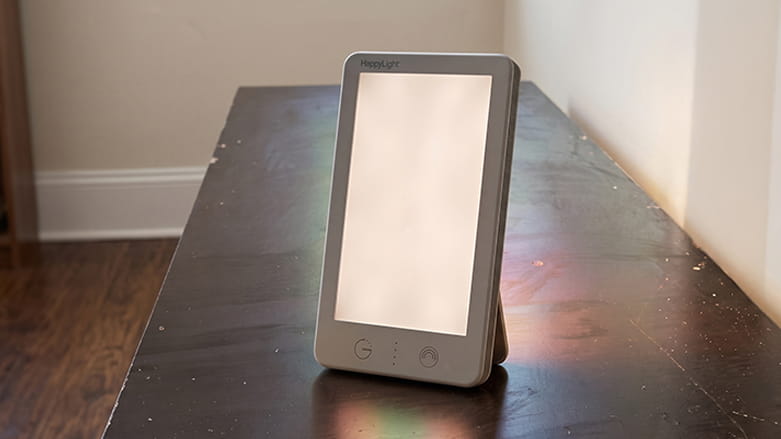
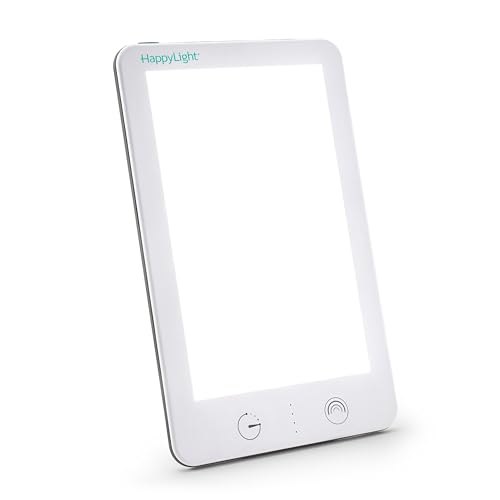
Verilux HappyLight® Lumi Plus
Best for session flexibility
- Size: 5.6 x 0.9 x 9.0in
- Weight: 1.3lbs
- Lux: Up to 10000 lux at 6in
- Session time: 15-minute increments, programmable up to 1 hour
Verilux HappyLight® Lumi Plus looks similar to the Lucent model at first glance, but adds meaningful customizations that give you more control over your sessions. You get three brightness levels and a countdown timer adjustable in 15-minute increments up to a full hour.
Where this lamp really earned our awe is the wall mounting. If you’ve got a morning skincare or makeup routine, mounting the Lumi Plus near your mirror lets you hit two birds with one stone.
Of course, the Lumi Plus model shares the same fundamental limitation as other compact HyppyLights products—you need to stay about 6 inches from the light to get the full 10000 lux. The further back you’re sitting, the less brightness reaches your face, and since you can adjust brightness, the amount of light you get is even less.
The build quality is another tension point. The slim plastic design keeps it lightweight for easy portability, but the detachable stand feels kind of flimsy. We’d be cautious not to wall-mount the lamp anywhere where it could fall onto hard flooring.
- Adjustable brightness and countdown timer
- Wall-mountable for hands-free use
- Travel-friendly design
- Requires close proximity
- Stand feels unstable
- Slightly dimmer than comparable models
Carex Day-Light Classic Plus Light Therapy Lamp
Best for large area, convenient use
- Size: 12.00 x 15.75 x 31.12in
- Weight: 9.35lbs
- Lux: Up to 10000 lux at 12–14in
- Session time: 20–30 minutes
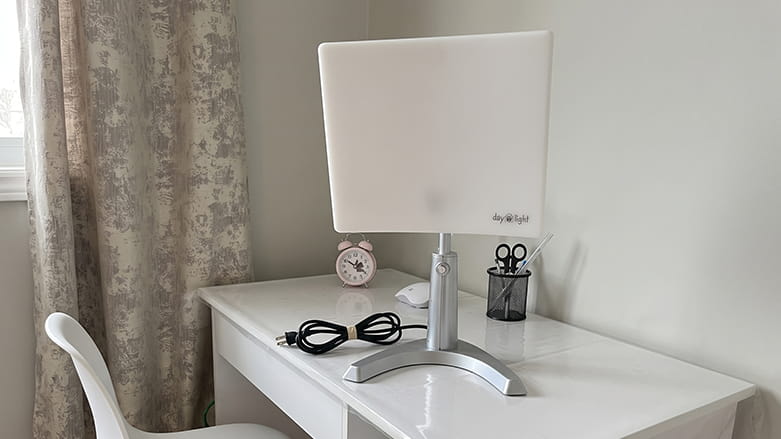
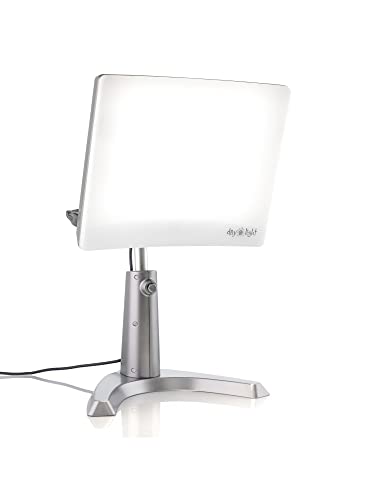
In our opinion, the Carex Day-Light Classic Plus lamp is the best light therapy for seasonal affective disorder you can use at home. If your mornings aren’t a mad dash out the door, you should give it some serious thought.
With a large screen, 10000 lux at a comfortable distance, and downward-projecting light, it meets the commonly recommended specifications, and it has been tested at universities like Yale.
One of the biggest advantages we found is freedom of movement. Unlike compact lamps that require you to stay inches away, Classic Plus extends that to 12–14 inches. You can read, sip your coffee, or do light tasks without feeling stuck in one position. The lamp’s angle and height can also be adjusted to hit your eye in a more comfortable way.
That said, the lamp is truly huge and heavy—it takes a large portion of desk space and moving it around is difficult. We have concerns about its durability as well: some online complaints mention cracked plastic parts and wobbly construction. We ourselves didn’t notice any product damage, but the large tilting display does feel precarious.
- Large screen allows comfortable distance
- Easy to assemble
- Adjustable height and angle
- Build quality is questionable
- Comparably high price point
- Takes a lot of space
SUXIO Light Therapy Lamp
Best on a budget
- Size: 5.11 x 6.8 x 0.5 in
- Weight: 0.68lbs
- Lux: 4000 lux/7000 lux/10000 lux (distance unspecified)
- Session time: 30–90 minutes
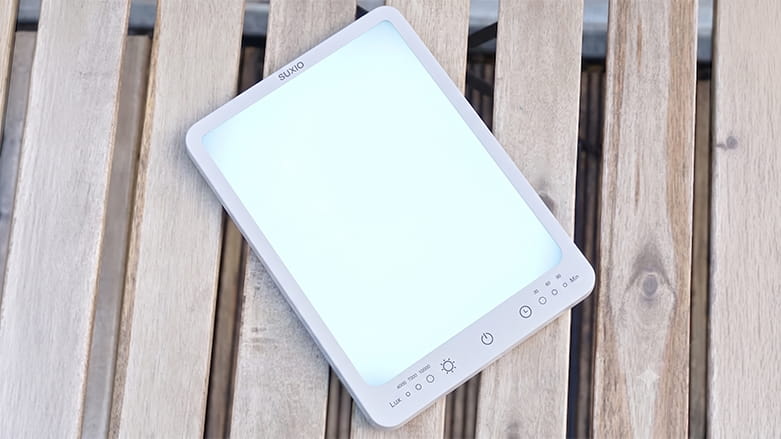
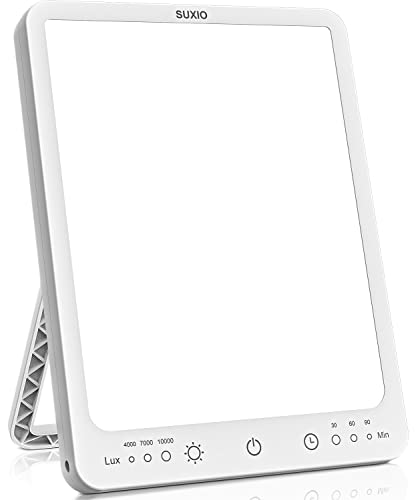
You’re on the fence about whether light therapy might actually help you? Then we recommend checking out a low-risk SUXIO Light Therapy Lamp. It’s one of the most affordable options in 2026, USB-powered, and surprisingly feature-rich—though it comes with some problems worth knowing.
Let’s start with what we loved—the wake-up function. You can set the lamp to turn on automatically in six, seven, or eight hours, gradually waking you with light instead of a noisy alarm. That said, this won’t suit everyone. Some of our testers tried it once and went straight back to their phone alarms, finding the light-based wake-up more startling than soothing.
The device itself is simple: lightweight plastic, 100 LEDs, and touch controls for three brightness levels (4000/7000/10000 lux) plus three timer settings (30/60/90 minutes).
There’s a catch, though—SUXIO doesn’t specify at what distance you actually achieve 10000 lux. This is a critical issue. We used the lamp about six inches from the face to get a sense of its operation, but truthfully, we have no way of knowing if that delivers the claimed brightness.
We also noticed the lamp gets quite hot even during 30-minute sessions, and the fixed stand angle makes it tricky to position the light properly without it shining directly into your eyes. Still, these are typical drawbacks at this price range.
- Budget-friendly
- Unique wake-up timer feature
- Adjustable brightness and session timer
- Lux distance isn’t specified
- Build quality feels cheap
- Inconvenient to angle and control position
LASTAR Sun Lamp, 10000LUX Sunlight Lamp
Best for personalization
- Size: 4.7 x 5.3 x 2.0in
- Weight: 1.14lbs
- Lux: Up to 10000 lux at 3.9in
- Session time: 15–60 minutes (Up to 2 hours)
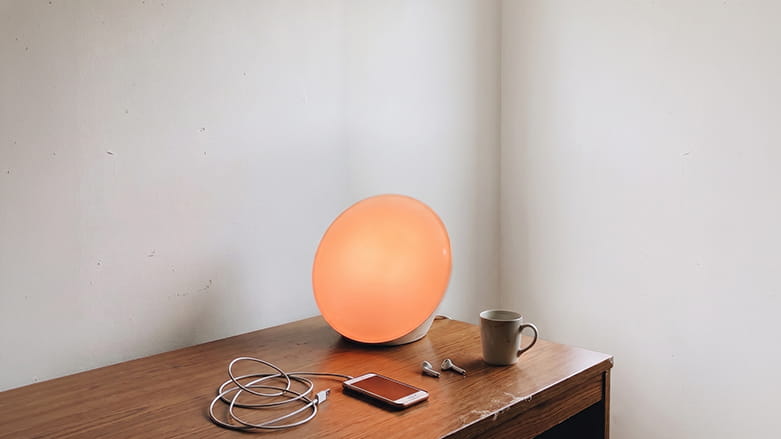
LASTAR Sun Lamp is the last light therapy device on our list, and it’s a unique one. If aesthetics, session customization, and extended exposure are your thing—this lamp might be your match.
The device is comparatively small and lightweight, so it doesn’t take much space. We found it works best on a living room table for longer, more relaxed sessions. Why longer? Well, the lamp demands ridiculously close proximity to the face to deliver a full 10000 lux. A more realistic approach is to position it further away, accept the reduced lux, and simply extend your session time to compensate.
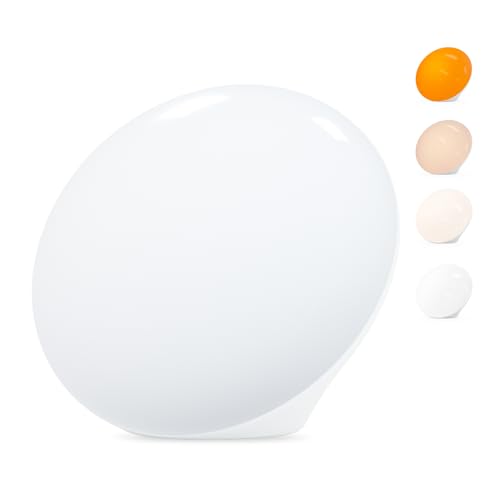
Beyond that limitation, the lamp offers a lot of flexibility. A few gentle taps on the back panel cycle through five brightness levels (5%, 25%, 50%, 75%, and 100%) and four color temperatures (warm white, soft white, neutral white, and cool white) to suit your preference. There are also four timer presets ranging from 15 to 60 minutes, and the memory function saves your last settings.
On the downside, that 3.9-inch distance requirement is a real drawback—it essentially means you’ll need longer sessions at reduced intensity to get any potentially meaningful results. The modern, rounded design won’t appeal to everyone either, and despite its looks, the build is still plastic. That said, the approachable entry point makes it worth considering.
- Extended session personalization
- Unique and modern design
- Simple touch controls with memory function
- 10000 lux requires impractical distance
- Longer sessions are needed
- Plastic construction
What lux level do you need for SAD?
Lux is how scientists measure how much light reaches where you're sitting. If that sounds confusing—you’re not alone.
A typical office light has about 500 lux, while a bright day outside hits 30000–100000 lux. For SAD, the standard is 10000 lux at a specific distance from your face. This exposure emerged from decades of clinical research suggesting its benefits, though lower intensities might help too.
You see, the brightness you actually receive depends on how far you sit from the lamp. So, different brands may specify the distance needed for the best lux level, like six inches away with Verilux lamps and 12–14 inches with a Carex lamp. Though, typical safety recommendations include using the light box around 16–24 inches from your face.
Before buying, check such specifications. Many lamps advertise “10000 lux” without stating the required distance. Commercially available SAD devices vary widely in actual light delivery, so be careful.
Also, lamp size is another important factor to look into. Bigger light surfaces distribute brightness more evenly, meaning you don’t need to sit uncomfortably close, shifting your position won’t disrupt a session, and the light reaches more of your eye.
How to use a SAD lamp correctly
You can usually find a user manual with your light therapy lamp for SAD. We encourage you to read it and follow the instructions. That said, there are practical rules worth understanding before you buy, so you can tell whether a device actually matches your lifestyle.
- Timing. Use your light therapy lamp as early as possible after waking up, ideally within the first hour. Research shows that sessions before 8am are the most optimal.
- Consistency. Skipping sessions or stopping early might diminish potential results. Commit 20–30 minutes every single morning for at least several weeks.
- Lamp’s angle. Position the lamp at eye level or slightly above, tilted downward. Keep your eyes open, but do not look directly at the light.
- Distance. Check your specific device’s distance specs for 10000 lux delivery and sit comfortably at that range. Try to stay still during the session—shifting may reduce light intensity.
How to choose the best SAD lamp
Before investing in the best SAD light therapy lamp, it might be helpful to understand what actually matters and what’s just marketing. We compiled a guide for you to keep in mind.
Lux output
This is probably the single most important specification you should check before buying. As we discussed earlier, 10000 lux is thought to be the most beneficial for SAD support, with daily morning sessions of around 20–30 minutes.
There's generally a tradeoff between light intensity and exposure time: brighter light usually requires shorter sessions—for example, 30 minutes at 10000 lux versus about an hour at 5000 lux or two hours at 2500 lux.
Many budget light therapy lamps advertise 10000 lux at impractical distances or don’t specify the distance at all. Be aware of this: while they may technically deliver 10000 lux, your sessions could become so uncomfortable that you stop using the lamp altogether.
Adjustable brightness
Piggybacking off that, some lamps offer multiple brightness settings—and this feature is worth exploring. It lets you ease into light therapy gradually, which is particularly useful if you experience initial side effects like headaches or eye strain.
These typically fade within several days, but if they persist, contact your healthcare provider for further guidance.
Size and weight
Screen size is more important than most people realize. Smaller screens mean any slight head movement might take you out of the therapeutic zone, reducing your actual lux exposure. You usually need to position them close to your face, and that’s not the most comfortable position. Larger screens allow more freedom of movement and deliver more consistent, even coverage.
However, large-screen lamps cost more and are really suited for home use only. Compact lamps sacrifice some effectiveness for portability—convenient for travel or office use.
So, while bigger lamps are generally better for SAD support, the choice ultimately depends on your lifestyle and where you’ll actually use it.
6 resources
- Global prevalence of seasonal affective disorder by latitude: A systematic review and meta-analysis. Journal of Affective Disorders.
- The chronobiology and neurobiology of winter seasonal affective disorder. Dialogues in Clinical Neuroscience.
- Seasonal affective disorder and beyond. EJBM. Bright light therapy
- Treatment measures for seasonal affective disorder: A network meta-analysis. Journal of Affective Disorders.
- Exploring the key parameters for indoor light intervention measures in promoting mental health: A systematic review. Indoor Environments.
- What is the optimal implementation of bright light therapy for seasonal affective disorder (SAD)? JPN.