We tested Garmin Watch vs. Hume Band—two completely different devices for different purposes
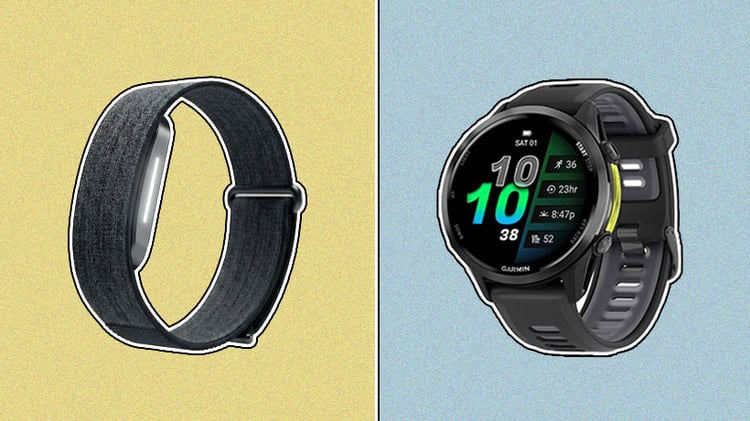
For this Garmin Watch vs. Hume Band comparison, we decided to compare Hume Band 2.0 and Garmin Forerunner 970 models. Both Hume Band 2.0 and Garmin Forerunner 970 are wearable devices designed to monitor and help support your health and fitness. However, while they track some similar metrics, they are meant for completely distinct purposes and target different people.
Hume Band 2.0 is a health-oriented tracker, geared mostly toward recovery and long-term wellness. Garmin Forerunner 970, on the other hand, is mostly known for its comprehensive fitness tracking and an overall impressive sports ecosystem.
To help you distinguish which one might be better for your needs, we decided to perform our own tests. We evaluated Hume Band 2.0 vs. Garmin Forerunner 970 in terms of comfort, usability, features, performance, and price. Since they’re meant for different purposes, our goal is to find which one is more universal and better suited for everyday wellness tracking.
| Product | Hume Band 2.0 | Garmin Forerunner 970 |
| Subscription | Optional | Optional |
| Battery life | Up to 14 days | Up to 15 days |
| Display | Screenless | 1.4" AMOLED |
| Water resistance | IP68 (dustproof and water-resistant) | 5ATM |
| Heart rate monitoring | Yes | Yes |
| Workout tracking | Basic | Extensive |
| Recovery metrics | Health Score, Metabolic Capacity, Stress | Recovery metrics |
| Smartphone compatibility | iOS and Android | iOS and Android |
| Warranty | 1 year (standard) | 1 year (standard) |
Hume Band vs. Garmin Watch: Key differences
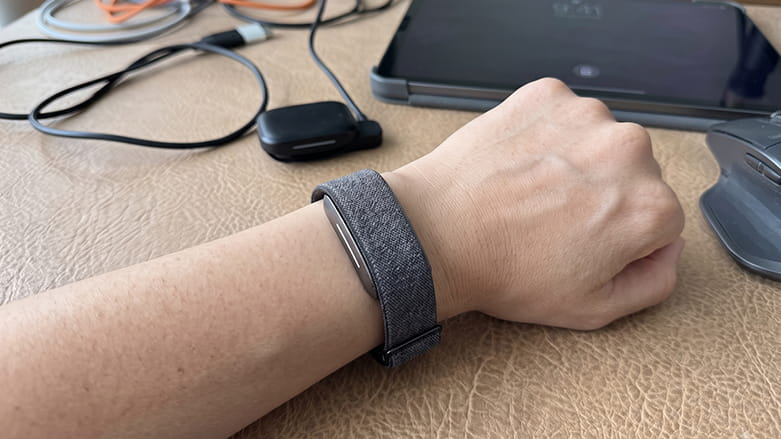
One of the most noticeable distinctions is their design and overall usability. Garmin Forerunner 970 comes with quite a few smart features and has a screen, so you can use it for your outdoor workouts without even carrying a phone. Hume Band 2.0 doesn’t have a display, which makes it minimalistic and more comfortable for sleeping, but you’ll only see your metrics via the app on your phone.
Diving a bit deeper, they also have very divergent purposes. Hume Band 2.0 provides you with a range of metrics, but it focuses more on your overall wellness and recovery than on fitness. However, it’s still suitable for regular workouts.
Garmin Forerunner 970 is clearly a sports smartwatch designed to help support your fitness journey. Even though it tracks other data, it’s a better fit for athletic purposes or anyone whose main goal is to improve their performance during workouts.
The ultimate choice depends on your preferences and goals. If you’re an athlete and are looking for a sports smartwatch, you should consider Garmin. For a long-term, minimalist health tracker, Hume Band 2.0 might be a better fit.
Winner: Hume Band 2.0
Design, comfort, and everyday wear
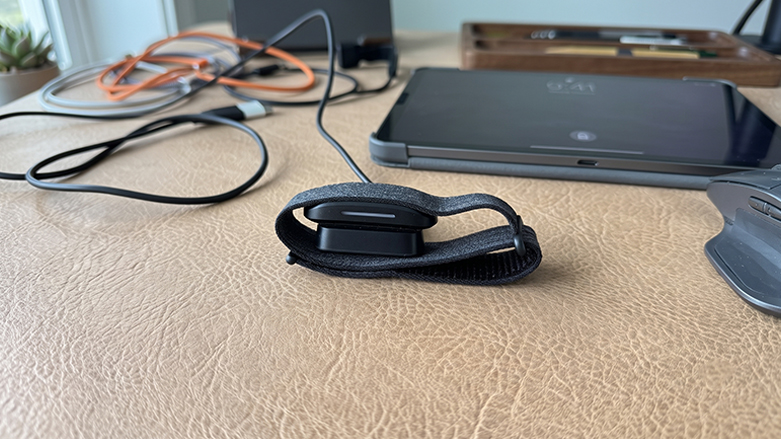
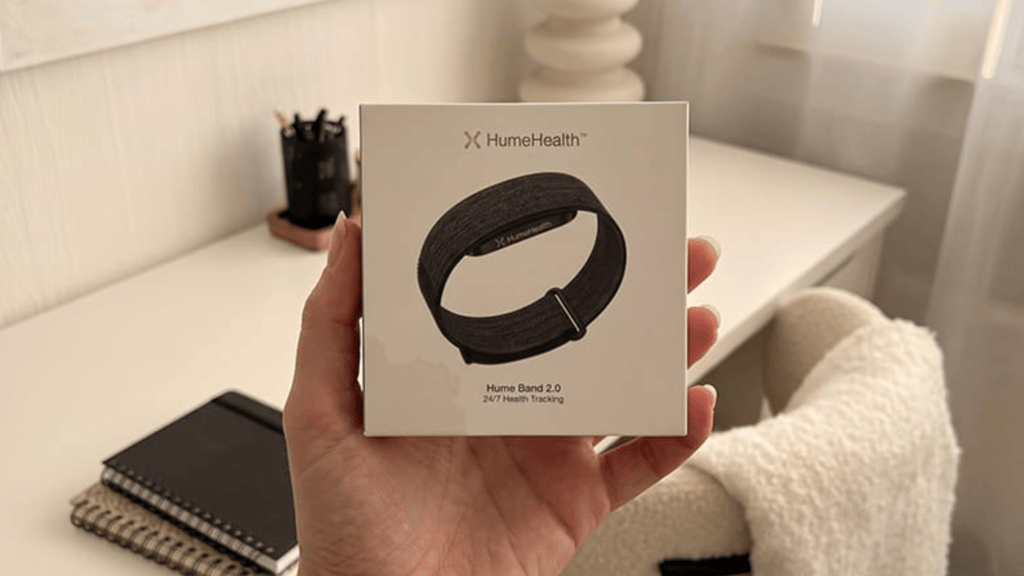
Hume Band 2.0 is a lightweight, completely screenless device—perfect if you want something that’s not so noticeable that you can incorporate it into your wardrobe seamlessly. We also found the new UltraLux fabric to be extra soft and breathable. Because it's so comfortable, you should be able to wear it 24/7 without really noticing it. Besides, it features IP68 certification, so you don’t need to take it off while showering.
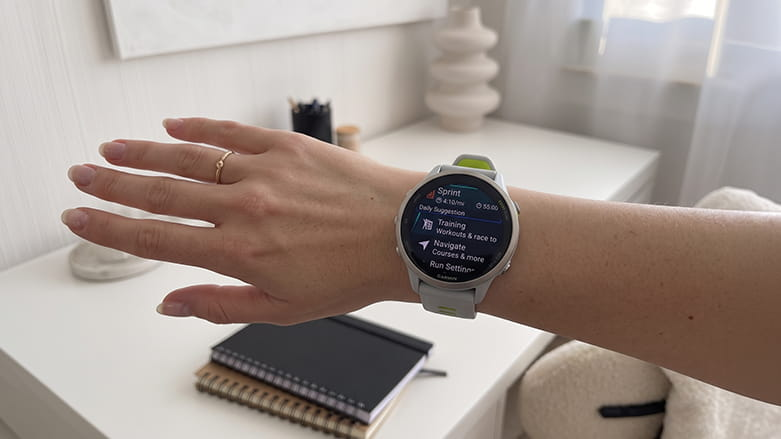
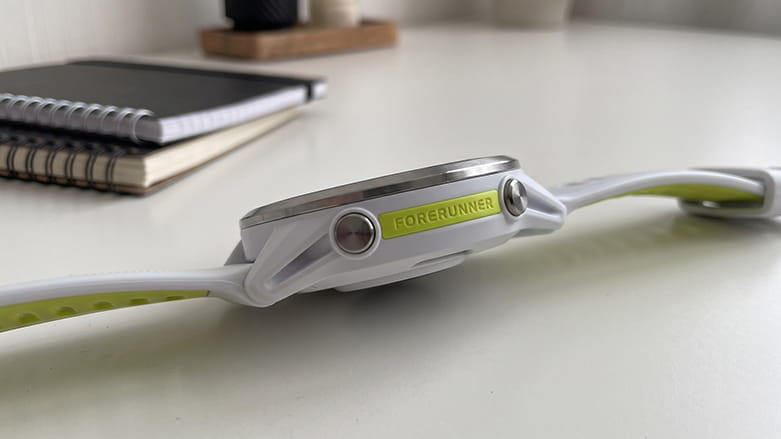
On the other hand, Garmin Forerunner 970’s design immediately gives away its more professional nature. The watch has a 1.4-inch AMOLED display that shows the time and daily metrics for your convenience. It’s definitely bulky and made out of quality materials like a titanium bezel and a sapphire crystal lens, but we still found it comfortable to wear daily. Garmin Forerunner 970 is also water-resistant, so you can swim and shower without taking it off.
Comfort during sleep
Hume 2.0 is better suited for sleeping due to its lightweight, soft band and screenless design. Besides, it doesn’t vibrate or light up, which could easily bother you at night.
Garmin Forerunner 970 does track sleep data, but since it’s a proper smartwatch rather than a band, it’s not the most comfortable device to wear to bed.
Winner: Hume Band 2.0
Health tracking and recovery features
Hume Band 2.0 is a more recovery-focused wearable—not only does it monitor and track your health data, it also turns it into detailed recommendations for improving your well-being.
With Hume Band 2.0, you can check your HRV (heart rate variability), respiratory rate, skin temperature, and more. It continuously tracks these metrics to provide insights into your metabolic capacity and metabolic momentum. This way, it can estimate your biological age, giving you another metric to consider when thinking about changes in your health and fitness over time. Combined with the other data it tracks, it may give you a better sense of how you're responding to exercise and recovery, and help you decide when to push yourself and when to take it easier.
Sleep quality also has a huge impact on your recovery and how you’re feeling overall. With Hume, you’ll be able to track your sleep stages, and you’ll also get a daily Sleep Score, which will help you evaluate how well rested you really are.
Hume Band 2.0 also closely monitors any changes in your data and basically tries to identify potential health issues. However, we don’t recommend trusting everything blindly. Such trackers cannot diagnose diseases, so if you notice any anomalies, you should consult a doctor rather than trusting a tracker.
Garmin Forerunner 970 comes from a well-established sports brand, so the overall experience is more fitness-oriented.
During our tests, we noticed that it provides a specific recovery time as soon as we finished our workout. By considering your HRV, stress levels, sleep, and activity, Garmin Forerunner 970 also monitors your body battery, which basically indicates how much energy you have left. We believe that having such information is crucial for athletes, as it should help you optimize your workouts and recovery time more.
To help you further improve your recovery after intense activities, Garmin Forerunner 970 also works like a sleep coach, providing you with a score, calculated by considering your sleep stages and quality. The tracker also aims to help you maintain a more regular sleep cycle by showing how aligned you are to your circadian rhythm. To put it more simply, it compares your natural internal clock with your sleep and wake-up times. We also liked that Garmin Forerunner 970 allows you to track or manually add your naps, which actually can have quite a huge impact on your rest.
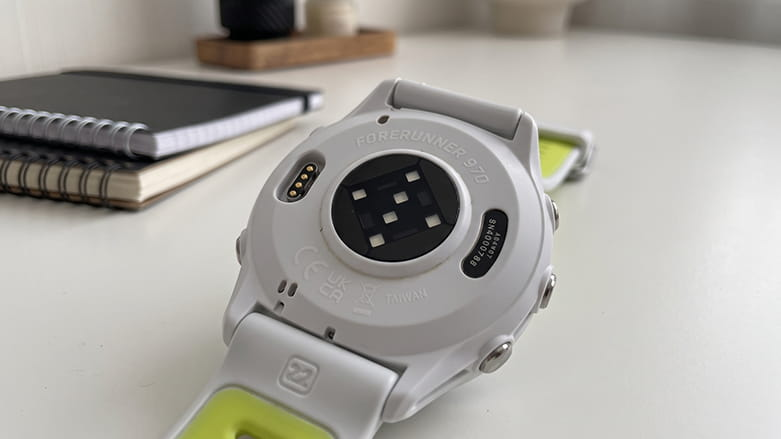
It also gives you a training readiness score estimate, which is based on your sleep, HRV, and activity data. In addition to that, it tracks oxygen levels using its Pulse Ox sensor and can record an ECG to help identify signs of atrial fibrillation (AFib) and other heart rhythm abnormalities. All of Garmin’s recommendations are designed to support your well-being, but we believe they are intended to help improve your fitness performance.
Stress and wellness monitoring
Garmin Forerunner 970 can also help you monitor your stress levels. It does that by tracking your heart rate variability, which is regulated by your autonomic nervous system. So, if Garmin detects less variability between your heartbeats, it considers it higher stress, and if the heartbeat variability has increased, it considers it lower stress. To help you understand better, it gives you a score from 0 to 100, 100 being the highest stress level. We also liked that you can use Garmin’s breathwork activities to potentially reduce your stress levels.
Keep in mind that when we tested Garmin, we noticed that it doesn’t track stress levels during intense workouts, which is understandable, as the results would most likely not be very realistic.
Hume Band 2.0 may estimate when your body is under stress based on movement data and cardiovascular signals. It mostly checks your heart rate variability, pulse, resting heart rate, and skin temperature to notice any strain on your mental well-being. As soon as you start using your Hume Band 2.0, it quickly notices your regular ranges, so once it detects cardiovascular changes, it might interpret it as stress. In case it does notice any changes, Hume provides actionable recommendations, such as modifying your activities and resting time.
Winner: Hume Band 2.0
Fitness tracking and sports performance
While Hume is mostly a health tracker, we found that it’s still suited for simple everyday activities. It does a good job of tracking how much you move daily, but it mostly uses this data to determine how it affects your overall metabolic capacity and recovery rather than to help you improve your sports performance. While sports enthusiasts might find it not as useful, we believe that such interpretation of your activity can help to modify your habits and potentially improve your long-term wellness. Since it’s completely screenless, you won’t be able to check your statistics or workout times quickly, which is a bit of a disadvantage.
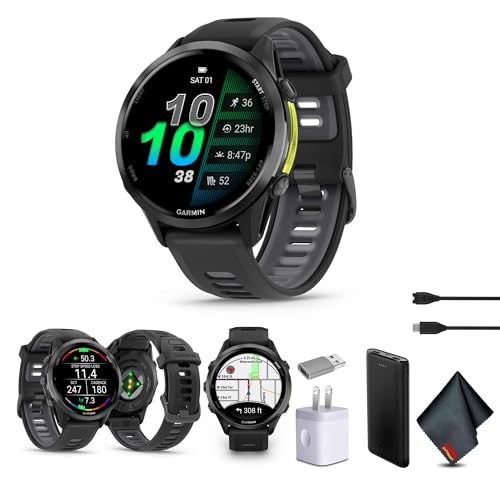
After testing Garmin Forerunner 970, we believe that it’s one of the best sports watches out there as it not only tracks your activity, but also helps you understand the results and provides recommendations for even more improvement. It has over 30 built-in activities and comes with different sport modes, even suitable for triathlons and bouldering. If you’re a runner, Garmin might help you reach your goals faster since it provides insights about stride length, cadence, and ground contact time. There’s even a Hill Score, which is based on your VO2, helping you measure your capabilities of running uphill.
Garmin Forerunner not only gives you data, but also turns it into clear guidance. It shows you morning and evening reports, where you’ll see key data and how you can prepare better for tomorrow. Using the app, you can even log habits like your caffeine or alcohol intake, which might help you notice if this has any impact on your performance.
GPS and outdoor activities
If you’re into working out outside, Garmin Forerunner 970 might be just for you. With its reliable GPS system, you’ll be able to track your route even around more secluded areas. It also has offline mapping, which lets you create round-trip routes without using the companion app. Unfortunately, Hume Band 2.0 doesn’t have a built-in GPS, so you’ll need to bring your phone if you want to map your workout.
Winner: Garmin Forerunner 970
Smart features and everyday usability
During our tests, we found that Garmin Forerunner 970 covers all key features that you’re likely to use daily. You can receive and take phone calls and read text messages. With Garmin Pay, you can make contactless payments without carrying your phone or credit card. If you enjoy listening to music during your workouts, you can download playlists and enjoy them without your phone.
Hume Band 2.0 is a screenless device; hence, it doesn’t have any features. For those who value simplicity, it’s the biggest selling point since it tracks your health data without any vibrations, sounds, or displays. However, if you need Bluetooth calls, messaging, music, and contactless payments, Hume Band 2.0 might not be for you.
Winner: Garmin Forerunner 970
Mobile app and user experience
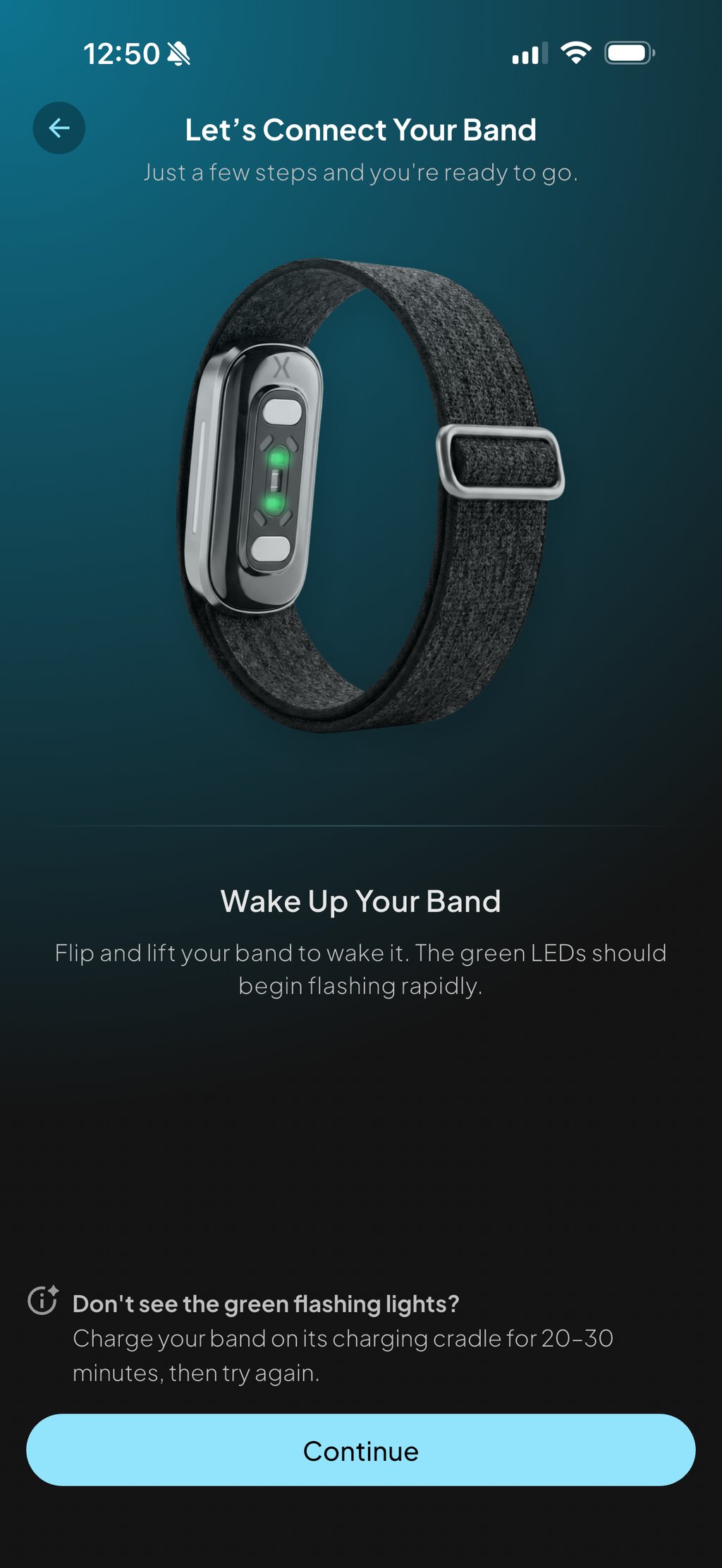
Since Hume Band 2.0 doesn’t have a display, using its companion app will be a huge part of your experience. The good news is—it’s user-friendly and provides a lot of data in a concise and understandable way.
When you open up the app, you’re greeted with the dashboard, presenting you with your overall Health Score, weight, metabolic age, and sleep quality. It will also provide you with more details on your blood pressure trends, which are shown in graphs, and other vital metrics like your heart rate, stress, skin temperature, and blood oxygen. For those interested in tracking workouts, you’ll see your steps and daily calories in one place, giving you a clearer picture of your activity level that day.
We also liked the app’s interface, since it looks modern and we found it easy to navigate, even for new users.
The Hume Health app is free, though if you want AI-driven coaching and personalized health reports, you’ll need to get the premium version at an additional cost.
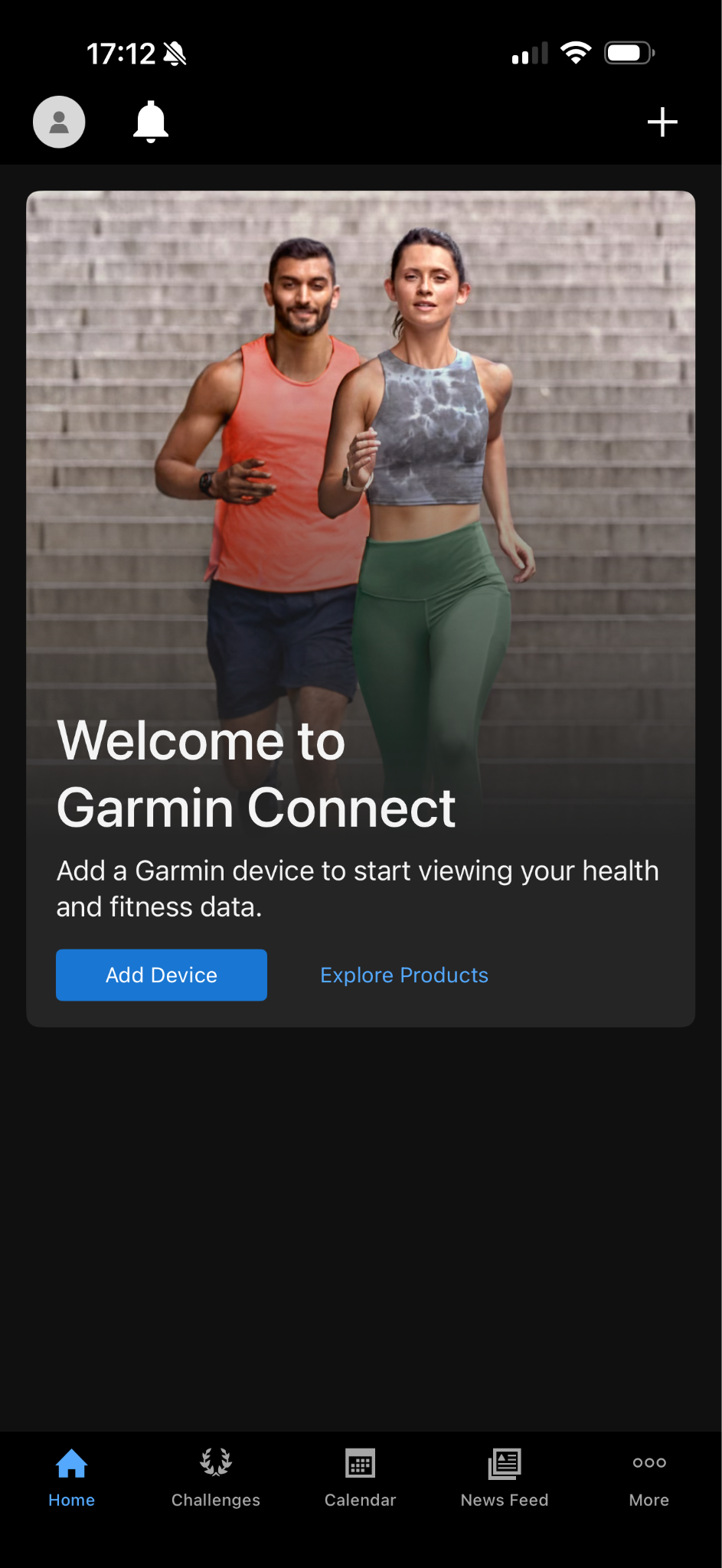
Garmin Forerunner 970 also comes with a companion app, Garmin Connect. It’s packed with a wide range of data on your health, recovery, and fitness, making it a perfect choice for professionals or fitness enthusiasts who value having a lot of information about their workouts.
Using the app, you’ll clearly see your Sleep Score along with a graph that presents your sleep stages. There’s also clear data about your body battery, menstrual cycle, stress, and hydration levels, some of which even come with explanations and tips for improvement. Besides, you’ll be able to see your VO2 max, training readiness, and HRV, alongside detailed information about your tracked workouts. While it’s not as modern as Hume Health, it’s still very easy to navigate. For more serious athletes, having information about ascent and pace is necessary, but we believe that it might be a bit overwhelming at first if you’re looking for something more health-focused.
Winner: Hume Band 2.0
Battery life and charging
You’ll probably wear your tracker 24/7, or at least most of the time, so it’s important to choose one with a decent battery life. Our tests revealed that both Garmin and Hume can be used consistently for quite some time, but it mostly depends on your usage.
Hume Band 2.0 has improved its battery capacity compared to its previous models and now offers up to 14 days of battery life. However, during our tests, we had to charge it on the 12th day, though keep in mind that we used it excessively. Overall, the battery drains slowly because the device doesn’t have a screen to light up. Once your battery runs out, you can use a magnetic dock to charge it, and a full charge should last around 20–80 minutes.
Generally, Garmin Forerunner 970 claims to have a battery life of 15 days, but we found that this depends on the features and settings you use. We noticed that using GPS-only mode significantly reduces battery life to 26 hours. Additionally, turning on the multi-band GPS, streaming music, and using Bluetooth calls will shorten it even more. Still, the results are impressive considering how many additional features it covers. However, if you don’t want to recharge your tracker daily, Hume Band 2.0 is a better option.
Winner: Hume Band 2.0
Price, subscription, and long-term value
Hume Band 2.0 is more budget-friendly than Garmin Forerunner 970. Besides, you can find all key metrics on your sleep, longevity, and metabolic data through the free companion app. However, a premium version of the app is also available via a monthly subscription, which includes AI-driven coaching, personalized weekly health reports, and biological age estimation.
By comparison, Garmin Forerunner 970 has a much higher initial price, but it doesn’t require a subscription to unlock key features. While a premium app version is available, we believe it’s unnecessary, as you can use GPS mapping, triathlon coaching, and other in-depth recovery metrics at no additional cost.
Which offers better long-term value?
Overall, we believe that the long-term value depends on your preferences. If you don’t want to invest too much in the device itself and don’t mind recurring subscriptions, Hume Band 2.0 is the better choice for you. However, while purchasing Garmin Forerunner 970 is more expensive at first, you don’t need to spend any more money on a membership. This means that using Garmin might even be cheaper in the long run.
Winner: Garmin Forerunner 970
More Wareable reviews:
Hume Band 2.0 Review: Is the upgrade worth it?
Garmin Forerunner 970 review: A runner's dream with one big caveat
Apple Watch SE 3 review: Still the best choice for most
Hume Band 2.0 vs. WHOOP 5.0: Which screen-free fitness tracker fits your needs?
Best fitness trackers of 2026: Our tested top picks
Verdict: Hume Band or Garmin Watch?
After testing Garmin Watch vs. Hume Band, we found Hume Band 2.0 to be the winner since it’s more suited for everyday health and overall wellness tracking. It’s very lightweight and is completely screenless, making it comfortable to wear 24/7. Besides, its health and recovery insights are better suited for people focused on longevity and well-being.
Garmin, on the other hand, is the better choice for runners, professional athletes, or anyone who is mostly interested in fitness tracking, GPS, and smartwatch features that help you stay connected without carrying a phone.
It’s clear that these devices are completely different, especially their approaches. While Hume Band 2.0 is the winner due to its health-first approach, the ultimate choice depends on your goals and needs.
Overall winner: Hume Band 2.0
FAQ's
Both Hume Band and Garmin have overall reliable sleep trackers, but Hume Band wins over Garmin due to comfort. Hume Band is much lighter, thinner, and completely screenless, making it a perfect choice for sleeping. While Garmin does a good job of tracking sleep, it’s quite bulky, has a screen, and occasionally vibrates, so it’s not ideal for everyone to wear at night.
Yes, Hume Band requires a subscription to get the full experience, including AI-driven coaching. You also get personalized health reports and a biological age estimation. While all key metrics can be seen in the free app, having more guidance and recommendations might be useful.
Yes, Garmin is better for runners as it is more sports-oriented. Hume Band 2.0 can also track your runs, but it lacks a built-in GPS if you run outside. On the other hand, with Garmin, you can enjoy your runs without bringing your phone, as all important data can be found on the watch’s screen.
References
-
The Lancet Digital Health
-
Journal of Sport and Health Science