Health tech giant eyes a system that could tell users whether their Whoop is too tight or loose to capture accurate data
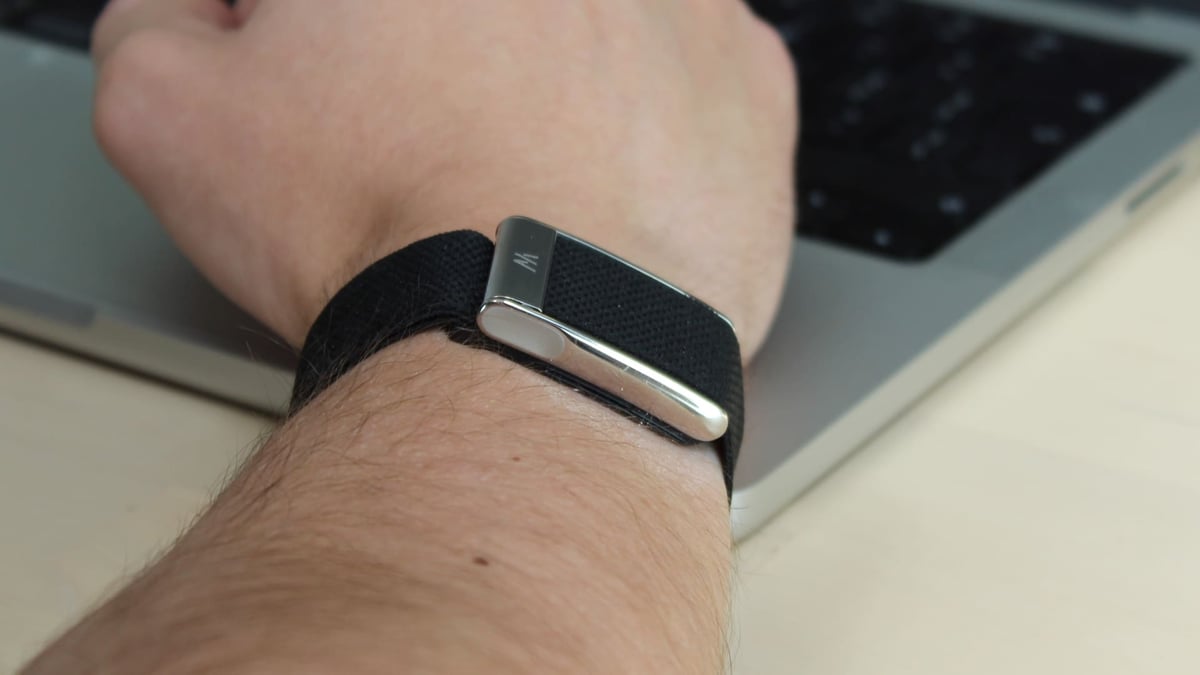
Whoop may be working on a system to resolve an issue that can undermine the data accuracy of even the very best screenless trackers—wearing it incorrectly.
In a patent filing in the United States, Whoop explains a system that would measure the tightness of the device when worn on multiple areas of the body, and report back with findings on necessary adjustments.
The goal of the tech described in the filing is to ensure the heart rate sensor’s contact with the skin is tight enough to accurately measure the blood flow, but not so tight that blood flow is constricted and thus “reducing the quality and strength of the optical signal” captured by the device’s advanced sensors.
Whoop correctly states that most people adjust tightness based on subjective feelings of comfort or style (what else do we have to go on, right now?), but without necessarily experiencing the tightness level required to ensure the device performs optimally.
How haptic vibrations could measure strap tension
Within the filing, Whoop explains that the device's haptic vibrations—currently used to ease people awake as part of its alarm system—would be used to “infer the amount of tension that is retaining the device against the body or, more generally, to evaluate whether the device is properly fitted to the user.”
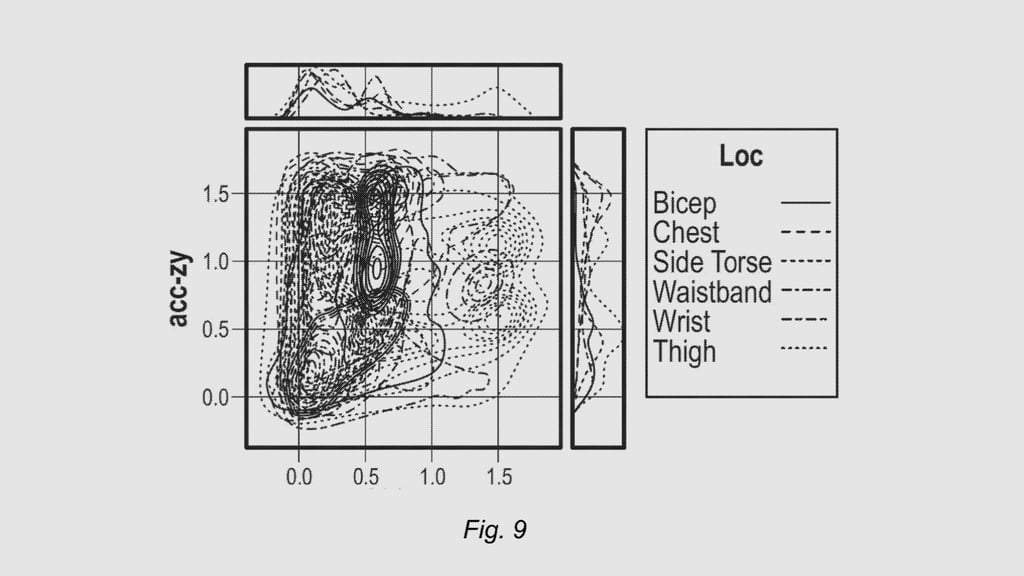
Following measurements taken when the user puts the device on or at intervals at the wearer’s discretion, the Whoop app would show an analysis of whether the fit is loose, normal, or tight and recommend adjustments for optimal performance if necessary.
The filing reads:
“The tension measurement may be repeated on a regular schedule, e.g., as a maintenance function, or under conditions indicating a change in tension, such as a deteriorating signal strength or decreasing quality/confidence for a physiological metric such as heart rate. In one aspect, the tension measurement may be repeated continuously for a period of time, e.g., at regular, short intervals, when available information indicates that the device is being worn and the tension is outside an acceptable range.
“In this case, the tension measurement may be repeated until the tension is determined to be in the acceptable range or until a timeout limit is reached. In the latter case, an error notification may be reported to the user, along with a warning that accurate data is not currently being acquired. The tension measurement, or other evaluation of fit, may also or instead be performed on-demand, based on a predetermined user interaction such as touching a button on a user interface, double-tapping the device, or the like.”
Older Whoop models didn't have haptic feedback, but since the launch of the Whoop 4.0 in 2021, users can receive alerts and be gently woken when they reach their sleep goal. This new implementation could help ensure more accurate sleep data for metrics like resting heart rate and heart rate variability (HRV).
Could this arrive for Whoop 5.0/MG users?
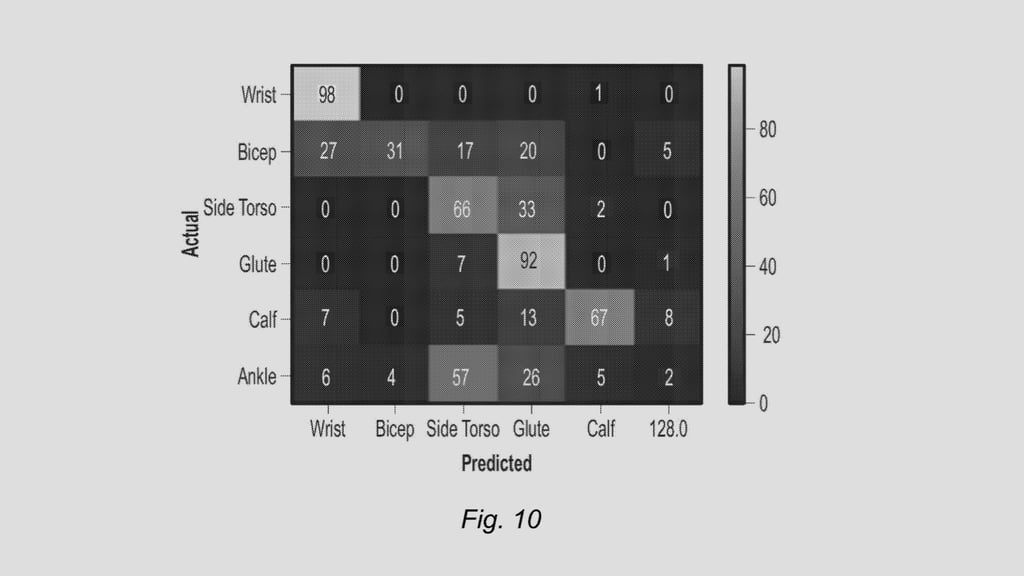
Technically speaking, the system doesn’t seem beyond the current generation of Whoop hardware. The vibrations, along with the device’s accelerometer and gyroscope, would measure both optical and mechanical coupling.
“In general, the tighter the wearable monitor is about the body, the smaller the phase relationship (e.g., the closer the response) and thus the larger the mechanical coupling,” the company says in one example.
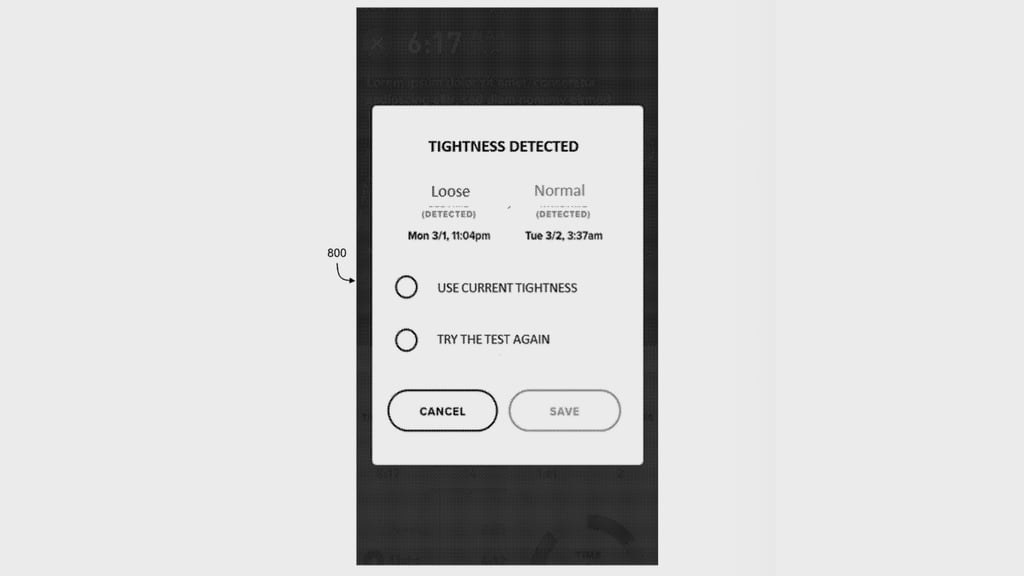
Those data points would be combined to provide the tightness reading, with precise advice on resolving any issues communicated via the user interface.
“In one aspect, fit may be reported as a quantitative statement of tension, e.g., the circumferential or normal force determined by the calculation,” the patent reads.
“In another aspect, the fit may be reported using a quantitative score such… on a range of -10 to 10, with zero being the optimal tension, scores between -5 and 5 being acceptable for accurate data acquisition, and anything outside the range of -10 to 10 unlikely to yield accurate or meaningful data.
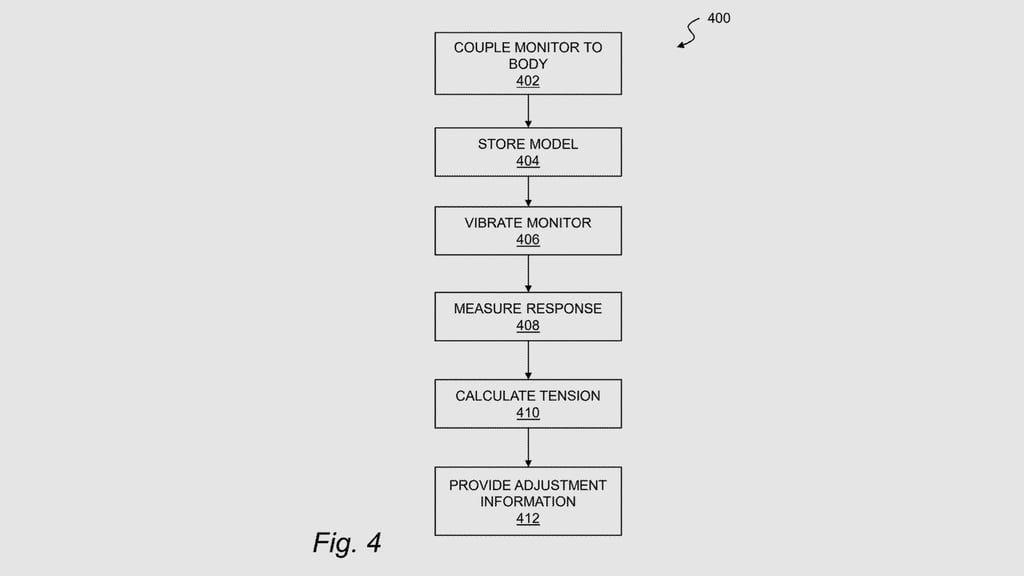
“The adjustment information may also or instead include action able instructions such as "tighten strap at least one millimeter," where the physical adjustment estimate is calculated based on the position of the monitor and a corresponding estimate of the body circumference and/or material of the elastic tensioning member(s).”
Why fit accuracy matters for Whoop’s clinical expansion
The 2026 patent—entitled Monitoring Fit of Wearable Devices—comes at an important time for the company.
Whoop is widely trusted by amateur and elite athletes for tracking Recovery, Strain, and Sleep, but its recent expansion into clinical health makes data accuracy vital.
Whoop now offers advanced blood testing that gives subscribers insight into 122+ biomarkers, helps them understand their body's needs, and provides personalized coaching based on the 24/7 data the device captures.
The idea is to give wearers context for why a certain body chemistry element might be high or low. If that data is inaccurate because the device is worn incorrectly, wearers may make decisions about their health and habits based on flawed information.