The 'Emerald' overhaul brings a context-aware engine, on-device processing, and more
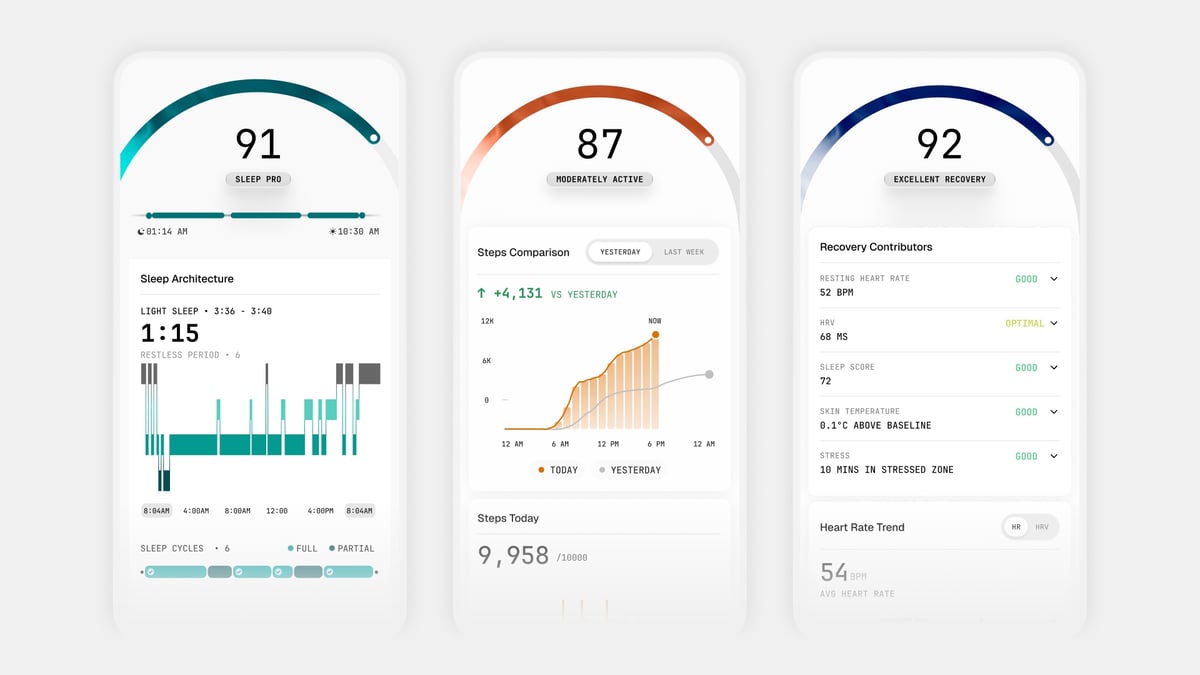
Ultrahuman has begun rolling out a major overhaul of its companion app, with the new 'Emerald' platform delivering more actionable AI insights, improved VO2 max calculations, and a shift to on-device processing.
Moving away from its previous data-heavy, biohacker-focused style, the Ultrahuman app is now aiming to solve users of its smart rings and health device ecosystem by prioritizing direct lifestyle recommendations that tell users exactly what to do next.
The core of the redesigned interface is UltraSphere, a context-aware decision engine powered by the company's Jade AI biointelligence layer, which was announced alongside the Ultrahuman Ring Pro in February.
Visible directly on the app's primary home screen, the engine processes markers spanning sleep structure, recovery, heart rate variability, and continuous glucose tracking to generate dozens of unique real-time recommendations.
Crucially, these insights are also anchored to location, weather, and personal circadian rhythms, offering tailored guidance for specific user archetypes such as night-shift workers or jet-lagged travelers.
Underpinning updates
In another fundamental backend, Ultrahuman has also transitioned the application to on-device processing.
Moving data analysis away from remote servers ensures that live health metrics, dynamic recovery scores, and stress rhythm data remain fully accessible without cellular connectivity—a huge win for those, like frequent flyers, who want to stay up to date with their biometrics when out of range.
Fitness tracking receives substantial algorithmic upgrades via the Emerald update.
The platform now features an enhanced VO2 max metric that improves accuracy by 21%, a claim the company says was validated against gold-standard laboratory tests.
Beyond these biometric enhancements, the update also overhauls automatic workout detection, introduces a consolidated sleep health report, and adds a dedicated longevity hub for tracking long-term biological age.
On paper—and after a quick flick through the app while writing this—Emerald appears to give Ultrahuman a slightly friendlier, more holistic-looking dashboard for users to spend time in.
I actually didn't mind the previous iteration too much; it certainly wasn't the worst smart ring app I've tested over the past few years. However, I'll never say no to more actionable insights to save me from sifting through graphs and data.
I'm currently putting the brand's Ring Pro through its paces ahead of a full review, so stay tuned for a deep dive on the all-new platform update over the coming weeks.