We've reviewed all the major smart glasses—here are our top recommendations
The smart glasses landscape has exploded in the last few years. What was once a niche, experimental corner of the wearables world has become one of its most exciting frontiers, with new devices launching at a blistering pace.
Whether it's frames with cameras and AR overlays or glasses that act as a personal cinema, the next generation of smart eyewear is here. And Meta remains the biggest reason why.
Between the original Ray-Ban Meta launch, last year's Gen 2 follow-up, and June's cheaper, in-house Meta Glasses line, Meta and EssilorLuxottica are estimated to account for roughly 75% of the smart glasses market. For most people shopping for a first pair, that dominance is still the simplest explanation for where to start.
However, 2026 has also been the year the camera-and-AI approach Meta popularized has faced real scrutiny.
Reports of secretly recorded footage, the reported 'Name Tag' feature facing pushback from 70 civil rights organizations, and courtrooms, restaurants, and theatres across the US and UK banning the glasses have all pushed privacy from a footnote into a genuine buying consideration.
We dig into what that means for our recommendations below. In essence, it's created an opening for camera-free alternatives to make a real case for themselves—something that would have looked unlikely a year ago.
This guide reflects our own hands-on testing across both ends of the category, from audio-and-camera glasses to AR display glasses and everything in between. Here's where things currently stand.
Overview: The best smart glasses
- Best AR smart glasses: Even Realities G2
- Best XR display glasses: VITURE Luma Ultra
- Best glasses for workouts: Oakley Meta Vanguard
- Best camera smart glasses: Ray-Ban Meta 2
- Best budget-friendly AR glasses: RayNeo Air 3s Pro
- Best AR glasses with spatial computing: XREAL Air 2 Ultra
- Best for hearing aid support: Nuance Audio
Smart glasses launches in 2026
The pace of new hardware hasn't slowed down in 2026. So, before we dive into our top picks, let's recap what's already landed this year—and what's still due before the year is out.
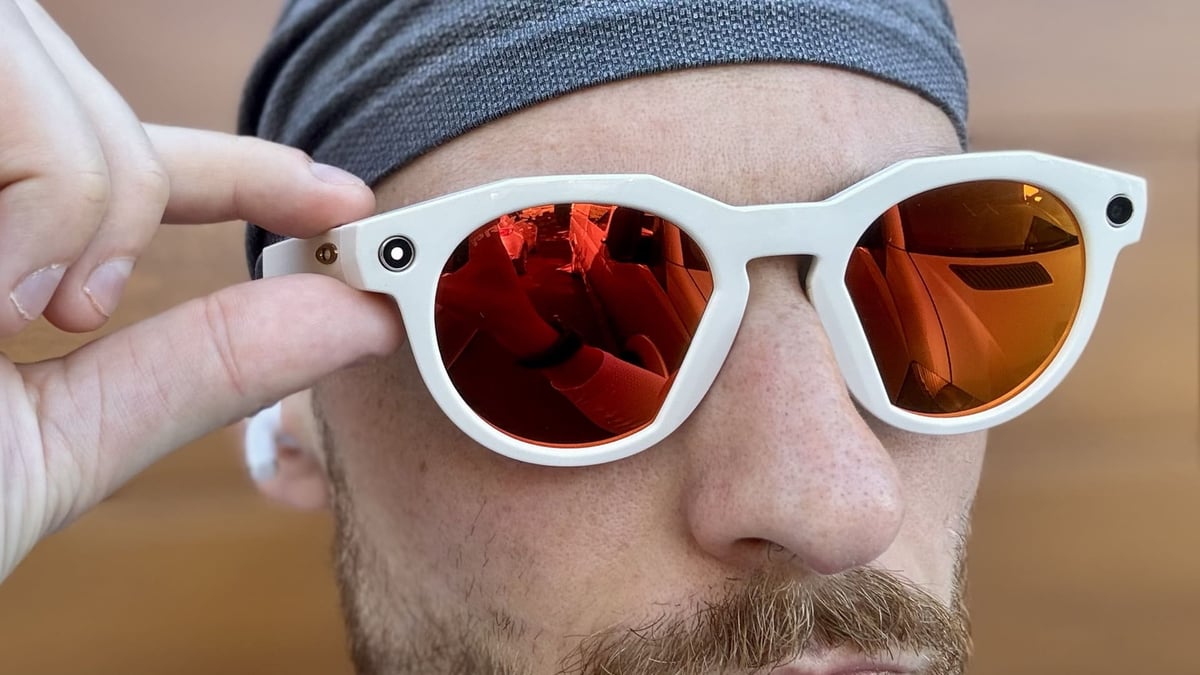
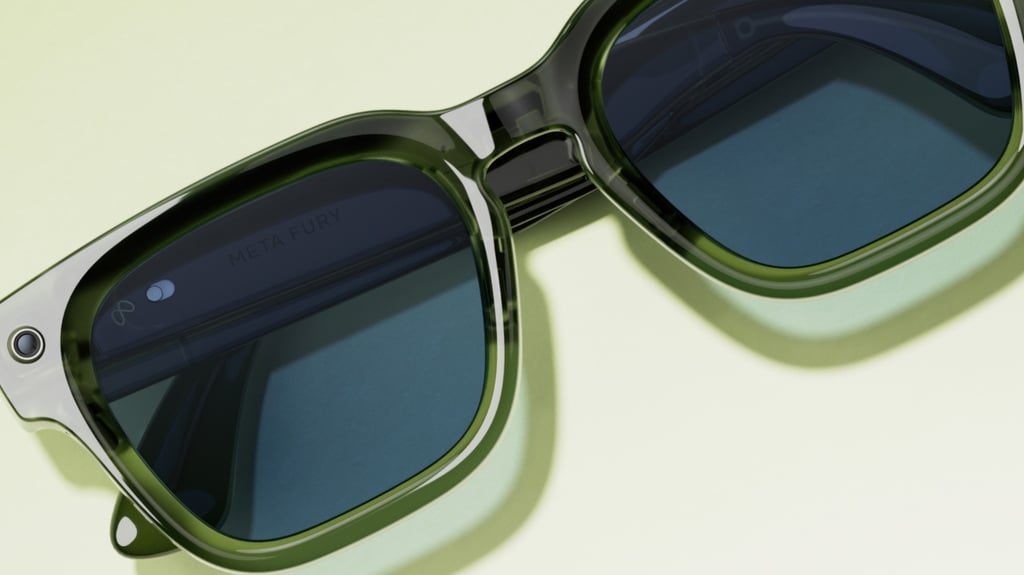
Meta doubled down on its own hardware in June, launching a self-branded Meta Glasses line — Adventurer, Fury, and a Kylie Jenner collaboration — starting at $299, undercutting Ray-Ban Meta Gen 2's $379 price while still being built with EssilorLuxottica.
Rokid's AI Glasses Style beat almost everyone to market, launching globally back in January at the same $299 price point. And Samsung used its most recent Galaxy Unpacked event to formally reveal its first pair of smart glasses, developed with Gentle Monster and Warby Parker on Google's Android XR platform, with access to both Gemini and Samsung's own Bixby assistant.
Smart glasses launches we're still expecting
Google and Samsung's Android XR glasses are both expected to actually start shipping this fall, alongside Google's own co-developed pairs with Warby Parker, Gentle Monster, and XREAL.
Meta Connect, confirmed for September 23-24 in Menlo Park, is widely expected to bring the next wave of Ray-Ban Meta hardware—rumored under the codenames Aperol (a sunglasses-style design with a bigger battery) and Bellini (a lighter, prescription-friendly frame)—with reported upgrades including a longer-lasting Live AI mode and a noticeably sharper camera.
Snap is also expected to finally bring its already-revealed next-generation AR glasses, rebranded simply as Specs, to a wider audience sometime this year. They will run on Snap's own OS, with Google's Gemini models available to developers.
We'll be testing as many of these as we can get our hands on and updating this guide accordingly.
What are the different types of smart glasses?
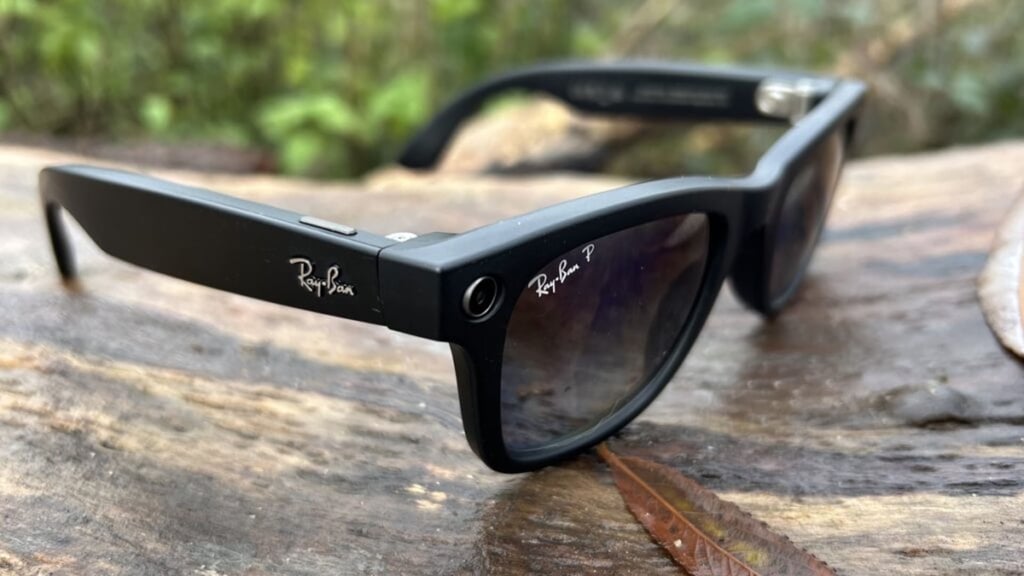
As the market evolves, smart glasses are being divided into two distinct categories. Understanding the difference is key to choosing the right pair for you.
Audio, AI, and camera glasses
These are the most common and consumer-friendly type of smart glasses right now. Think of them as super-powered headphones and a camera that you wear on your face.
Their primary functions include playing music and podcasts via open-ear speakers, taking phone calls, using a voice assistant (such as Meta AI), and capturing photos and videos from a first-person perspective. They connect wirelessly to your smartphone to function.
- Examples: Ray-Ban Meta Smart Glasses, Oakley Meta Vanguard
Augmented reality (AR) & display glasses
This category is more advanced and diverse, with fewer options ready for consumer use. These glasses project digital information onto the lenses, overlaying it on the real world. This can range from simple text notifications to creating a vast, virtual cinema screen for watching movies.
Some are 'AR-lite', focusing on projecting a virtual display from a connected device (like a laptop or phone). Others are 'proper' AR glasses, using cameras and sensors to understand your environment and place digital objects within it. This category also includes AI glasses that utilize a display to display information from an assistant.
- Examples: VITURE Luma Ultra, RayNeo Air 3s Pro, Even Reality G2
Even Realities G2: Best AR smart glasses

Even Realities G2 key features
- Camera-free, privacy-first design
- Sharp monochrome waveguide display, prescription-compatible
- Even Hub third-party app platform
- Optional R1 smart ring for controls
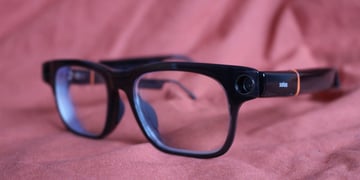
The Even Realities G2 takes a different approach to almost everything else in this guide: no camera, no speakers, just a sharp monochrome waveguide display built into frames that pass for a completely normal pair of glasses.
Controls run through a touch strip on the temple or, better, the optional R1 smart ring, which also moonlights as a basic fitness tracker.
Software was thin at launch, but the arrival of the Even Hub app platform has changed that considerably. Third-party developers can now build directly for the glasses, and six months in, the catalog covers everything from live captioning and translation to sports scores and monitoring AI coding agents on the display.
At $599—or closer to $850 with the R1 ring—it's not cheap, and some native features like navigation and AI summaries are still a little inconsistent. But by leaving cameras and speakers out entirely, Even Realities has built the most convincing privacy-conscious alternative to Meta's glasses currently on the market.
- Read our full Even Realities G2 review
- Genuinely look like a normal pair of glasses
- Even Hub is evolving into a solid third-party ecosystem
- R1 ring is a clever way to solve the controls problem
- Prescription-friendly waveguide display
- $599 before you've added the $249 R1 ring
- Some native features are still inconsistent
- Touch-strip controls are fiddly without the ring
VITURE Luma Ultra: Best display glasses
VITURE Luma Ultra key features
- AR-based smart glasses
- Clear HARMAN audio
- 9 brightness levels, up to 1,500-nit brightness
- Adjustable for myopia up to -4.0D
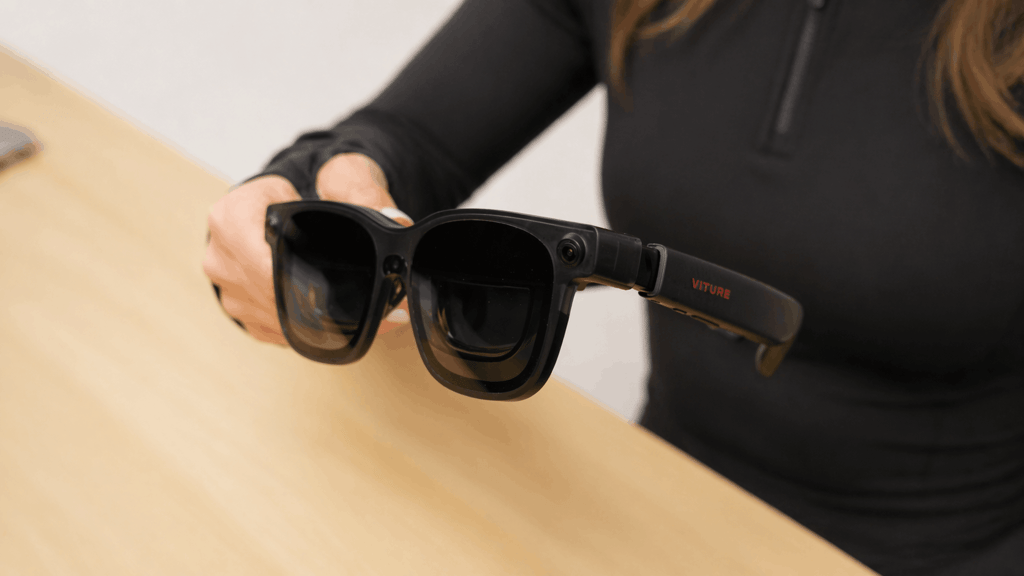
If you are more interested in augmented reality (AR) smart glasses, VITURE Luma Ultra is the most compelling option at its price point. Powered by micro-OLED panels, it projects a massive 152-inch virtual screen with a 1200p resolution, a 120Hz refresh rate, and up to 1,500 nits of peak brightness.
To project multiple virtual screens, VITURE Luma Ultra can be used with the SpaceWalker and The Beast apps. That versatility makes it equally suited to binge-watching a series on a long-haul flight and to going through spreadsheets on the go. Compatibility is broad, too, with support for iOS, Android, macOS, and Windows devices.
If you wear prescription lenses, VITURE Luma offers myopia adjustments to -4.0D. This means that some users with nearsightedness can focus the display for clear vision without additional prescription inserts.
At $599, the VITURE Luma Ultra is a serious investment. But for anyone who wants a taste of spatial computing without strapping a headset to their face, it is one of the most feature-rich pairs of XR glasses you can buy right now.
- Crisp video quality with impressive 1,500-nit brightness
- Great for AAA games
- Has a built-in camera and microphone
- Supports myopia corrections up to -4.oD
- Doesn’t feature a built-in battery
- Not so budget-friendly
Oakley Meta Vanguard: Best for workouts

Oakley Meta Vanguard key features
- Smart features powered by META AI
- 9 hours of use
- Captures 720p video quality
- No prescription lenses option
Aimed at cyclists, runners, and other athletes, Oakley Meta Vanguard are specialized smart glasses for vigorous exercise. Built on the same Meta AI platform as the Ray-Ban Meta, they transplant that tech into a wraparound shield design that stays on for hands-free fitness companionship.
With seamless Garmin integration, you can use these glasses to get real-time information about calories burned, heart rate, elapsed time, speed, and other metrics you may want to keep an eye on during your workout. These glasses feature Prizm™ lenses specifically engineered to enhance vision and improve contrast, providing razor-sharp detail in any lighting condition or weather.
Compared to Ray-Ban Meta Gen 2, Oakley Meta Vanguard captures videos in lower quality, 720p, compared to 3K Ultra HD, so there are clear trade-offs if you're buying these primarily as a content capture device. Besides that, they clearly look like workout glasses, so if you're looking for something discreet and casual, look elsewhere.
- Read our full Oakley Meta Vanguard review
- Solid fit that stays put through even the most punishing workouts
- IP67 rating handles sweat, rain, and dust
- Impressive audio quality
- Light enough at 66 grams
- Slightly more expensive than the Ray-Ban Meta Gen 2, $499
- Clunky design that only works for exercise
Ray-Ban Meta (Gen 2): Best camera smart glasses

Ray-Ban Meta Gen 2 key features
- Smart features powered by META AI
- Open-ear speaker design with immersive sound
- Up to 8 hours on typical use
- Can be purchased with prescription lenses
The new Ray-Ban Meta Gen 2 glasses are definitely an upgrade from the original Gen 1 glasses that made the smart glasses mainstream. By packing a better camera, dramatically longer battery life, and refined audio into the same iconic Wayfarer frames, Meta and EssilorLuxottica have turned an already great product into the definitive smart eyewear experience.
Let’s be clear: there’s no augmented reality here. These glasses have two core functions: capturing first-person photos and videos and acting as a pair of high-quality open-ear headphones for music and calls. And Gen 2 does both better than ever.
The biggest upgrade is undoubtedly the camera quality. The dual cameras shoot in 3K Ultra HD, a massive leap from the previous 1080p, capturing content that looks good beyond social media. A small LED light illuminates to let people know when you’re recording, addressing some privacy concerns.
Additionally, the battery will now last up to 8 hours on typical use, doubling what you get with the Gen 1 model. In practice, heavy use will reduce it, but it's a major difference from the previous model. The charging case provides up to 48 additional hours of charge.
The ‘smart’ features of Ray-Ban Meta Gen 2 are relatively basic. However, by focusing on doing a few things extremely well in a stylish and high-quality package, these glasses set the standard for the entire category. Currently, the frame is priced at $379, with lens prices starting from $20, making them a budget-friendly option in the smart glasses market.
- Check out our Ray-Ban Meta (Gen 2) summary
- Great photo and video quality
- Lovely audio
- Just a classic pair of Ray-Bans
- Charging case is lush
- Higher starting price ($379 vs. Gen 1's $299)
RayNeo Air 3s Pro: Best budget-friendly glasses
RayNeo Air 3s Pro key features
- 1,200-nit brightness
- 1080p resolution at 120Hz
- No cameras or spatial tracking, strictly a display device
- Full prescription lens compatibility
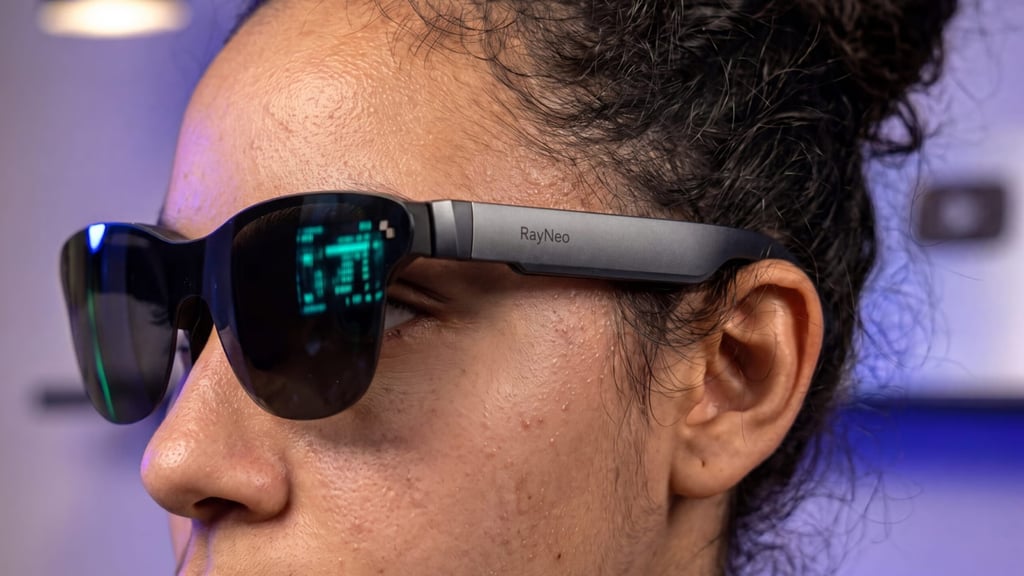
Rayneo Air 3s Pro are about giving you a colossal private cinema screen that you can take anywhere. And at $299, they do it for roughly half the price of the top-end competition.
The headline spec is brightness. At 1,200 nits, the Air 3s Pro is among the brightest display glasses on the market, a major step up from XREAL Air 2 Ultra that offers up to 500 nits.
Audio is handled by a quad-speaker system with spatial audio algorithms that deliver surprisingly immersive surround sound for a pair of glasses. A Whisper Mode narrows the sound stage to keep things private in public.
However, with no spatial computing capabilities, RayNeo Air 3s Pro are not as futuristic as its more expensive competitors, such as VITURE Luma Ultra. While marketed as AR, they are technically a bright screen you can take anywhere you go. For travellers, gamers, and anyone who wants a portable screen experience without the bulk or price of the competition, these are very hard to beat.
- Stunning 1,200-nit brightness at a fraction of the competition's price
- Lightweight and well-balanced for extended wear
- No spatial computing as seen in XREAL
XREAL Air 2 Ultra: Best with spatial computing

XREAL Air 2 Ultra key features
- 1920 x 1080 pixels per eye display
- Spatial computing for AR experience
- Up to 500 nits brightness
- No video or camera capture
If you want a glimpse of the ‘spatial computing’ future that Apple’s Vision Pro promises in a much more accessible form factor, the XREAL Air 2 Ultra is your best bet. These wired glasses don’t offer true, world-altering AR. Instead, they excel at creating a massive, high-quality virtual screen that appears to float in front of you.
Plugged into a compatible smartphone, laptop, or gaming console, the Air 2 Ultra can simulate a display of 100 inches or larger. The clarity is superb, making it a game-changer for watching movies on a plane, enjoying a private and expansive monitor for work, or immersive gaming.
While XREAL’s Nebula platform offers spatial computing features and hand tracking, the core strength of the Air 2 Ultra is its function as a top-tier portable display. They are more technically ambitious than audio glasses, but they also serve a very different purpose. For frequent travellers or anyone craving a bigger screen on the go, they are a powerful and impressive piece of kit.
- Sharp, vibrant visuals with a convincing, large virtual display feel
- Compatible with a wide range of devices
- The experience “isn’t quite there yet” for everyday consumers
- Users report short battery life
Nuance Audio: Best for hearing aid

Nuance Audio key features
- Designed to be used as a hearing aid
- Up to 8 hours of battery life
- Sleek, fashionable design
- Don’t require fitting by an audiologist
A collaboration between EssilorLuxottica and Nuance Audio, these smart glasses address a distinct issue: hearing loss. Disguised within a stylish pair of frames, this device is essentially a sophisticated hearing aid designed to make conversations more straightforward in noisy environments.
Using beamforming technology and an array of hidden microphones, the glasses can identify the person you're speaking to and amplify their voice while filtering out background noise. The idea is to provide a solution for individuals with mild to moderate hearing loss who may not require or prefer a traditional, behind-the-ear hearing aid.
By integrating the technology into a familiar and fashionable object, Nuance Audio aims to remove the stigma associated with hearing assistance devices. They don't require fitting by an audiologist and offer an unobtrusive way to enhance social interactions. It's a powerful example of how smart glasses can provide genuine, life-improving utility beyond notifications and photos.
- Specialized use case scenario
- Discrete design
- Can be purchased in installments
- Not your typical smart glasses
- Tinny and metallic sounds, lacking natural warmth
- Relatively expensive, $699 for the frame
Bottom line
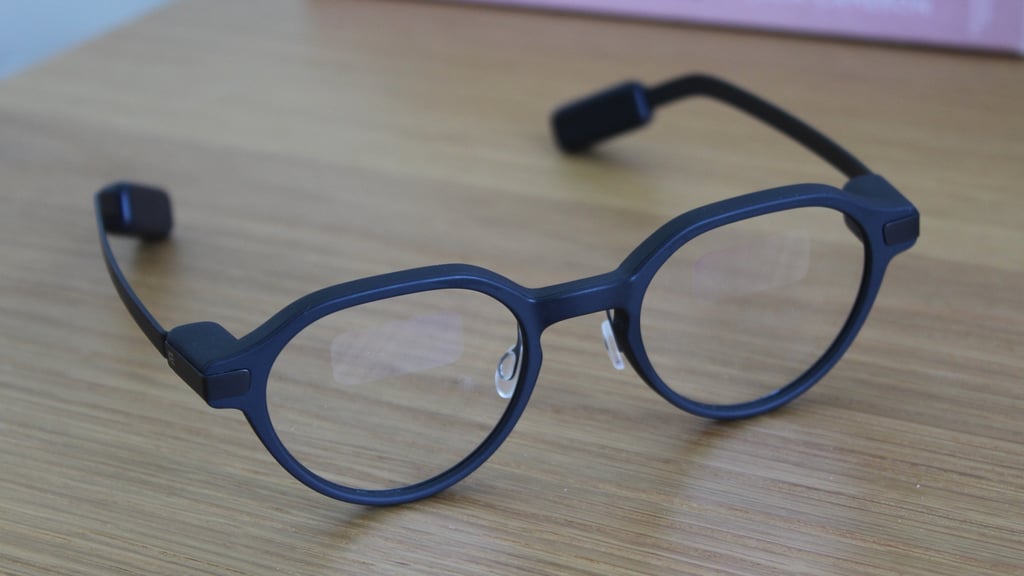
The smart glasses market is not one-size-fits-all, and the right pair depends entirely on what you want them to do.
For sheer polish, camera quality, and audio, Ray-Ban Meta Gen 2 remains the gold standard. For most first-time buyers, it's still the easiest recommendation in this guide. Meta and EssilorLuxottica have iterated on a genuinely great format, and, with more than 80% of the smart glasses market between them, nothing else here comes close as an all-round, do-everything pair of glasses.
That said, we'd be doing readers a disservice if we pretended that recommendation has stayed as simple as it used to be.
This year alone, Meta quietly stripped a facial-recognition feature out of its Ray-Ban companion app after more than 70 civil rights organizations warned it could enable stalking and harassment, reports surfaced of the glasses being used to covertly film in public, and at least one US courtroom banned them outright during a trial. None of that makes Ray-Ban Meta a bad product—it isn't—but it's a genuinely different proposition to recommend with a completely straight face than it was a year ago.
That climate is a big part of why our own daily pick has quietly shifted toward the Even Realities G2. It doesn't have a camera at all, which sidesteps the entire issue outright, and six months of Even Hub updates have turned it into a genuinely capable pair of glasses in its own right (rather than just a privacy-conscious consolation prize).
It won't suit everyone. You're trading photo and video capture for peace of mind, and the optional R1 ring pushes the price close to Meta's flagship Ray-Ban Display, but it's where we'd point a privacy-conscious buyer first, and increasingly where we reach ourselves.
Beyond those two, the rest of this guide still holds up: VITURE Luma Ultra justifies its $599 price tag if you want more than a screen, and Rayneo Air 3s Pro remains the standout value pick for a portable, high-quality display without the AR ambitions—or price tag—of the competition.