If you want a running-watch on a budget, start with Garmin Forerunner 55. I tested it for three weeks against cheaper rivals and my personal $500-class Garmin, and it reminded me why simple can also be brilliant: the GPS workflow is straightforward, the training prompts are clear and useful, and I never had to worry about the battery running out.
The better news is that it isn’t the only good option under $200. If you want a brighter screen, maps, or a lower price, I found several smartwatches that make more sense than overspending on flagship features you may barely use.
Forerunner 55 is the one I’d buy first for running
Garmin Forerunner 55 is not the flashiest watch here. It does not have an AMOLED display, onboard music, color maps, or the premium feel of Garmin’s pricier models.
But after using it for 12 runs, three gym sessions, and every night of sleep tracking across a 21-day test window, it was the smartwatch I trusted the most when going out the door.
My test with all smartwatches was deliberately ordinary. I used them on the same phone, wore them snugly one finger above the wrist bone, kept default GPS settings unless a “best accuracy” mode was offered, and compared them on three repeat routes: a 5km park loop, an 8.2km mixed road-and-tree-cover route, and a 12.4km run along the canal, with awkward underpasses.
I charged every watch to 100% on Sunday nights (recharging each during the week based on how much battery is left), used them for four runs per week, kept sleep tracking on, and left always-on display enabled only on models that offered it. For heart-rate spot checks, I compared smartwatches against a chest strap during two steady runs and one interval session. I treated those numbers as training-use comparisons, not medical-grade readings.
Here’s the compact version of what I saw:
| Watch | My tested battery with 4 GPS runs/week | 5km route average error | Best thing in use | Biggest annoyance |
| Garmin Forerunner 55 | 7 days | ~0.05km | Most coherent running tools | Plain screen |
| Amazfit Active Max | 8.5 days | ~0.10km | Big, bright display and maps | Looks and feels bulky |
| Amazfit Bip 6 | 6.5 days | ~0.12km | Huge value for beginners | Lighter training feedback |
| Amazfit Active 2 | 5 days | ~0.10km | Compact round design | App feels less training-led |
| CMF Watch 3 Pro | 5 days | ~0.05km | Strong GPS value | Limited sports ecosystem |
| Mibro GS Active2 | 5 days | ~0.13km | Spec sheet for the money | Trust and polish lag behind |
| Moutarlier GPS watch | 4 days | ~0.20km | Extremely cheap GPS | Too many rough edges |
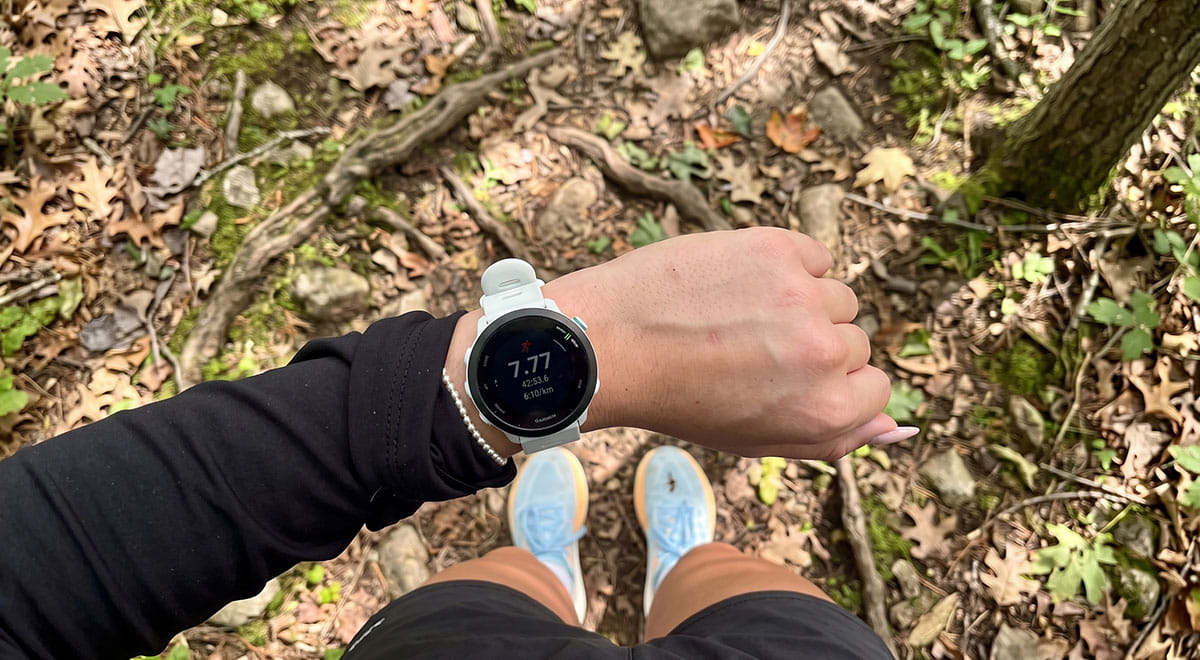
For me, Forerunner 55’s advantage was not one spectacular metric, it was the absence of friction. Starting a run took two button presses, data screens were readable in rain, and auto-lap alerts arrived exactly where I expected on my measured park loop. The pace graph after each run was easy to understand, and Garmin’s suggested workouts felt like a useful nudge rather than a random instruction from an app.
Garmin claims up to two weeks of smartwatch battery life and up to 20 hours of GPS use. In my mixed-use routine, I got around 7 days before it hit 9%. That meant I could charge it once, train for a full working week, and charge it on my rest day.
Its old-school design is also why it works so well mid-run
Forerunner 55 looks dated next to the AMOLED smartwatches below. The bezel is chunky, the screen is muted, and you’re not going to mistake it for a luxury smartwatch.
On a run, though, the old-school design becomes a strength.
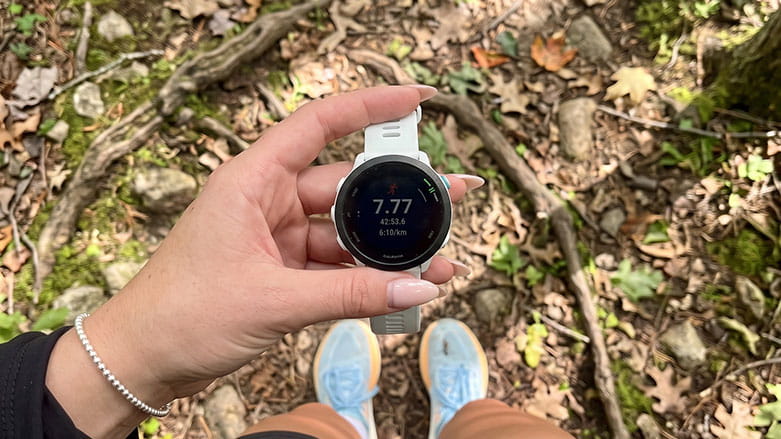
Buttons beat touchscreens when your hands are sweaty, cold (as mine usually are), or half-covered by sleeves. I could pause at road crossings without looking down for more than a second. During 400m repeats, the lap button registered cleanly every time. On the morning runs along the canal, where the damp air makes everything sweaty, Forerunner 55 was the least annoying smartwatch I wore.
The daily suggested workouts were also better judged than I expected at this price. After a harder interval day, it suggested an easier run rather than pushing another demanding session. After two short recovery runs, it nudged me toward a longer steady effort. I don’t follow suggestions from smartwatches blindly, but I take them seriously, and for a beginner or returning runner who wants structure without building a plan from scratch this can be useful.
If you want full-color maps, music without a phone, a touchscreen, richer smartwatch features, or more advanced training analysis, this is not the bargain version of a flagship Garmin. It’s just a simpler running watch with Garmin’s basics done well.
Amazfit Active Max is a budget pick for runners who want a bigger screen and maps
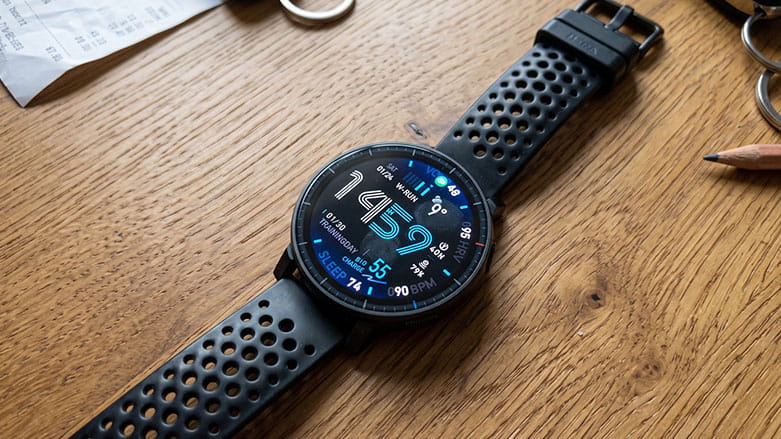
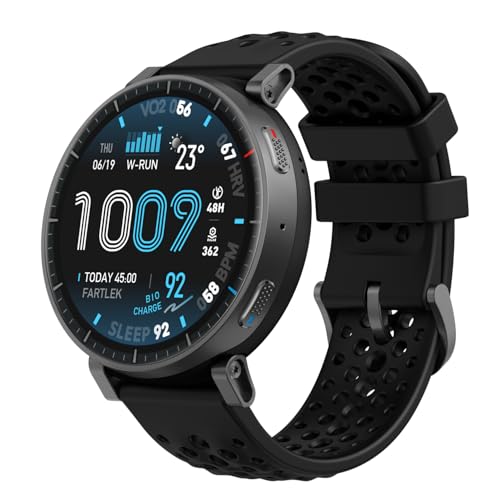
Amazfit Active Max was probably the most nice-looking smartwatch I tested. Its large AMOLED display made route screens, pace fields, and notifications easier to read than on the Forerunner 55, especially indoors or during sunnier days.
Amazfit claims up to 25 days of battery life, though my always-on-display setup with regular GPS runs landed at slightly more than eight days. That is pretty excellent for a bright-screen watch in this category.
Active Max also offers offline maps, a large set of sports modes, and support for compatible external heart-rate sensors. In practical terms, that made it feel more ambitious than the price suggests. On my 12.4km canal-side run, having a route visible on the wrist was genuinely useful if I took a wrong bridge and needed to find my way to the correct path.
The trade-off is size and precision in trickier conditions. It looked too large on my wrist, and under tree cover its track occasionally wandered to the wrong side of the path. The total distance was still usable for casual training, but if you want interval accuracy, I wouldn’t pick it.
Buy this if you want maximum display, mapping convenience, and battery for the money. Skip it if compact comfort and the tightest GPS trace matter more.
Amazfit Bip 6 is the best cheap smartwatch I’d recommend to a first-time runner
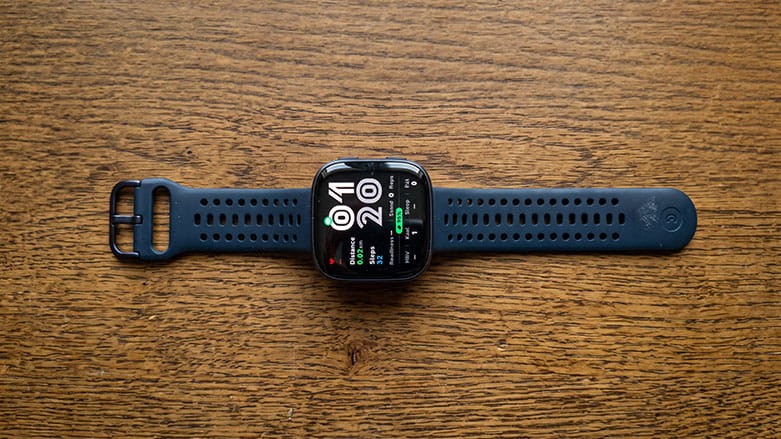
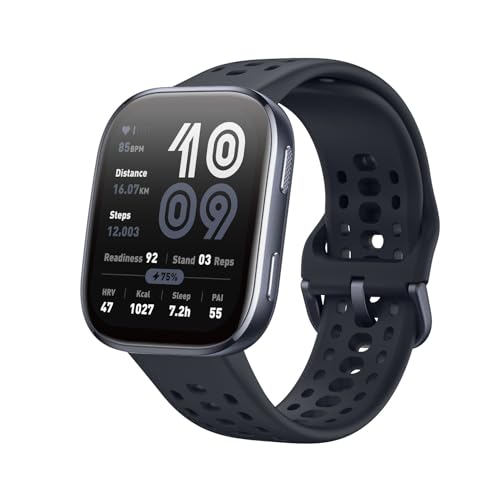
Amazfit Bip 6 is the value option I kept mentally defending throughout the test.
It gives you built-in GPS, a large AMOLED screen, sleep tracking, daily activity stats, 5ATM water resistance, and downloadable maps and routes. Amazfit claims up to 14 days of battery life; I got around 6–7 days with my run-heavy routine. That is more than enough for a beginner who wants to stop carrying a phone for distance tracking.
During easy runs, Bip 6 gave me the core information I actually cared about: current pace, distance, elapsed time, heart rate, and post-run route. The screen was easier to read than Forerunner 55’s, and the smartwatch was comfortable enough to sleep in without feeling the weight.
Where it falls behind Garmin is interpretation. The app gives you plenty of data, but there’s no truly useful ‘what should I do next?’ feature. If you’re building toward a 5K, 10K, or first half marathon, it will record the work, it just won’t guide the work as convincingly as Forerunner 55.
For most new runners, though, that is an acceptable compromise.
Amazfit Active 2 is a nicer-looking sub-$100 hybrid
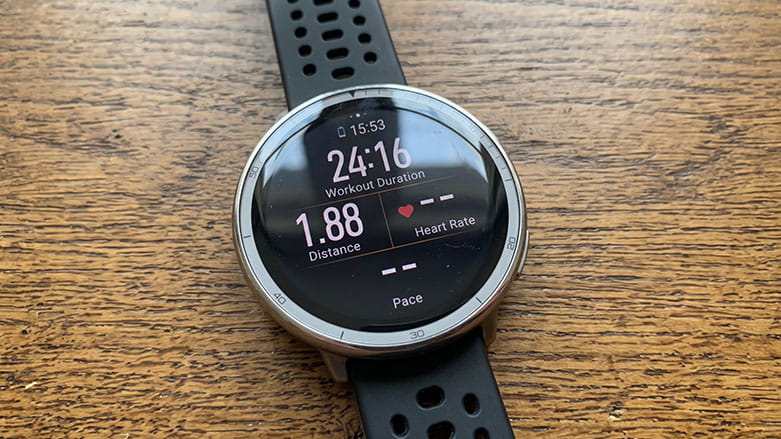
Amazfit Active 2 is the watch I would choose if I wanted a budget running smartwatch that did not look quite as much as a sports tracker.
Its round AMOLED display is bright, the case is more compact than Active Max, and it still gives you built-in GPS, onboard maps, 5ATM water resistance, and compatible external-sensor support. In my testing, it handled the 5km and 8.2km routes well enough for everyday training, and the lighter case made it easy to wear overnight.
The catch is that it feels more like a simple wrist-watch that can track your workout rather than being an actual smartwatch. Active 2’s app experience is broad, but I spent more time tapping around to find what I wanted after workouts than the actual workout itself.
I think it’s a solid pick for gym users, casual runners, and anyone who wants one affordable watch for steps, sleep, notifications, and a few runs each week. It is less convincing for runners who want a training plan conveniently on the wrist.
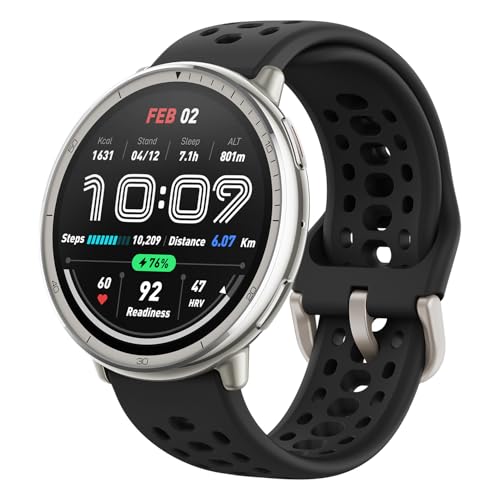
CMF Watch 3 Pro is a GPS bargain, but not without compromises
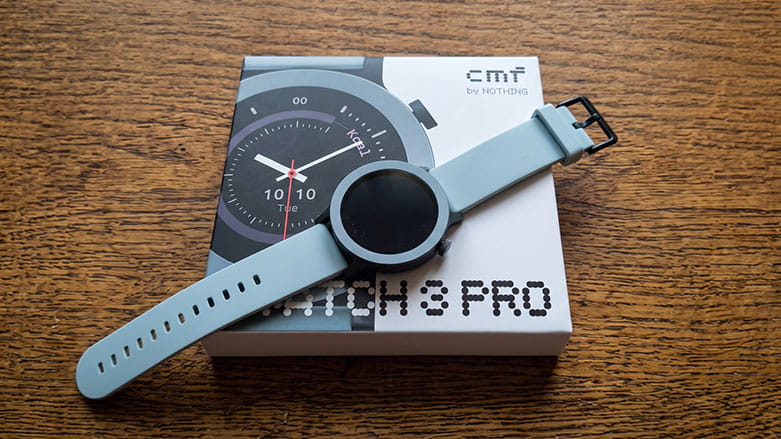
CMF Watch 3 Pro stood out because it brings dual-frequency GNSS into this budget-focused comparison. In my repeat-route testing, it produced one of the cleaner traces on open roads and handled a route along the canal better than several rivals.
That makes it interesting if GPS consistency is the biggest frustration with your current smartwatch.
The rest of the watch is more limited. My battery dropped to five days with regular workouts and the display settings I prefer. It also lacks the mature app ecosystem, third-party app support, and payment features that some smartwatch buyers expect. Despite the tough-looking protection rating, I would not buy it primarily as a swim watch because the sports support is not as rounded as I’d want.
For runners, though, the value case is simple: if you care more about route recording than polished smart features, it deserves a look.
Cheapest smartwatches are tempting, but I’d treat them as carefully
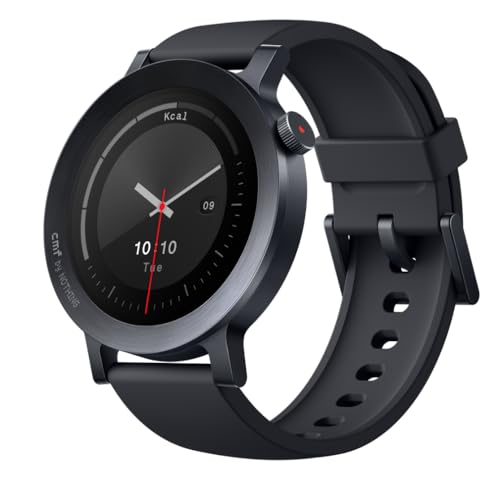
Mibro GS Active2 has the kind of spec sheet that makes bargain hunters pause: an AMOLED display and dual-band positioning claims from a lesser-known brand.
In use, I found it promising but less reassuring. The basics worked, and I liked the screen, but syncing felt slower, menus weren’t very polished, and the GPS trace on my routes drifted more than I’d like to see. If you enjoy trying lesser-known tech and get a generous return window, it could be worth the gamble.
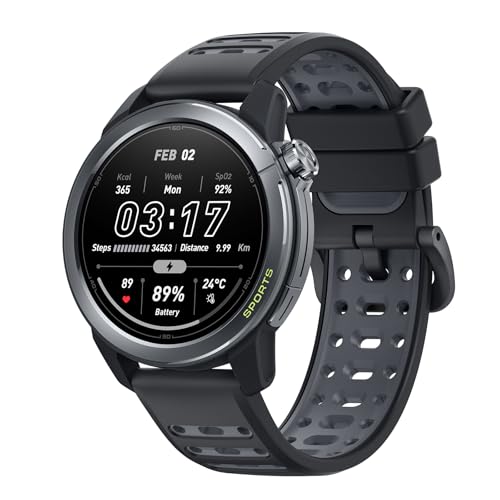
Moutarlier GPS smartwatch appeal rests on being a basic entry point. It recorded my runs and showed basic stats, but it was the only watch here I wouldn’t recommend for goal seeking people. Battery life was shorter, the app felt too basic, and the GPS errors were large enough to throw me off during my run.
If you just want proof that you moved, it’s fine. If you are training with intent—it’s better to spend a bit more on a better smartwatch.
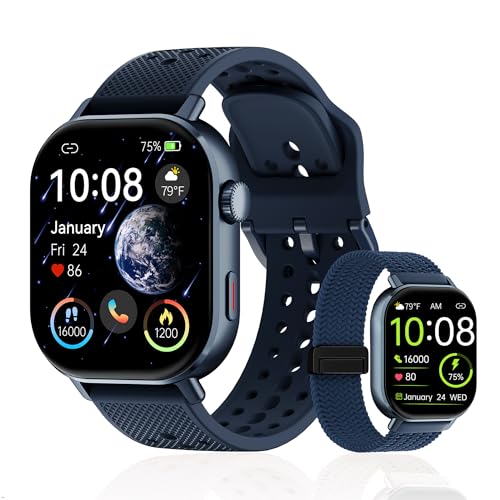
The right running watch under $200 depends on how you train
If I were a new runner who wants a smartwatch to make training easier, I would buy a Forerunner 55 today. It has the most coherent running experience, the best button-led workout flow, and the fewest moments where I wondered whether saving money wasn’t actually worth it.
If I were buying a smartwatch for a runner who values screens, maps, and battery over training tools, I would pick Amazfit Active Max. Bip 6 is most suitable for people on the budget, while the no brainer comfort option is definitely Active 2. On the other hand, if GPS spec value matters for you above all else, you should consider CMF Watch 3 Pro.
The key isn’t to chase the longest feature list. Think whether you can read it while moving, trust the distance enough for your routes, go a week without charging anxiety, export or sync your data where you need it, and understand what the app wants you to do next.
You don’t need a $500 Garmin for everyday running. I’d buy Garmin Forerunner 55 first if training guidance matters, Amazfit Bip 6 if the budget is tight, and Amazfit Active Max if you want a solid smartwatch for an approachable price.