Fitbit Air vs. Garmin Cirqa—one meant for serious fitness tracking, the other for casual wellness
Garmin Cirqa and Fitbit Air are both well-established names in the wearable industry. Both are screenless, minimalistic, and designed to deeply monitor and track your activity and overall wellbeing.
Although both target similar users, they take completely different approaches. It’s difficult to distinguish which one is better, but before investing in one, you should consider whether you prefer reliable data or AI-driven guidance more.
To help you understand how they differ, we decided to perform our own in-house tests. Instead of focusing on their marketing claims and specifications, we used these devices ourselves for several weeks and paid close attention to comfort, usability, and overall performance. Before you spend your money, here are our honest thoughts on Garmin Cirqa vs. Fitbit Air.
| Garmin Cirqa | Google Fitbit Air | |
| Subscription requirements | None | Optional |
| Battery life | Up to 10 days | Up to 7 days |
| Weight | 17g | 12g |
| Water resistance | Up to 50 meters | Up to 50 meters |
| GPS support | Connected GPS | Connected GPS |
| Workout tracking | 80+ activities | 40+ activities |
| App compatibility | Garmin Connect | Google Health |
| Recovery and readiness | Body battery and Training readiness | Daily readiness score |
| Warranty | 1 year | 1 year |
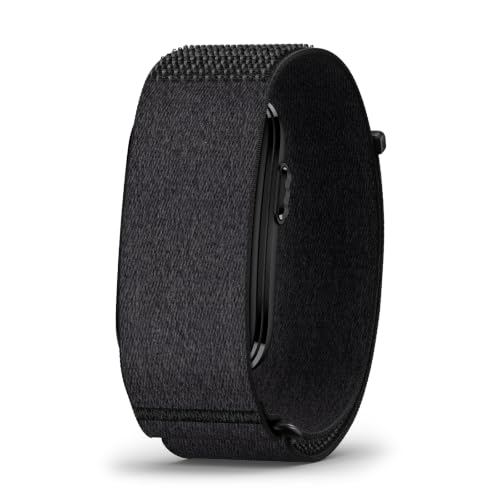
Garmin Cirqa vs. Fitbit Air: Key differences
At first glance, Fitbit Air and Garmin Cirqa might look almost identical, considering their overall purpose. Both are completely screenless and are meant to help you track your wellbeing. While these devices are similar in some ways, our tests showed they differ in several areas.
One of the key differences between Garmin Cirqa and Fitbit Air is their payment models. Garmin Cirqa is a one-payment type of device, meaning that once you purchase it, you won’t need to pay any extra for a subscription. Fitbit Air, on the other hand, is a bit cheaper and does function without a subscription, but you do need a paid membership to unlock its coaching tools.
Additionally, FitbitAir has no displays or buttons, whereas Garmin Cirqa has a button that lets you quickly start and stop your workouts. Another key difference is their battery life, which is a key consideration when choosing a wearable. With Garmin Cirqa, you’ll be able to use it for up to 10 days without charging, while Fitbit Air will last up to 7 days.
Sports-first vs. wellness-first approach
While both devices definitely focus on fitness and health, we noticed that they take different approaches. Garmin Cirqa seems to take a more sports-first approach, as it provides detailed insights into your training load, physical activity, and recovery. Even though Fitbit Air also offers features tailored for athletes, we believe it’s more focused on wellness, including metrics like stress management and mood logging.

Design, comfort, and everyday wear
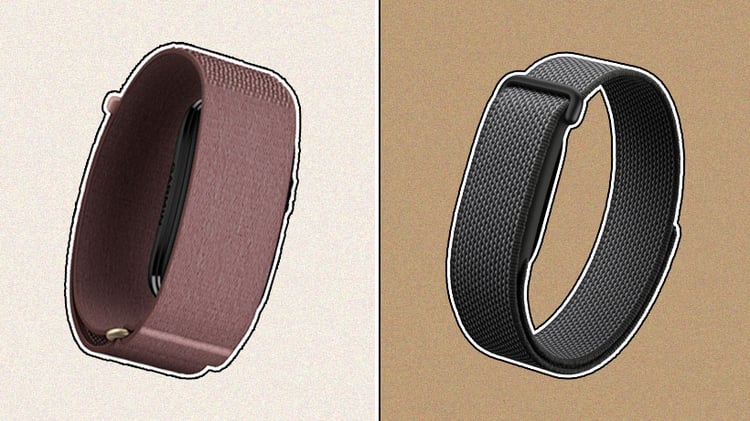
Both trackers are meant to be worn 24/7, so it’s important to choose one that you’ll be comfortable wearing daily. At first glance, Garmin Cirqa and Fitbit Air might look very similar, especially if you have never used a tracker before, but we found that they differ quite a bit.
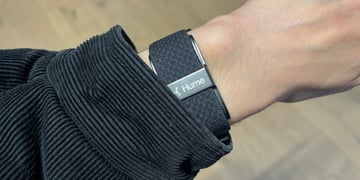
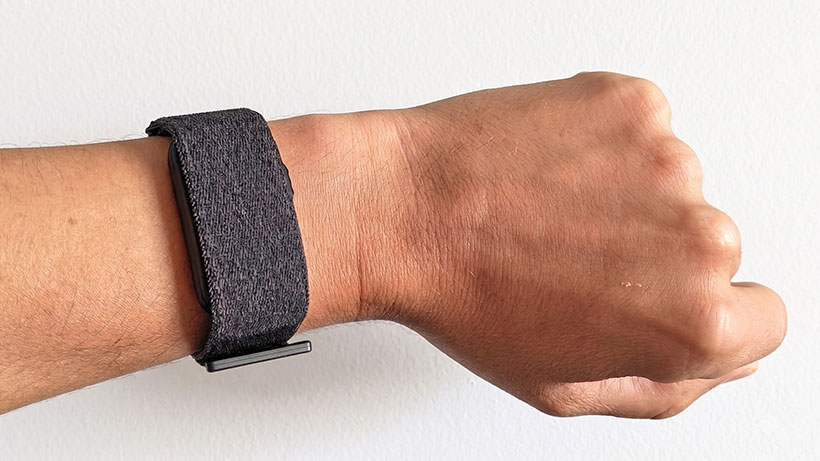
While both are very lightweight, Fitbit Air proved to be sleeker of the two. It’s made out of recycled polycarbonate and PBT plastics and weighs only 12 grams. It’s also very thin, so you can comfortably wear it under long sleeves. Besides, if you like wearing jewellery, Fitbit Air will blend in quite well. During our tests, we got used to it pretty quickly, so it didn’t bother us while working out. Moreover, since it’s water-resistant, you can even wear it when swimming or showering.
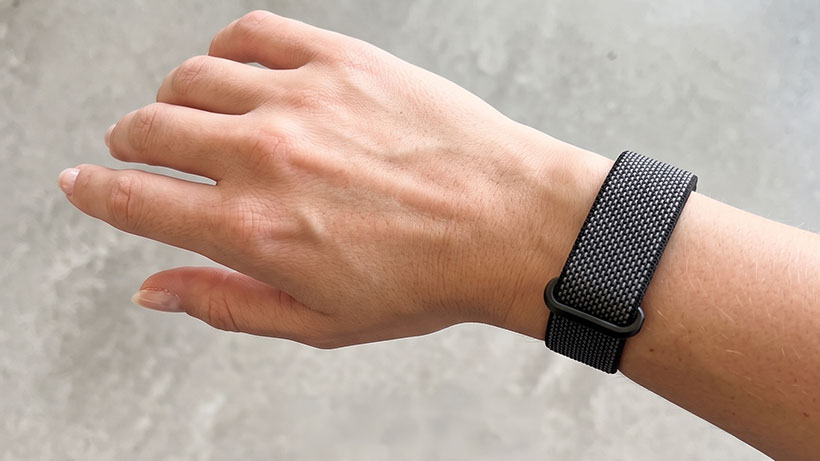
Garmin Cirqa is a bit more bulky, weighing around 17 grams, but it’s still very light compared to some other trackers. It’s made out of quality nylon, which we found extremely comfortable, as it wicked away sweat much better than other materials. We also believe that it’s a perfect choice for working out. While both are very minimal, unlike Fitbit Air, Garmin Cirqa has a physical button on the side, which can be used to quickly start and end your workouts without the need to open the companion app.
Comfort during sleep
If you want to get the most out of your tracker and monitor your sleep as well, you’ll need to wear your device 24/7—to bed as well. During our tests, we slept with both Fitbit Air and Garmin Cirqa, and didn’t have any issues with either. The Fitbit Air is a very lightweight device, so you get used to it pretty quickly. Garmin Cirqa is made out of very soft material, so even if you feel something on your wrist, it shouldn’t really bother you when sleeping.

Health tracking and recovery features
Both Garmin Cirqa and Fitbit Air monitor and track various health metrics that may support your recovery and overall wellbeing. While you’ll be able to track similar data, these devices take different approaches to health tracking.
After testing Fitbit Air, we believe that it does an excellent job in overall wellness monitoring. It’s packed with different sensors, including red and near-infrared sensors to monitor SpO2, skin temperature sensors, and irregular heart rhythm notifications. If you decide to sleep with it, it provides sleep stages and a Sleep Score, which will help you evaluate the quality of your rest. Besides, there’s a smart wake alarm that will vibrate on your wrist to help you wake up.
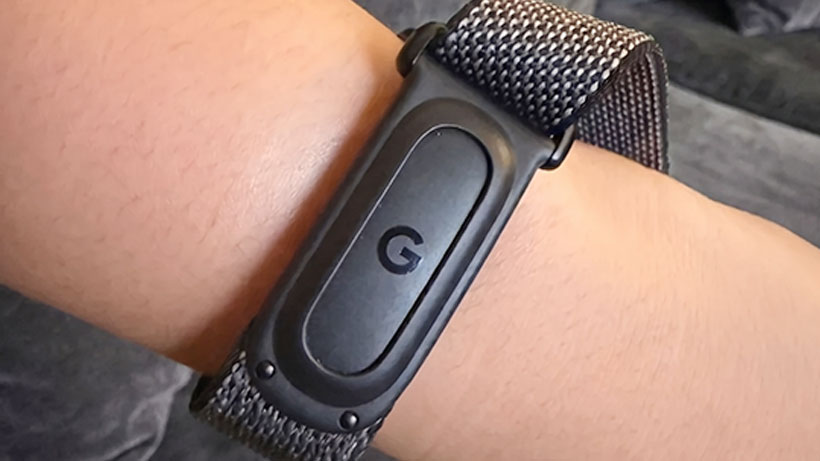
When it comes to day-to-day wellness monitoring, Fitbit Air offers a mood-logging system, mindfulness content, and a Stress Management Score. It also focuses heavily on recovery, which you can understand better by tracking your Cardio Load and Daily Readiness Score. What makes Fitbit Air stand out is the AI-driven coaching. Using it, you’ll get useful insights and recommendations that could improve your wellbeing, rather than just raw data. However, to get this, you will need to get a paid subscription.
Garmin Cirqa, on the other hand, immediately puts all your data into context, and it doesn’t cost any extra. It constantly monitors your heart rate and HRV, which are also factored into your Body Battery Score. Monitoring this Body Battery Score should help you to better understand how tired you actually are. It also tracks your sleep stages, circadian rhythm, and breathing patterns at night, which are later used to generate recommendations on how much sleep you need to fully recover.
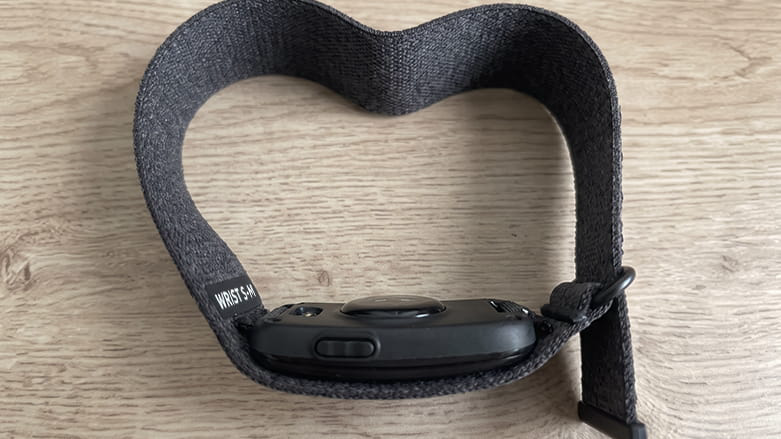
If you’re considering fitness tracking, we believe the Garmin Cirqa is one of the top choices for athletes. It offers features such as Training Readiness, Training Status, and Workout Benefit, which explain how your workout can affect your body. Overall, we believe that Garmin is much more sports-focused.
Fitness tracking and workout experience
If you invest in a fitness tracker, you should expect much more than simple step counting. After testing both Garmin Cirqa and Fitbit Air, we believe they both deliver quite detailed sports tracking.
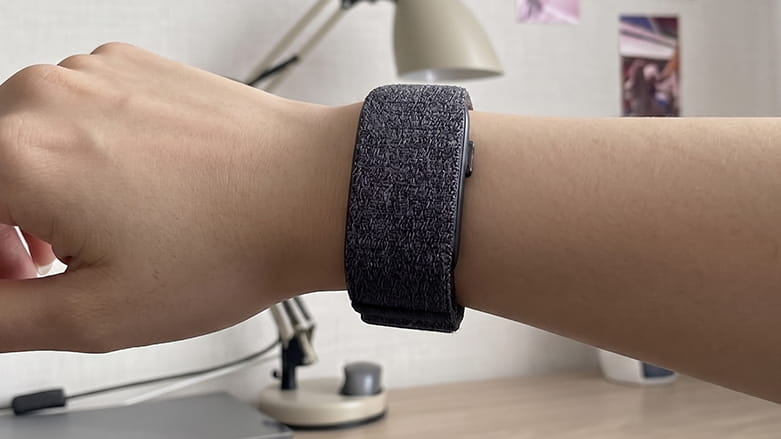
Garmin Cirqa proved to be a highly fitness-oriented tracker, perfect for runners, cyclists, other athletes, and fitness enthusiasts. It can recognize and track over 80 different sports activities, including yoga and strength training.
Having a physical button to start and end our workouts was also a game-changer for quick, effective sessions.
If you’re working out outside, Garmin Cirqa uses connected GPS via your phone for route mapping. There’s also a Workout Benefit feature that explains how each session affected your endurance.
This tracker also might be useful for faster recovery. Using the Training Status feature might help you balance your workouts with proper recovery.
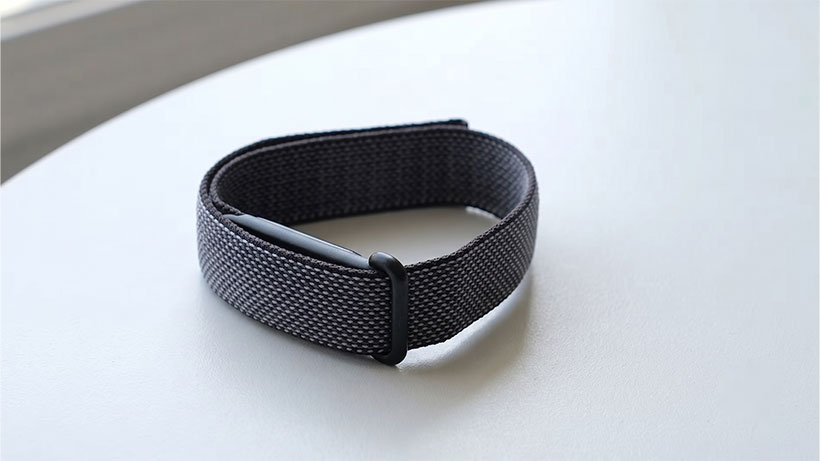
We found Fitbit Air to be much more useful for casual workouts due to its simplicity. It supports over 40 exercise modes and quickly picks up simple walks, runs, and even swim sessions without opening the app. It’s also great for tracking calories, your cardio load, and active zone minutes, which will help you to keep on track. However, we found that opening the app to pause workouts was not always convenient.
Mobile app and software experience
Fitness trackers are actually quite useless without an app, so we thoroughly went through both Fitbit Air and Garmin Cirqa companion apps. Our tests revealed that both apps will provide you with a lot of data about your wellbeing, but they differ in their approaches.
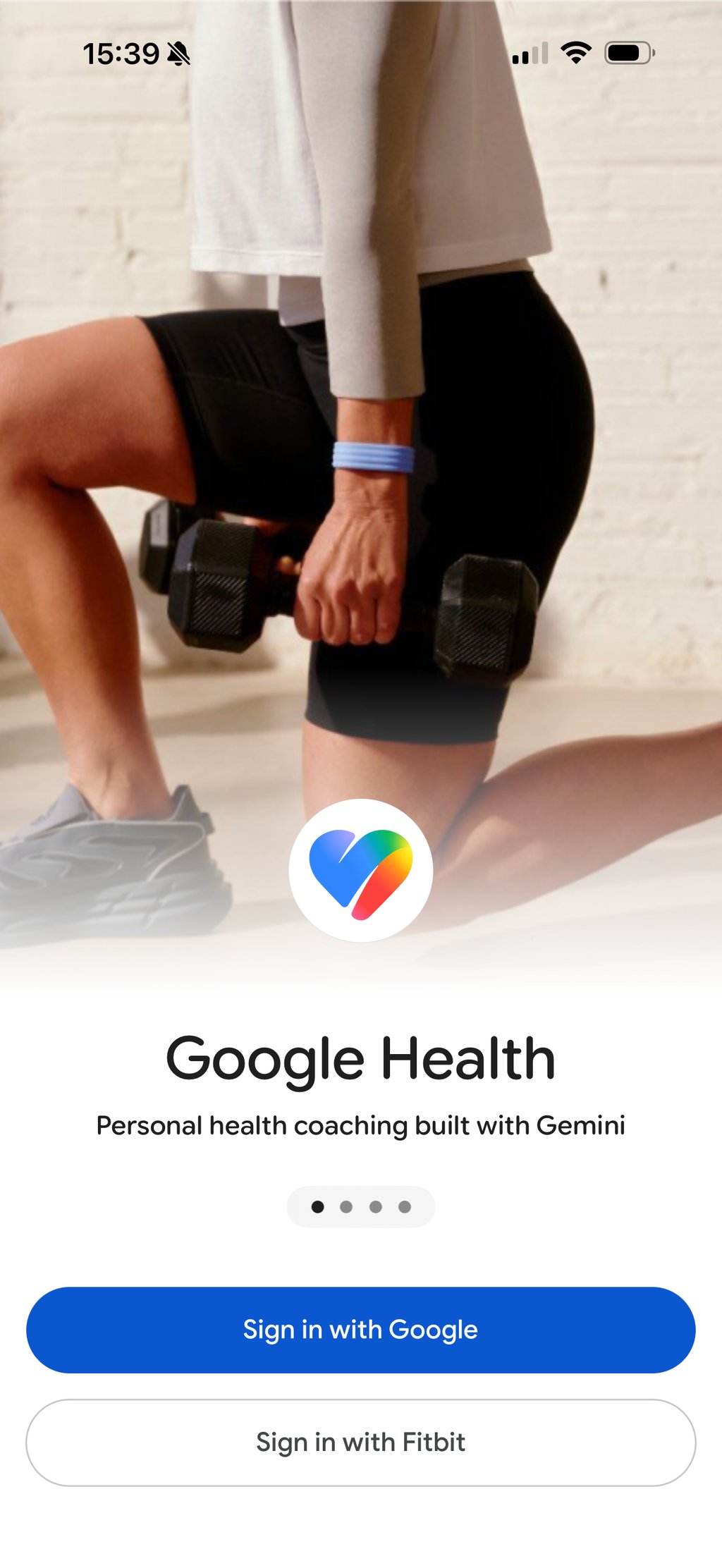
Fitbit Air shows all your data through the Google Health app. Overall, the app looks modern, and everything is presented quite clearly, so it’s suitable for beginners as well as experienced athletes. We didn’t really have any issues navigating it. What we liked most was Fitbit’s coaching and recommendations. We believe this might offer far more value than raw data to some people. Besides, you can sync the app with other third-party health apps to keep everything in one place.
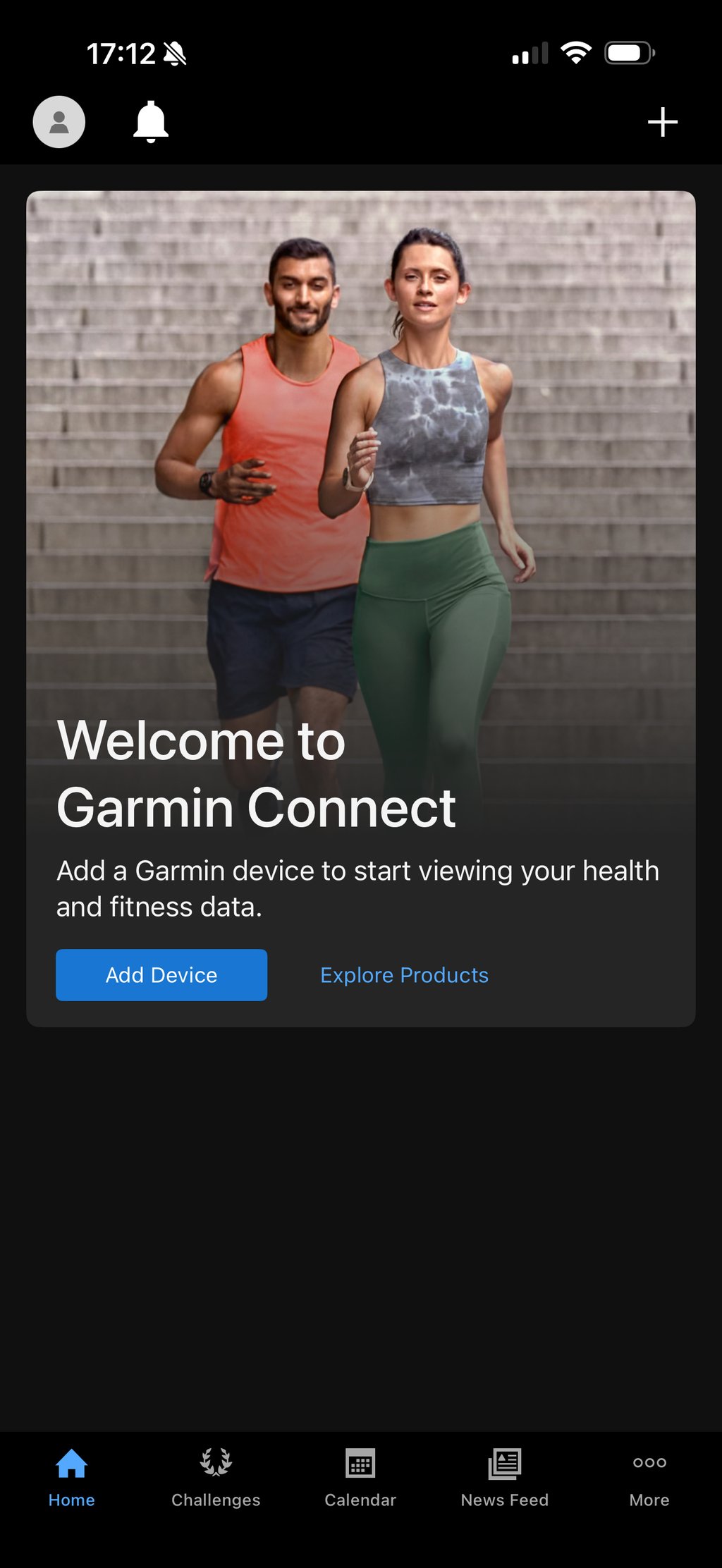
Garmin Connect is much more data-focused, so be prepared to see a lot of charts and numbers about your wellness trends. While it might be a bit overwhelming at first, you should get used to it quite quickly.
Inside the app, you’ll be able to track your training stats, sleep, and recovery metrics. It can also be synced with other apps like Strava or MyFitnessPal.
Garmin Connect definitely provides detailed metrics and guidance, and it doesn’t cost anything, whereas with Google Health, you’ll need a paid subscription to access its AI-coaching features.
Battery Life and charging
Since you’ll probably wear your tracker everywhere you go and even to bed, it’s important to choose one with a decent battery life. Our tests revealed that both Garmin Cirqa and Fitbit Air can be worn for multiple days without you even having to worry about them running out of battery.
Garmin Cirqa can last up to 10 days without charging. Keep in mind that during our tests, we wore it 24/7 and used almost all of its features quite excessively. Besides, when you need to charge it, a full charge takes only about 90 minutes.
After testing Fitbit Air, we found that it offers up to 7 days of battery life. Similarly, a full charge also took around 90 minutes, but Fitbit Air also has a lifesaver quick charge feature, which can give you almost a full day of battery life in only 5 minutes. Nonetheless, Garmin Cirqa wins out over Fitbit Air in terms of battery life because it can be taken off to charge less frequently.
Price, subscriptions, and overall value
Pricing is one of the key factors for most of us when choosing a device. However, you should focus more on overall value for money than on the initial price. Especially when choosing between Fitbit Air and Garmin Cirqa.
Taking a quick glance at the price, Fitbit Air is definitely cheaper than Garmin Cirqa, at least the initial price for the device itself. However, after receiving our devices, we quickly realized that the long-term ownership costs are actually quite different.
Garmin Cirqa is a subscription-free device, meaning that once you purchase it, you don’t need a subscription to access its features. Of course, there is a premium membership plan that you can get, but we found it completely optional.
On the other hand, we believe you’ll need a premium subscription to use Fitbit’s more advanced features. While theoretically, Fitbit Air can be used without an additional membership, without it, you won’t be able to use its AI-driver coaching, which is one of the main features.
Overall, if you only need a basic fitness tracker without any extra features, Fitbit Air is definitely the cheaper option. However, if you want more advanced health tracking, Garmin Cirqa is the better (and even cheaper, if you use it for quite some time) choice in the long run.
More wearable comparisons
Garmin Cirqa vs. Whoop: Which recovery and fitness tracker should you buy?
Whoop 5.0 review: A bold leap into longevity with familiar drawbacks
Best fitness trackers of 2026: Our tested top picks
Final verdict: Garmin Cirqa or Fitbit Air?
After testing Garmin Cirqa vs. Fitbit Air, we found Garmin Cirqa to be the winner as it offers long-term value. While it does an excellent job regarding fitness tracking, it still has quite a few features to monitor sleep, recovery, and overall wellbeing. While the initial price is a bit higher, you don’t need to worry about any additional subscription fees, making it a good investment.
Even though Garmin Cirqa proved to be the better option, it doesn’t mean that Fitbit Air isn’t worthy of attention. We believe that Fitbit Air is a great alternative if you’re looking for something lightweight, beginner-friendly, and wellbeing-oriented. However, while the initial price is quite low, you will need a recurring membership to use all features, including AI coaching, which means you’ll need to pay regularly for the subscription.
FAQ's
Is Fitbit Air more accurate than Garmin?
No, Fitbit Air is not more accurate than Garmin as both have proved to perform quite well and excel in different areas. Fitbit Air might be a better fit for overall wellbeing tracking, step counting, and sleep monitoring. Garmin, on the other hand, excels in terms of fitness tracking, making it a much more popular choice amongst athletes.
Does Garmin Cirqa require a subscription?
No, Garmin Cirqa doesn’t require a subscription. Once you pay the initial price for the device, you can use the companion app and its main features for free. There is a premium subscription available with some extra advanced features, but it’s completely optional.
Which has better sleep tracking?
Fitbit Air has better sleep tracking as it’s focused more on general wellbeing and longevity. However, even though Garmin Cirqa is a fitness-first tracker, it still proved to accurately track your sleep and provide detailed insights about your rest.
Which is more accurate for heart rate monitoring?
Both Garmin Cirqa and Fitbit Air provide heart rate monitoring. In our testing, their readings were generally consistent with expected values. Overall, Fitbit Air might be better for monitoring your everyday accuracy, while Garmin Cirqa for tracking your heart rate during workouts and recovery.
References
-
Digital Health Journal.
-
The Lancet Digital Health.