Chest straps might be the gold standard for accuracy, but plenty of people find them uncomfortable, restrictive, or just annoying to put on before every workout—so we tried to find alternatives that matched in quality and accuracy.
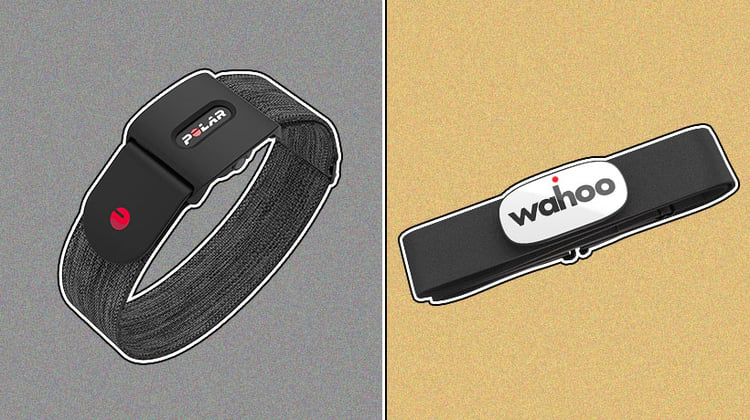
After testing a bunch of devices, both Polar Verity Sense and Wahoo TICKR FIT stood out for our team: they are lightweight and comfortable enough to forget you're wearing them. During our testing, they also achieved chest-strap-level accuracy in steady-state training. So, which one is the right fit for you?
The difference comes down to how each device fits into your specific routine—whether that's swimming, weightlifting, running, or general gym use. We delved deeper, so you could make an informed decision.
|
|
|
| Title | Polar Verity Sense | Wahoo TICKR FIT Heart Rate Armband |
| Price | $104.95 | $89.99 |
| Sensor type | Optical sensor | Optical sensor |
| Wearing position | Arm or temple (inserted into the goggles) | Arm |
| Battery | Rechargeable | Rechargeable |
| Battery life | Up to 30 hours of active use | Up to 30 hours of active use |
| Internal memory | Yes | No |
| Bluetooth support | Yes | Yes |
| ANT+ support | Yes | Yes |
| More info | Buy on Amazon | Buy on Amazon |
Polar Verity Sense vs Wahoo TICKR FIT: Key differences
Polar Verity Sense and Wahoo TICKR FIT are quite similar—but not the same. The clearest difference lies in their versatility: where Wahoo TICKR FIT lacks, Polar Verity Sense delivers.
Polar Verity Sense can be worn on the arm or clipped onto swim goggles via the temple position—so if you are a frequent swimmer, this is a clear advantage. Wahoo TICKR FIT is arm-only, so it's better suited to land-based training like running and gym sessions.
Polar Verity Sense may also be a better choice for hikers and marathoners due to the internal memory. Having that memory means you can train anywhere, even if the mobile data is patchy. And for those who are trying to get rid of phone addiction, just leave it at home and go for a run—and you will still be able to track it with Polar.
So, Polar Verity Sense, being slightly more expensive than Wahoo TICKR FIT, comes with these good-to-have features that are not necessary for all—but might be essential for some.
Winner: Polar Verity Sense
Design, fit, and comfort
Both devices are built to be discreet and lightweight.
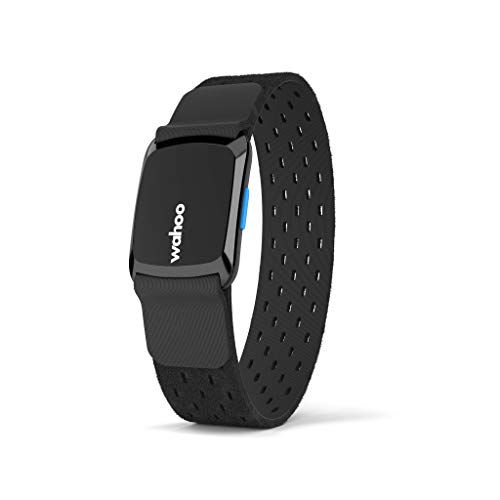
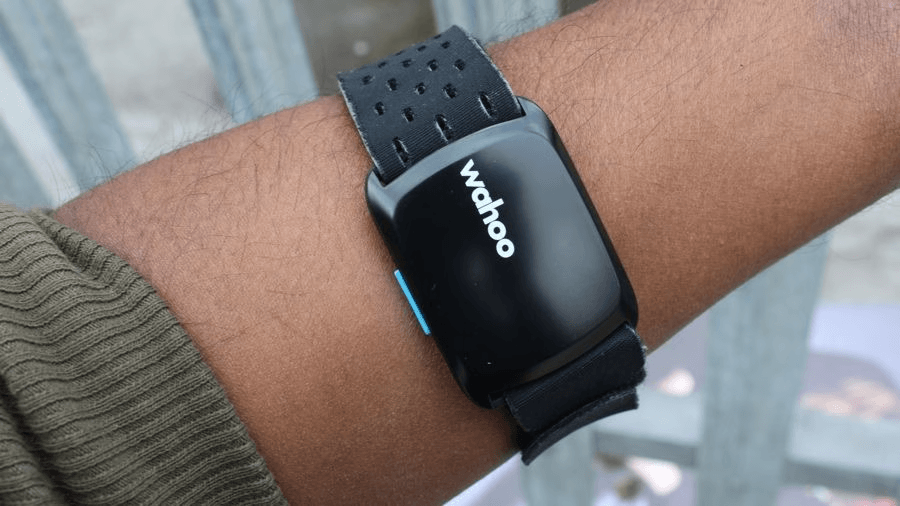
Wahoo TICKR FIT ships with two stretchable, perforated straps (small and large) that wrap around the forearm with velcro, holding a small rectangular sensor unit with a single power button and an LED status light.
It's light enough that most wearers stop noticing it mid-workout, though the velcro closure has been known to slip slightly during high-movement activities like weightlifting, or when worn underneath a jacket in wet conditions.
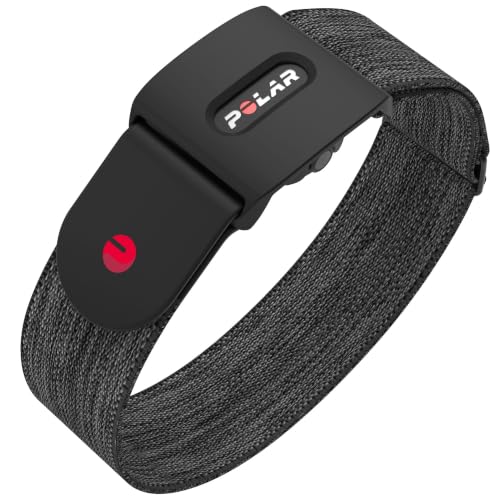
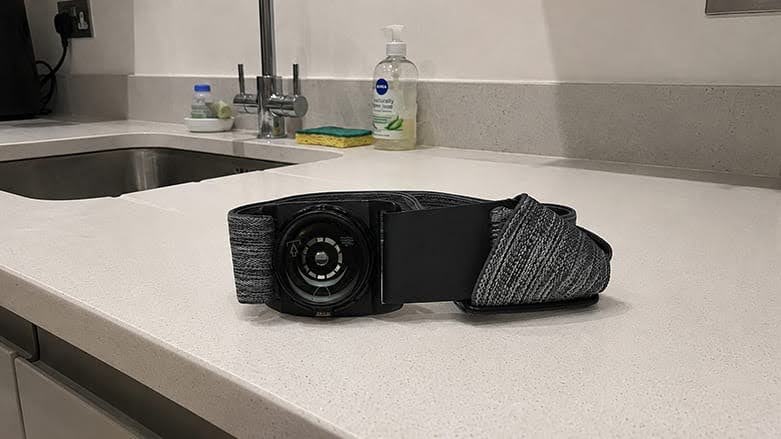
Polar Verity Sense takes a slightly different design approach: a circular, puck-like sensor that clips into an adjustable strap for arm wear, or a separate clip for temple/goggle placement. It sits against the skin and holds its position well, whether under tight clothing or during more dynamic movement.
Both are comfortable enough to wear for a long workout without chafing—the kind of comfort that's the entire reason these armbands exist in the first place. If comfort is your priority here, you can go with whatever best suits your other needs.
Winner: Tie
Heart rate accuracy and workout performance
We have tested both against chest straps, and both hold up well during steady-state training.
Wahoo TICKR FIT, benchmarked against a Polar H10 chest strap during treadmill running, showed as little as a 1-2 BPM difference in average and max heart rate—even during more intense interval sessions, where wrist- and arm-based optical sensors often start to lag. The one notable inaccuracy came when the sensor physically slipped out of position underneath a jacket, which is a design/fit issue rather than a sensor limitation.
One area worth flagging: Wahoo TICKR FIT's calorie burn estimates ran consistently higher than the H10's—by roughly 50-100 calories per hour-long session. But we wouldn’t recommend trusting any device when it comes to calories burned—not just these two. Calorie data depends heavily on each brand's own algorithm and shouldn't be treated as clinically precise.
Polar Verity Sense, tested against both Apple Watch and Polar's own H10 chest strap, performed similarly well during cardio work, though it showed the same slight lag behind the chest strap that's typical of optical sensors during rapid heart rate changes.
Winner: Tie
Swimming and multisport use
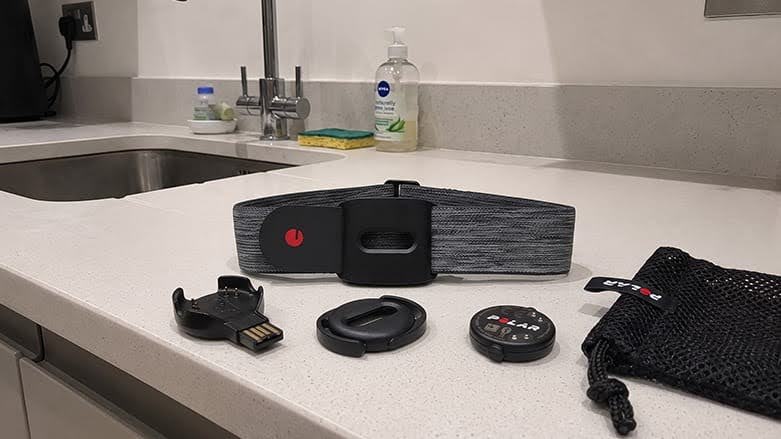
This is where the two devices diverge most sharply. Polar Verity Sense can be inserted into a dedicated clip that attaches to swim goggles, letting it track heart rate at the temple while you swim—a feature that opens it up to triathletes and swimmers who want heart rate data without a chest strap in the water.
Wahoo TICKR FIT has no equivalent. It's rated water-resistant (IPX7), so it can handle sweat and rain without issue, but it isn't designed or positioned as a swim-tracking tool.
If swimming is part of your training mix, Polar’s ability to be used in the swimming goggles makes the decision for you.
Winner: Polar Verity Sense
Battery life and everyday practicality
Both devices are rated for up to 30 hours of active use on a full charge, so there's no meaningful gap here. The battery is also rechargeable—you might notice that devices that offer longer battery life sometimes use replaceable batteries, so we recommend looking into that if you want a device that lasts longer.
They use manual on/off buttons—which can be a drawback for some, as you do need to remember to switch it off after a session to avoid battery drain.
Wahoo TICKR FIT also has an LED that flashes blue when paired and red when the battery runs low—a simple system, though it does help. A similar statement could be said about Polar, which has an LED to indicate the battery level: red blinking slowly for low, red blinking rapidly for critically low.
Polar Flow Verity has three different training modes indicated by the LED light: blue for heart rate mode (broadcasting the metrics to another device), green for recording (saving the data), and white for swimming. At first, this may not be as intuitive, but as with all screenless devices, after a few sessions with it, you get the hang of it.
Winner: Tie
Polar Flow vs. Wahoo app
Polar Flow and the Wahoo app both serve as the companion software for pairing, firmware updates, and reviewing synced workouts—though neither is essential, since both devices work with popular third-party apps like Strava and Runkeeper too.
We found Polar Flow to be more dense, which is great for those who are interested in their metrics. But it is also less intuitive and has a more dated interface.
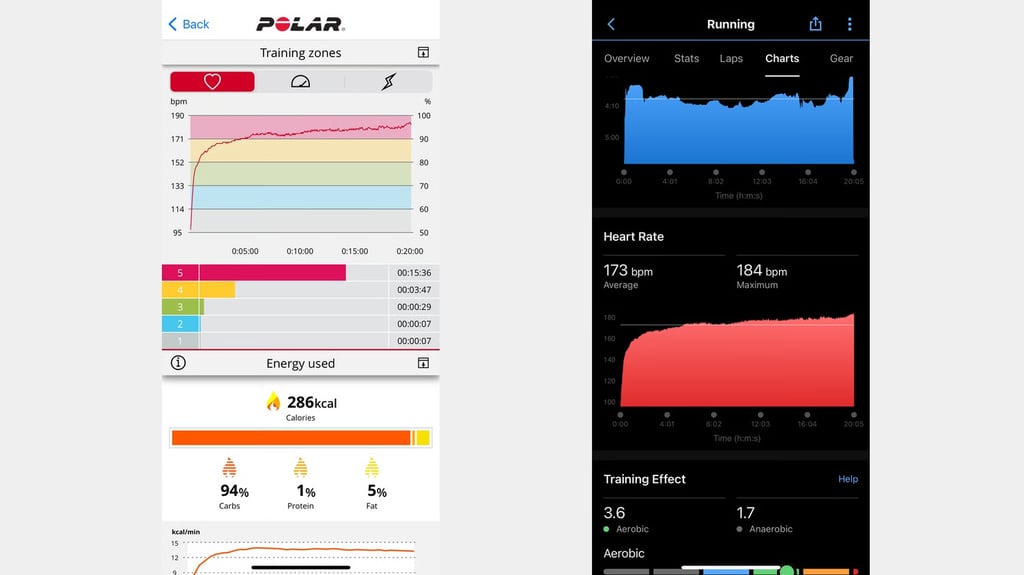
The Wahoo app is a bit more intuitive, with a fresh, up-to-date interface. The basics are easy to understand—but the app also goes beyond that.
For example, the Wahoo app has a so-called mental capacity score, which is determined by a quick reaction test and a questionnaire. This is for you if you want to be more attuned to your emotional and cognitive readiness to work out.
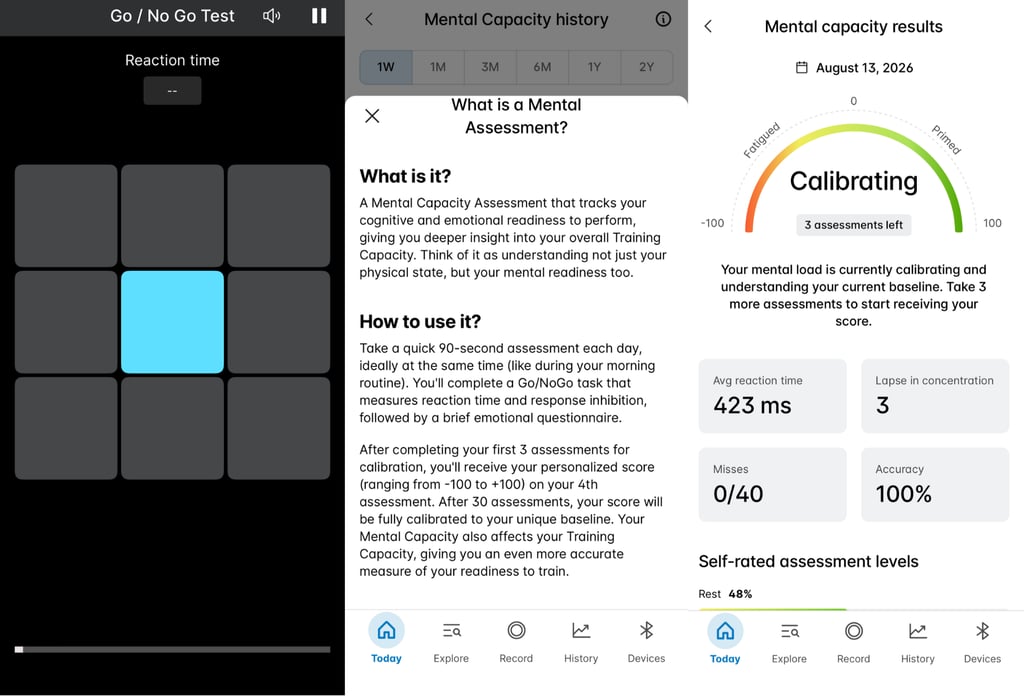
These extras might be an advantage for some—or a nuisance for those who want a straightforward interface.
However, Polar takes the lead here thanks to its web platform, freeing you from relying solely on a mobile app. With Polar Flow, you can analyze your workout history directly on a desktop—a capability Wahoo's app lacks.
Winner: Polar Verity Sense
Price and overall value
Wahoo TICKR FIT is the more affordable of the two—but the difference is quite small.
|
|
|
|
| Title | Polar Verity Sense | Wahoo TICKR FIT Heart Rate Armband |
| Price | $104.95 | $89.99 |
| More info | Buy on Amazon | Buy on Amazon |
Polar Verity Sense sits at a higher price, but that premium buys extra functionality: swim-ready goggle mounting and internal memory for phone-free recording.
If you don't need to track heart rate in the pool and don't mind always having a paired device nearby, Wahoo TICKR FIT should not disappoint you. We found both to be great at what they are supposed to do—track your heart rate.
Winner: Wahoo TICKR FIT
More heart rate monitor comparisons:
Best heart rate monitors: From chest straps to rings, here are our recommendations
Best chest straps: Accurate, reliable, and reviewed by our experts
Garmin HRM 600: Gold standard for chest straps
Verdict: Polar Verity Sense or Wahoo TICKR FIT?
Both are excellent armband heart rate monitors that solve the same basic problem—delivering reliable heart rate data without a chest strap—but they're built for slightly different training profiles.
Choose Polar Verity Sense if you swim as part of your training and want the option to track heart rate via the goggle clip, or if you want internal memory to record workouts without your phone nearby. Moreover, if viewing your data on a desktop is appealing to you, Polar is the option that offers that.
Choose Wahoo TICKR FIT if you train mostly on land, don’t need the internal memory, and want to save some money. Just like Polar, it is comfortable, has a good battery life, and does not disappoint with accuracy.
But if you ask us, we would go for Polar Verity Sense. Even if you don’t think you need the extra features now, you might want them sometime in the future, especially the internal memory, which allows you to track anywhere you go.