
I’ve reviewed smartwatches and trackers for over a decade—these are my current picks for form, function and female-focused features
There was a time when smartwatches weren’t designed for ladies. Smartwatches for women were an afterthought—but, luckily, that’s now changed.
Many smartwatches and fitness trackers had chunky designs, minimal color options, and large displays. If that’s your vibe, then lucky you. If not, there are more choices for the best smartwatch for women these days.
Several smartwatches and trackers now offer much slimmer builds, and wider color choices, and they also have features specifically targeted at women. Some models offer, biometric cycle tracking via temperature sensors, stress tracking, and even fertility highlighting.
I’ve been testing smartwatches and fitness trackers for over 10 years, and I’ve worn everything from the Hume Band to the Oura Ring 4 in the last few months.
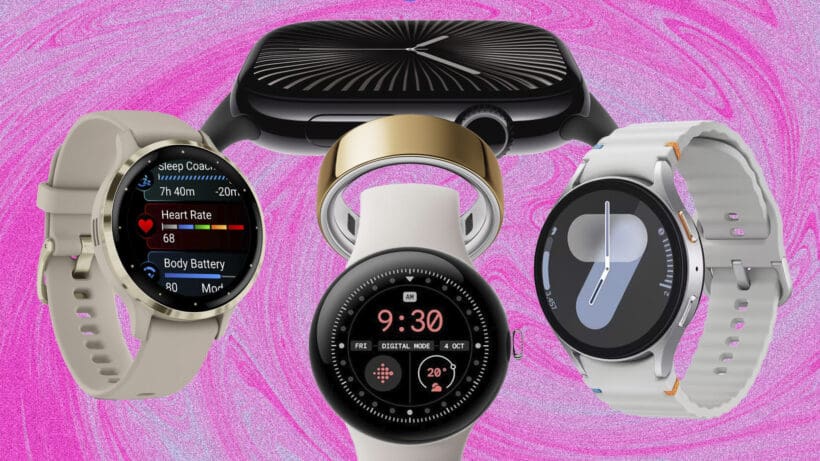
These are my top picks for the best wearables specifically designed for women, offering not only more feminine looks but also features that cater specifically to women.
Quick wearables for women picks:
- Best wearable for women: Hume Band
- Best for recovery: Whoop 5.0
- Best hybrid smartwatch: Withings ScanWatch Light
- Best smart ring: Oura Ring 4
- Best smartwatch for iPhone: Apple Watch Series 10
- Best for Samsung users: Galaxy Watch 7
- Best smartwatch for Android: Pixel Watch 3
- Best smartwatch for athletes: Garmin Venu 3S
How we tested
Wareable has reviewed these smartwatches individually already, but we asked expert women’s tech advocate Britta O’Boyle to wear each one again—and re-test female-first features. Britta evaluated the women’s health features, period tracking capabilities, and insights, which take longer to assess than simple health tracking features. She also tested all the main wellness, health, and smart features while assessing each for comfort, wearability, and design.
Hume Band
- Sizes: Not specified
- Colors: Black
- Tracks: Heart rate, HRV, SpO2, skin temperature, sleep stages (light, deep, REM, awake), sleep quality, activity levels, movement patterns, strain, recovery, Metabolic Capacity, and Metabolic Momentum
- Compatibility: Android 8.0 and later, iOS 14.0 and later
- Price: $249
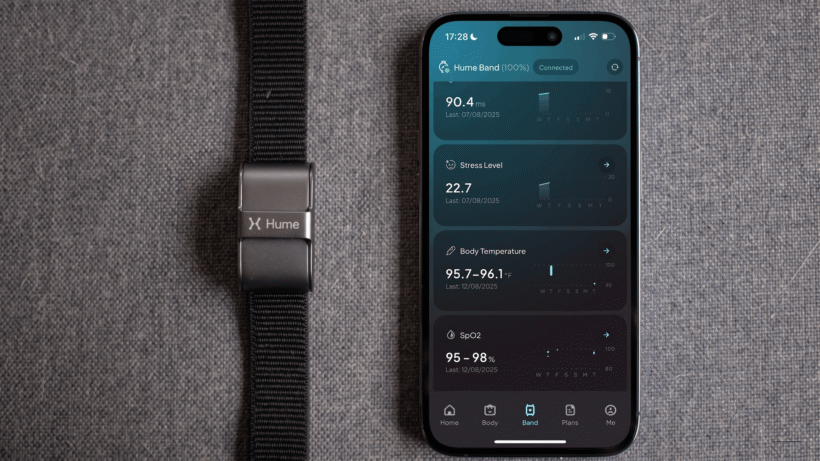
If you’re always on the go and don’t want to be distracted by constant phone notifications, Hume Band might catch your eye. Like a ring on this list, it’s not a traditional smartwatch but is included purposely.
This wellness band quietly collects health data in the background and feeds it into Hume’s companion app. Think of it as a low-distraction health tracker for women who want insights rather than another screen.
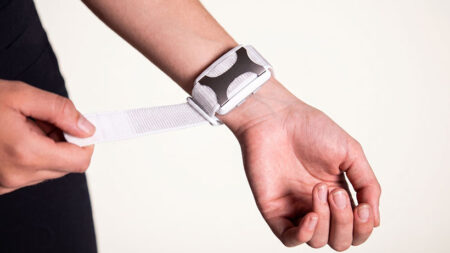
Design-wise, it’s tricky. On the one hand, it looks more like a minimalist fabric bracelet than a piece of tech, blending into everyday outfits better than chunky sports watches do. That softer, screen-free approach also makes it comfortable for sleep tracking.
However, there aren’t many color or material options, which is a bummer since I’d prefer something other than just black. If you’re a classic color lover, you’ll be more than happy to wear this one. But if you like other colors, the band options will disappoint you.
Putting design aside, Hume Band’s core strength is its focus on recovery. It tracks heart rate, HRV, SpO2, sleep stages, skin temperature, and strain, then turns those numbers into scores and trend data in the app.
I really enjoyed the Metabolic Capacity Score feature. Every day, it showed me a 0–100 score representing my body’s energy reserve based on sleep quality, accumulated stress, and recent activity strain. I found it helpful because it made it easier to decide whether to rest more or go to the gym.
Sadly, there don’t appear to be dedicated cycle-tracking tools, so it’s not a good fit for menstrual health insights. However, the sleep, recovery, temperature, and stress data could still help spot patterns across different life phases, especially if you track cycles elsewhere.
Overall, even though it lacks some dedicated women’s health features, it’s a good wearable choice if you prefer wellness tracking without flashy notifications.
WHOOP 5.0
- Sizes: Not specified
- Colors: Offers a wide range of finishes and band colors
- Tracks: Heart rate, HRV, sleep stages, recovery, strain, stress, activity load, respiratory rate, blood oxygen trends, skin temperature, and personalized coaching insights
- Compatibility: iOS 17.0 or later, Android 11.0 or later
- Price: Starts at $199/year (subscription type)
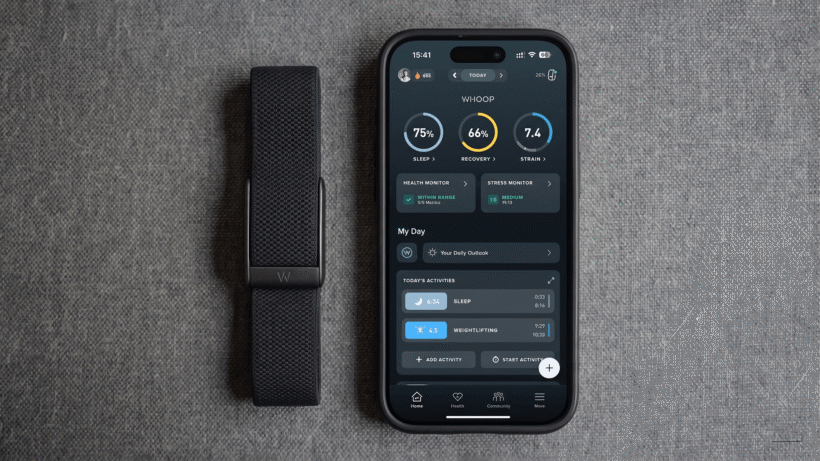
Like Hume Band, WHOOP 5.0 is another screenless wearable on our list, but both serve different purposes. While Hume Band leans into general wellness, WHOOP 5.0 is more performance-minded.
It has a full coaching platform aimed at people who train regularly, care about sleep quality, or want to understand how lifestyle choices affect readiness day to day. It has long been popular with serious runners, gym-goers, and endurance athletes, but there’s also plenty here for active women who want fitness data without another glowing display.
Compared to the Hume Band, the WHOOP 5.0 wins the design competition. It offers a wide range of band colors, fabrics, and premium finishes, so it can feel sporty, subtle, or polished. You can style it with any outfit or choose it based on your mood. I personally chose the SuperKnit Luxe Band in dune with gold, as it suited me best.
For women, WHOOP 5.0 has become more interesting just recently, thanks to expanded hormonal health features. The app offers menstrual cycle insights, cycle-phase guidance, and pregnancy-focused insights showing how hormonal shifts may affect sleep, recovery, and training.
WHOOP 5.0 is one of the few fitness-first wearables taking the hormonal health area seriously, which I applaud.
In my opinion, it’s a well-thought-out fitness wearable; however, there is a catch, like always. WHOOP 5.0 runs on a membership rather than a one-time purchase. Every year, it feels like you are buying it again, which might not be acceptable to everyone. That said, if you’re a fitness-focused woman, it might be worth a splurge.
- Read the full WHOOP 5.0 review
Withings ScanWatch Light
- Sizes: 37mm dial
- Colors: The dial comes in Sand and Rose Gold, Pearl White, Black, Blue and Rose Gold, and Green colors with different band options
- Tracks: Daily heart rate, sleep, breathing quality, steps, calories burned, and heart rate
- Compatibility: iOS 16 or later and Android 9.0 or later
- Price: $249.95 + app subscription if wanted ($9.95/month)
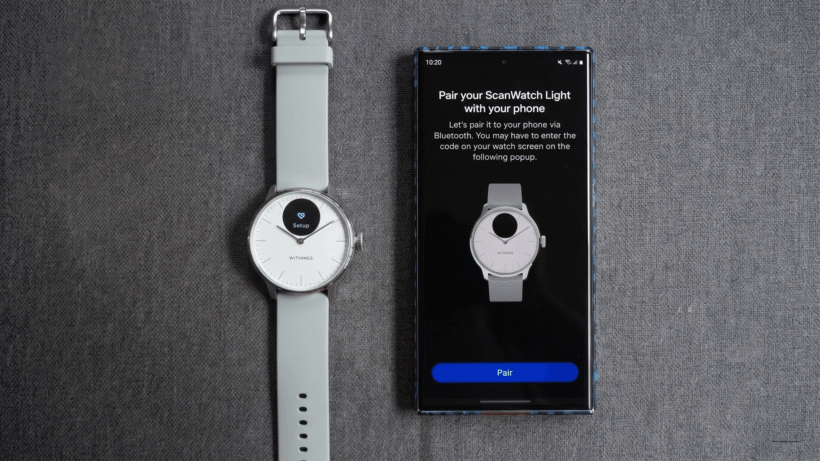
If you’re tired of chunky smartwatches and want something more classy, I recommend the Withings ScanWatch Light. In my opinion, it’s the most fashionable watch on this list.
However, it shouldn’t be treated as a traditional smartwatch as we typically think of them today, but rather as a hybrid one. You still get a small display for essentials, but the overall experience is closer to wearing a classic watch that quietly tracks your health.
Withings smartwatch’s whole identity is in the design. It looks sleek, minimal, and the stainless-steel case gives it a more polished, jewelry-like feel than most plastic-heavy fitness trackers. You won’t need to take it off while wearing a nicer dress, which I found convenient.
It stands out not only for its design but also for its simplicity. All the wearables on the list are packed with multiple health and fitness features that, for some women, might be too much. The Withings ScanWatch Light is designed for people who want awareness, but not constant performance feedback. It focuses on simple but meaningful health metrics: heart rate, sleep quality, activity, and basic recovery indicators.
The downside is the subscription. You can buy the watch by itself and connect with other health or fitness apps; however, if you want to use the Withings+ app, you will have to pay.
Withings ScanWatch Light is not as expensive as WHOOP 5.0, but it’s still an extra bill to pay. The app comes with cycle tracking, which is beneficial, but for deeper insights, again, you’ll have to pay $9.95/year for the partnership with the Clue app.
I understand that it is not much, but I think it should be included in the subscription, and women shouldn’t pay extra to better understand their bodies. Aside from this, Withings ScanWatch Light is an elegant hybrid smartwatch suitable if you’re looking for a wearable that prioritizes lifestyle-oriented data tracking.
Oura Ring (Gen 3/4)
- Sizes: 4-15
- Colors: Silver, Black, Brushed Silver, Stealth, Gold, Rose Gold
- Tracks: Steps, heart rate, blood oxygen, respiratory rate, heart rate variability, female cycle tracking, stress tracking, sleep tracking, Readiness Score, Sleep Score, Cardiovascular Age, Resilience
- Compatibility: OS 16 or later and Android 10 or later
- Price: From $349
Stepping away from smartwatches and opting for a more discreet form of fitness tracking, the smart ring presents a great option for health monitoring. There are many smart rings currently available on the market, but it’s Oura that champions women. Remarkably, women constitute nearly 60% of the user base, which is unprecedented for a consumer tech product.
It’s the Oura Ring 3 that I’ve used, which is why this model appears on the list. Although the Oura Ring 4 launched in October 2024, offering a few extra features and more accurate fitness tracking, the design remains largely the same and it still operates on the same platform.
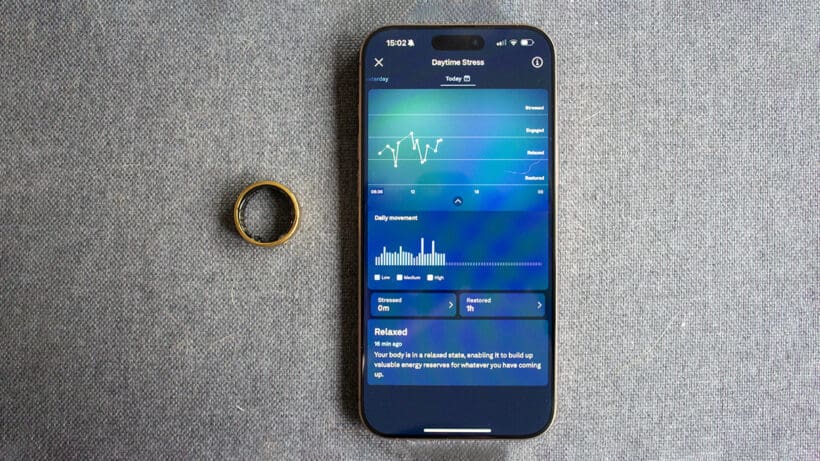
The Oura Ring 4 features a sleek, uninterrupted design that comes in a range of color options, including silver and black, as well as gold and rose gold. I’m a personal fan of gold because it resembles a fashion ring rather than a smart device. The Ring 4 is made from titanium and is lighter than the Ring 3 that rests on my finger.
Design aside, the Oura platform is excellent. For such a small device, it’s amazing how much data the Oura Ring collects, from stress and sleep tracking to heart rate and body temperature. Data is presented in visually appealing cards in the Oura app, with summary cards on the main Home tab and more detail on the Readiness, Sleep, Activity, and Resilience tabs.
Even details are user-friendly, with color-coded bars indicating when a certain element is ‘Good’, ‘Optimal’, or when you need to ‘Pay attention’. It is highlighted red when it requires attention, making it easy to spot the outliers.
Like the Samsung Galaxy Watch 7 and the Google Pixel Watch 3, you get a Readiness Score with Oura, which consists of various contributing factors, including sleep, sleep balance, body temperature, and heart rate variation. I particularly appreciate stress tracking—I’ve found it to align closely with how I felt—and I enjoy the extra features, such as Resilience and Cardiovascular age.
Cycle tracking is beneficial as well—providing prompts to log your data as your period approaches. Oura was the first wearable to integrate with the Natural Cycles app, offering features like green days and red days based on your temperature and whether you’re trying to avoid or achieve conception.
Oura has introduced a new Fertility Insights feature that utilizes the temperature sensor to indicate when you are most fertile. While I’m not trying for a baby, it is wonderful to see a wearable that prioritizes women’s health.
Activity tracking could be improved, although the Oura Ring 4 has addressed this issue. Overall, the Oura Ring is a discreet and excellent wearable that I’d highly recommend if you’re looking for something to track your health without dominating your wrist.
- Read the full Oura Ring 3 review | Oura Ring 4 review
Apple Watch Series 10
- Sizes: 42mm and 46mm
- Colors: Aluminum – Silver, Rose Gold, Jet Black / Titanium – Natural, Gold, Slate
- Tracks: Steps, heart rate, blood oxygen (not in US), respiratory rate, heart rate variability, female cycle tracking, Sleep Apnea, Vitals, Training Load, sleep tracking
- Compatibility: iOS 18 or later
- Price: From $399
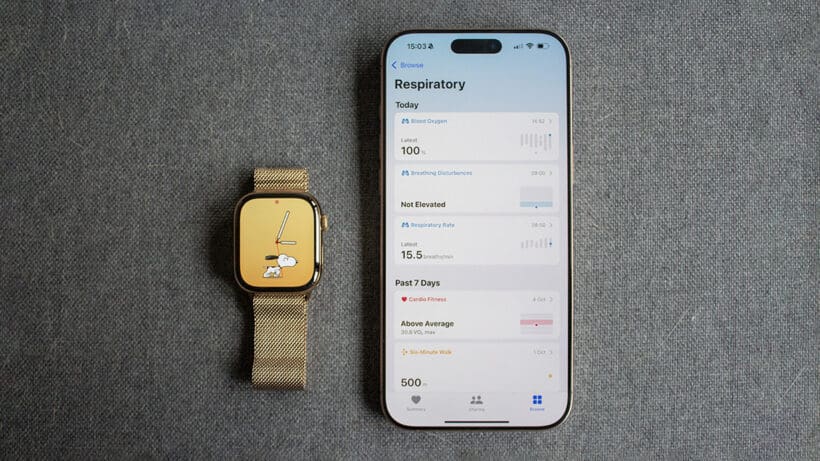
The Apple Watch Series 10 introduced a few notable changes this year for the 10th-anniversary model. Firstly, it increased the sizes to 42mm and 46mm, which also enlarged the displays. Secondly, it slimmed down the case by around 1mm. The slimmer casing makes a significant difference when worn (much to my surprise), sitting much more comfortably on the wrist, and the larger display means that the 42mm model is more than adequate.
The color options for the Watch Series 10 are great too, with the Gold titanium variant being my particular favorite. The Rose Gold and Jet Black aluminum models are lovely in person as well, and you can make any of them stand out with the various strap options. I highly recommend the Milanese Loop strap, which looks gorgeous on it, though I suggest a Sport Band for exercise.
When it comes to features, the Apple Watch Series 10 includes a wrist temperature sensor, enabling more accurate cycle tracking and integration with the Natural Cycles app for added functionality. The latest software, watchOS 11, also introduces a new method for tracking pregnancy, which I really wish had been available when I was pregnant. I had to rely on a separate app on my iPhone to obtain what I needed, but most of it is available now.
The software, which is not only available on the Watch Series 10 but also on older models, introduces Training Load and Vitals this year. The new Vitals app is particularly effective at detecting when something is slightly amiss, while Training Load helps highlight if you’re exercising too much or perhaps not enough.
I also enjoy sleep tracking on the Apple Watch, with the Series 10 offering sleep apnea detection. All the stats and trends are displayed in the Health app, although some can also be found in the Fitness app on the iPhone and Sleep app on the watch itself.
I’d love an all-around energy score or readiness score based on the range of stats and data collected by the Apple Watch Series 10. A sleep score would be great too, and I’d like to see dedicated stress tracking. Overall, the Apple Watch Series 10 is a great all-rounder, offering accurate fitness and sleep tracking, easy-to-understand data, and good cycle and pregnancy tracking.
- Read the full Apple Watch Series 10 review
Samsung Galaxy Watch 7
- Sizes: 40mm and 44mm
- Colors: Green and Cream (40mm) / Green and Silver (44mm)
- Tracks: Steps, heart rate, blood oxygen, respiratory rate, heart rate variability, female cycle tracking, sleep apnea, blood pressure, stress tracking, sleep tracking, energy score, sleep score.
- Compatibility: Android 11 and later
- Price: From $300
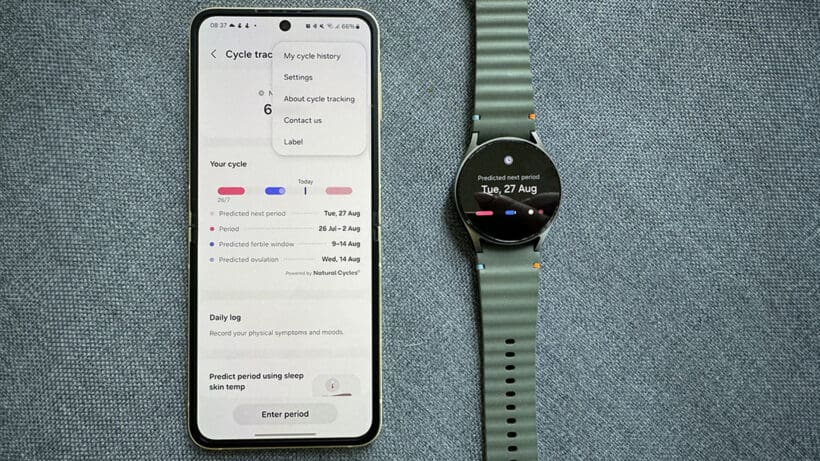
The Samsung Galaxy Watch 7 is likely the chunkiest option among my picks, but I must admit, I was pleasantly surprised when I reviewed it, and that is part of why it has made the cut.
The bulky build has character, and while the 40mm model still feels significantly larger on the wrist than the 42mm Apple Watch Series 10 equivalent, it looks good. The display is glorious, with plenty of punch and vibrancy, and the interface is fluid and easy to use.
The green color option is quite distinct in the world of smartwatches, and there are excellent strap choices available, including rubberized sport bands, fabric selections, and metal Milanese options, if you want your watch to appear a bit more polished for the office or an event, for example. Once again, I would recommend the Sport Band for exercise, although I am partial to a metal option for everyday wear.
As with Samsung’s latest phones, the company has utilized artificial intelligence (AI) to provide a little helping hand regarding some of its features. Each morning, you receive an Energy Score, which indicates your capacity for the day, along with Wellness Tips to help you make small changes that can improve both your score and your Sleep Score.
Energy Score is calculated based on activity over the last day, sleep over the last seven days, sleeping heart rate on average and then sleeping heart rate variability. I loved it, and while I was told that it was “version 1.0” and it would only get “better and better”, it’s a score that’s easy to understand and a good indicator of what you should be doing that day.
Cycle tracking is available here too, and it’s easy to add data directly from the Galaxy Watch 7, rather than always needing to open Samsung Health on your Galaxy phone or Android device. You can easily see when your next period is due and quickly add symptoms using the Daily Log on the watch, which features a simple and user-friendly interface. The Galaxy Watch 7 can also track stress and measure blood pressure, providing a comprehensive suite of fitness and health features that are user-friendly.
Charging on the Samsung Galaxy Watch 7 could be faster, battery life could be improved, and I would love to see compatibility with the iPhone. However, it’s a fantastic smartwatch if you’re looking for something with a slightly chunkier build and superb fitness features.
- Read the full Samsung Galaxy Watch 7 review.
Google Pixel Watch 3
- Sizes: 41mm and 45mm
- Colors: Polished Silver, Champagne Gold, Matte Black
- Tracks: Steps, heart rate, blood oxygen, respiratory rate, heart rate variability, female cycle tracking, stress tracking, sleep tracking, Daily Readiness Score, Sleep Score, Stress Score, Sleep Profile
- Compatibility: Android 10.0 and later
- Price: From $249.99
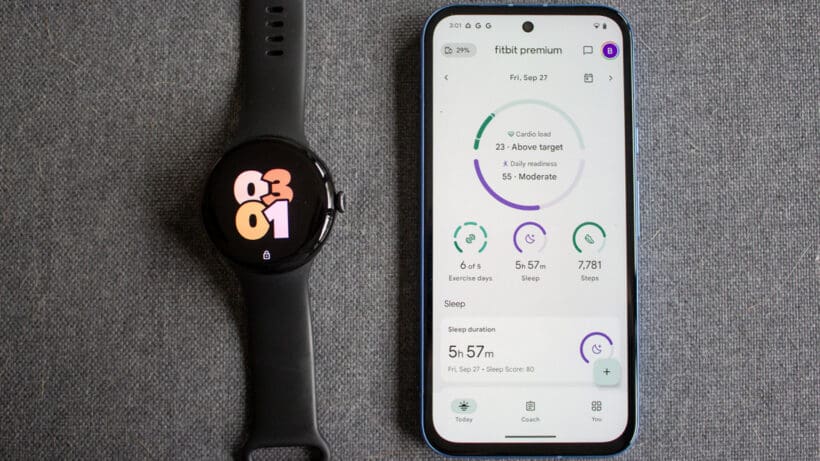
The Google Pixel Watch 3 is Google’s third smartwatch, featuring a pebble-shaped design that is both simple and sophisticated. It’s not as chunky as the Samsung Galaxy Watch 7 or the Garmin Venu 3S, but it is still larger on the wrist than the smaller Apple Watch Series 10. I reviewed the Matte Black with Obsidian Active Band, although I would choose a Champagne Gold option if given the choice, as it’s a little softer.
There are plenty of extra strap options as well, so even though the Pixel Watch 3 comes with an Active Band by default, you’ll discover two-tone leather options, slim metal variations, and different material choices, allowing you to change the look quite easily. The strap mechanism of the Pixel Watch 3 could use some improvement—it’s not very user-friendly—but once you understand it, there’s a good selection of additional straps available.
Fitness and activity tracking on the Google Pixel Watch 3 is impressive, primarily due to the Fitbit integration that has been executed well. Fitbit has always excelled at presenting data in an easy-to-interpret manner, and that quality remains intact despite the Google acquisition. The accompanying Fitbit app is clear and concise, providing a comprehensive overview of your health.
There’s cycle tracking and symptom logging, but there is no additional integration with apps like Natural Cycles, such as those offered by the Apple Watch and Oura Ring, despite the numerous sensors on board the Pixel Watch 3. Stress tracking is excellent, and Fitbit has always excelled at sleep tracking, mastering it long before many others even began to offer it.
The Daily Readiness Score is also a favorite of mine, providing an indication of your status for the day—similar to Samsung’s Energy Score. Additionally, there are Cardio Load and Target Cardio Load scores that help guide your exercise activities and illustrate the impact of exercise on your body.
Like Samsung’s Galaxy Watch 7, I would love to see iPhone support for the Google Pixel Watch 3, given that Wear OS used to offer it. However, if you have an Android device, specifically a Pixel one, the Pixel Watch 3 is a great smartwatch with accurate tracking and simple stats that are easy to understand.
- Read the full Google Pixel Watch 3 review
Garmin Venu 3S
- Sizes: 41mm and 45mm
- Colors: Soft Gold, Slate, Silver (41mm) / Slate, Silver (45mm)
- Tracks: Steps, heart rate, blood oxygen, respiratory rate, heart rate variability, female cycle tracking, stress tracking, sleep tracking, Body Battery
- Compatibility: OS 18.2 or later and Android 9.0 or later
- Price: $449.99
Garmin has long been the key player when it comes to running watches and sports watches, but what about watches specifically for women? Well, the company does offer the Garmin Lily 2 (the successor to the Garmin Lily that launched in 2021), which is specifically designed for women, though it’s not the Garmin I would pick. It’s got a small and discreet design, but it misses out on some of Garmin’s top features, and the Venu 3S has softer vibes than some of the other models in Garmin’s lineup, plus a range of features.
While it’s a good smartwatch for women, as we’ll review in a moment, it’s still quite basic for sports tracking. If you want proper athletic analysis, try the Forerunner 265S.
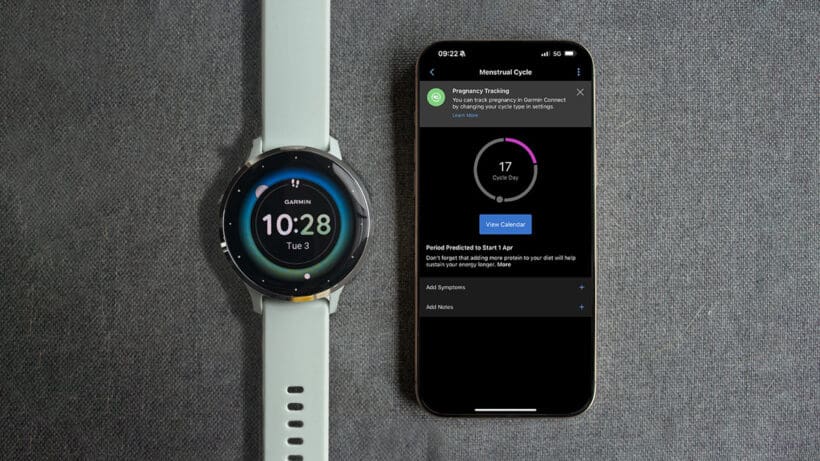
Back to the Venu 3, it is available in 41mm and 45mm sizes. As usual, I would choose the 41mm, but that depends on your preference, of course. There are a variety of color options as well, though the Soft Gold is the one that captured my attention, especially when paired with the French Grey strap. Garmin also provides some extra straps, but none are particularly elegant. So, if you desire a more sophisticated appearance, you’ll need to consider a third-party strap or accept that this watch is more suited for a sporty vibe on your wrist.
One of the best things about the Garmin Venu 3S is that it lasts longer than a day. I regularly achieved a week with the Venu 3S, including my workouts. That makes it the best in terms of internal tests here.
There’s cycle tracking and pregnancy tracking too, with the ability to log daily symptoms and receive cycle predictions. What is good about Garmin, however, is that you will get information about exercise and nutrition based on different stages of your cycle, helping you understand what your body might need in response to hormonal shifts.
The Venu 3S also has stress tracking, it’s great for running if you’re a runner and it offers Garmin’s Body Battery too, which is one of my favorite Garmin features. Body Battery is slightly different from the Energy Score from Samsung and Daily Readiness Score from Fitbit on the Pixel Watch in that it depletes throughout the day depending on what you do, rather than offering a one-time score every day.
It’s impossible to get it back up to 100%, but it is interesting to see how different factors affect you throughout the day – and you’ll notice it’s not usually hard workouts that cause the Body Battery percentage to drop. Instead, it’s when your heart rate is high but you’re not moving.
The Garmin Venu 3S is on the larger side of the wearables on this list, but if you’re seeking a sportier look with excellent fitness and health features, it comes highly recommended.
- Read Wareable’s full Garmin Venu 3 review
Smartwatches for women FAQ
Before you buy a wearable, make sure it is compatible with your smartphone. For example, Apple Watch is only compatible with iPhone, while Google’s Pixel Watch 3 and Samsung’s Galaxy Watch 7 are both only compatible with Android phones. If you have a Samsung phone, you get extra features with the Galaxy Watch 7 compared to the Pixel Watch 3 and vice versa if you have a Pixel phone, so keep that in mind too. The Oura Ring, Garmin Venu 3S, Hume Band, WHOOP 5.0, and Withings are all compatible with iOS and Android, so less restrictive.
All the wearables I picked above come in different size options, which I detailed in the bullets for each. For smaller wrists, generally, I would recommend the smaller watch cases, but you may want a larger screen, so that’s partly my personal preference. You want any smartwatch you pick to be comfortable, day and night, because many of the features they offer require you to wear them 24/7. With the Oura Ring, you will need to ensure the size is right otherwise it won’t work properly so get a sizing kit and follow the guidelines, including wearing the plastic tester ring for 24 hours, before you place your order.
Most wearables these days offer many of the same features, like heart rate tracking, SpO2, step counting, sleep tracking, and plenty more. Some offer extras, like the Samsung Galaxy Watch 7 and its blood pressure monitoring, for example, while others have features like Sleep Apnea detection. If there are specific features you want, such as the ability to detect potential atrial fibrillation or stress tracking make sure the device you are choosing does that.
As with any purchase, it comes down to the individual. However, the quality and accuracy of women-based insights, such as fertility or menstrual cycle tracking, is a big differentiator. Style and comfort on smaller wrists also play a big part.
We consider anything around 42mm or smaller to be truly unisex, in smartwatch terms. In the classic watch market, women’s sizes are usually 40mm or less.
The Apple Watch is the best all-round smartwatch, with great health and fitness features as well as useful smarts such as Apple Pay. But if you’re a serious runner, then Garmin will suit you better — and its watches usually have a week of battery life compared to just a single day on an Apple Watch.
Smartwatches are usually good for a few years. They’re prone to getting scratches and marks, but they aren’t made obsolete quickly. An example is that the Apple Watch is replaced every year, but the Series 5 (from 2018) is still getting the latest watchOS 11 updates and new features.
Bottom line
Choosing the best smartwatch should always come down to your preferences. If you’ll wear it every day and night, comfort and design are as important as tracking accuracy.
That said, I will quickly go through wearables on this list and what they are best for. The WHOOP 5.0 is my top choice for deeper recovery insights. However, for a calmer, everyday wellness-focused wearable, I would go with Hume Band.
If you want a traditional smartwatch with the best phone ecosystem integration, Apple, Samsung, and Google remain the leaders. The Oura Ring 4 is the most discreet wearable I found, so if band-type devices feel too chunky, consider this one.
Design-wise, Withings ScanWatch Light wins as the most elegant hybrid smartwatch on the list. I recommend it if you want a watch easy to style with any outfit.
Just remember, there is no single best wearable for everyone. The right choice is simply the one that fits your lifestyle, feels good to wear, and offers the features you’ll actually use.