- Straightforward app dashboard
- Integrates with other apps and devices
- Lightweight, barely noticeable during workouts
- ANT+ support for live broadcasting on other devices
- No onboard memory, so no offline tracking
- No HRV on the Wahoo app
After several generations of chest straps, Wahoo released TRACKR as a clear step forward from its older heart rate monitors—and, of course, as a product meant to compete more directly with established rivals.
Aimed at runners, cyclists, and gym-goers alike, it’s designed to be an easy, no-fuss option for anyone who wants more reliable workout data than a smartwatch typically provides.
On paper, it ticks all the boxes.
What is Wahoo TRACKR?
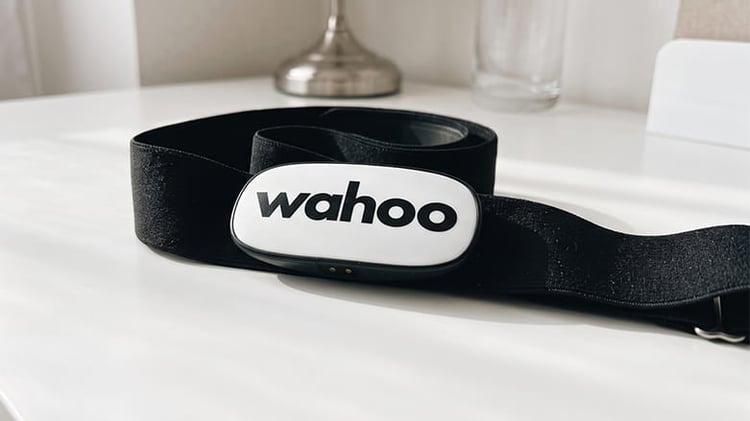
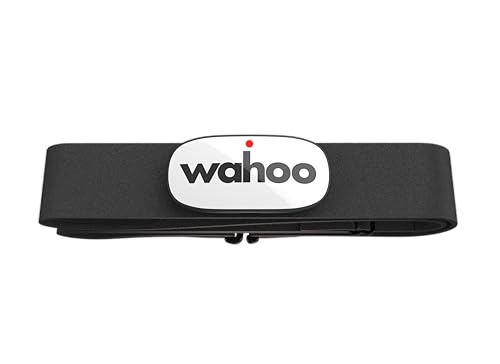
TRACKR is Wahoo's latest chest strap monitor, replacing both the TICKR and TICKR X with a lighter build, a rechargeable battery, and a handful of design tweaks aimed at everyday comfort.
The brand behind it, Wahoo Fitness, has been making chest straps for over a decade, appealing to athletes seeking reliable, high-quality products.
By using TRACKR, you can track beats per minute (BPM), average heart rate, max heart rate, total calories, and heart rate variability (HRV) during your workouts.
However, HRV data does not appear on the Wahoo app itself, but you can access it via another TRACKR-compatible app (e.g., the Elite HRV app). This is nothing new in the chest strap monitor market, as some of the most popular competitors, such as Polar H10, also require a third-party app for HRV readings.
Design, comfort, and first impressions
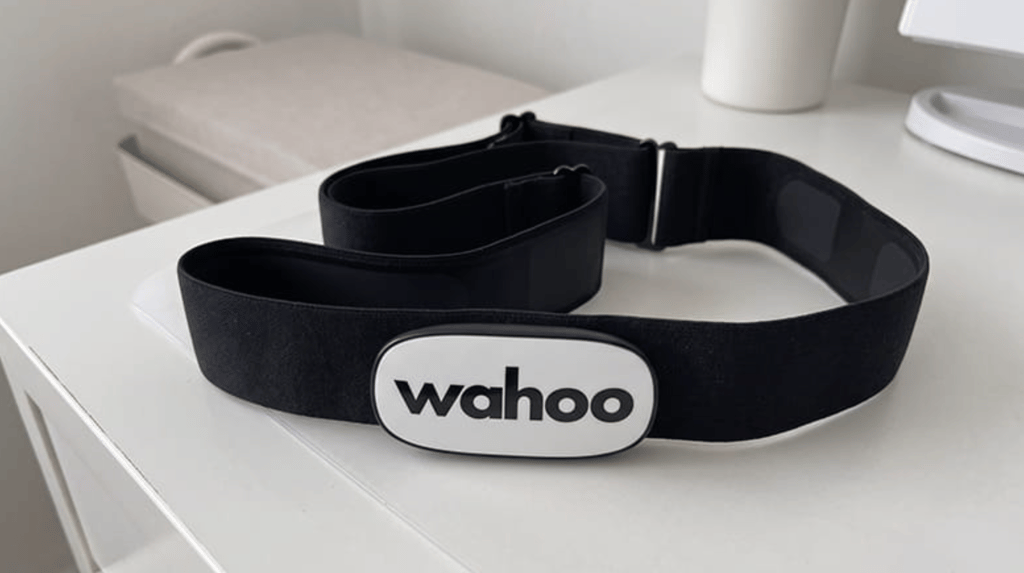
The design of TRACKR has been optimized for everyday use, with a lighter construction (39 grams) that ensures comfort during long workouts. The adjustable strap fits snugly, minimizing movement. I found the fit comfortable, even during longer sessions.
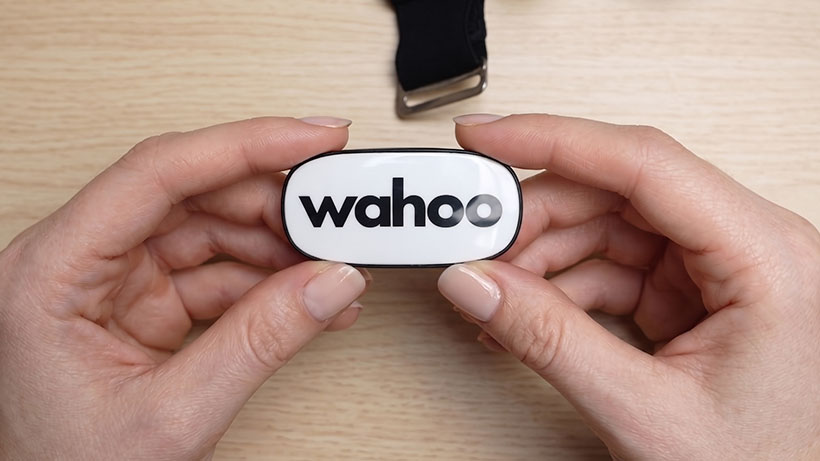
The adjustable strap helps it accommodate different body types, though it is far from universal, as the standard strap (the one included in the kit) fits chests up to 50 inches (122 centimeters). A larger size is available, but you will have to purchase that separately.
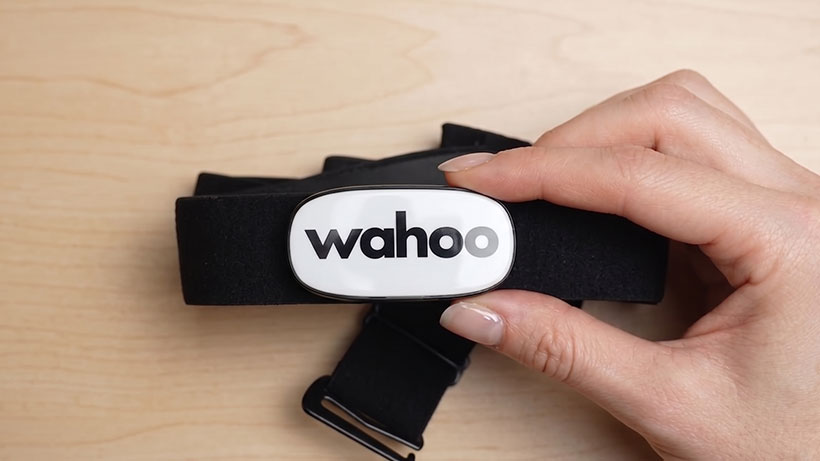
TRACKR is rated IPX7, meaning it can survive temporary water immersion (up to 1 meter for 30 minutes)—so while you shouldn’t use it for swimming, it should be fine during vigorous exercise. The strap should be hand-washed only.
Setup and compatibility
Setup took me less than a couple of minutes. You snap the TRACKR pod onto the strap, download the Wahoo app, and pair via Bluetooth or ANT+.
Bluetooth is common and probably doesn’t need any further explanation, while ANT+ may raise some eyebrows. What it essentially does is that with an ANT+ connection, you can broadcast the data from your tracking device straight to a device with a screen, like a smartphone, and view it live. Even some gym equipment can connect via ANT+, so make sure you check the next time you’re hopping on the stairmaster.
After you connect, the app walks you through positioning, so you don't need to dig through a manual—although one is included in the box.
Pairing with other apps is also easy. TRACKR connects directly to third-party apps like Strava, Zwift, and TrainingPeaks via Bluetooth, so unlike some competitors, you're not stuck manually exporting files after every session.
Wahoo’s broader ecosystem is another advantage. If you already use Wahoo gear like ELEMNT bike computers, KICKR trainers, or its training app, TRACKR fits in naturally and keeps your data flowing through the same setup.
Workout performance and training experience
When it comes to accuracy, TRACKR performed well in my testing. First thing you’ll notice is that there shouldn’t be any abnormalities, sudden jumps or drops in heart rate—meaning the tracker is consistent throughout the workout. These irregularities are more common in wrist-based optical sensors, and I haven’t noticed any with TRACKR.
The device was prompt to track changes in effort as well, even when I was doing interval workouts for VO2 max improvements. This is where my Apple Watch lagged behind a bit—so if you are thinking about a chest strap due to their ability to pick up changes in heart rate faster than a wrist-worn device, TRACKR may be a suitable choice for you.
The Wahoo app itself keeps things fairly simple. You’ll find heart rate during your activity, average heart rate, and estimated calories burned in your summary afterward. A lot of numbers you will find here will be estimations based on a questionnaire afterward—for instance, you will be prompted to rate how hard it was. These can be useful for load management, but based on subjective input.
In the app, you can also set up alarms based on your goals—with a wide range of triggers to choose from, including duration, distance, and calories burned. Surprisingly, no alert based on your heart rate—which is a major drawback considering this might be needed for different types of exercises, including VO2 max or endurance training.
For runners, TRACKR may be disappointing due to a lot of metrics missing, including cadence, vertical oscillation, ground contact time, and stride length.
There's also no breathing rate metric here, which some competing straps now include as a secondary effort indicator. TRACKR sticks to the fundamentals rather than trying to be a full health-monitoring hub. For the price, it’s fair—but keep that in mind if you are looking for an all-in-one device.
Battery life and everyday use
TRACKR is not the first Wahoo strap, but this one comes with a rechargeable battery—the most obvious upgrade over its predecessors that used coin-cell batteries. Now, it is rated for over 100 hours of active use, which is quite fair, especially since you’ll not need to buy a new battery once it runs out.
That said, in the current chest-strap market, 100 hours isn't exactly the longest. Devices like the Polar H10 push well past that mark with over 400 hours—but this one in particular uses replaceable batteries. So, 100 hours is actually way more impressive when you consider that the battery is rechargeable.
For perspective, rechargeable rivals such as the Frontier X2 (which, by the way, costs about 4–5 times as much as the Wahoo TRACKR) don't come anywhere close, offering only 24 hours of battery life.
Wahoo app and data experience
Wahoo goes beyond what you would expect from a heart rate monitor app.
All the basics are there in a neat, easy-to-understand, intuitive dashboard—so for those who don’t want any extras, Wahoo does the job well. Heart rate data is presented clearly, without requiring any digging to understand or clutter. The app presents historical data as well, so it can be valuable if you are looking forward to tracking your progress.
If you do want more, however, there are plenty of things to explore—and whether you’ll find them useful or not, it's up to you.
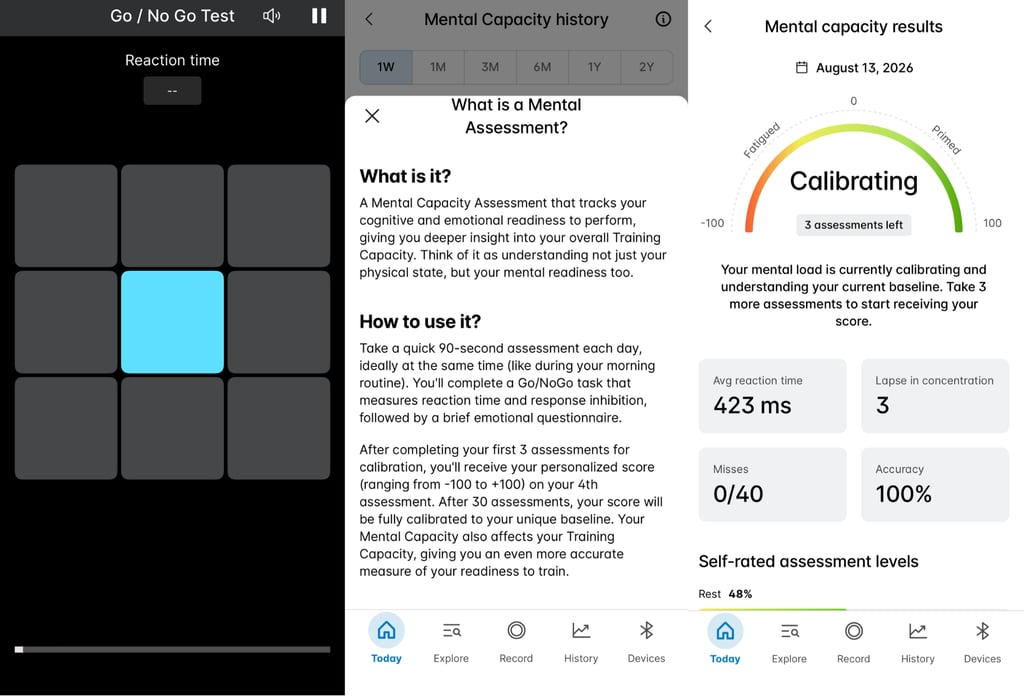
For instance, the app offers a so-called mental capacity score, determined by a short reaction test (a Go/NoGo task) and a brief questionnaire, designed to give you a sense of your cognitive and emotional readiness to train on a given day. It's a nice touch, and one I didn't expect from what is, on paper, just a chest strap app.
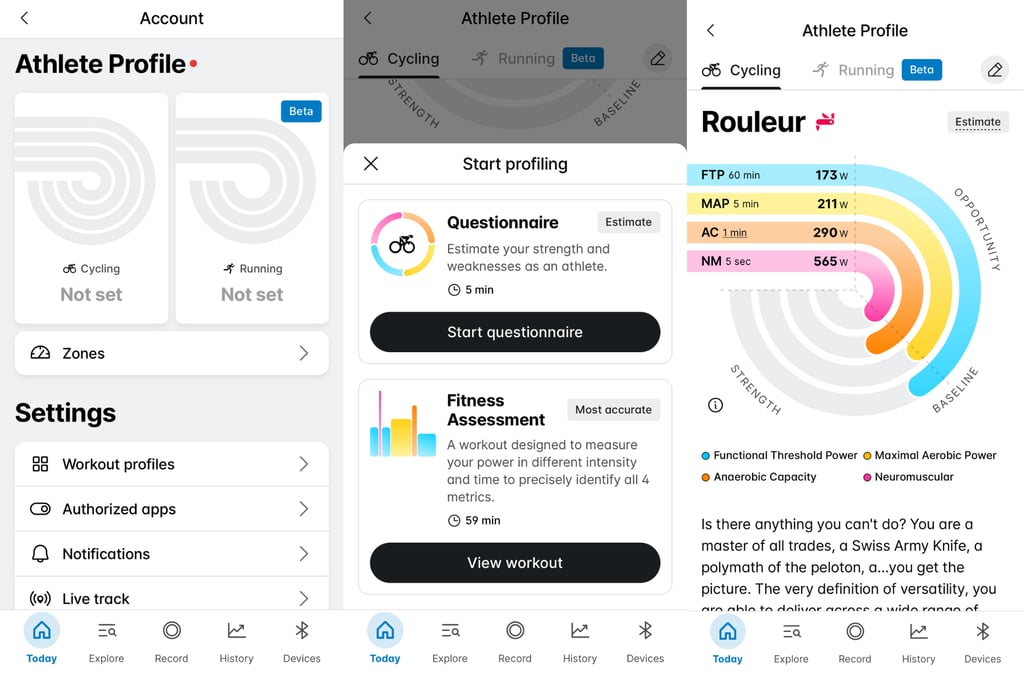
Another quite interesting thing is the athlete profiles, although that applies to cycling and running. Again, a nice touch, but I personally found this all overwhelming—this is not why I am here anyway.
What disappoints me most about Wahoo TRACKR is the lack of offline tracking. If you are planning to run a marathon in an area with spotty mobile data coverage, you might be losing a chunk of your data. This is because TRACKR does not include an onboard memory card—although older models such as TICKR X did, and it is unclear why the brand decided to omit it from this model.
Wahoo TRACKR vs. the competition
To help put TRACKR in context, I've lined it up against three of its most talked-about rivals: Polar H10, Garmin HRM 600, and Frontier X2. Each one targets a slightly different type of athlete, so "best" really depends on what you're optimizing for.
Keep in mind that all four straps use ECG-based sensing rather than optical, so in terms of raw heart rate accuracy, they're all a step above wrist-based trackers.
| Product | Battery | Battery life | HRV | ECG | Connectivity | App ecosystem | Price |
| Wahoo TRACKR | Rechargeable | Around 100 hours of active use | Yes, via a third-party app | No | Bluetooth and ANT+ | Wahoo, solid basic free features | Mid-range |
| Polar H10 | Replaceable button cell | Around 400 hours of active use | Yes, via a third-party app | No | Bluetooth and ANT+ | Polar Flow, solid basic free features | Mid-range |
| Garmin HRM 600 | Rechargeable | Around 60 hours of active use | Yes | No | Bluetooth and ANT+ | Deep Garmin Connect integration | Mid-range |
| Frontier X2 | Rechargeable | Around 24 hours of active use | Yes | Yes, continuous | Bluetooth | Feature-rich, premium features paywalled | Premium tier |
Wahoo TRACKR is best for athletes who want a no-fuss heart rate device with great battery life and don't mind a shorter feature list, while the Polar H10 suits those who want long-term battery convenience via coin-cell swaps.
Garmin HRM 600, on the other hand, is best for Garmin ecosystem users who want a more advanced feature set, whereas Frontier X2 is geared toward health-conscious users who want continuous ECG, breathing rate, and training load insights and are willing to pay a premium for them.
Other heart monitor reviews:
Best chest strap monitors: We tested a bunch and here’s the ones we liked the most
Best heart rate monitor watches: For those who would like to explore wrist-based options as well
Verdict: Should you buy the Wahoo TRACKR?
Yes—if you are looking for a simple yet solid chest strap.
It nails the fundamentals: comfortable fit, strong battery life, reliable heart rate data, all without asking you to pay for a subscription to unlock basic features.
Is it the right fit for everybody? Probably not.
There are pricier chest straps out there with more advanced metrics like ECG, breathing rate, and readiness scoring, so if that's what you're after, TRACKR won't be enough on its own.
If you already have a chest strap from Wahoo, the upgrade is probably not worth it at the moment. Considering that some drawbacks about TRACKR only appear on this model (e.g., no memory for offline tracking), this monitor is not necessarily an improvement.