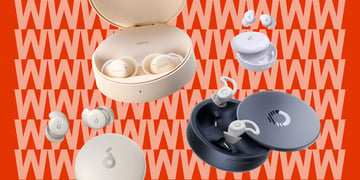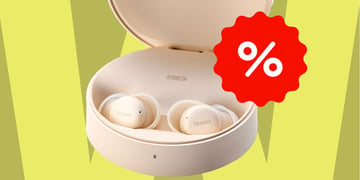
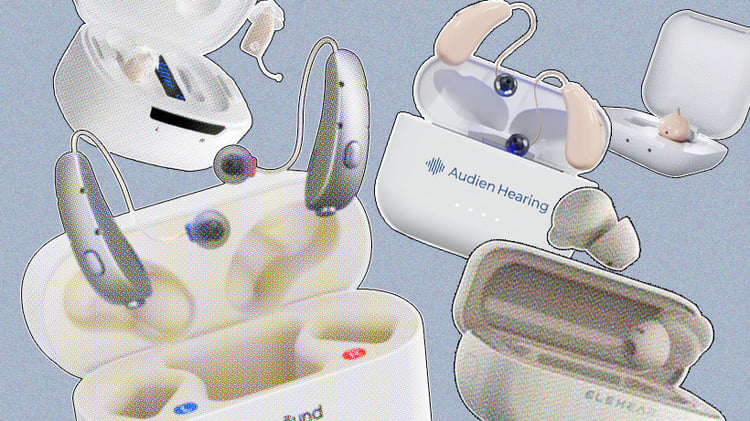
We reviewed budget-friendly options and picked options that do not compromise on quality
Hearing aids can vary dramatically in price, and the rise of lower-cost OTC models has opened up far more choice for buyers.
But cheap and good value aren’t the same thing. For shoppers on a tighter budget, it is especially important to evaluate the products before jumping into the purchase: after all, sometimes lower prices correlate with low quality.
That’s why we were diligent in choosing products. In this guide, we’re focusing on affordable hearing aids that balance price with quality rather than simply naming the cheapest options.
Quick picks: Best affordable hearing aids
- Audien ION pro 2: Best for value
- Elehear Delight: Best for active users
- Ceretone Core One Plus: Best discreet
- Yeasound RIC800: Best for tinnitus masking
- Audien Atom Air: Cheapest option
How we evaluate affordable hearing aids
We evaluated affordable hearing aids by looking at far more than price alone—we picked products that are worth your money.
We considered how easy each device is to set up, how comfortable and secure it feels in everyday wear, and how straightforward it is to handle and adjust.
We also paid close attention to performance factors such as speech clarity, how well the hearing aids cope with background noise, and whether sound remains decent across different listening environments.
Beyond that, we assessed app experience and battery life. Warranty and trial periods are also important, particularly for online buyers.
Audien ION Pro 2
Best for: Buyers who want strong features for the money
- Price: $551.20
- Type: OTC
- Fitting: Self-fitting
- Battery: Rechargeable
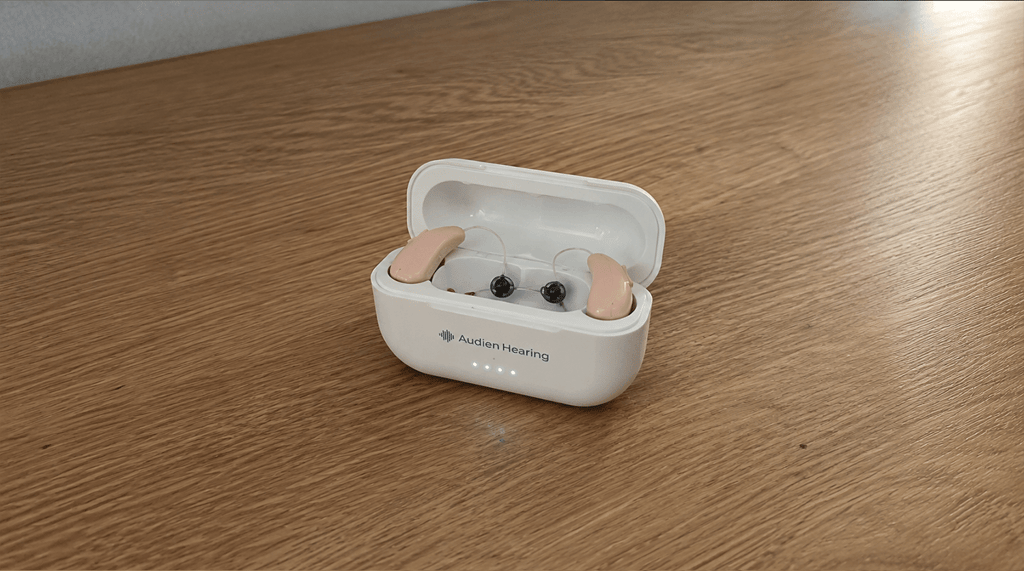
Audien ION Pro 2 is a compelling option for shoppers who want more than just a low price. It comes with features that help it feel more premium than some budget-focused products, including Bluetooth streaming, dual-directional microphones for clear speech even in noisy places, and a charging case with UV cleaning.
It’s also an approachable option for first-time buyers, with a simple app-led setup and a straightforward overall experience. During our testing, it delivered solid everyday performance, with great sound quality—arguably the most important factor for any hearing aid.
The over-ear design is fairly discreet, but still visible if you look closely. Still, if you’re looking for an affordable hearing aid that gives you a bit more in terms of features, Audien ION Pro 2 is an appealing pick.
- Natural sound
- Works well in crowded places
- 6 hearing modes
- We noticed some connection drops
ELEHEAR Delight
Best for: Users with active lifestyles
- Price: $371 (With the dry box)
- Type: OTC
- Fitting: Self-fitting
- Battery: Rechargeable
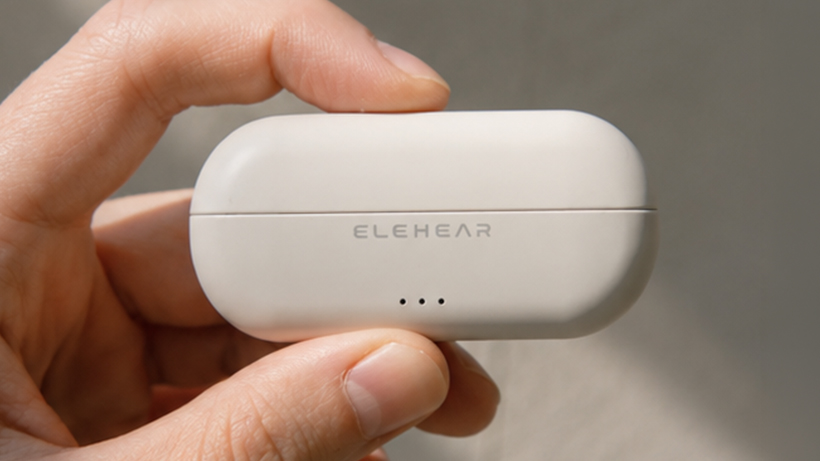
In second place, we have an even more affordable hearing aid, ELEHEAR Delight, which stands out for a modern, earbud-style approach. It is one of those products that do not appear any different than regular earbuds—so while not totally invisible, we would still describe them as discreet.
The fit is aimed at keeping the aids secure during walks, workouts, and busier daily routines, with no need to readjust.
It also brings a solid feature set for the price, including Bluetooth streaming and calls, app support on iOS and Android, and AI-powered sound processing designed to improve speech clarity while reducing background noise. The IP67 rating adds some useful peace of mind too, especially for users who want something that can better handle sweat and splashes.
Battery life is up to 13.5 hours per charge, with two extra charges from the case.
The main downside is that ELEHEAR Delight wasn’t the best at reducing background sounds, so we wouldn’t say these are the best for crowded places.
- FDA-registered
- Modern design
- Natural sound
- Struggles in crowded places
Ceretone Core One Pro
Best for: Budget shoppers looking for a discreet option
- Price: $299
- Type: OTC
- Fitting: Self-fitting
- Battery: Rechargeable
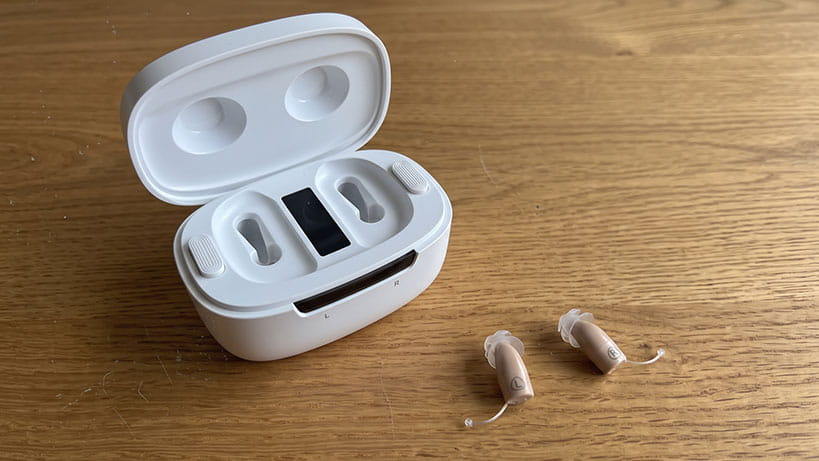
With Ceretone Core One Pro, the first thing that catches your eye is the fact that there’s nothing there to catch it—they’re virtually invisible. This is due to their in-ear design, meaning Core One Pro sits in your ear canal, stays hidden and secure.
Comfort-wise, Ceretone is still a good choice, though some of our testers noted it wasn’t the best for long wear. The device comes with 3 different eartip sizes to help users find a more secure and comfortable fit.
Battery life is competitive, especially in the budget-friendly category, with 20 hours per charge and 80 hours with the case.
To use Ceretone Cone One Pro, you’ll not need to download an app, and it works straight out of the box. It is a simple solution, and some users might find it too basic—but sound quality-wise, it performs well.
- FDA-registered
- Discreet option
- 4 hearing modes
- Some may find them uncomfortable
Yeasound RIC800
Best for: Tinnitus masking
- Price: $549
- Type: OTC
- Fitting: Self-fitting
- Battery: Rechargeable
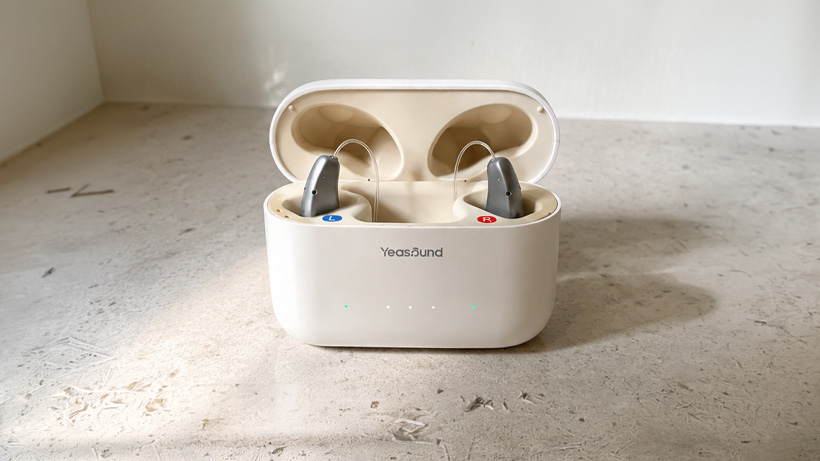
Yeasound RIC800 is a hearing aid built around the same digital processing core found in prescription devices. Designed to deliver clear speech clarity, it provides advanced wind and sudden noise suppression features at a substantially more accessible price point.
Yeasoung also has AI noise reduction, Bluetooth streaming for calls and music, true IPX8 waterproofing, and tinnitus masking, while also offering app controls, an AI assistant, and access to remote audiologist support.
The main limitation is that personalized hearing is still based on preset sound profiles rather than a hearing test. While the AI assistant and fine-tuning options help, some users may want a more tailored setup. Even so, for buyers who want a feature-rich hearing aid with strong battery life and tinnitus support, Yeasound RIC800 is an appealing value pick.
- FDA-registered
- Strong battery life
- IPX8 waterproof
- No hearing test
Audien Atom Air Hearing Aids
Best for: shoppers on a tight budget who do not need extra features or much personalization
- Price: $119.20
- Type: OTC
- Fitting: Self-fitting
- Battery: Rechargeable
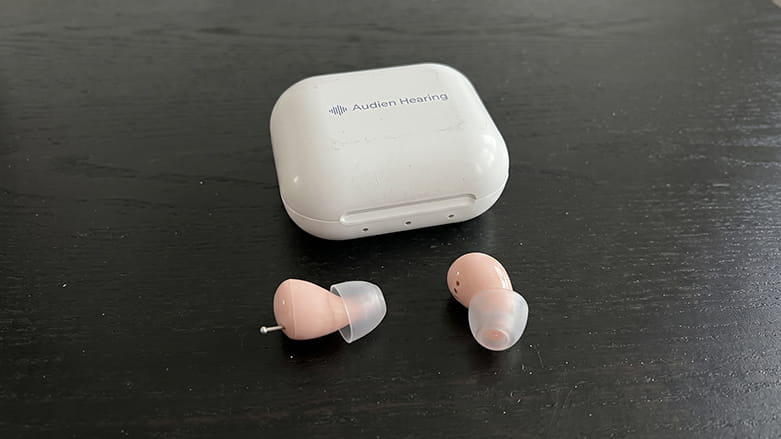
Audien Atom Air is the most affordable option on this list, making it an appealing pick for buyers who want to keep costs as low as possible. At $119.20, it undercuts the rest of the field by a wide margin, but still offers a few practical strengths, including a lightweight in-ear design, simple out-of-the-box setup, and no need for an app.
Atom Air is pre-tuned and designed to work straight away, which makes it especially approachable for first-time buyers who do not want to deal with app setup, ongoing adjustments, or a more technical fitting process. The design is also discreet and comfortable, with a light feel that makes it easy to wear throughout the day.
Naturally, the trade-off is that it is a more basic device overall, with fewer advanced features and less personalization than pricier rivals. Still, if your main priority is getting hearing support at the lowest possible price, Audien Atom Air is a strong budget-friendly option.
- FDA-registered
- Discreet design
- Basic functionality only
Best affordable hearing aids compared
| Device | Price | Prescription or OTC | Bluetooth | Battery | Warranty | Trial |
| Audien ION Pro 2 | $551.20 | OTC | Yes | Rechargeable, 20 hours | 1 year | 45 days |
| ELEHEAR Delight | $371.00 | OTC | Yes | Rechargeable, 13.5 hours | 1 year | 45 days |
| Ceretone Core One Pro | $299.00 | OTC | No | Rechargeable, 20 hours | 1 year | 100 days |
| Yeasound RIC800 | $549.00 | OTC | Yes | Rechargeable, 31 hours | 1 year | 100 days |
| Audien Atom Air Hearing Aids | $119.20 | OTC | No | Rechargeable, 24 hours | 1 year | 45 days |
How much do hearing aids cost?
Hearing aid prices vary widely depending on whether you’re buying an OTC or prescription model, as well as the features included.
Affordable OTC hearing aids can start at a few hundred dollars and premium options can cost $2,000 or more. Prescription hearing aids are even more expensive, often costing several thousand dollars once professional fitting and ongoing support are factored in.
That gap in pricing is one of the main reasons OTC hearing aids have become such a popular option. They’ve opened up the category to buyers who want hearing support without committing to the much higher costs typically associated with clinic-based devices—although they are limited to help with mild to moderate hearing loss only.
OTC vs. prescription: Which is more affordable?
Over-the-counter hearing aids are generally far more affordable than prescription models, mainly because they cut out the clinical services bundled into traditional hearing care.
Here are some other differences between OTC and prescription hearing aids:
| Factor | OTC hearing aids | Prescription hearing aids |
| Upfront cost | Lower upfront cost, typically a few hundred dollars per pair | Much higher upfront cost, often several thousand dollars, including care |
| Hearing loss degree | Mild to moderate | Mild to profound |
| Hearing assessment | No formal hearing test required before purchase | Usually includes a professional hearing assessment |
| Fitting | Self-fitting or preset setup at home | Professionally fitted by a hearing care provider |
| Customization | More limited personalization, often app-based or preset modes | Highly customized to your hearing profile and needs |
| Professional support | Usually limited customer support, with some brands offering remote help | Ongoing professional support is typically included |
| Follow-up adjustments | Often handled by the user through the app or device controls | Follow-up fine-tuning is usually provided by a specialist |
| Convenience | Easy to buy online and use at home | Less convenient, as it often involves clinic visits |
| Trial and returns | Often includes trial periods and return windows, but policies vary by brand | May also include trial periods, though terms depend on the clinic or provider |
What to look for in an affordable hearing aid
An affordable hearing aid should not just be cheap—it should offer good overall value. That means looking beyond the headline price and considering how well the device performs in everyday use. Sound quality, speech clarity, comfort, and ease of setup matter, particularly if you’re buying online and won’t have in-person support.
It’s also worth paying attention to practical features such as battery life, rechargeability, app support, and Bluetooth streaming. Also, check the warranty, return window, and the quality of customer support. These factors can make a big difference if you run into setup issues or decide the device is not the right fit.
When should you see a hearing professional?
OTC hearing aids can be a more affordable and convenient option, but they are not the right choice for everyone. If your hearing loss feels severe, has come on suddenly, affects only one ear, or is accompanied by symptoms such as pain, dizziness, or ringing, it’s a good idea to see a hearing professional rather than relying on self-fitting alone.
Professional help is also worth considering if you’ve tried an OTC hearing aid and still aren’t hearing clearly, or if you’re struggling with fit, comfort, or sound adjustments. A hearing professional can help identify whether you need a different type of device, a more tailored fitting.
And lastly, OTC hearing aids can only help with mild to moderate hearing loss. If you are experiencing a more severe loss, it is best to talk to your healthcare provider first. An OTC hearing aid will not be sufficient help in this case.
Other hearing aid reviews:
Best hearing aids: Our picks for every budget
Best Bluetooth hearing aids: For music streaming and calls, we ranked our top choices
Affordable hearing aids: FAQs
The best affordable hearing aids are the ones that balance price with strong everyday performance, comfort, ease of use, and buyer protections such as a trial period or warranty. Good value matters more than the lowest upfront cost alone.
Decent OTC hearing aids typically cost a few hundred dollars per pair, though some budget models are lower, while premium options are higher. Prescription hearing aids usually cost much more, often reaching several thousand dollars once fitting and support are included.
Yes, cheap hearing aids can be good, but not all low-cost models offer the same value. A lower price may mean compromises in sound quality, comfort, app experience, or support, so it’s important to look beyond cost and consider overall performance.
Yes, OTC hearing aids are usually much cheaper than prescription hearing aids. They are sold directly to consumers without in-person fitting appointments, which helps keep costs down and makes them a more accessible option for adults with perceived mild to moderate hearing loss.