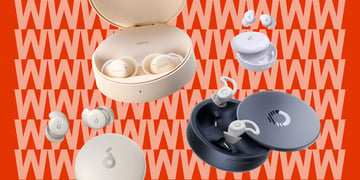
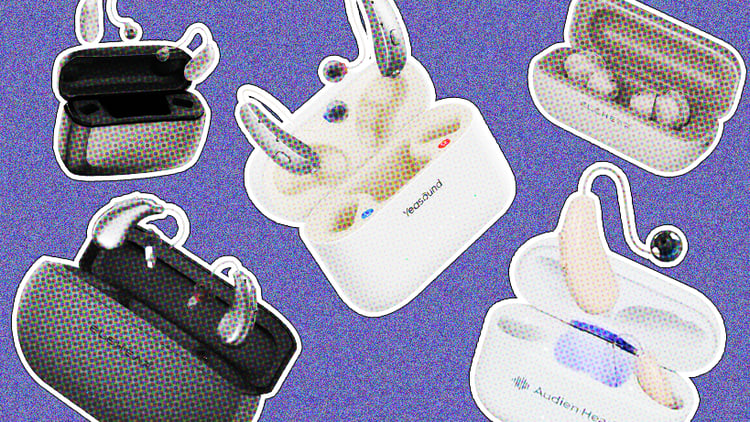
We present you with the best Bluetooth hearing aids that made it onto this list only after thorough testing
Modern hearing aids do far more than amplify sound. Equipped with Bluetooth technology, current devices can stream phone calls and media directly to your ears. Over-the-counter options also make managing mild to moderate hearing loss more accessible. Just keep in mind that, unlike prescription ones, they have some limitations.
Bluetooth connectivity also isn’t universal across all of these kinds of devices—it varies between products and can differ depending on whether you use an Android or an iOS phone.
All of this can all sound a bit confusing, so to help you find the best fit for you, we compiled the top Bluetooth hearing aids. To achieve it, we assessed each model based on sound quality, speech clarity, Bluetooth reliability, compatibility, wearing comfort, battery life, app experience, and overall value. Read on to see how the top models compare across every category.
Quick picks: Best Bluetooth hearing aids
- Jabra Enhance Select M3: Best for nearly invisible design
- ELEHEAR Beyond Pro: Best for unique features
- Yeasound RIC800: Best for noise reduction
- Audien Ion Pro 2 Hearing Aids: Best for simple setup
- ELEHEAR Delight: Best for active users
How we tested Bluetooth hearing aids
Every Bluetooth hearing aid featured on this list underwent a thorough testing process to ensure they guarantee the best user experience. We used each device in a variety of settings, evaluating them in quiet rooms, busy environments, while taking phone calls, streaming music, and listening to podcasts.
Throughout testing, we focused on a wide range of criteria, from ease of initial setup and Bluetooth pairing to app experience for both iPhone and Android users. We also carefully assessed sound quality, speech clarity, and how well each device handled background noise, while prioritizing all-day comfort.
Lastly, we paid close attention to connection reliability, calls and voice quality, performance when moving away from the phone, and battery life while streaming—helping us pick the Bluetooth hearing aids that offer the best overall value.
Jabra Enhance Select M3
Best for: Nearly invisible design
- Type: OTC self-fitting
- Hearing aid style: RIE
- Bluetooth compatibility: Bluetooth LE Audio (Auracast-ready)
- iOS/Android support: Supports both
- Battery life: 24 hours
- Rechargeable/disposable: Rechargeable
- App compatibility: Jabra Enhance app
- Price: $1,995 per pair
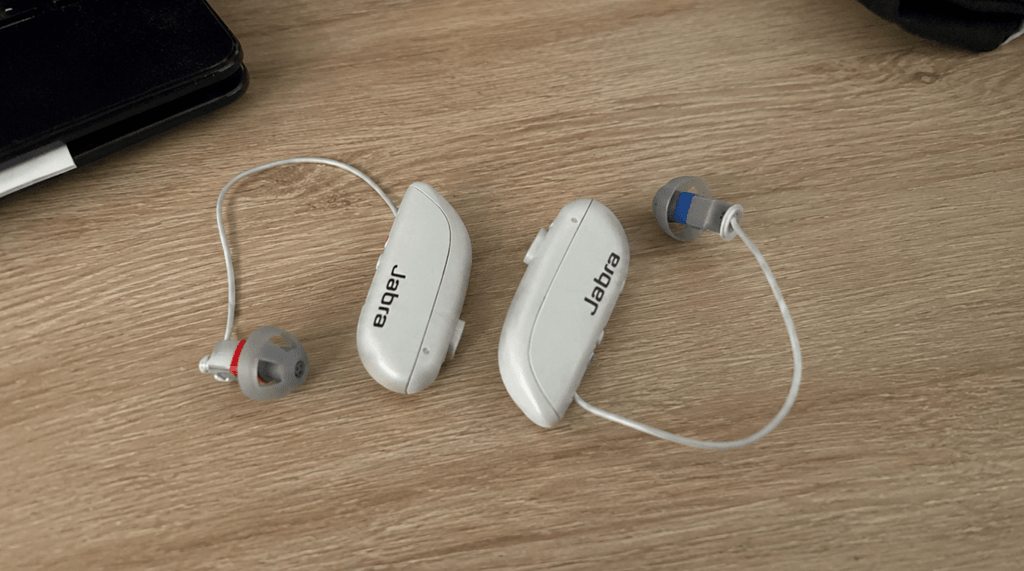
Our top choice for Bluetooth hearing aids is the Jabra Enhance Select M3. It features a nearly invisible design and proprietary SoundScape technology that prioritizes speech and reduces background noise, helping you focus on conversations even in busy environments.
It comes in a RIE hearing aid style, with a small casing behind the ear that connects to a minuscule speaker inside the ear canal via a transparent wire. The discreet design, along with a provided ear measurement tool and multiple dome sizes, ensures you can find a snug fit.
It’s considered to be a self-fitting Bluetooth hearing aid, which means that to set it up you’ll need to complete an in-app hearing test that automatically tailors the acoustic profile to your ears. The free mobile app acts as your control center and allows you to easily tweak volume and noise filters. Via the app, you can also message Jabra's licensed Audiology Team, who can send adjustments directly to your hearing aids without an office visit.
Bluetooth pairing is straightforward for both iPhone and Android users and lets you stream music, podcasts, and calls. Conveniently, you can answer incoming phone calls by double-tapping the device. Additionally, the integrated Bluetooth Auracast technology will soon allow community centers, event spaces, and transit hubs to broadcast live audio directly through these hearing aids.
While testing sound quality, we found it to be robust, thanks to the Bluetooth LE Audio standard for better stability and less battery drain. The battery can last up to 96 hours, as the case holds up to 3 additional charges. If you are in a rush, a 10-minute quick charge gets you 2 hours of power, and a 1-hour charge gives you 12 hours.
Admittedly, the investment is significant, but it’s bundled with three years of remote care and adjustments from licensed audiologists, which we think adds a lot of value to this product.
- In-app hearing test
- 3 years of free professional remote care
- Nearly invisible design
- High price point
ELEHEAR Beyond Pro
Best for: Unique features
- Type: OTC self-fitting
- Hearing aid style: RIC
- Bluetooth compatibility: Bluetooth 5.3
- iOS/ Android support: Supports both
- Battery life: 20 hours
- Rechargeable/disposable: Rechargeable
- App compatibility: ELEHEAR app
- Price: $631 per pair
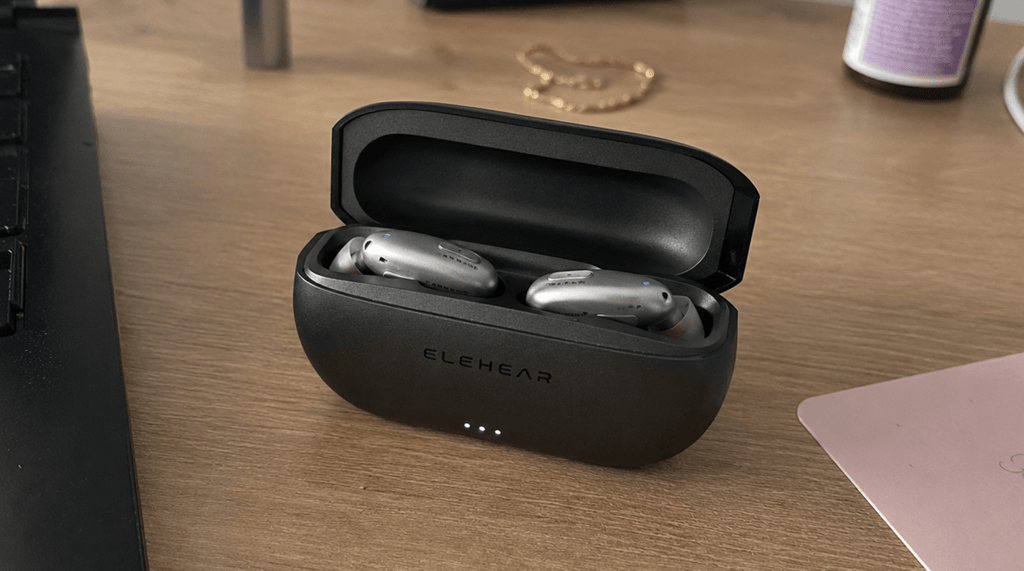
Runner-up is ELEHEAR Beyond Pro, which is packed with modern features that you won’t easily find in other competitors at this price. Powered by VOCCLEAR® 2.0 technology, it clarifies speech and reduces noise with the help of AI algorithms. The device also features 2 microphones per hearing aid so it can better process sounds coming from different directions.
Setup can be easily done in the app by completing a hearing test so Elehear’s audiologists can tailor the device specifically to support your hearing health. Through it, you can further adjust hearing aids’ settings, including volume, mode, noise-control, and directionality. If you get lost, ELEHEAR offers lifetime customer support, so you can always turn to them if you have any questions.
Bluetooth functionality allows streaming phone calls, TV, and music from both Apple and Android products directly to your hearing aids. Music enthusiasts will especially like the Music Mode, which is marketed to reveal “richness in every note” for a more vivid and real listening experience.
Another impressive feature is tinnitus masking, which offers over 20 immersive and tailored soundscapes that provide a distraction from phantom sounds. Additionally, the device helps to overcome language barriers with real-time AI translation with 20 supported languages, eliminating the need to switch apps.
However, as a Receiver-in-Canal (RIC) device, it can feel more bulky than other streamlined competitors. However, it remains ergonomic, and the battery lasts up to 20 hours with the case providing 4 additional charges, making it a good on-the-go partner.
Overall, it’s a product that balances modern features and an accessible price so people prioritizing both don’t have to compromise.
- In-app hearing test
- Lifetime customer support
- Tinnitus masking
- Real-time AI translator
- Slightly bulkier design
Yeasound RIC800
Best for: Noise reduction
- Type: OTC
- Hearing aid style: RIC
- Bluetooth compatibility: Bluetooth LE Audio (Auracast-ready)
- iOS/ Android support: Supports both
- Battery life: 31 hours
- Rechargeable/disposable: Rechargeable
- App compatibility: Yeasound App
- Price: $549 per pair
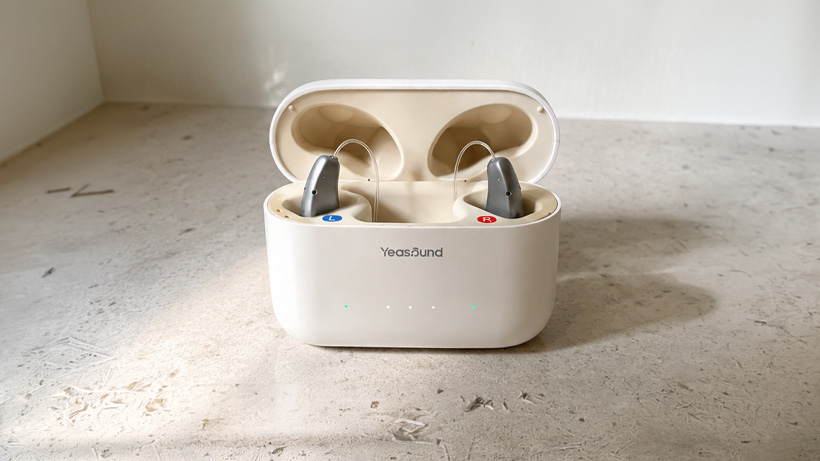
According to the brand, Yeasound RIC800 was built using the same core components as professional hearing aids, offering performance, sound quality, and reliability at an OTC price point. By harnessing AI, it reduces noise, adapting to any environment so you can hear words clearly.
However, during setup, we weren't very thrilled to learn that personalized hearing is limited to preset sound profiles. While you have the option of an AI assistant, which might be enough for some people, the help of an audiologist and a hearing test might tailor your hearing profile better and benefit more people. Though, as usual, the app allows users to adjust various settings in their hearing aids, including volume, mode, noise-control, and directionality.
The app also grants access to a 3-band equalizer, music mode, microphone focus controls, and six different white-noise options designed specifically to provide relief for tinnitus (ringing in the ears).
To us, Bluetooth seemed to function as standard with the device streaming calls, music, and TV with both iOS and Android phones. It’s also Auracast-ready, which means that in the future the device will let you tune into public audio broadcasts (like airport announcements or gym TVs) directly through your hearing aids.
We additionally liked the compact design and battery life that lasts 124 hours on the go, making this device a convenient addition to your routine.
Everything considered, this device is a solid option to support your hearing health, though it does sacrifice a few premium features to make the price slightly more accessible.
- Tinnitus masking
- Auracast-ready
- AI assistant
- Lacks hearing test
Audien Ion Pro 2 Hearing Aids
Best for: Simple setup
- Type: OTC
- Hearing aid style: RIC
- Bluetooth compatibility: Direct Bluetooth streaming
- iPhone / Android support: Supports both
- Battery life: 48 hours
- Rechargeable/disposable: Rechargeable
- App compatibility: Audien app
- Price: $689 per pair
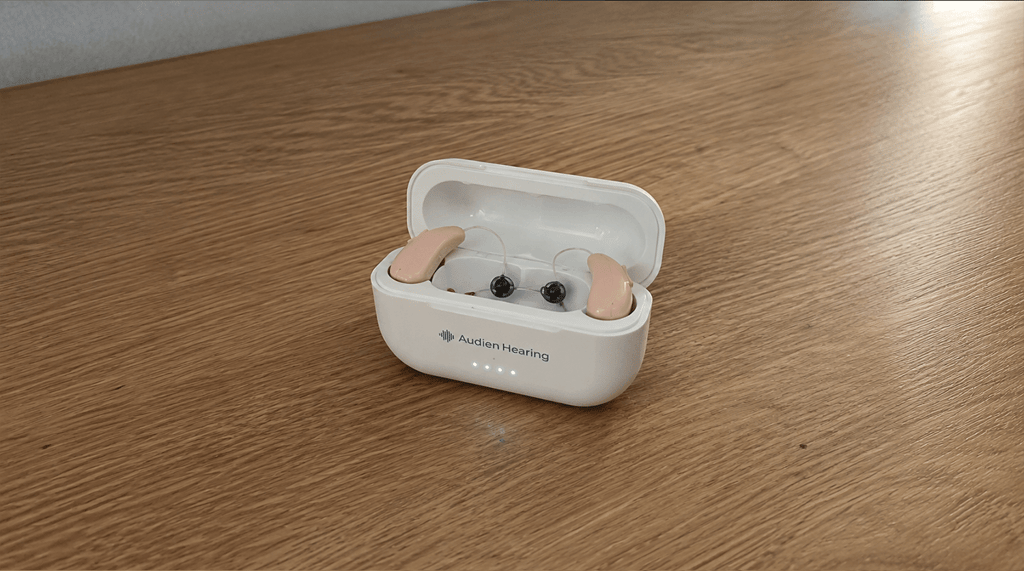
Per the manufacturer, Audien Ion Pro 2 Hearing Aids are a product featuring six hearing modes designed by audiologists and Grammy-winning sound engineers. Each of them, in addition to dual microphones, allows you to enjoy clearer sound whether you’re chatting, watching TV, or out in a crowd.
While the setup is quick, it seems to sacrifice the process of tailoring your hearing profile via a hearing test. It only requires you to open the app, pick your sound mode, and adjust volume to your liking. Unfortunately, it’s likely that the majority of users will require more personalization than this.
Better news is that it features enhanced Bluetooth technology. According to the brand, this should allow you to stream audio from your devices, providing a richer and louder experience when listening to music, podcasts, or TV. Additionally, while testing this device, we confirmed that it’s compatible with both iOS and Android phones.
When wearing these hearing aids, the comfort levels are satisfactory, just like the battery life. It lasts up to 48 hours and can be extended to 144 hours thanks to the charging case. The charging case also has a built-in UV-cleaning function, which is a detail you find with any other device on this list.
The major downside to this device is that it lacks personalization and easily accessible audiology support. Due to this, it may be suited best to users who want a simple, ready-to-wear device.
- Enhanced Bluetooth technology
- Sanitizing charging case
- Long battery life
- Lacks in-app hearing test
ELEHEAR Delight
Best for: Users with tighter budgets
- Type: Self-fitting OTC
- Hearing aid style: ITC
- Bluetooth compatibility: Bluetooth 5.3
- iPhone / Android support: Supports both
- Battery life: 13.5 hours
- Rechargeable/disposable: Rechargeable
- App compatibility: ELEHEAR app
- Price: $371 per pair
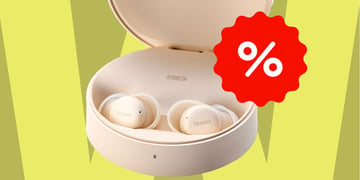
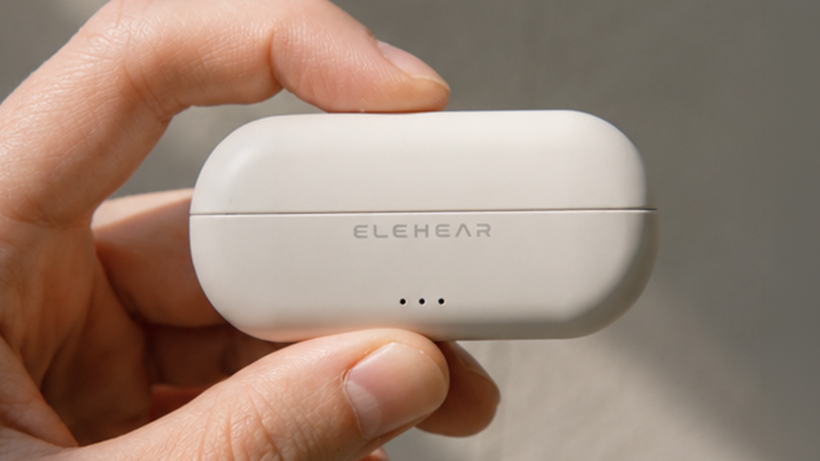
Rounding up our list is the most budget-friendly with an earbud-style design–ELEHEAR Delight. It’s specifically designed for active users prioritising ergonomic comfort. The design also provides discretion for people who want to avoid the medical look hearing aids typically have.
While its design is a standout, its technology doesn’t fall behind either. It pairs proprietary VOCCLEAR® technology with AI sound processing to sharpen speech and soften noise automatically.
Even though it’s a budget-friendly device, its app still includes a built-in hearing test that generates a profile of your specific hearing loss pattern across frequencies. This helps the AI model tailor amplification specifically for you, prioritizing the exact frequency ranges where your hearing needs support most.
We found the app and Bluetooth functions to be perfectly compatible with both iOS and Android products, allowing you to customize your sound further and stream music, calls, and TV directly through your hearing aids.
Unfortunately, where it falls slightly short is battery life. Its run time is 13.5 hours, with the charging case being able to extend it by 2 additional charges. Still, it’s a solid, highly personalizable option that is currently running a limited-time offer to make the price even more accessible. Until September 7, use coupon code LABOR15 and get 15% off sitewide.
- Discrete design
- In-app hearing test
- Budget-friendly
- Shorter battery life
Bluetooth hearing aids compared
Compare our chosen top Bluetooth hearing aids side by side so you can find the right fit for you in no time.
| Device | Bluetooth compatibility | Streaming | Battery life | App | Type | Price | Best for |
| Jabra Enhance Select M3 | Bluetooth LE Audio (Auracast-ready) | Calls, music, podcasts | 24 hours | Jabra Enhance app | OTC self-fitting (RIE) | $1,995 per pair | Nearly invisible design |
| ELEHEAR Beyond Pro | Bluetooth 5.3 | Calls, TV, music | 20 hours | ELEHEAR app | OTC self-fitting (RIC) | $631 per pair | Unique features |
| Yeasound RIC800 | Bluetooth LE Audio (Auracast-ready) | Calls, music, TV | 31 hours (up to 124h with case) | Yeasound App | OTC (RIC) | $549 per pair | Noise reduction |
| Audien Ion Pro 2 Hearing Aids | Direct Bluetooth streaming | Audio, music, podcasts, TV | 48 hours (up to 144h with case) | Audien app | OTC (RIC) | $689 per pair | Simple setup |
| ELEHEAR Delight | Bluetooth 5.3 | Music, calls, TV | 13.5 hours | ELEHEAR app | Self-fitting OTC (ITC) | $371 per pair | Active users |
What are Bluetooth hearing aids?
Bluetooth hearing aids are devices that amplify sound and connect to smart devices like your phone, tablet, or TV so you can stream calls, music, podcasts, or other audio directly through them. This functionality allows you to bypass external background noise, offering a clearer listening experience compared to traditional hearing aids.
Bluetooth compatibility also allows for a completely hands-free phone by streaming caller audio directly into your ears while built-in microphones pick up your voice.
Since Bluetooth hearing aids pair with your phone, you can manage them directly through your screen. This allows you to adjust volume and switch between sound modes tailored to specific environments on the spot, without scheduling a visit to an audiologist’s office.
What actually matters in Bluetooth hearing aids?
Just because a product claims to have Bluetooth, it doesn't mean that it works well. Here’s what to look for when buying Bluetooth hearing aids to avoid a poorly executed Bluetooth connection:
- Ease of pairing. Your phone should find the Bluetooth hearing aids right away without you having to fiddle with it too much. All it should take is turning on Bluetooth, opening your hearing aids case, and pushing the pair button in the app.
- Connection stability. A stable connection is essential for clear sound. Connection drops can cause audio lag, static, and crackling, disrupting your day and even social interactions.
- Streaming and call quality. A quality Bluetooth connection ensures that voices on a call are easy to understand, while also delivering a natural sound when you are listening to music or podcasts.
- Connection range. The better the range, the more freedom you have to move around without losing connection to audio streaming.
- Device compatibility. Not all Bluetooth hearing aids are universally compatible, so you need to ensure the ones you’re buying work with your specific operating system, like iOS or Android.
- Switching between devices. One moment you might be streaming a video on your tablet, and the next, you have to pick up a call on your phone. In these situations, your hearing aids should seamlessly switch between devices without you having to manually disconnect and reconnect.
- App control. Bluetooth connectivity lets you easily customize your hearing aid settings, track battery levels, and adjust to different environments straight from your smartphone.
- Battery impact from streaming. Streaming can drain your Bluetooth hearing aids' batteries faster. Make sure to choose a model that features Bluetooth Low Energy technology designed for reduced power consumption, so you don’t have to stop your day to recharge your hearing aids.
Prescription vs OTC Bluetooth hearing aids
Over-the-Counter (OTC) Bluetooth hearing aids are designed for mild-to-moderate hearing loss. Users set them up independently using a smartphone app and an in-app test. They are more affordable and accessible, and in some cases, also include remote support and adjustments from hearing specialists.
Whereas prescription hearing aids require a professional fitting by an audiologist and are meant to treat any level of hearing loss. Their cost is much higher, but includes in-person clinic visits, custom ear molds, precise adjustments, and continued professional support.
Bluetooth technology is available in both OTC and prescription options, allowing for direct audio streaming, hands-free phone calls, and smartphone controls. This means that Bluetooth support alone doesn’t have to determine whether someone chooses OTC or prescription hearing aids.
Bluetooth hearing aids for iPhone vs Android
Since iOS and Android use distinct operating systems, Bluetooth compatibility varies. As a result, the exact same hearing aid might perform differently depending on which phone you use. Depending on your device, you may experience differences in app functionality, direct streaming, and call handling.
So before buying, always make sure to verify compatibility between your smartphone and the hearing aid model. Checking this upfront guarantees you get the seamless streaming, app controls, and call handling you’re looking for.
Final verdict: Which Bluetooth hearing aid should you buy?
While picking the best Bluetooth hearing aids, we compared them across many criteria, but what separates the strongest options from subpar ones ultimately comes down to amplification and direct streaming quality, customization levels, battery life, and overall design and comfort.
For us, Jabra Enhance Select M3 stands out as the most complete package. It features an ergonomic, nearly invisible design, a self-fitting approach, high-quality sound, long-lasting battery life, and even free professional support for three years.
Of course, our top pick might not be the ideal fit for everyone, especially considering its higher price point. For those with tighter budgets who don’t want to compromise on modern technology, our runner-up, ELEHEAR Beyond Pro, is a solid alternative. With ample modern features and lifetime customer support, it offers premium value at a more accessible price.
If you want to avoid the traditional medical look that hearing aids are known for, we suggest considering the ELEHEAR Delight. It features a discreet earbud style while still offering modern technology and a high level of customization.
FAQs
Whether Bluetooth hearing aids are better than regular ones depends entirely on your preferences and needs. While Bluetooth models allow users to stream calls, music, and TV audio directly to their ears and offer more control via an app, those who are less tech-savvy and prefer a simpler approach might not see the appeal of this extra feature.
The main downsides of Bluetooth hearing aids are that they can be susceptible to dropped connections, pairing errors, and compatibility issues with iOS and Android devices. Additionally, they drain the battery faster and can be more complicated to manage for less tech-savvy users. That said, with the help of our guide, you should be able to find the right fit more easily, while avoiding the aforementioned downsides.
Our testing revealed that the best hearing aid with Bluetooth is Jabra Enhance Select M3. It stands out as a full package combining quality audio, stable direct streaming, modern technology, a nearly invisible design, and professional audiologist support.