When the scale refuses to move for a couple of weeks, it’s tempting to react by eating less or pushing yourself harder. I spent six weeks using Hume Health Body Pod as my main body-composition dashboard, and the biggest lesson was annoyingly simple: my weight looked stuck, but the rest of the data told a calmer story.
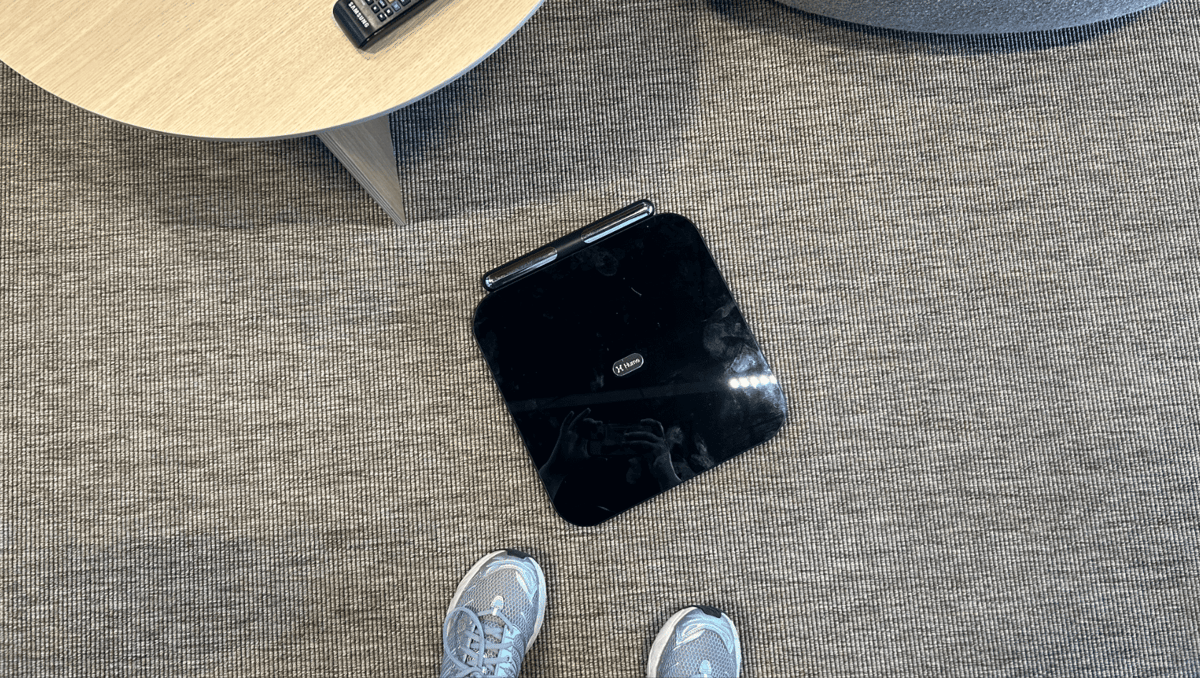
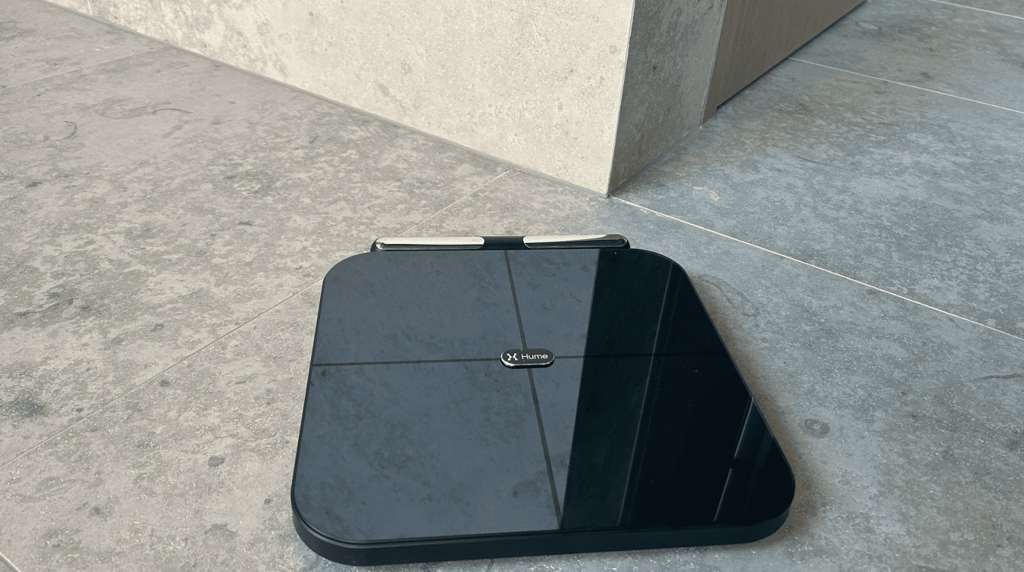
Hume Health Body Pod is the lead product here because it does more than spit out a single weight reading. Hume says its hand-and-foot electrode system estimates more than 40 body-composition metrics, including body-fat percentage, skeletal muscle, visceral fat, and body water.
But let’s be clear right away: that does not make it a medical device, nor does it tell you exactly what changed inside your body overnight. What it did give me was a better way to look at my progress without obsessing over one number.
My weight barely changed, but Hume Body Pod told a different story
I kept Body Pod in my bathroom and used it for six weeks while sticking to my regular strength training and calorie-controlled diet. I also checked my progress with a simple digital scale, a tape measure, and my gym notes to see if the Body Pod’s numbers lined up with what I saw elsewhere.
I weighed every Monday, Wednesday, and Friday morning at 7:10am, after using the bathroom and before coffee. I ran the full Body Pod scan with the app open for the advanced reading.
But sadly, my body weight was the headline disappointment. Across six weeks, my seven-day average moved from 74.6kg to 74.4kg. If I had only been using my old scale, I would have called that a stall.
But Body Pod gave me more numbers to work with. Instead of looking only at weight, I could also see changes in body fat, muscle, water, and other body-composition measurements. That made the small change on the scale feel a lot less frustrating.
| Metric I tracked | Week 1 baseline | Week 6 reading | What I took from it |
| Seven-day average weight | 74.6kg | 74.4kg | Basically flat |
| Waist circumference | 86.8cm | 84.9cm | Noticeable downward trend |
| Body-fat estimate | 28.3% | 27.4% | Directionally improving |
| Skeletal muscle estimate | 29.7kg | 30.1kg | Stable-to-up, not crashing |
| Visceral-fat estimate | 8.6 | 8.2 | Small long-term dip |
| Body-water percentage | 49.6% | 50.7% | Helped explain noisy days |
Yes, none of those numbers is perfect on its own. Together, though, they changed my decision. Instead of cutting calories again in week six, I held the plan steady.
The seven-day average stopped one salty dinner from hijacking the week
The most useful number was not the fanciest one. It was the seven-day average weight.
On day 18, my morning weight jumped 0.9kg after a late restaurant meal, two flights, and far less water than usual. My old habit would have been to stare at that number and assume the week had gone badly. The moving average barely flinched.
That mattered because weight is noisy. Food still in your gut, sodium, carbohydrate intake, menstrual-cycle changes, travel, soreness, poor sleep, and illness can all change the number on your scale without meaning the same thing as fat gain.
My rule by week two was simple: individual weigh-ins were weather, and the weekly average was climate. If the average had climbed for three or four straight weeks, I would have reviewed the plan. One weird Tuesday did not get that power.
Waist measurement was the low-tech number the smart scale could not replace
Body Pod gave me a lot, but it did not replace a tape measure.
Every second Sunday, I measured my waist at the same point, standing relaxed, after the morning scan. I did it twice and wrote down the average if the two readings were close. It took under a minute and added context the scale could not provide.
This was the number that first made the ‘stuck’ feeling fade. My waist was down 1.9cm by the end of the sixth week, even though body weight barely moved.
That did not prove exactly where fat had been lost, and tape measurements have their own error. Pull tighter one week, and you can manufacture progress. But paired with the flat weight average and improving gym performance, it was enough to keep me from overreacting.
Body-fat percentage was useful once I stopped worrying about tiny changes
The Body Pod’s body-fat estimate was the number I wanted to believe most and trusted least day-to-day.
That is not a knock on Hume specifically. Consumer body-composition scales use bioelectrical impedance analysis, which estimates body composition based on how an electrical signal travels through the body. Hydration, recent exercise, food intake, skin temperature, and measurement conditions can all nudge the result.
So I ignored tiny changes. A move from 27.8% to 27.7% did not earn a celebration. However, a six-week drift from 28.3% to 27.4%, with scans done at the same time of day and under similar conditions, was more meaningful.
That made me see Body Pod differently. Instead of checking if I lost fat since Monday, I started paying attention to changes over several weeks. When I measured under the same conditions, the long-term trend was much more helpful than any single result.
Skeletal muscle number kept me from blaming strength training for no progress
I lifted four days a week during those six weeks, so the skeletal muscle estimate became my sanity check.
My weight staying flat could have meant nothing was happening. It could also have meant I was losing some fat while retaining or gaining a little lean mass. The Body Pod’s skeletal muscle estimate moved from 29.7kg to 30.1kg across the six weeks. I didn’t take that as an exact measurement of how much muscle I had gained, but it was an interesting trend to watch.
The more convincing evidence was my gym log. My goblet squat sets went from 3x10 at 26kg to 3x12 at 28kg. My dumbbell row went up by 2kg per side. My regular 30-minute walk covered an extra 0.3km at a similar effort.
That combination mattered. If my weight, waist size, body fat, muscle, and workout results had all stayed the same, I probably would have thought nothing had changed. But they didn’t. Something was improving, even if my scale barely showed it.
Visceral-fat estimate was a long-term nudge, not a number to chase
Body Pod also reports a visceral-fat estimate. I found it useful, but only after I stopped checking it like a daily scorecard.
This is exactly the sort of number that can make a body-composition dashboard feel more serious than it really is. That said, a consumer scale does not directly image fat around your organs, and this metric should not be used to diagnose risk or replace medical advice.
Still, over the six-week block, my estimate moved from 8.6 to 8.2. I put that in the ‘interesting direction’ column, not the ‘proof’ column.
The real benefit was how it changed my behavior. When I saw the number next to my waist measurement, it reminded me to pay attention to the basics: sleep, alcohol, steps, protein, and sticking with my workouts. That helped me much more than checking the number every day and stressing over small changes.
Body-water percentage explained the days when every other metric looked suspicious
Body water became my lie detector for bad scan days. And here is why.
My lowest body-water reading came the morning after a hot evening workout and a poor night’s sleep. That same scan showed higher weight, higher body-fat estimate, and lower skeletal muscle estimate. The dashboard looked bleak until I added the context: I was likely under-hydrated and not in my normal scan state.
Two days later, I scanned again in my normal morning routine, and the numbers had moved closer to my usual range.
That is where Body Pod was most helpful. Not because every metric was independently decisive, but because the combination helped me decide when not to act. A noisy scan did not require a new diet plan. It required another normal morning.
The app depth is the reason to buy Hume, but it can also feel like homework
The best thing about Body Pod is its dashboard. I liked that I could easily see my weight, fat estimate, muscle estimate, water percentage, and other body-composition trends without having to make my own spreadsheet.
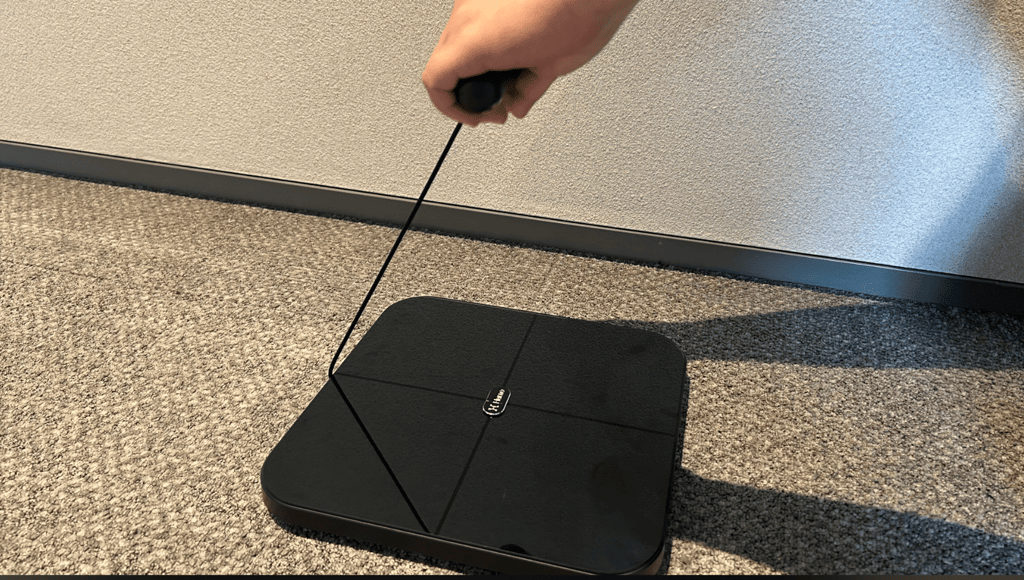
Using the hand bar made the process feel more intentional than just stepping on a regular scale. I had to open the app, stand still, hold the electrodes, and wait for the scan to finish. That extra step helped me because it made the measurement feel like a real check-in, not just something I did without thinking.
However, there are two obvious limitations.
First, the amount of data can be too much if you are prone to spiraling over numbers. If daily weight tracking makes you anxious, this is not automatically a healthier option just because it has more metrics. More numbers can mean more context, but they can also mean more things to worry about.
Second, the scan routine needs consistency. If you measure some days after coffee, some days after training, and some days at night, the dashboard becomes much harder to interpret. In other words, Body Pod rewards boring habits.
RENPHO and Withings are the two alternatives I would compare before buying
Body Pod is not the only smart scale that can give you more than a basic weight reading.
RENPHO MorphoScan is the value rival I would look at if you want hand-and-foot segmental readings and a simpler app experience for less money. It makes most sense if you want the trend data without feeling like you have joined a coaching platform.
The trade-off is in the app's feel. For me, Hume's app felt more guided and made it easier to review my progress each week. RENPHO gives you plenty of data, but you may need to spend more time working out what those numbers mean and which changes are actually worth paying attention to.
Withings Body Scan sits at the other end. It is the premium option for people who want a broader health dashboard and integrations, and who are willing to pay for a more ambitious connected-scale experience.
Regarding whether your weight is really stuck, I wouldn't start with Withings unless you already want all its features. Body Pod was a better middle ground for me: it gave more information than a basic scale, but wasn't as expensive or complicated as the premium options.
My verdict: buy Body Pod if a flat scale keeps making you change a plan too early
Hume Health Body Pod didn’t instantly change my weight, but it showed me that progress is about more than just the number on the scale.
After six weeks, my weight average was almost unchanged, but my waist was down, my body-fat estimate trended lower, my skeletal muscle estimate held up, and my training improved. That was enough evidence for me to keep going rather than panic-adjusting a plan that was probably working.
I'd recommend Body Pod if you strength train, care about body-composition trends, and want a dashboard that puts your weight in context. I'd skip it, though, if you just want to weigh yourself now and then, don't like using apps, or know that extra body metrics will make you feel worse.
In my opinion, Body Pod works best as a weekly decision tool. It's not a medical device or a magic fat-loss solution, but it's a genuinely helpful way to stop one stubborn number from taking over your whole plan.